Enterprise software carries a cost most organizations underestimate. A procurement officer spends fourteen clicks approving a routine purchase order. A field engineer opens a mobile form and waits eight seconds for a dropdown to populate. A compliance lead cannot find the audit trail they need before the auditor arrives. An entire regional team ignores the new platform leadership just spent two years rolling out. Weak Enterprise Software Design shows up as abandoned rollouts, shadow IT workarounds, rising training costs, procurement cycles that favor familiar competitors, and renewal conversations that grow tense every year. In enterprise, friction translates directly into productivity loss measured across thousands of seats daily.
Our approach treats enterprise software as operational infrastructure, not a dashboard collection. Before any screen is produced, our team studies power users during peak workload, shadows occasional users navigating tasks they touch monthly, interviews administrators managing permissions and audits, and maps integration points across ERP, CRM, HRIS, identity, and compliance systems already in production. From there we deliver research-backed information architecture, role-based interfaces, admin consoles, bulk-operation flows, reporting surfaces, and component libraries tuned for dense data and high-stakes decisions. As a specialized partner delivering enterprise application design, we engineer the moments that determine adoption: first login, common task completion, exception handling, and reporting generation.
Eighteen years of design work across thirty-plus countries gives our team practical fluency in how enterprise software actually behaves under procurement pressure, security review, and organizational politics. UX Stalwarts has partnered with early-stage B2B founders building vertical SaaS for first enterprise logos and with listed corporations modernizing legacy internal systems that thousands of employees depend on daily. Our designers read architecture documents, sit in security reviews, work alongside change-management leads, and speak the vocabulary of RBAC, SSO, SAML, SCIM, audit trails, data residency, SOC 2, and ISO 27001. That grounding separates surface polish from a B2B software design agency capable of navigating enterprise buying cycles and delivering products that pass procurement, security, and user-acceptance gates together.

Power users move faster than menus allow. Our interfaces are designed with keyboard shortcuts, command palettes, bulk operations, and custom views built in from the start. Advanced users should fly through their daily work while new users still discover the interface at their own pace, not one sacrificing the other.

Enterprise rollouts fail when design ignores adoption psychology. Our work treats migration paths, feature introduction pacing, contextual help, and training material generation as first-class design concerns. Users recognize familiar patterns even in new systems, and leadership sees measurable adoption instead of slow erosion into shadow IT.

Enterprise platforms serve administrators, power users, occasional users, and read-only viewers at the same time. Each tier has different training, different privileges, and different attention budgets. We design each role distinctly, so super-admins get depth and first-time users get simplicity without collapsing either into a compromise.

Enterprise software never runs alone. SSO, SAML, SCIM, ERP feeds, CRM syncs, HRIS connections, and data-warehouse exports shape UI decisions long before visual polish matters. Our designs account for these integration realities early, so interfaces ship cleanly instead of breaking during security review or identity federation.

Every enterprise action generates audit implications. Our interfaces make permission changes, approvals, data exports, and configuration edits visible and reversible where compliance requires it. This protects organizations from legal and regulatory exposure while giving administrators confidence in the controls they actually rely on daily.

Enterprise rollouts move through security questionnaires, architecture reviews, legal redlines, and multi-stakeholder sign-offs. Our collaboration rhythm supports procurement rather than fighting it: documented design decisions, accessibility attestations, data-handling diagrams, and change-log transparency so sponsors can defend the project at every gate.

Enterprise interfaces carry measurable productivity consequences. A cluttered approval screen steals fifteen minutes from every manager daily. A confusing reporting tool pushes analysts back to exported spreadsheets and workaround macros. A poorly designed admin console creates security risks nobody flags until audit season. Strong enterprise UX design shifts metrics that compound across thousands of seats: task completion time drops, training hours fall, support ticket volume declines, and adoption rises beyond pilot cohorts. A thoughtful enterprise product design partner understands organizational politics, procurement pressure, and the quiet moments where shadow IT grows because the official tool felt too painful to use.
Partner with specialists who design enterprise software that actually ships and lasts.
Every engagement follows a deliberate sequence built to navigate procurement pressure, integration realities, and adoption challenges across real organizations.

We begin by mapping the enterprise reality around your software: stakeholder politics, integration landscape, existing legacy tools, regional rollout priorities, and procurement gate requirements. Interviews with power users, occasional users, administrators, and IT leadership establish the baseline every design decision must eventually improve across adoption, compliance, and productivity.

Enterprise platforms serve distinct role tiers with sharply different needs. We separate administrator, power-user, occasional-user, and read-only-viewer journeys into independent maps documenting task frequency, permission scope, device context, and training exposure. These artifacts guide every screen so role differentiation stays crisp rather than blurred into compromise.

Enterprise tasks often span multiple systems, approvers, and time zones. We structure workflow logic, approval chains, exception handling, bulk operations, and notification hierarchies through tree testing and card sorting with real power users. Integration touchpoints with ERP, CRM, HRIS, and identity providers are mapped here rather than left as surprises for engineering later.

High-fidelity screens for admin consoles, power-user surfaces, occasional-user tasks, and read-only reporting ship alongside a component library tuned for enterprise density. Data tables, audit logs, permission matrices, approval flows, and bulk-edit patterns are weighted through visual hierarchy designed to support decisions under procurement and security scrutiny. Accessibility review happens before handoff.

Designs are validated with real users in real organizational contexts. Pilot cohorts across regions, departments, and role tiers provide evidence on adoption friction, training gaps, and integration edge cases before wider rollout. Change-management materials, training decks, and admin playbooks are refined alongside the product so wider launch feels prepared rather than rushed.

Post-launch, enterprise cohort data guides refinement. Task completion time, adoption rate by role, support ticket categories, training hours saved, and audit-readiness indicators are monitored against the Phase One baseline. Where gaps surface, targeted revisions ship in structured sprints so the platform keeps earning adoption beyond pilot enthusiasm, into the long tail of daily operational work.
Drawn from over one thousand engagements, these projects reflect measurable outcomes across internal tools, vertical SaaS platforms, and enterprise-wide transformation programs.
Foundational values behind every enterprise engagement are adoption honesty, integration discipline, and measurable operational impact. Teams evaluating a SaaS product design agency or an enterprise SaaS design agency comparison weigh domain fluency against execution speed, and both matter in enterprise work. From vertical SaaS founders shipping first enterprise logos to listed corporations modernizing legacy internal systems, our team operates across the maturity spectrum. Design decisions balance immediate user needs against the architectural runway required for seat expansion and regulatory change.
Industry coverage spans finance operations, HR and talent management, procurement, supply chain planning, sales operations, analytics and BI, compliance and risk, field service, manufacturing operations, and horizontal productivity tools. Our custom enterprise software design and enterprise system design services work extends across internal tools, white-label platforms, and B2B SaaS products. That cross-vertical pattern library sharpens decisions on how enterprise application UX services should feel intuitive even for users trained on twenty-year-old software.

Choosing the best enterprise UX design company comes down to organizational fit, not reputation alone. UX Stalwarts has been cited in enterprise software publications, shortlisted for international design awards, and referenced in Fortune 500 transformation case studies because the output lifts adoption and operational throughput rather than just refreshing visual style. Three commitments explain why enterprise leaders select our team.
Adoption Ownership: Every enterprise engagement ships tied to a named adoption or task-completion metric, and our team stays engaged until the number moves in production.
Power-User Craft: Keyboard shortcuts, bulk actions, custom views, and command palettes are treated as first-class work, so advanced users move fast rather than being slowed by beginner-focused menus.
Procurement And Security Fluency: Design decisions account for SSO, audit trails, data residency, and compliance review from day one, so projects clear enterprise gates rather than stalling there.
Our studio uses category-leading tools selected for collaboration speed, engineering handoff accuracy, and documentation rigor across every enterprise UI design services and business software UX strategy engagement we run.









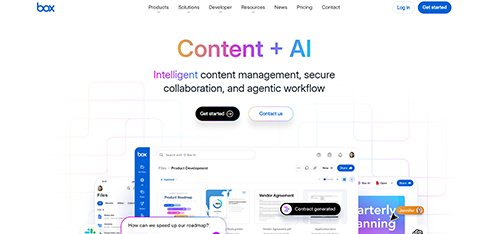
Having licenses is meaningless if people do not use the product. Nearly half our seats were inactive. UX Stalwarts redesigned around how knowledge workers actually find and act on content. Utilization jumping from 54 to 80 percent proved enterprise adoption is fundamentally a design problem.
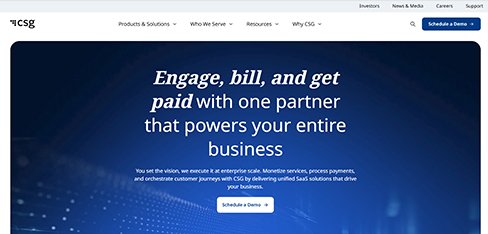
Our platform had powerful automation but accountants used only 28 percent of features. UX Stalwarts made close automation accessible with visual task management. Close time shrinking 38 percent while adoption doubled proved the barrier was always the interface, not the technology.
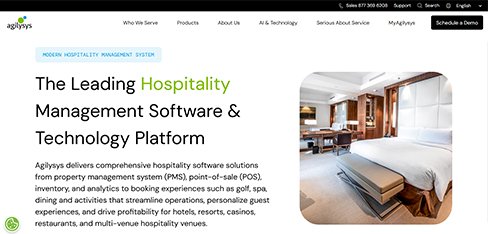
We were losing properties to cloud-native competitors because our PMS looked like 2005. UX Stalwarts modernized everything into a platform staff enjoy using. Going from declining adoption to 3,200 new properties proved that in hospitality tech, the user experience is the product.
The questions enterprise leaders ask before choosing a design partner.
Start with organizational specificity. A consumer-focused studio that has never shipped an admin console or a role-based permission matrix will miss where enterprise software actually fails. Enterprise UI UX consulting services worth considering bring experience with SSO, SAML, audit trails, and procurement review cycles, not just visual portfolios. Ask for before-and-after adoption numbers rather than aesthetic case studies. Check experience with ERP, CRM, and HRIS integration patterns. Review component libraries designed for dense enterprise data. Candidates for the best enterprise UX design company defend decisions to product, engineering, security, and procurement leads in one meeting. Portfolios alone never reveal whether a studio has shipped software to thousands of seats. Enterprise Software Design Agencies and Enterprise Software Designcompanies vary widely.
Pricing for enterprise software design services varies with scope, role-tier count, and integration complexity. A focused UX audit for enterprise applications typically starts in the low five figures. A complete enterprise UI/UX design engagement covering research, role tiers, workflow architecture, admin consoles, and a component library usually runs mid-five to six figures. Enterprise programs involving legacy replacement, multi-region rollouts, or ongoing optimization across seat populations reach higher. Enterprise SaaS design agency comparison exercises typically reveal wide variance driven by scope, integration depth, and post-launch support. Transparent scoping before contract signature prevents commercial surprises during procurement review and legal redlines that follow. Our custom enterprise software design services and enterprise software ui design services pricing stays transparent.
Timelines depend on scope and role-tier count. A targeted enterprise usability design audit with prioritized recommendations typically takes four to six weeks. A single-surface redesign like an admin console or approval workflow runs eight to twelve weeks including validation. A full engagement covering discovery, role tiers, workflow architecture, interface craft, and a documented component library generally runs sixteen to twenty-six weeks. Digital transformation UX programs involving legacy replacement, multi-region rollouts, or cross-stack integrations extend further. We scope in two-week milestones with visible deliverables so product, engineering, and change-management teams can evaluate progress continuously across pilot cohort data and integration checkpoints. Enterprise app Design services and enterprise web software design Company engagements scale similarly.
A structured engagement follows six sequential phases. First, organizational discovery collects stakeholder interviews, integration audits, and legacy system documentation. Second, role-tier mapping separates administrator, power-user, occasional-user, and read-only journeys. Third, workflow architecture validates approval chains, bulk-operation logic, and integration touchpoints through tree testing. Fourth, interface craft produces high-fidelity admin, power, and reporting screens against a component library. Fifth, pilot rollout validation tests designs with real cohorts across regions before wider launch. Sixth, enterprise iteration tracks adoption metrics and ships refinements. Each phase ends with a signed-off deliverable. This is how enterprise UX research and enterprise product usability work together to ensure enterprise-grade delivery. Our enterprise custom software design Agency and enterprise software ux design Firms experience guides this.
Three things separate our enterprise work. First, adoption ownership. Every engagement ships tied to a named adoption or task-completion metric rather than a visual KPI. Second, power-user craft. Keyboard shortcuts, bulk actions, custom views, and command palettes are treated as first-class work rather than advanced-user afterthoughts. Third, procurement and security fluency. Design decisions account for SSO, audit trails, data residency, and compliance review from day one. A proven enterprise UX consulting practice applying this discipline consistently ranks among candidates when enterprise leaders evaluate partners. Portfolio polish alone never reveals whether a studio can clear procurement gates and ship software thousands of enterprise seats adopt voluntarily. An enterprise software application design Agency and Enterprise Software Designcompanies practice clarifies this difference.
Starting is deliberately lightweight. A brief discovery call covers organizational stage, role-tier mix, integration landscape, procurement cycle, known pain points, and desired outcomes. Within five working days you receive a scoped proposal covering phased milestones, deliverable samples, team composition, timeline, and commercial terms. A paid pilot sprint focused on one high-leverage surface is available for teams wanting to test chemistry before committing to a full enterprise engagement. Most clients move from first conversation to kickoff within two to four weeks, accounting for procurement review timing. You can begin with a short enquiry, share documentation under NDA, or explore related capabilities through our broader UX design services page. Many enterprise app design company partnerships begin exactly this way.
Several adjacent capabilities compound the impact of enterprise product design. A mature design system accelerates every new feature release and protects consistency across admin console, power-user interface, occasional-user task flows, mobile field apps, and reporting surfaces. Conversion rate optimization sharpens customer-facing surfaces like marketing sites and self-serve sign-up flows. Design systems for enterprises often anchor multi-year platform roadmaps. Dedicated usability testing, accessibility audits for compliance attestation, and motion design for state transitions complement core enterprise work. Selection depends on program stage; early vertical SaaS prioritizes role flows, while mature platforms gain more from optimization and system governance. Our custom enterprise software design services and custom enterprise software design firms portfolios reflect this.
Every engagement is scoped around the specific enterprise product, not a template. A horizontal productivity platform has different needs than a vertical SaaS for clinical research. A field service mobile app requires different hierarchy than a CFO reporting console. Our custom enterprise software design work for internal tools differs meaningfully from enterprise software UX design for multi-tenant external SaaS sold across customers. Discovery produces a custom engagement plan accounting for user base size, role-tier mix, integration landscape, regulatory jurisdiction, and procurement cycle. Sprint cadence, deliverable format, and stakeholder involvement adjust to match how your organization actually makes decisions across product, engineering, security, and change-management leadership. Our Enterprise app Design services and custom enterprise software design company engagements adapt accordingly.
Yes, and it is usually where meaningful enterprise wins show up. After launch, real seat-level adoption often differs from pilot predictions in small but important ways. Retainer options range from enterprise programs to lighter engagements covering specific surfaces. Typical support covers ongoing design iteration, component library expansion, integration updates with new identity or ERP systems, periodic usability studies with pilot cohorts, and analytics-driven optimization of adoption friction. A dedicated enterprise UX research partner keeps that rhythm consistent through regulatory changes, organizational restructures, and platform expansions. Remote validation plays a central role here, covered in our guide to remote usability testing for distributed enterprise cohorts. An enterprise app design company and enterprise software application design Agency support this rhythm.
Coverage spans finance operations, HR and talent, procurement, supply chain planning, sales operations, analytics and BI, compliance and risk, field service, manufacturing operations, healthcare and life sciences back-office, and horizontal productivity tools. Clients range from vertical SaaS founders to Fortune 500 corporations operating across India, the United States, the United Kingdom, the European Union, the GCC, and Southeast Asia. A regionally experienced team understands that Indian enterprises often use global capability center models with large CoE teams, EU software must respect GDPR and data residency, US enterprises demand SOC 2 readiness, and GCC customers require Arabic-first interfaces. Pattern transfer across verticals is deliberate; a proven approval workflow for procurement often accelerates HR offboarding design decisions.
Adoption reflects design decisions, not training hours. Our method combines four techniques. First, familiar patterns where users expect them, so experienced operators recognize the interface before the tutorial ends. Second, progressive disclosure for complex features, so new users encounter depth only when ready. Third, contextual help and inline guidance that replaces dusty PDF manuals nobody reads. Fourth, change-management design treating migration as a first-class surface with phased feature introduction and opt-in advanced modes. Disciplined enterprise application UX services and thoughtful enterprise product usability work can lift adoption rates by double-digit percentages within the first ninety days post-launch without additional training investment. Enterprise Software Design Agencies and enterprise software design solutions guide adoption results here.
Legacy replacement fails when design ignores muscle memory. Our approach treats existing systems as valuable context rather than obstacles. We map current workflows carefully, preserve terminology familiar to experienced users, and design migration paths that let teams adopt new capabilities without abandoning proven patterns overnight. Phased rollout plans, parallel-running periods, and dedicated data migration UX protect organizations during cutover. Digital transformation UX work requires humility about what twenty-year-old systems got right, not just what they got wrong. Our article on UX accessibility audits covers related compliance considerations that often surface during legacy replacement in regulated industries. Our enterprise software design agency engagements and custom enterprise software design company method apply here; enterprise web software design Company expertise supports this.
Security and compliance shape design inputs, not post-launch reviews. Before wireframes begin, our team maps the regulatory framework governing your product: SOC 2, ISO 27001, GDPR, HIPAA, CCPA, regional data residency, and industry-specific controls. SSO via SAML or OIDC, SCIM user provisioning, role-based access control, audit log surfacing, data-retention controls, and export governance are designed in rather than added later. Admin consoles include visible permission matrices, change logs, and reversible actions where compliance requires them. These decisions protect organizations from regulatory exposure and accelerate procurement review because security questionnaires get answered by product capability rather than policy promises alone. Our custom enterprise software design firms and enterprise software design agency portfolios address legacy carefully.
Yes. Design systems for enterprises carry specific requirements beyond consumer or B2C systems. Components must handle dense data tables, permission badges, approval states, audit log patterns, bulk-action toolbars, multi-tenant theming, accessibility contrast under dense density, localization for twenty-plus languages, and regulatory disclosure blocks. Our system engagements produce tokenized foundations, a production-ready component library, documented accessibility behavior, and developer handoff kits that scale across dozens of internal applications. For large enterprises, long-term stewardship matters as much as the initial build, which we explore in our article on design system governance. A disciplined system is often the ROI story that justifies the engagement. Enterprise software design solutions, enterprise software ui design services, and enterprise custom software design Agency work apply here.
Measurement begins before design. During discovery we capture baselines for flows being redesigned: task completion time, adoption rate by role, support ticket volume, training hours required, audit preparation time, and operator-reported friction scores. After launch the same metrics are re-measured at thirty, sixty, and ninety days, and again at quarterly reviews. Secondary signals include seat activation rates, power-feature usage, integration stability, and renewal sentiment from enterprise buyers. Business reviews tie design decisions back to productivity, compliance posture, and renewal pipeline movement. Whether the project is enterprise UI design services for an internal tool or a B2B software design agency engagement for vertical SaaS, measurement discipline separates cosmetic redesigns from durable organizational improvement. Enterprise software ux design Firms apply measurement here.

C – 81C, Sector – 8, Noida 201301, India


1025 Beamon Drive, Franklin 37064 Tennessee, USA
Sveavagen 34 111 34 Stockholm, Sweden
A-10, Sahastradhara Rd, Doon IT Park, Dehradun, Uttarakhand

© 2026 UX STALWARTS. All rights reserved.