Organizations invest heavily in chatbots and virtual assistants only to watch users abandon them within seconds. The root cause is almost never the underlying AI model. It is the interface sitting on top. Poor conversation flows, rigid response patterns, missing fallback paths, and tone-deaf bot personas create frustration instead of resolution. When conversational UI design fails, support tickets increase, customer satisfaction scores drop, and the technology investment produces negative returns rather than efficiency.
Our conversational UI design services focus on structuring every dialogue path, visual element, and interaction cue so that users feel guided rather than interrogated. We map intent hierarchies, script branching conversation flows, design multimodal input patterns, and build bot personas calibrated to your brand voice. Deliverables include annotated conversation flow diagrams, high-fidelity chat interface prototypes, voice interaction scripts, fallback escalation frameworks, and usability-tested designs validated with real users before development begins.
With eighteen years of cross-industry design experience spanning healthcare, fintech, logistics, and enterprise SaaS, we bring domain awareness that generic chatbot agencies cannot match. Our conversational UX designers understand both the technical constraints of NLP engines and the emotional needs of end users. That combination produces interfaces people actually want to use, not ones they tolerate until a human agent becomes available.

Every conversation flow begins with mapped user intents, not scripted keyword matches. We analyze real support transcripts, search queries, and task completion data to identify what users actually need when they engage a conversational interface. This eliminates dead-end dialogues and reduces fallback rates from the first release.

Bot personality is not an afterthought. We develop conversational personas grounded in your brand tone, industry expectations, and audience demographics. Each persona includes vocabulary guidelines, response length rules, escalation language, and emotional calibration parameters. The result is an interface that sounds like your organization, not a generic template.

Designing conversational interfaces for a banking app differs fundamentally from designing one for a logistics dashboard. We bring sector-specific compliance awareness, terminology mapping, and workflow understanding into every project. That domain fluency means fewer revision cycles, faster stakeholder alignment, and interfaces that earn user trust immediately.

Users do not always type. They tap quick-reply buttons, speak commands, upload images, and share locations. We design conversational UI UX that accommodates text, voice, visual, and hybrid input modes within a single coherent experience. Every input path receives the same design rigor so no channel feels secondary.

We tie every design decision to a trackable metric. Containment rate, average resolution time, escalation frequency, and user satisfaction scores are defined before the first wireframe. Post-launch, we provide analytics dashboards and optimization recommendations so your conversational interface improves continuously rather than stagnating after deployment.

Design artifacts are only valuable if your engineering team can implement them without ambiguity. Our deliverables include developer-annotated conversation flow diagrams, component specifications mapped to your tech stack, and integration guidelines for platforms like Dialogflow, Rasa, Voiceflow, or custom NLP engines.

A well-designed conversational interface does more than answer questions. It reduces the distance between a user’s problem and its resolution. When dialogue paths are structured around real intent patterns, when fallback states offer alternatives instead of dead ends, and when the interface adapts its tone and complexity to the user’s context, the entire service experience shifts. Support costs decrease because fewer interactions require human escalation. Customer retention improves because users feel heard on the first attempt. Our team of conversational UX designers brings behavioral research, linguistic precision, and interaction psychology into every project to make that shift measurable.
Partner with specialists who design dialogue that delivers results.
Each phase builds on validated findings from the previous one, reducing risk and ensuring your investment produces working outcomes.

We audit existing support channels, analyze conversation transcripts, review abandonment data, and interview stakeholders to understand where users struggle most. This phase identifies the highest-impact use cases for conversational automation. By the end, we deliver a prioritized intent map and a scoped project brief.

The bot’s personality, vocabulary range, response tone, and escalation behavior are defined collaboratively with your brand and product teams. We create detailed persona documents that include sample dialogues, edge-case handling guidelines, and tone calibration rules. This ensures consistency across every conversation touchpoint.

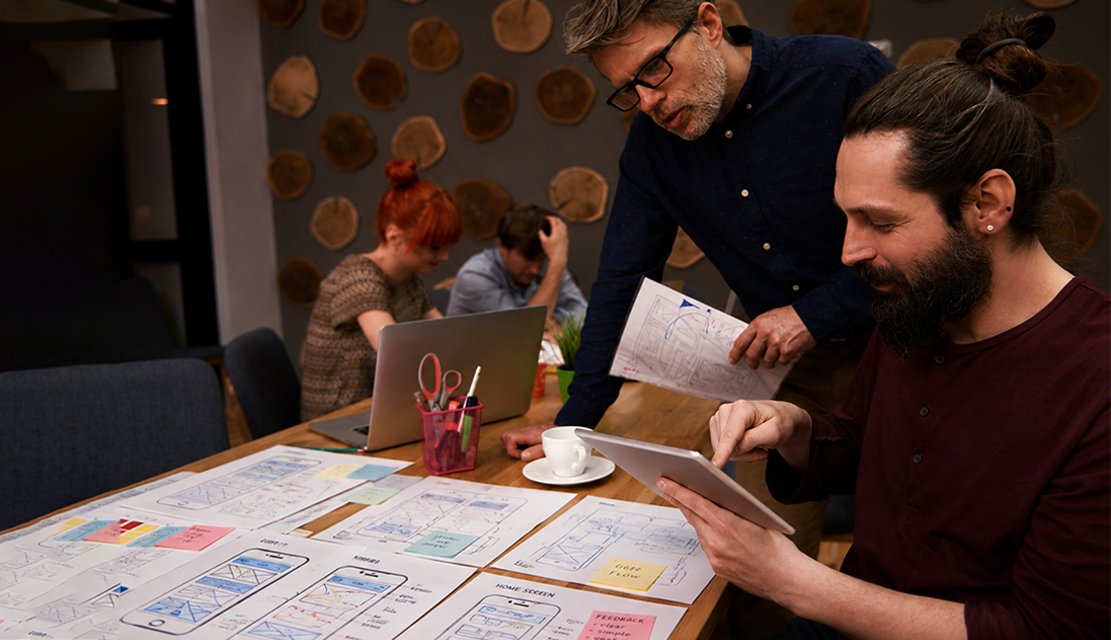
Using insights from discovery and persona alignment, we design branching conversation flows covering happy paths, error states, disambiguation prompts, and human handoff triggers. Every flow is mapped visually in annotated diagrams that show decision logic, variable dependencies, and integration points with backend systems.

High-fidelity prototypes bring the conversation flows to life inside realistic chat or voice interface mockups. We design message bubbles, quick-reply components, card carousels, typing indicators, and input field behaviors. Prototypes are interactive, allowing stakeholders and test users to experience the conversation before any code is written.

We recruit representative users to test the prototype across target scenarios. Sessions measure task completion rates, comprehension accuracy, error recovery success, and satisfaction. Findings are documented in a prioritized recommendation report. Only validated designs move forward, ensuring development resources are spent on proven conversation patterns.

Our conversational UI design consultants work alongside your engineering team during build. We provide component-level specifications, platform-specific guidelines for tools like Dialogflow or Rasa, QA checklists for dialogue accuracy, and post-launch monitoring frameworks. This phase ensures what was designed is what gets deployed, without interpretation gaps.
Across 1,000+ client engagements and multiple industries, our conversation design work has produced interfaces users return to willingly.
Every conversational UI design project we take on starts from the belief that scalability and compliance cannot be afterthoughts. Whether building for a startup launching its first customer support bot or an enterprise deploying an AI agent across multiple geographies, we calibrate scope, language, and regulatory requirements to match. Our client portfolio spans early-stage products and Fortune-level platforms with equal rigor.
Industries we serve include banking and financial services, healthcare and telemedicine, insurance, e-commerce and retail, logistics and supply chain, education technology, SaaS platforms, telecommunications, and government services. Each sector brings distinct compliance frameworks, user vocabulary, and task patterns. Our cross-industry exposure means we recognize structural patterns faster and avoid the learning curve that single-industry agencies face.

Our approach to conversational UX design has been shaped by eighteen years of solving real interface problems across regulated and complex industries. That track record has earned recognition from clients who value precision over promises. Three specific practices define how we operate differently from other providers in this space.
Transcript-Driven Design Decisions: Every conversation flow starts from real user data, not assumptions. We audit actual support logs before designing any dialogue.
Compliance-Embedded Conversation Flows: Regulated industries require audit-ready dialogue paths. We build compliance checkpoints directly into the conversation architecture, not as a review layer.
Post-Launch Optimization Partnership: We monitor containment rates and resolution times after launch, providing quarterly optimization reports that keep your interface improving.
We select tools based on your project's technical requirements, integration constraints, and team capabilities. Our platform-agnostic approach ensures designs work across the most widely adopted frameworks.









American Express contact centers were overwhelmed with routine calls that customers should have been able to handle digitally, but our self-service was too complex and frustrating. UX Stalwarts designed conversational UI that finally made digital service as easy as talking to an agent. Reducing call volume 67 percent and improving containment from 32 to 78 percent transformed our service economics. The $127 million in cost savings proved conversational UI is not just better experience — it is better business. This is how we scale premium service.
Capital One’s mobile banking was powerful but required customers to stop what they were doing, pull out their phones, and manually navigate. This limited when and how people could bank with us. UX Stalwarts designed voice banking that made banking truly mobile — available while driving, multitasking, or when hands and eyes were busy. Growing engagement 156 percent and reaching 43 percent adoption proved voice is not novelty — it is fundamental access. The 9.6 out of 10 satisfaction from visually impaired customers showed voice banking is also accessibility imperative.
FIS had enterprise-grade payment processing but our APIs were complex and intimidating for developers used to Stripe’s simplicity. Integration took weeks and required payment processing expertise most developers lacked. UX Stalwarts designed conversational developer interface that made our powerful APIs as easy to use as asking questions. Reducing integration time 84 percent and growing adoption 143 percent among small businesses proved conversational UI is not just for consumer chatbots — it is for developer tools. This is how enterprise fintech competes with developer-first startups.
Considering a conversational interface for your product? Here is what decision-makers typically need to know.
Conversational UI design is the practice of creating digital interfaces where users interact through natural language, either by typing or speaking, instead of navigating traditional menus and forms. It matters because these interfaces directly affect customer satisfaction, support costs, and task completion rates. A well-designed conversational interface resolves user queries faster, reduces the need for human agents, and creates a service experience that feels personalized rather than procedural. For businesses, this translates into lower operational overhead and stronger customer retention over time. Our conversational interface design services target both.
Start by evaluating whether the agency has experience in your specific industry, since compliance requirements and user expectations vary significantly across sectors. Ask for case studies that show measurable outcomes like containment rates, resolution times, or satisfaction score improvements, not just visual portfolios. Check whether they deliver developer-ready specifications or only high-level wireframes. A strong conversational UI design agency will also demonstrate expertise in NLP platform integration, not just visual design. Finally, confirm they offer post-launch optimization, since conversation flows always require iteration based on real user data. Such criteria define the best conversational UI design agency India offers.
Costs vary based on the scope, number of conversation flows, integration complexity, and whether voice interfaces are included alongside text. The key cost driver is not the number of screens but the number of intent paths, edge cases, and escalation flows that need to be designed and tested. Always request a scoped estimate based on your specific requirements. That scoping is standard for professional conversational UI design services.
A typical project spanning discovery, persona definition, flow design, prototyping, and usability testing takes between six and twelve weeks. Simpler implementations focused on a single channel and a limited set of intents can be completed in four to six weeks. Enterprise projects involving multiple languages, compliance reviews, and cross-platform deployment often extend to fourteen or sixteen weeks. The most time-intensive phase is usually flow architecture, where branching logic, fallback paths, and integration points are mapped in detail. Rushing this phase produces fragile dialogue systems that require costly rework after launch. Every credible conversational UI design firm follows this discipline.
Conversational UI design focuses on the user experience layer: how dialogues are structured, what the bot says and when, how errors are handled gracefully, and how the interface looks and feels. Chatbot development is the engineering work of building the underlying system, training NLP models, connecting APIs, and deploying the software. Both are essential, but they require different expertise. Poor development with strong design still produces a usable experience. Strong development with poor conversational UX design produces a technically capable bot that users abandon because it feels confusing or unhelpful. A skilled conversational UX designer prevents that outcome.
Three things set our work apart. First, every project begins with real transcript analysis, not assumption-based persona creation. We study actual support logs, search queries, and abandonment data before designing a single flow. Second, we embed compliance checkpoints directly into conversation architecture for industries like banking, healthcare, and insurance. Third, we stay involved after launch, tracking containment rates and resolution metrics to deliver quarterly optimization updates. Most conversational UI design companies in India deliver static files and move on. We treat every deployment as a living system that requires ongoing refinement. As a conversational UI design company India trusts, we operate accordingly.
Yes. Voice UI design follows many of the same structural principles as text-based conversation design, but introduces additional constraints around response length, confirmation prompts, interruption handling, and ambient noise tolerance. We design for both channels and frequently create unified conversation architectures that serve chat, voice, and hybrid multimodal experiences from a shared intent framework. Voice interactions require shorter responses, more explicit confirmations, and careful pacing. Our design process accounts for all of these factors when voice is within scope. Our conversational UI UX services cover both channels seamlessly.
Any industry where users frequently contact support, complete repetitive tasks, or need guided decision-making benefits from well-executed conversational interface design. Banking, insurance, healthcare, e-commerce, logistics, education technology, and telecommunications are sectors where we see the highest return on investment. These industries handle large volumes of predictable queries that are well-suited to automation. The critical factor is not industry type but query repeatability. If a significant percentage of your inbound questions follow identifiable patterns, a conversational interface will reduce costs and improve response quality. That is where an enterprise conversational UI design company adds value.
During the persona definition phase, we conduct workshops with your brand and product teams to document tone guidelines, vocabulary preferences, formality levels, and emotional boundaries. We then create a persona specification document that includes sample dialogues across different scenarios, including normal queries, complaints, and edge cases. This document becomes the reference standard for every conversation flow. We also test persona consistency during usability sessions by asking participants to describe how the bot made them feel. If the feedback does not align with your intended brand perception, we adjust before handoff. Each conversational UX designer on our team applies this rigor.
Yes. Our conversational UI design consultants produce deliverables that are mapped to the technical specifications of platforms including Dialogflow, Rasa, Amazon Lex, Microsoft Bot Framework, and Voiceflow. We work within your existing tech stack rather than prescribing a platform change. For teams building on custom NLP engines, we provide intent taxonomies, entity definitions, training phrase suggestions, and response templates formatted for direct ingestion. Our goal is to give your engineering team everything they need to implement the designed experience without guesswork or reinterpretation. Few conversational UI design firms India hosts deliver this depth.
Delivery is not the end of our engagement. We offer post-launch monitoring and optimization as a structured service. This includes tracking key metrics such as containment rate, average resolution time, escalation frequency, and user satisfaction scores. Based on this data, we provide quarterly reports with specific design recommendations for improving underperforming flows, adding new intent paths, and refining the bot persona. Conversational interfaces are living products. User behavior shifts, new queries emerge, and the underlying AI models improve over time. Continuous design iteration ensures your interface remains effective. A reliable conversational UI design firm treats this as standard, which is what our conversational UI UX services include by default.
Absolutely. Many of our engagements begin with an audit of an existing conversational interface. We review conversation logs, identify abandonment points, map unrecognized intent patterns, and evaluate the current fallback experience. From that analysis, we produce a redesign strategy that prioritizes the highest-impact improvements. Common fixes include restructuring flow logic, rewriting bot responses for clarity and brevity, adding disambiguation prompts, improving the human handoff trigger, and aligning the persona with user expectations. Redesign projects typically deliver measurable improvement within the first thirty days after relaunch. Such rigor defines the best conversational UI design agency India promises.
Multilingual conversation flows require more than translation. Sentence structure, formality norms, cultural expectations around directness, and even the length of typical user inputs vary across languages. We design conversation architectures that accommodate these differences structurally rather than treating localization as a post-production translation task. Each language variant gets its own flow review, persona tone adjustment, and usability validation. For enterprise deployments across multiple regions, we create a shared intent framework with language-specific dialogue branches, ensuring consistency in logic while allowing cultural adaptation in tone. Most conversational UI design firms India hosts skip this rigor, but an enterprise conversational UI design company plans for it from day one.
Standard deliverables include a prioritized intent map, bot persona specification document, annotated conversation flow diagrams with branching logic, high-fidelity interactive prototypes of the chat or voice interface, usability test findings and recommendations, developer handoff documentation with component specifications, and a post-launch monitoring framework. The exact set varies by project scope. Enterprise engagements may also include NLP training data recommendations, compliance audit documentation, and multilingual flow variants. Every deliverable is designed to be actionable without requiring further interpretation from our team. Every engagement under our conversational interface design services follows this pattern.
We define success metrics before design begins and track them continuously after launch. Primary metrics include containment rate, which measures the percentage of conversations resolved without human escalation. We also track average resolution time, user satisfaction score collected through post-conversation surveys, and intent recognition accuracy. Secondary metrics include conversation length, repeat contact rate, and abandonment rate at specific flow points. These data points reveal not just whether the interface works, but where it fails and why. Our quarterly optimization reports translate these findings into specific design changes. As a conversational UI design company India relies on, we report transparently.

C – 81C, Sector – 8, Noida 201301, India


1025 Beamon Drive, Franklin 37064 Tennessee, USA
Sveavagen 34 111 34 Stockholm, Sweden
A-10, Sahastradhara Rd, Doon IT Park, Dehradun, Uttarakhand

© 2026 UX STALWARTS. All rights reserved.