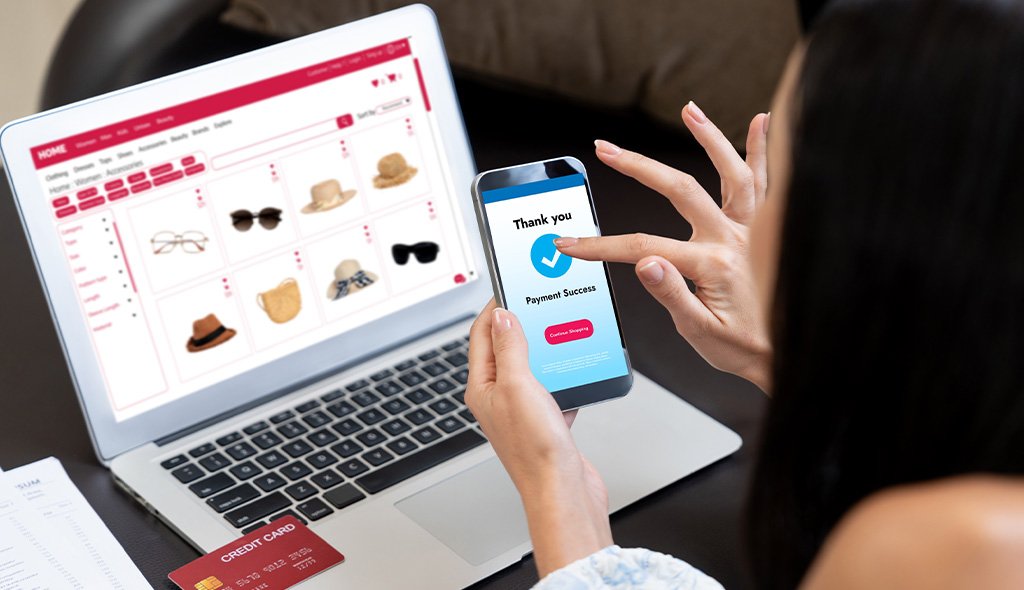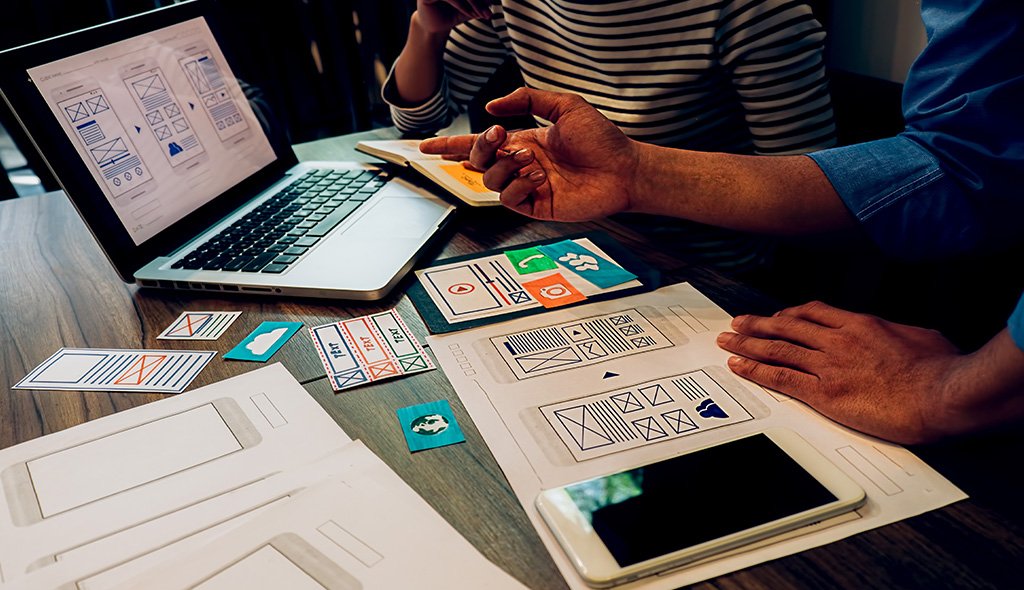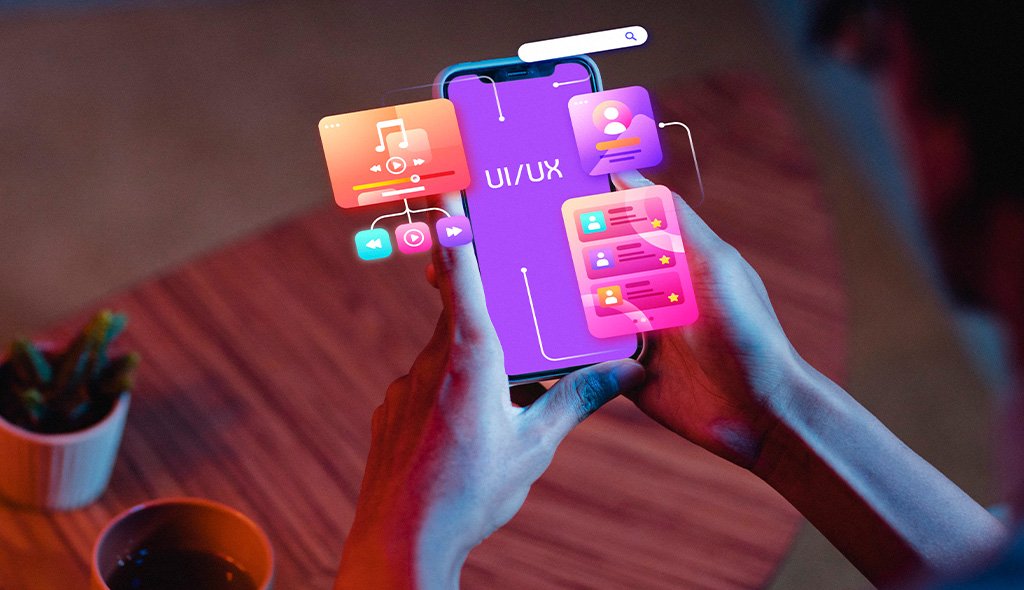
Building a digital product without prototyping is building on assumptions. Teams commit engineering resources to features that have never been tested with real users, approve designs based on static screens that cannot reveal interaction problems, and present product concepts to investors using slide decks that fail to communicate actual experience. The result is predictable: rework after launch, missed usability issues that erode adoption, and stakeholder misalignment that surfaces only when the product is already coded. Prototyping services eliminate these risks by making the product experience tangible, testable, and improvable before a single line of production code is written.
UX Stalwarts delivers prototype design services that turn product concepts into clickable, interactive simulations across web, mobile, and enterprise platforms. Each engagement produces prototypes calibrated to their purpose, whether that is validating navigation flows with real users, demonstrating product viability to investors, or providing developers with behavioral specifications they can implement directly. UI prototyping services cover interaction design, transition behavior, micro-animation logic, and conditional state handling. Website prototyping services address responsive behavior across breakpoints, while mobile app prototyping covers platform-native gestures and navigation patterns for iOS and Android independently.
Eighteen years of product prototyping across industries including healthcare, fintech, SaaS, e-commerce, and enterprise software have refined a methodology that treats every prototype as a decision instrument. Each interactive model is designed to answer specific product questions: Will users complete this task flow? Does this onboarding sequence retain attention? Can this dashboard configuration support three distinct user roles? This question-driven approach separates a UX prototyping company that produces demonstration artifacts from one that produces actionable product intelligence. The prototypes delivered here reduce development timelines, prevent post-launch redesign, and accelerate stakeholder approval cycles.

Every prototype is built for a defined purpose: validating usability, securing investment, or specifying developer behavior. This purpose determines fidelity level, interaction depth, and testing approach from the start. Teams avoid over-engineering demonstration prototypes and under-specifying development prototypes because the intended outcome shapes every design decision.

Prototypes here prioritize how users interact with the product rather than how it looks. Transitions, gestures, conditional states, error responses, and loading behaviors are simulated before visual polish is applied. This interaction-first approach catches usability failures that static mockups and even high-fidelity screenshots consistently miss during stakeholder review.

Every prototype is structured for immediate usability testing. Task scenarios, success criteria, and measurement points are documented alongside the interactive model. Product teams receive a prototype they can put in front of real users the same week it is delivered, compressing the validation cycle significantly.

A mobile app prototyping company must simulate platform-specific behaviors that desktop prototypes cannot represent. Prototypes account for gesture navigation, native transitions, thumb-zone ergonomics, keyboard interactions, and notification handling unique to iOS and Android. Website prototyping services address hover states, scroll behavior, and responsive breakpoints with equal precision.

Startups raising capital need prototypes that communicate product vision in under five minutes. Investor pitch prototypes are designed for narrative clarity, guiding viewers through a curated flow that demonstrates market-ready user experience without requiring technical explanation. This presentation-optimized format has supported funding rounds across seed, Series A, and growth stages.

Prototypes become development specifications, not throwaway artifacts. Interaction behavior, component states, animation timing, and conditional logic are documented in formats that frontend engineers can reference directly during implementation. This eliminates the interpretation gap between approved prototype and built product that causes costly rework cycles.
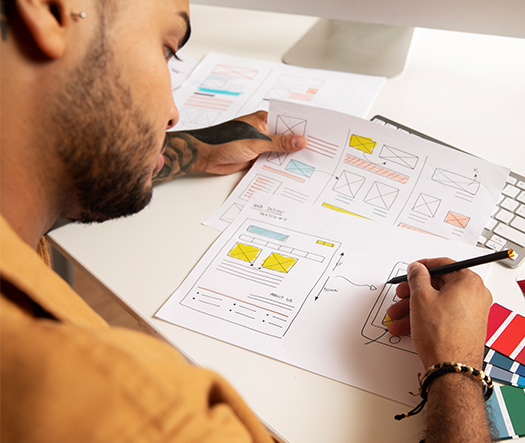
Prototyping changes the economics of product development. The cost of identifying and resolving a usability problem during prototyping is a fraction of resolving the same problem after code is written, tested, and deployed. Product prototyping services compress the feedback loop between product idea and validated user experience, allowing teams to iterate through multiple design directions in weeks rather than months. Beyond cost reduction, prototyping builds organizational confidence. When stakeholders interact with a working simulation rather than reviewing static screens, approval decisions happen faster and with fewer revision cycles. Product prototyping development services turn uncertainty into evidence and evidence into committed product direction.
Partner with prototyping specialists who accelerate validation and reduce risk.
This methodology produces prototypes that answer real product questions, survive usability scrutiny, and translate directly into development specifications.

Before prototype creation begins, the specific questions the prototype must answer are documented. Is this a validation prototype for usability testing? An investor demonstration? A behavioral specification for developers? Defining the prototype’s purpose determines its fidelity, scope, and interaction depth, preventing wasted effort on features that serve no testing or decision-making goal.

User tasks and interaction sequences are mapped across all key flows. Every tap, click, swipe, scroll, and conditional branch is documented before screen design begins. This behavioral blueprint ensures the prototype covers complete user journeys rather than isolated screens, catching dead-end paths and navigation gaps before interactive building starts.

Interactive screens are built with transitions, micro-animations, state changes, and conditional logic that simulate actual product behavior. Low-fidelity prototypes use simplified visuals to test flow and structure. High-fidelity prototypes incorporate visual design, real content, and polished interactions that closely replicate the intended production experience for stakeholder or user evaluation.

Completed prototypes are tested with representative users through structured task scenarios. Participants navigate the prototype while completing defined tasks, and their behavior reveals friction points, confusion patterns, and navigation failures. Test findings are documented with severity rankings and specific design recommendations, giving product teams prioritized actions rather than subjective feedback.

Testing insights drive targeted prototype revisions. Each change is traced to a specific usability finding, preventing arbitrary design modifications that introduce new problems. Refined prototypes undergo follow-up validation to confirm that issues have been resolved. This test-refine-retest cycle produces prototypes grounded in behavioral evidence rather than team opinion or assumption.

Finalized prototypes are packaged with comprehensive behavioral documentation for development teams. Interaction specifications, animation timing values, conditional logic rules, and component state definitions are organized in developer-friendly formats. Post-handoff support ensures prototype intent carries through implementation intact, with engineering questions addressed promptly during initial build sprints.
See how prototype design services have shaped product outcomes across 1,000+ client engagements spanning fintech, healthcare, SaaS, and consumer platforms.
Prototyping for a consumer shopping app requires a completely different interaction model than prototyping for a clinical data management platform. This practice builds on that distinction. Every prototype engagement applies domain-specific interaction conventions, regulatory display requirements, and audience behavioral expectations. From startups validating their first app prototype development concept to enterprises redesigning complex internal workflows, the prototyping methodology adapts without sacrificing rigor or testing discipline.
Industry-specific prototyping experience spans healthcare patient intake flows, fintech transaction approval sequences, e-commerce checkout optimization, SaaS onboarding and dashboard configuration, EdTech course navigation systems, logistics dispatch interfaces, insurance claims processing tools, and media content publishing platforms. Each industry introduces unique interaction constraints and user expectations. That accumulated pattern knowledge means prototypes produced here reflect proven interaction conventions rather than generic template assumptions that require costly iteration during development.

Most prototype design services produce interactive demonstrations. This practice produces decision instruments. Every prototype is engineered to answer specific product questions through behavioral simulation and structured user testing. That distinction has earned partnerships with product teams who recognize that prototyping done well prevents the most expensive category of product failure: building the wrong thing beautifully.
Question-Driven Prototype Design: Every prototype is built to answer a specific product question, ensuring interaction design serves validation goals rather than visual demonstration alone.
Fidelity Matched to Purpose: Prototype fidelity is selected based on business context, not habit, ensuring investor demos, usability tests, and developer specs each receive appropriate detail.
Test-Integrated Delivery: Prototypes ship with documented test scenarios, success metrics, and user recruitment criteria so validation begins immediately upon delivery.
UX prototype design services depend on tools that support interaction design, real-time collaboration, and precise developer handoff. These platforms power every prototyping engagement from concept through delivery.









Ford was facing $340 million investment decision for next-generation infotainment without knowing if users would accept our design direction. UX Stalwarts created realistic interactive prototype enabling comprehensive testing. Validating design through prototype before development prevented expensive mistakes and focused investment on features users actually valued. The 23 critical issues discovered in testing would have been disasters if found after launch. This prototyping approach transformed how we make platform decisions.
Boeing cockpit design affects pilot training costs, safety, and airline operations for 30+ year aircraft lifecycle. UX Stalwarts created realistic prototype enabling comprehensive validation before production. Reducing training from 8+ weeks to 2.7 weeks through prototype-validated design delivered massive value to airline customers. The 34 interaction issues found in testing would have been catastrophic safety and cost problems if discovered after aircraft delivery. This prototyping was essential to 777X success.
Medtronic surgical robot faced stringent FDA usability requirements where failure meant regulatory rejection and market delay. UX Stalwarts created functional prototype enabling comprehensive validation. Achieving 98 percent task success and FDA approval on first submission proved prototype investment prevents expensive regulatory problems. The 41 safety-critical issues found in testing could have caused patient harm or approval rejection. This prototyping was not optional — it was essential to responsible medical device development.
Considering a prototyping partner and need clarity on process, cost, or deliverables?
Prototyping services involve creating interactive simulations of digital products that allow teams to experience, test, and refine user flows before committing to development. Businesses invest in prototyping because it is the most cost-effective method for validating product decisions. Discovering a navigation problem or a confusing task flow during prototyping costs a fraction of discovering it after code has been written and deployed. Prototyping services also accelerate stakeholder alignment by giving decision-makers something tangible to interact with rather than static designs to interpret, which compresses approval timelines and reduces revision cycles significantly.
Evaluate whether the agency treats prototyping as a validation discipline or a visual exercise. A strong UI/UX prototyping agency will ask about your testing goals, target users, and decision context before discussing screens or fidelity. Check whether their prototypes are structured for usability testing with documented task scenarios, or whether they primarily produce demonstration models. Review their experience with your platform type, since mobile app prototyping demands different interaction patterns than website prototyping. Finally, confirm they provide behavioral documentation for developers alongside the interactive model rather than delivering a prototype that requires reinterpretation during implementation.
A wireframe defines the structural layout of a screen, showing where content and components are positioned. It is static and focused on spatial arrangement. A prototype adds interaction, navigation, and behavioral simulation to those structures, allowing users to click through flows, trigger transitions, and experience the product as a connected system. Wireframes answer “what goes where on each screen?” while prototypes answer “how does the user move through and interact with the product?” Many projects benefit from both, progressing from structural wireframing to interactive prototyping within a single engagement for maximum efficiency.
Prototype development services costs depend on prototype scope, fidelity level, number of unique flows, and interaction complexity. A focused prototype covering a single user flow with 8 to 12 screens costs significantly less than prototyping an entire SaaS platform with role-based dashboards, onboarding sequences, and multi-step transaction flows. Affordable prototyping services are available for startups with constrained budgets, while enterprise engagements scale to cover hundreds of interactions across multiple user roles. The most transparent pricing comes from agencies that scope based on flow count and interaction depth rather than open-ended hourly billing with undefined deliverables.
Timeline varies with scope and purpose. A focused validation prototype covering one primary user flow with 10 to 15 screens typically takes two to three weeks, including testing and one revision cycle. Comprehensive product prototyping covering multiple flows, conditional states, and responsive breakpoints across 30 or more screens takes four to eight weeks. Rapid prototyping engagements for investor pitches or concept validation can be completed in one to two weeks with a narrower interaction scope. The primary timeline variable is stakeholder feedback speed, since prompt review keeps projects moving without idle gaps.
The practice produces three prototype categories matched to distinct business purposes. Validation prototypes are designed for usability testing, structured with task scenarios and success metrics to capture behavioral data from real users. Pitch prototypes are crafted for investor and stakeholder presentations, using curated narrative flows that communicate product vision in under five minutes. Specification prototypes are built for developer handoff, with comprehensive interaction documentation, animation timing values, and conditional state definitions. Each category uses a different fidelity level and interaction depth, ensuring the prototype investment matches its intended use precisely.
Yes. As a mobile app prototyping company, the practice creates platform-specific prototypes that account for native interaction conventions on both iOS and Android. iOS prototypes follow Human Interface Guidelines for navigation structure, gesture behavior, and modal presentation patterns. Android prototypes follow Material Design principles for bottom navigation, floating action buttons, and system back behavior. App prototype development covers touch gestures, swipe navigation, pull-to-refresh behavior, keyboard interactions, and platform-specific transition animations. Cross-platform projects receive a shared interaction foundation with documented divergence points so development teams can implement each native version accurately.
Prototyping is one of the most effective tools for fundraising. Investors respond to tangible product experiences far more positively than to slide decks or static mockups. A well-crafted pitch prototype demonstrates user flow clarity, product differentiation, and experience quality within minutes, making the investment case concrete rather than abstract. Product prototype development services for funding rounds focus on narrative-driven interaction sequences that highlight the product’s core value proposition and market readiness. Startups that present interactive prototypes during fundraising consistently report shorter decision cycles and stronger investor engagement than those relying on static presentation materials alone.
Prototyping experience spans healthcare, fintech, e-commerce, SaaS, EdTech, logistics, real estate, insurance, media, and government platforms. Each industry introduces unique interaction requirements. Healthcare prototypes must simulate compliant data entry flows and patient-facing consent processes. Fintech prototypes require secure transaction sequence testing and regulatory disclosure placement. E-commerce prototypes focus on product discovery, filtering, cart behavior, and checkout optimization. SaaS prototypes address multi-role onboarding, dashboard configuration, and feature adoption flows. Explore how user experience measurement connects to conversion outcomes across these verticals. When sourcing partners, the best prototyping consulting services and reputable prototyping services firms maintain industry-specific pattern libraries that prevent generic interaction defaults from undermining domain fit.
Prototypes serve as behavioral blueprints for frontend engineering. Finalized prototypes are delivered with interaction specifications that document every clickable element, transition behavior, conditional display rule, animation timing, and component state change. Developers use these specifications as build references rather than reinterpreting visual designs into code independently. Post-handoff support ensures prototype intent carries through implementation, with engineering questions addressed during initial build sprints. This structured handoff reduces the gap between approved user experience and shipped product, minimizing the rework that occurs when development teams receive prototypes without behavioral documentation. Selecting among prototyping services agencies should hinge on how the team documents behavioral specifications rather than visual polish.
A prototype design company in India combines deep UX talent with cost efficiency and timezone overlap that supports global product teams effectively. India has one of the largest trained UX professional communities working across international engagement models. Teams deliver prototype projects at price points that allow both startups and enterprises to invest in thorough interaction validation without budget overruns. Working hour overlap with US, European, and Australian teams enables real-time collaboration during critical review and testing cycles. The key differentiator is delivering enterprise-grade prototyping rigor at accessible price points rather than sacrificing methodological depth for affordability.
Rapid prototyping is an accelerated approach that produces testable interactive models within days rather than weeks. It is most appropriate when teams need to validate a specific interaction hypothesis quickly, present a concept to stakeholders under tight deadlines, or test multiple design directions before committing to a single approach. Rapid prototyping prioritizes speed and learning over visual polish, using lower-fidelity interactions to capture behavioral insights efficiently. It is particularly valuable during early product discovery, competitive response situations, and pre-funding concept validation where time-to-insight matters more than pixel-level refinement in the delivered prototype.
Standard deliverables include clickable interactive prototypes organized by user flow, an interaction specification document covering transitions, conditional states, and animation behavior, usability test scripts with task scenarios and success criteria, a test findings report with prioritized recommendations, and organized source files in Figma, Axure, or the agreed platform format. Higher-fidelity engagements add developer handoff packages with component state documentation and responsive behavior specifications. Enterprise and SaaS engagements include role-based prototype variants and conditional visibility documentation. All prototypes are structured for both stakeholder review and direct developer reference, ensuring a smooth path from validated experience to built product.
Revisions are managed through defined testing and feedback cycles. Each prototype iteration is tested against documented success criteria, and revisions are driven by specific usability findings rather than subjective opinion. This evidence-based approach keeps revisions focused and productive. The number of revision rounds is agreed during project scoping, and each round has a clear submission and review timeline. Additional rounds beyond the agreed scope are accommodated with transparent cost and timeline adjustments. This structure prevents open-ended iteration while ensuring product teams have meaningful influence over prototype direction at every stage. Read more about measuring experience outcomes to prioritize revisions effectively.
Yes, and combining them is often the most effective approach. Prototype development services delivered alongside usability testing produce a closed-loop validation cycle where prototypes are built, tested with real users, refined based on behavioral evidence, and retested to confirm improvements. This integrated approach eliminates the coordination overhead of managing separate prototype and testing vendors who must align independently on scope, timing, and deliverable format. It also ensures that test scenarios are designed by the same team that built the interactions, creating tighter alignment between what is tested and what is measured.
Both prototyping services firms and prototyping services agencies offer interactive design work, though their delivery models vary. The best prototyping consulting services combine strategic discovery with hands-on prototype execution, treating each engagement as a product decision exercise rather than a visual deliverable. A specialized UX Prototype Development agency typically embeds research, interaction design, and usability testing into one continuous workflow. Working with a focused UX Prototype Development agency also tends to produce cleaner documentation for engineering. When evaluating partners, examine how the team validates assumptions, documents interaction behavior, and structures handoff, since these signals reveal practical depth more reliably than portfolio polish.
Selecting an App Prototype Development Company starts with reviewing how that team handles interaction design beyond static screens. A credible App Prototype Development Company demonstrates platform-specific behavior, gesture mapping, and offline-state handling within sample work. A capable UX Prototyping Company applies the same rigor to web and dashboard platforms, embedding flow validation and accessibility checks into every iteration. Strong UI Prototyping Services support both contexts by documenting transitions, conditional states, and component-level interaction behavior in formats developers can consume directly. Evaluate the partner’s measurement practices, since teams that capture behavioral data during testing produce prototypes that survive scrutiny far better than visually polished demonstrations alone.
Yes. 3D prototyping service offerings cover hardware-software interfaces where physical interaction and on-screen behavior must be modeled together, useful for IoT, AR, and connected device contexts. Beyond this, product development prototyping services cover the full digital product spectrum, from concept validation through detailed interaction specification. Product prototype development services combine usability testing with technical handoff documentation so the prototype directly informs engineering. Product Prototyping Services delivered for early-stage teams emphasize learning velocity, while product prototyping development services for enterprise teams emphasize role-based flows and compliance behavior. Affordable Prototyping Services exist for constrained budgets, and a 3D prototyping service variant can be scoped within larger product development prototyping services engagements.

C – 81C, Sector – 8, Noida 201301, India


1025 Beamon Drive, Franklin 37064 Tennessee, USA
Sveavagen 34 111 34 Stockholm, Sweden
A-10, Sahastradhara Rd, Doon IT Park, Dehradun, Uttarakhand

© 2026 UX STALWARTS. All rights reserved.