SaaS platforms compete on experience, not just features. When your user interface design for SaaS fails to communicate value within the first interaction, trial users abandon before activation, paying subscribers raise support tickets instead of exploring deeper functionality, and enterprise buyers lose confidence during evaluation. Poor SaaS product UI design costs more than lost conversions. It inflates customer acquisition expenses, increases churn across billing cycles, and creates a widening gap between what your product can do and what users actually discover. The interface is the product in every meaningful way.
Our SaaS UI UX design practice addresses these risks through research-grounded interface architecture, interaction patterns tested against real user workflows, and visual systems built for long-term scalability. From early-stage SaaS web app UI UX to mature enterprise platforms requiring role-based dashboard redesigns, we deliver wireframes, high-fidelity prototypes, production-ready component libraries, and comprehensive design systems. Every engagement starts with your product’s subscription metrics and retention data, ensuring that design decisions connect directly to activation rates, feature adoption, and lifetime customer value rather than subjective preference.
With eighteen years of cross-industry delivery and over a thousand successful product engagements, UX Stalwarts brings a depth of SaaS UI design experience that most agencies simply cannot match. Our teams have designed interfaces for B2B platforms handling regulatory compliance workflows, multi-tenant architectures serving thousands of concurrent users, and consumer-facing SaaS tools operating in highly competitive verticals. That range of exposure sharpens every recommendation we make. When your product requires an interface that performs under real business pressure, execution credibility matters as much as creative talent.

Every SaaS project begins with behavioral analytics review, competitive benchmarking, and structured user interviews. We identify where users hesitate, abandon, or seek support before designing a single screen. This UX research for SaaS platforms eliminates guesswork and produces interfaces grounded in validated user behavior rather than assumptions.

SaaS interfaces must support trial conversion, upsell pathways, and renewal confidence simultaneously. Our design approach accounts for the full subscription lifecycle, from freemium onboarding to enterprise tier management. We structure navigation, feature visibility, and upgrade prompts so they serve business outcomes without disrupting the core user experience.

Designing for healthcare SaaS requires different compliance patterns than designing for fintech or logistics platforms. Our team has delivered SaaS application UI design across regulated and unregulated industries globally, applying domain-specific knowledge to data structures, permission models, and workflow hierarchies that generic agencies routinely overlook.

We build modular, token-based design systems that grow alongside your product. Each component is documented, version-controlled, and developer-ready, reducing frontend implementation time by significant margins. Instead of redesigning screens every quarter, your team assembles tested patterns from a shared library that maintains visual and functional consistency at scale.

SaaS dashboard UI design demands more than data visualization. It requires contextual hierarchy, role-based content filtering, and progressive disclosure that matches how different users consume information. We design dashboards where administrators, operators, and executives each see precisely what they need without navigating through irrelevant complexity.

Our clients receive weekly design reviews, shared Figma workspaces, and annotated prototypes at every milestone. Decision-makers, product managers, and developers stay aligned throughout the engagement. This level of transparency ensures that feedback cycles are short, revisions are purposeful, and the final product reflects collective input rather than isolated design assumptions.

A well-designed SaaS interface does more than look polished. It reduces the time between signup and value realization, making users confident enough to explore, adopt, and eventually advocate for your product. When interaction design for SaaS is executed with precision, support ticket volume drops, trial-to-paid conversion rates climb, and expansion revenue grows through natural feature discovery. Surface-level aesthetics cannot achieve these results alone. It takes disciplined information architecture, intentional micro-interactions, and a deep understanding of how SaaS users move through complex workflows daily. Our team brings that discipline to every engagement, backed by years of measurable product outcomes.
Partner with a dedicated team focused on your product's growth.
Each phase builds on validated decisions from the previous step, reducing risk and ensuring that nothing reaches development without evidence.

We audit your existing product analytics, review support ticket patterns, and conduct stakeholder interviews to understand business goals, user pain points, and competitive positioning. This phase produces a prioritized problem map and a clear brief that aligns design direction with measurable outcomes. Nothing moves forward without this clarity.

UX research for SaaS platforms involves structured user interviews, task analysis sessions, and competitive interface benchmarking. We study how current and prospective users navigate similar tools, identify friction points in critical workflows, and document behavioral patterns. The output is a validated set of user personas and journey maps.

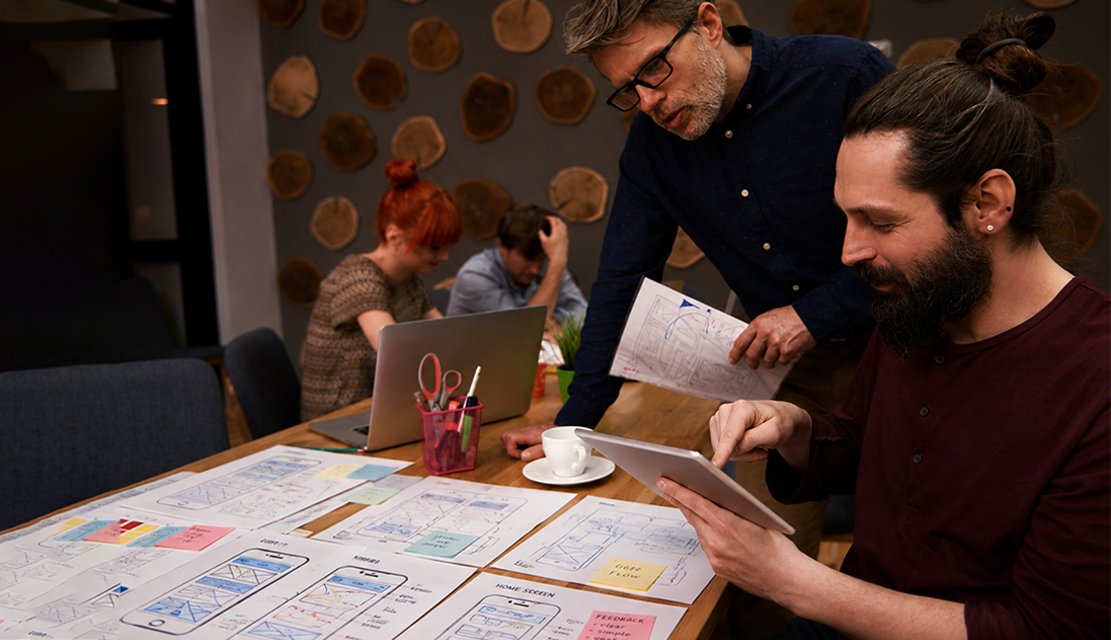
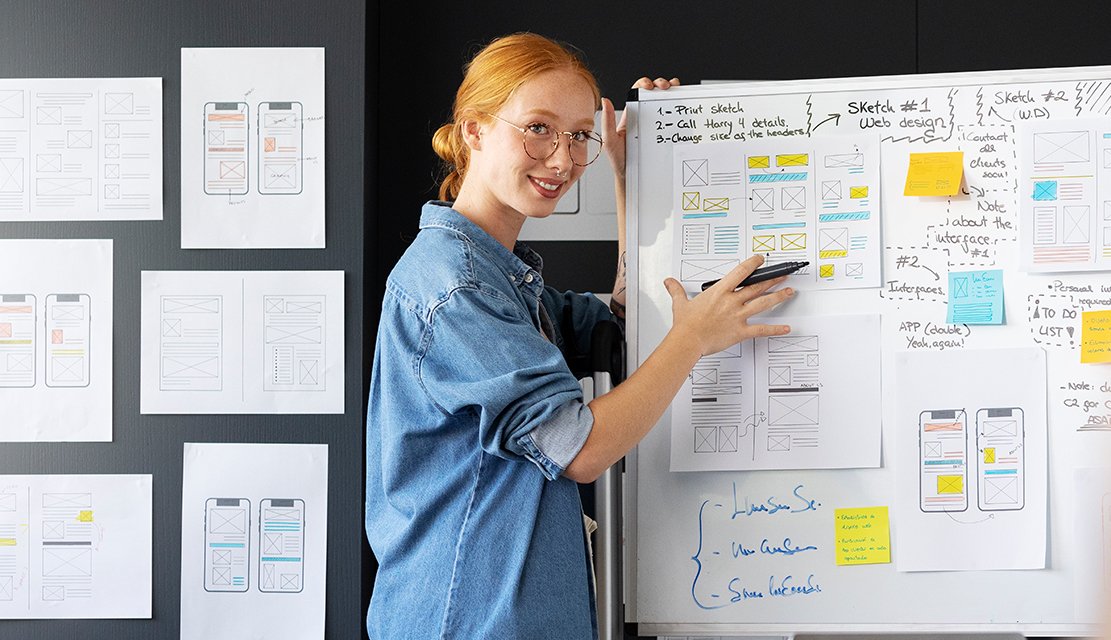
Information architecture defines the structural backbone of your SaaS interface. We map navigation hierarchies, content groupings, and feature relationships into wireframe models that establish logical flow before visual design begins. This phase resolves questions about where features live, how users find them, and what content appears at each level.

High-fidelity UI design transforms validated wireframes into production-ready screens. We apply your brand identity, typographic system, color palette, and component patterns to create interfaces that are visually consistent, accessibility-compliant, and optimized for the contexts your users operate in, whether desktop dashboards, responsive web views, or mobile companions.

Interactive prototypes undergo moderated usability testing with representative users. We measure task completion rates, identify navigation confusion, and capture qualitative feedback on layout clarity and visual hierarchy. Test findings are documented as actionable refinements that feed directly back into the design before any code is written.

We deliver annotated Figma files, a complete design system with documented components and tokens, redline specifications, and interactive prototypes your development team can reference during implementation. Post-handoff, we remain available for design QA reviews, ensuring that what ships matches what was designed without visual or functional drift.
Across 1,000+ client engagements spanning multiple industries, our SaaS interface design work has delivered measurable improvements in adoption, retention, and revenue.
Our approach to UI design for SaaS platforms is shaped by two core commitments: scalability that supports product growth without requiring frequent redesigns, and adaptability that respects the unique constraints of each industry. Whether serving a Series A startup building its first dashboard or an established enterprise modernizing a legacy platform, we calibrate complexity, compliance requirements, and user sophistication to match the specific engagement.
We have delivered SaaS product UI design for healthcare, fintech, education technology, logistics, human resources, legal technology, real estate, and e-commerce verticals. Each industry presents distinct regulatory expectations, data sensitivity requirements, and user workflow patterns. This breadth of exposure allows our designers to anticipate usability challenges, apply proven navigation structures, and recommend interaction patterns that have been validated across comparable platforms.

Building effective SaaS interfaces requires more than visual skill. It demands an understanding of subscription economics, multi-user environments, and the behavioral nuances that separate sticky products from those that churn. Our practice has earned recognition through consistent delivery of interfaces that measurably improve product performance and client satisfaction.
Retention-First Design Philosophy: Every interface decision is evaluated against its impact on user retention, activation speed, and long-term engagement rather than aesthetic trends.
Full-Lifecycle SaaS Fluency: We design across the complete SaaS journey, from trial signup and onboarding through feature expansion, admin configuration, and renewal touchpoints.
Engineering-Ready Deliverables: Annotated components, documented tokens, and interactive prototypes ensure developers build exactly what was designed, every time.
We use industry-standard platforms for design, prototyping, collaboration, and handoff, ensuring seamless integration with your existing development workflows and product management processes.









Building powerful engineering tools that only senior architects can use limits our market to a fraction of development teams. UX Stalwarts redesigned our platform so any developer can perform cloud migration assessments. Productivity improving 2.8X and adoption tripling proved that SaaS UI design determines how large your addressable market actually is.
Processing payments across Latin America means navigating different currencies, regulations, and banking systems in each market. Operating through 6 separate dashboards guaranteed errors. UX Stalwarts designed a unified interface that adapts to each market while giving operators one consistent experience. Errors dropping 68 percent means millions of transactions processed correctly every month.
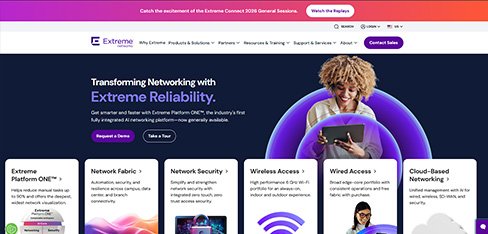
Network administrators spending 44 percent of troubleshooting time just identifying the problem means they are detectives when they should be engineers. UX Stalwarts designed AI-assisted root cause analysis and intelligent alerting that identifies problems in 2 minutes instead of 30. MTTR dropping 52 percent proves that network management SaaS UI directly determines how fast businesses recover from outages.
Exploring your options for a SaaS design partner? Here are answers to what teams ask most.
Start by evaluating whether the agency has direct experience with SaaS products, not just general web or app design. SaaS interfaces involve subscription workflows, onboarding sequences, permission models, and dashboard complexity that generic design teams rarely encounter. Ask for case studies showing measurable improvements in activation or retention. Review their process for handling multi-tenant environments and role-based layouts. Confirm they deliver documented design systems, not just static mockups. Finally, assess how they collaborate with engineering teams during handoff. The best SaaS UX design company will demonstrate a structured methodology aligned with product growth goals.
Pricing depends on product complexity, the number of screens or user flows, whether you need a full design system, and the engagement model (project-based vs. retainer). A focused redesign of a core SaaS dashboard may require a different investment than a ground-up SaaS application UI design spanning onboarding, admin panels, reporting modules, and customer-facing portals. Agencies in India typically offer strong value relative to comparable quality from US or European firms. Request a scoped proposal that itemizes deliverables so you can compare costs meaningfully rather than relying on hourly rate comparisons alone.
Timelines vary based on scope. A targeted redesign of a single SaaS module, such as a dashboard or onboarding flow, often takes four to eight weeks including research, design, testing, and handoff. A comprehensive engagement covering the full SaaS web app UI UX, including information architecture, multiple user roles, and a complete design system, typically spans three to five months. Projects with extensive user research phases or regulatory compliance requirements may extend further. We establish milestone-based timelines during discovery so that both teams have realistic expectations before work begins.
UI design focuses on the visual layer of your SaaS product, including typography, color, component styling, layout, and visual hierarchy. UX design addresses the broader experience: how users discover features, navigate workflows, complete tasks, and recover from errors. In practice, strong SaaS UI UX design integrates both disciplines throughout the process. A beautiful interface with poor navigation still frustrates users, while an intuitive structure with inconsistent visuals undermines trust. Our teams work across both dimensions simultaneously, ensuring that visual decisions support usability and that research insights shape the interface at every level.
Yes. SaaS dashboard UI design is one of our most requested capabilities. Dashboards are often the primary interface where users spend the majority of their time, making them critical for retention and satisfaction. We design dashboards that prioritize contextual data display, progressive disclosure for complex datasets, role-based content filtering, and responsive behavior across screen sizes. Whether you need a new analytics dashboard, an operations control panel, or a customer-facing reporting view, we scope dashboard projects independently. You can learn more about our approach to B2B SaaS interface strategy on our services page.
Absolutely. Our handoff process is built around developer collaboration. We deliver annotated Figma files, interactive prototypes, component documentation, and token-based design systems that integrate directly into frontend development workflows. During implementation, we participate in design QA reviews to catch visual or interaction discrepancies before they reach production. Many of our SaaS clients operate with distributed engineering teams, and our experience coordinating across time zones ensures smooth communication. We adapt to your team’s sprint cadence and review cycles rather than imposing a rigid external schedule.
Our SaaS product design agency experience spans healthcare, fintech, education technology, logistics and supply chain, human resources, legal technology, real estate, and e-commerce. Each vertical brings unique requirements around data sensitivity, regulatory compliance, user expertise levels, and workflow complexity. For example, enterprise SaaS UI design in healthcare requires HIPAA-aware data display patterns, while fintech demands transaction security indicators and audit trail visibility. This cross-industry breadth allows us to apply proven solutions from one sector to accelerate design decisions in another, while still respecting the specific constraints of each domain.
UX research for SaaS platforms removes assumptions from design decisions by grounding every choice in observed user behavior. Through methods such as task analysis, moderated usability testing, and behavioral analytics review, we identify where users struggle, what features go undiscovered, and which workflows cause abandonment. These findings shape information architecture, prioritize feature placement, and inform interaction patterns that match real user mental models. Products built on research consistently outperform those designed on intuition alone, showing measurable gains in activation speed, task completion rates, and net promoter scores. Explore how our usability testing services integrate into SaaS engagements.
Effective SaaS UI design best practices include maintaining visual consistency through a documented design system, reducing cognitive load with progressive disclosure, designing onboarding sequences that guide users to value quickly, using clear typographic hierarchy to separate primary actions from secondary options, and ensuring accessibility compliance across all interactive components. For dashboards specifically, prioritize contextual data over exhaustive data display and design role-based views so each user type sees relevant information without clutter. These principles apply regardless of whether your product targets startups or enterprise buyers. Our design system creation services help codify these practices into reusable components.
Most top SaaS UI design agencies lead with aesthetics or speed. Our differentiation lies in treating every SaaS engagement as a product strategy exercise first and a visual design exercise second. We begin with your retention metrics, subscription data, and support ticket patterns before opening a design tool. This ensures that interface decisions target real business problems rather than cosmetic preferences. We also deliver complete, documented design systems rather than collections of static screens, giving your product team the foundation to scale consistently. The combination of analytical rigor and production-ready output is what separates our practice.
Yes. A design system is a standard deliverable in our SaaS UI design services. For SaaS products, a design system is not optional luxury but operational necessity. It contains reusable UI components, design tokens for color, spacing, and typography, interaction patterns, accessibility guidelines, and usage documentation. This system ensures consistency as your product adds features, supports multiple user roles, and scales across platforms. We build design systems in Figma with corresponding developer documentation hosted in tools such as Storybook or Zeroheight, so both design and engineering teams reference a single source of truth.
Yes. We follow an incremental redesign methodology for live SaaS platforms where a sudden visual overhaul could confuse existing users. This involves auditing the current interface, identifying high-impact areas for improvement, and rolling out changes in phased modules rather than a single release. User experience optimization for existing SaaS products requires careful change management, including transition guides, contextual tooltips for updated interfaces, and A/B validation of major layout changes before full deployment. This approach improves product usability without creating the friction that drives loyal users away during redesign transitions.
Interaction design for SaaS defines how users engage with interface elements throughout task completion. It encompasses hover states, transitions, loading indicators, error handling patterns, drag-and-drop behaviors, keyboard navigation, and micro-interactions that provide feedback at every step. In data-heavy SaaS platforms, interaction design determines whether filtering a table feels instantaneous or frustrating, whether saving a form provides clear confirmation, and whether switching between views preserves user context. Strong interaction design is invisible when done well but immediately noticeable when absent. We integrate interaction design decisions into every phase of our process.
Enterprise SaaS UI design often involves multiple user roles, each requiring different levels of access, different data views, and different administrative capabilities. We design permission-aware interfaces using progressive disclosure and role-based layout logic, so administrators see configuration tools, managers see reporting dashboards, and end users see task-focused views. This prevents information overload while ensuring that each role can complete their workflows efficiently. Our approach also accounts for multi-tenant architectures where a single interface must adapt to different organizational configurations without requiring custom builds for each client instance.
Getting started is straightforward. Reach out through our consultation form with a brief description of your product, your primary design challenges, and your timeline expectations. We schedule a discovery call to understand your goals, review your current product if one exists, and identify the scope of work. From there, we provide a detailed proposal outlining phases, deliverables, timelines, and investment. There is no obligation at the discovery stage. Whether you are a startup building your first SaaS interface or a B2B SaaS design company seeking to modernize an established platform, we tailor every engagement to your specific product context. Learn more about our broader product design methodology.
Our SaaS UI design solutions cover the complete spectrum that growing products require, from initial wireframing through production-ready interface delivery. As one of the more experienced SaaS UI design companies operating across global markets, we structure SaaS interface design services around your subscription model, user roles, and growth trajectory. Whether you need focused SaaS interface design services for a single module or comprehensive SaaS platform UI design services covering onboarding, dashboards, settings, and reporting, the scope adapts to product maturity. Our SaaS UI design solutions are equally suited to lean MVP teams seeking activation lift and established SaaS platform UI design services engagements requiring detailed governance. Many clients begin with a focused engagement and expand into ongoing SaaS product UI UX design solutions partnerships as their product roadmap evolves, allowing our SaaS UI design companies relationship to scale alongside their internal team. The same applies for SaaS product UI UX design solutions that need to integrate with existing component libraries.
The decision to Hire SaaS UI Design Agency support depends on product stage, internal hiring runway, and the depth of specialized expertise required. Many teams choose to Hire SaaS UI Design Agency partners when they need senior SaaS-specific design judgment without a long recruitment cycle. The best SaaS UI design agency for your product will demonstrate clear case studies in your vertical, transparent process, and engineering-ready deliverables. Identifying the best SaaS UI design agency is less about brand recognition and more about fit, methodology, and proven outcomes. A specialist SaaS UI design agency brings patterns refined across multiple subscription products that internal generalists rarely accumulate. Compared to other SaaS UI design agency options, our practice combines product strategy with detailed execution, making us a preferred partner for teams looking to move quickly without compromising design rigor.
Yes. Our practice operates with the depth that buyers expect from custom SaaS UI design firms while delivering with the velocity that fast-moving product teams require. As one of the established custom SaaS UI design firms serving global SaaS clients, we tailor every engagement to your unique product context rather than applying templated approaches. For B2B SaaS UI Design Services, we account for procurement workflows, role-based permissions, multi-tenant architectures, and integration points that consumer-focused SaaS UI design firms often overlook. Our B2B SaaS UI Design Services span enterprise dashboards, admin consoles, and reporting environments where data density and workflow precision matter. As a B2B SaaS Platform UI UX Design company with cross-industry experience, we bring patterns validated across regulated and unregulated verticals. Choosing a focused B2B SaaS Platform UI UX Design company helps your team avoid the common pitfalls of generic SaaS UI design firms whose work suits only consumer-grade products.
Our SaaS Product Design Services combine strategic discovery, interface design, and design system delivery into one engagement. Unlike SaaS Product UI Design agencies that focus narrowly on visual layers, we treat each engagement as a product outcome exercise. Our SaaS Product Design Services include user research, information architecture, prototyping, validation, and developer handoff. As a specialized SaaS Dashboard UI Design company, we design dashboards that handle high data density, role-based filtering, and progressive disclosure without overwhelming users. Working with a focused SaaS Dashboard UI Design company ensures your reporting environments support real decision-making rather than presenting raw data. Compared to general SaaS Product UI Design agencies, our scope extends from early discovery into long-term design system stewardship. We also work alongside SaaS Product Interface Design firms when teams require dedicated capacity for component documentation, and many clients consolidate previously separate SaaS Product Interface Design firms relationships into one streamlined partnership.
Choosing a SaaS User Interface Design Company that understands web application complexity is essential when your product serves enterprise users with varied workflows. As a SaaS User Interface Design Company with cross-industry exposure, we design for responsive behavior, accessibility, and consistent component patterns across screen sizes. Our SaaS UX/UI Design Services blend research, interaction patterns, and visual design into one delivery model rather than splitting them across separate teams. Many clients choose our SaaS UX/UI Design Services because the integrated approach reduces handoff friction and accelerates engineering execution. Among SaaS Web App UI Design companies serving global SaaS markets, we focus on subscription metrics and retention impact, not just visual polish. This product-first orientation distinguishes us from SaaS Web App UI Design companies that lead with aesthetic trends rather than measurable outcomes.

C – 81C, Sector – 8, Noida 201301, India


1025 Beamon Drive, Franklin 37064 Tennessee, USA
Sveavagen 34 111 34 Stockholm, Sweden
A-10, Sahastradhara Rd, Doon IT Park, Dehradun, Uttarakhand

© 2026 UX STALWARTS. All rights reserved.