Webflow gives marketing teams unprecedented design control, but that freedom often creates experience problems that undermine performance. Overbuilt animations that slow page loads, inconsistent responsive behavior across breakpoints, form layouts that discourage completions, and navigation structures that confuse rather than guide are common across Webflow sites that prioritize visual impact over usability. For B2B and SaaS companies, these friction points mean qualified visitors leave before engaging with content, requesting demos, or submitting inquiries. Without deliberate webflow user experience design, even visually impressive sites fail to generate pipeline.
Our webflow ux design services solve these problems through a structured, evidence-based methodology. Starting with behavioral analysis and UX audits tailored to the Webflow platform, we identify where visitors encounter friction across your site. Every recommendation targets a specific conversion barrier, from restructuring information architecture and simplifying navigation flows to optimizing form interactions, refining CTA placement, and ensuring responsive layouts perform consistently across all devices. The outcome is a Webflow site where design sophistication and usability work together, guiding every visitor toward the action your business needs them to take.
With eighteen years of cross-industry design experience serving SaaS platforms, B2B enterprises, healthcare organizations, and financial services firms, UX Stalwarts brings a depth of ux strategy for webflow that development-focused agencies cannot replicate. Our team has optimized Webflow sites for organizations spanning early-stage startups building their first marketing presence to established enterprises managing complex multi-page content architectures. We do not treat Webflow as simply a build tool. Every engagement begins with research into your audience, your competitive landscape, and the specific behavioral patterns your analytics reveal.

Every project opens with a comprehensive ux audit for webflow sites that connects usability findings to business impact. We identify the specific friction points causing visitor drop-offs, low form completions, and high bounce rates, then rank each issue by its projected influence on lead generation and revenue to create a prioritized remediation roadmap.

Most Webflow agencies focus on homepage aesthetics. Our customer journey optimization webflow methodology spans the complete visitor path, from initial landing through content consumption, CTA interaction, form engagement, and post-submission confirmation. Every touchpoint is evaluated and refined based on observed behavior, ensuring no stage of the journey leaks qualified traffic.

Our designers understand Webflow at an architectural level, including CMS collection structures, Interactions 2.0 capabilities, responsive breakpoint logic, native integrations, and hosting performance characteristics. This means every user interface design webflow recommendation is implementable within the platform’s capabilities, avoiding impractical proposals that require external workarounds or costly custom code overrides.

Design preferences do not drive our decisions. Heatmaps, session recordings, scroll depth analysis, and A/B testing inform our webflow ux optimization from initial audit through post-launch refinement. This disciplined approach eliminates subjective debates about color, layout, or animation and ensures that each change produces verifiable improvements in the metrics your stakeholders track.

Having optimized experiences for regulated industries, complex B2B sales cycles, subscription models, and high-consideration SaaS products, we apply pattern recognition that single-niche Webflow shops lack. Navigation structures proven in healthcare often unlock engagement gains in fintech. Content hierarchies effective for SaaS frequently strengthen lead capture in professional services.

We function as a strategic partner, not an isolated vendor. Our webflow ux agency engagement model includes documented design rationale, CMS usage guidelines, and team training so your marketing staff can maintain, update, and evolve UX improvements independently using Webflow’s visual editor. Sustainable self-sufficiency is a deliverable in every project.
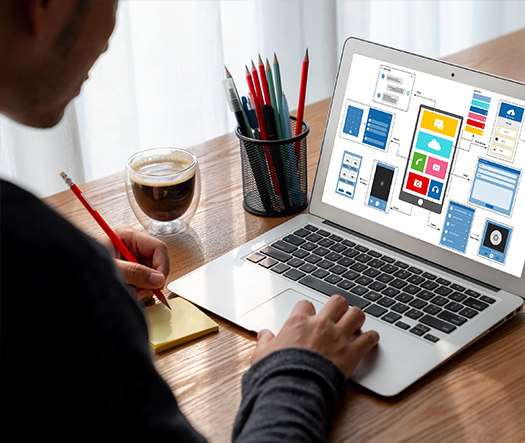
Effective ux design for webflow sites goes far beyond visual sophistication. It directly influences lead volume, visitor engagement depth, and the cost of acquiring each qualified prospect. When your webflow website user experience is optimized, visitors find relevant content faster, trust your brand more readily, and complete conversion actions with fewer hesitations. Navigation that mirrors visitor intent reduces bounce rates. Content layouts that answer questions in the right sequence increase page depth. Form designs that minimize cognitive load raise completion rates. Our team combines rigorous UX research capability with hands-on Webflow platform expertise to deliver these compounding results.
Collaborate with specialists who understand how Webflow visitors actually convert.
Our structured six-phase process ensures every ux for webflow websites decision is research-informed, platform-aware, and aligned with conversion goals.

We open by mapping your business objectives, target audience profiles, and existing Webflow site performance against competitive benchmarks. This phase includes stakeholder workshops, analytics baseline establishment, and content architecture review to define what success looks like for your specific market position and identify where the greatest UX opportunities exist.

Our website usability testing webflow and heuristic evaluation process examines every critical page and interaction across your site. We analyze navigation clarity, content hierarchy, responsive behavior at each breakpoint, form completion rates, CTA visibility, animation performance, and CMS content delivery. Each finding is scored by severity and estimated business impact, producing a prioritized action plan.

Based on investigation findings, we develop an experience strategy document defining information architecture restructuring, content flow adjustments, navigation redesign, and conversion path optimizations specific to your Webflow environment. This blueprint is reviewed collaboratively with your team to confirm alignment among design goals, Webflow technical capabilities, and broader business priorities.

Our designers produce wireframes and high-fidelity prototypes in Figma that realize the experience strategy within Webflow’s design constraints. Layouts account for CMS collection structures, interaction animation timing, and responsive breakpoint logic so that handoff from prototype to Webflow development remains smooth and technically aligned throughout.

Before any changes go live, we conduct usability tests with recruited participants matching your target audience. This ux research webflow validation catches friction that internal reviews miss and provides documented evidence that the proposed experience outperforms the current one. Only layouts confirmed through testing proceed to Webflow implementation, substantially reducing post-launch risk.

After launch, we monitor visitor behavior through analytics and session recordings to verify that improvements deliver projected gains. Webflow usability improvements continue through iterative testing and refinements informed by live performance data. This phase ensures that results compound over quarters rather than degrading as traffic patterns, content, and competitive dynamics shift.
Across 1,000+ client engagements spanning SaaS, B2B services, healthcare, and fintech, our Webflow UX work has produced documented improvements in engagement and conversion.
Our approach to webflow ui ux design services is anchored in principles of clarity, performance, and measurable business outcomes. Whether you are a SaaS startup building your first Webflow marketing site or an enterprise managing a content-rich multi-section platform with hundreds of CMS items, we calibrate our UX methodology to match your content complexity, visitor intent patterns, and growth trajectory. Every solution is engineered for sustained performance at scale.
Our team has delivered ux optimization for webflow projects across SaaS and technology, B2B professional services, healthcare and life sciences, financial services, education, media and publishing, real estate, and nonprofit organizations. This cross-sector portfolio means we understand how different audiences consume content, evaluate credibility, and convert on Webflow sites, producing sharper outcomes regardless of your industry vertical or audience sophistication.

Our standing among top ux agencies for webflow websites has been earned through consistent delivery of outcomes that clients verify in their analytics dashboards and pipeline reports. Industry recognition and lasting client partnerships reflect a commitment to experience rigor that extends well beyond surface-level Webflow development. Three capabilities anchor our competitive position.
UX-First, Platform-Aware Design: We evaluate Webflow sites against 90+ usability parameters, combining heuristic review with behavioral data analysis that build-focused agencies consistently overlook.
Lead-Generation UX Expertise: Our webflow conversion optimization ux work maps and refines every visitor touchpoint from first page view through qualified form submission, covering stages most agencies ignore.
Research-Validated Webflow Decisions: Every layout, interaction, and content placement is tested with real visitors before implementation, producing Webflow sites backed by evidence rather than opinion.
We deploy industry-leading research, prototyping, analytics, and testing platforms to ensure every dimension of your Webflow site experience is measured, validated, and continuously refined with rigor.








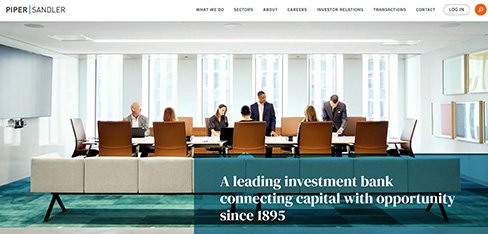
Investment banks with brochure websites miss opportunities because CEOs researching advisory firms want to see relevant deal experience and sector expertise, not corporate boilerplate. UX Stalwarts designed a Webflow site that showcases our capabilities the way clients evaluate us. Leads nearly doubling and becoming our #2 mandate source proved that a well-designed website generates real advisory revenue.
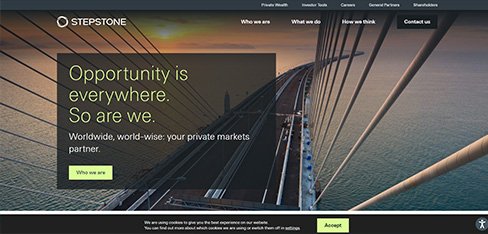
Institutional LPs spend hours researching firms digitally before taking a meeting. Our old website gave them nothing to evaluate. UX Stalwarts designed a Webflow site that demonstrates our private markets expertise through data, insights, and institutional-grade design. Contributing to $2.4 billion in LP interest proved that institutional fundraising is now a digital-first activity requiring digital-quality experiences.
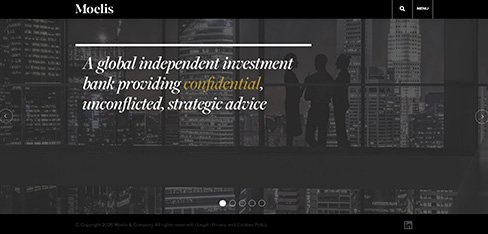
A 5-year-old brochure site was creating an impression inconsistent with the caliber of our advisory practice. UX Stalwarts designed a Webflow experience that communicates our intellectual depth and deal-making capability through design as rigorous as our advice. Bounce rate dropping 58 percent and advisory inquiries increasing 78 percent proved that for professional services, the website is the first impression that determines whether you get the meeting.
Answers to the questions marketing teams ask before investing in Webflow UX.
Evaluate whether the agency leads with UX research or primarily offers Webflow development. The best webflow ux design agency will demonstrate a structured audit methodology, show case studies with measurable conversion outcomes, and prove fluency in both UX principles and Webflow platform architecture. Ask whether their team conducts usability testing with real visitors, not just internal design reviews. Confirm they understand CMS collection modeling, interaction performance trade-offs, and responsive breakpoint nuances alongside core experience design. Pricing transparency, documented process, and the ability to work collaboratively with your existing marketing team are additional strong indicators of the right fit. A reputable Webflow UX Design Company will also share testimonials from past Webflow User Experience Experts engagements to validate their methodology.
Webflow UX audit pricing depends on site complexity, page count, and the depth of analysis required. A focused review of a compact Webflow marketing site with ten to fifteen pages might range from $1,500 to $4,000. A thorough ux audit for webflow sites that evaluates navigation, CMS structure, form flows, responsive layouts, interaction performance, and accessibility for a mid-size site typically costs $5,000 to $12,000. Enterprise Webflow sites with extensive CMS architectures, multiple landing page variants, and complex integration layers may require $12,000 to $25,000 or more. Each audit delivers a prioritized findings report with estimated business impact per recommendation. For organizations comparing scope, our Webflow UX/UI Design Services range from focused audits to full Webflow UX Design solutions tailored to your growth stage.
Timelines vary based on project scope and your site’s current maturity. A targeted UX audit with actionable recommendations typically takes two to four weeks. A complete redesign incorporating research, strategy, prototyping, testing, and phased Webflow implementation generally spans ten to sixteen weeks. Sites with large CMS collections, complex interaction sequences, or multi-stakeholder approval processes may extend beyond sixteen weeks. Allocating adequate time for usability verification before launch is essential, because skipping testing phases frequently results in post-launch corrections that cost significantly more than structured validation would have required. Engaging Webflow User Experience Services from established Webflow UI/UX Design Firms ensures realistic timelines that balance research depth with delivery speed.
A thorough audit evaluates every element influencing visitor behavior across your Webflow site. This includes homepage messaging clarity, navigation structure and menu logic, CMS content organization, landing page effectiveness, form layout and field sequencing, CTA placement and visibility, interaction and animation performance, image optimization, responsive behavior across desktop, tablet, and mobile breakpoints, accessibility compliance, and page load speed. The deliverable is a prioritized report connecting each issue to its estimated impact on engagement and conversions, providing your team with a clear investment roadmap. Learn more about how usability testing validates audit findings with evidence from real visitors. Working with experienced Webflow UX Design comapanies, especially the best Webflow UX Design firms in india, ensures audits are thorough yet cost-efficient.
A visual refresh updates brand elements like typography, color palette, and imagery. Webflow ux optimization, by contrast, is driven by visitor behavior data and conversion analysis. It addresses how people navigate your site, where they hesitate or disengage, and what barriers prevent them from completing desired actions. Optimization may involve restructuring page hierarchy based on scroll depth data, repositioning CTAs for visibility at key decision moments, simplifying form fields to reduce abandonment, or adjusting responsive layouts that perform poorly on specific devices. The goal is measurable improvement in engagement and lead generation metrics, not simply a refreshed visual identity. Choosing a specialized Webflow UI/UX Design Agency or a dedicated Webflow UX Optimization Agency ensures the work targets measurable performance gains, not aesthetics alone.
Yes, and this targeted approach frequently delivers faster results at a fraction of the cost. Focused interventions to improve ux webflow website performance identify the highest-impact friction points and resolve them within your existing Webflow project. This might involve restructuring navigation for clarity, redesigning key landing pages, optimizing form interactions, refining CTA copy and placement, or correcting responsive breakpoint inconsistencies on high-traffic pages. These changes often produce significant conversion gains without the time, expense, and SEO risk of a complete site rebuild, while preserving the organic search authority your current Webflow site has accumulated. Many clients begin with a phased engagement through a Webflow UX Design Company before scaling work with our Webflow User Experience Experts across additional pages.
Effective webflow ux design starts with clear, scannable navigation that reflects how your specific audience segments look for information. Above-the-fold content should communicate your value proposition in under five seconds without requiring scrolling. CTAs need contextual placement at decision moments, not just at page bottoms. Forms should request only essential fields, with clear labels and inline validation. Responsive layouts must perform consistently across desktop, tablet, and mobile without content reflow that disrupts reading flow. Interactions and animations should enhance comprehension rather than delay page usability. Page speed should target sub-two-second loads. Trust signals such as client logos, testimonials, and certifications should appear near conversion points throughout every page. Following these practices, our Webflow UX/UI Design Services consistently outperform off-the-shelf Webflow UX Design solutions used by template-driven teams.
Webflow’s Interactions 2.0 engine enables sophisticated scroll-triggered animations, hover states, and page transitions, but these features can significantly harm usability when overused. Our approach evaluates every interaction against three criteria: does it aid comprehension, does it degrade page performance, and does it distract from the primary conversion action? Animations that pass all three tests are retained and optimized for timing and easing. Those that fail are simplified or removed. We also audit interaction performance using Lighthouse scores and real-device testing to ensure animations render smoothly without causing layout shifts or delayed content visibility. Our Webflow User Experience Services apply these performance criteria more rigorously than most Webflow UI/UX Design Firms that prioritize visual flourishes.
For B2B and SaaS companies, webflow website user experience directly determines how many visitors become qualified leads. Common experience issues that reduce lead volume include buried CTAs that visitors never see, form layouts with excessive or unclear fields, navigation that fails to guide visitors toward conversion pages, slow-loading sections that cause abandonment, and content hierarchies that do not answer buyer questions in the sequence they arise. Our approach addresses each of these through evidence-based layout refinement, form UX optimization, and strategic CTA placement tested against real visitor behavior patterns before implementation. Among Webflow UX Design comapanies focused on lead generation, the best Webflow UX Design firms in india combine analytical rigor with cost-effective delivery models.
Yes. Webflow Enterprise and sites with extensive CMS collections present unique UX opportunities around content modeling, dynamic page templating, and personalized content delivery. Our webflow ux design services extend to complex architectures where hundreds of CMS items feed into filterable collections, dynamic landing pages, and resource libraries. For these projects, CMS structure becomes a UX decision, because how content is organized, referenced, and surfaced directly shapes how visitors discover and consume information. We design CMS schemas that serve both editorial efficiency and visitor experience simultaneously. For enterprise architectures, partnering with a senior Webflow UI/UX Design Agency or specialist Webflow UX Optimization Agency ensures CMS decisions support both editorial and visitor experience needs.
We establish baseline metrics during the audit phase and define agreed-upon KPIs before design work begins. Common metrics for measuring webflow ux services impact include conversion rate by traffic source, form completion rate, bounce rate, average session duration, pages per session, scroll depth on key pages, and returning visitor percentage. Post-launch, we monitor through GA4 and session recording tools, running comparison analyses against pre-optimization baselines. For sites running A/B tests, we provide statistical confidence reporting to confirm that observed improvements are genuine performance gains rather than seasonal or traffic-source variance.
Absolutely. Many engagements follow a collaborative model where we deliver UX strategy, annotated Figma prototypes, and validated design specifications while your internal team handles Webflow development. We provide responsive breakpoint guidelines, interaction timing specifications, CMS structure recommendations, and accessibility notes that translate directly to Webflow’s visual editor workflow. This model works particularly well for marketing teams with established Webflow capabilities who need specialized UX expertise to direct their build priorities. We also conduct post-build reviews to verify that design intent is preserved across published pages and devices.
A webflow ux agency combines research methodology and behavioral design expertise with deep platform knowledge. General Webflow development shops typically start with a template or visual direction and build without conducting visitor behavior analysis, usability testing, or conversion funnel evaluation. A specialized UX agency brings structured audit processes, behavioral data interpretation, and evidence-based design decisions that generalist developers rarely provide. For organizations serious about maximizing visitor engagement and lead generation, partnering with a team that integrates research, design, and Webflow architecture produces measurably different results. Explore how heuristic evaluation strengthens Webflow UX audits.
The top ux agencies for webflow websites treat responsive ux design webflow as a core design discipline, not an afterthought applied after desktop layouts are finalized. This means designing for Webflow’s specific breakpoint system (1920px, 1440px, 991px, 767px, 478px) with deliberate content hierarchy decisions at each viewport. Navigation patterns shift for thumb-friendly interaction on smaller screens. Content blocks reflow based on reading priority rather than default stacking. Images scale without distortion or excessive load overhead. Form elements resize with adequate tap targets. We test responsive behavior on physical devices across iOS and Android, because browser simulation alone misses rendering differences that measurably affect visitor behavior.
Webflow UX improvements produce the strongest results when integrated with complementary disciplines. Our conversion rate optimization practice extends UX findings into structured experimentation programs. Prototyping services provide interactive validation of complex Webflow layouts before development begins. For sites requiring deeper research, our UX research capabilities include visitor interviews, card sorting for navigation architecture, and task-based usability testing. Visual design, accessibility auditing, and design system development are also available to scale core UX improvements across your complete Webflow ecosystem and any connected digital properties.

C – 81C, Sector – 8, Noida 201301, India


1025 Beamon Drive, Franklin 37064 Tennessee, USA
Sveavagen 34 111 34 Stockholm, Sweden
A-10, Sahastradhara Rd, Doon IT Park, Dehradun, Uttarakhand

© 2026 UX STALWARTS. All rights reserved.