Organisations allocate resources to product development, hoping that the best-funded engineering teams will come up with experiences that users can adopt and appreciate. However, products fail at an extraordinarily uniform rate, not due to technical deficiencies, but simply due to the possibility of making design decisions without adequate knowledge of the user behaviour, positioning amongst competitors, or the context of operations. In the case of product packaging design firms introducing physical-digital hybrid experiences or medical equipment design firms creating device interfaces, the price of such a mismatch is even greater, because it is not possible to rectify physical production errors with a simple software update.
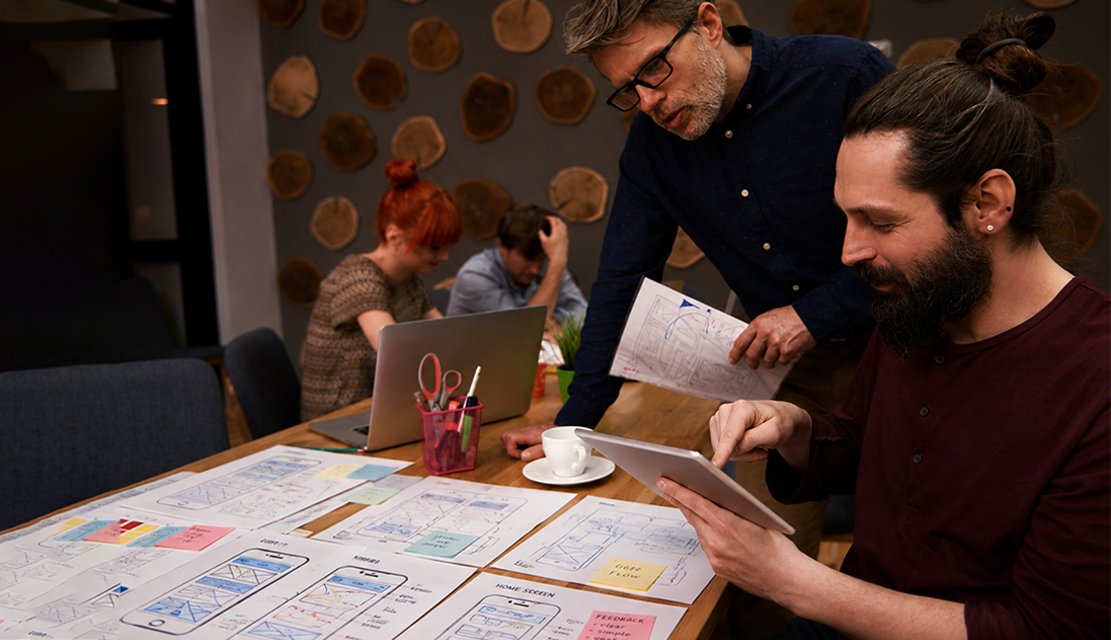
Digital product design is a stern process that commences even before a single screen is drawn. The strategic base is set through market and user research, competitive landscape, and stakeholder alignment workshops. And the cycle continues onward with information architecture, interaction design, development of the visual system, prototype creation, and usability validation at each point. The deliverables cover the entire product life cycle, including strategic briefs, user journey maps, high-fidelity prototypes, design systems, specifications that are ready to be developed, and post-launch optimisation advice. This approach also guarantees that when a prototype development firm or engineer partner is handed the design handoff, all interface-related choices are already tested against perceived user behaviour and business goals.
By engaging in UX Stalwarts, one is assured of experience in cross-industry product design with a span of eighteen years. The team also uses domain-specific design patterns not easily replicable by generalist product design firms because they have designed digital products across fintech platforms, healthcare systems, e-commerce marketplaces, real estate portals, education technology applications, and enterprise SaaS workflows. Every project is scoped to the maturity of their product to the client, be it testing an early-stage concept to investor-readiness, or redesigning an already-established platform to reverse declining usage, or assembling the digital interface layer to the industrial and medical devices, so that the investment made in design is directly reflected in the performance of the product in the market.

Any form of engagement starts with user research, behavioural analytics, and product competitor audits before design exploration. The decisions made on products are based on the behaviour observed and not assumptions by stakeholders. This evidence-based orientation assures that design resources are spent on proven opportunities, which minimizes the amount of waste that arises when teams resolve problems that are not present in the reality of the user.

The engagements cut across the entire product design lifecycle – strategic definition to production-ready delivery and post-launch optimisation. This eradicates the divide that exists when organisations hire different partners to develop the strategy, interface design, prototyping, and design-system documentation. A continuity team where research and handoff are maintained by the same team generates more coherent products with minimal communication-related gaps.

Continuous activity in fintech, healthcare, e-commerce, education, real estate, and enterprise SaaS has created a comprehensive library of tested interaction patterns,s including onboarding experiences, transaction experiences, dashboard design, and multi-role experiences. This cross-domain knowledge will speed up the design process by implementing tested solutions and will modify each pattern to fit the particular situation of the engagement.

Prototypical models of the interactive artefacts are made at the key points of decision-making in the process to allow alignment of the stakeholders and user testing of artefacts as opposed to abstract documentation. The approach to prototyping as a final deliverable does not give a chance to find out structural problems in the early stages. The prototyping in the iterative design cycle helps in alleviating rework, and it helps to build confidence due to visible and testable progress.

The products are planned in the form of coherent systems, rather than ensembles of autonomous displays. Systems where the component libraries, interaction conventions, and visual standards are documented are used to guarantee consistency in all touchpoints and enable development teams to create in an efficient way without necessarily having to do some design work continuously. This system-level design is particularly important with enterprise products that have several modules and user roles.

Engagements are not confined to initial delivery, but include product design retainers, which enable ongoing improvement, feature expansion, and design-system governance. Periodic product review measures performance in terms of adoption measures and determines the subsequent group of opportunities. Such a long-term relationship makes product design not a one-time process but a developmental process.

The existence of product design services is because the distance between a technically functional product and the product that users actively select depends almost completely on the quality of design. Even a product that satisfies all the engineering requirements can fail commercially due to the fact that its navigation is confusing, the onboarding process is too complicated, and its core workflow takes more effort than what the available alternatives can offer.
The cost of using an agency engaged in product design that runs the entire gamut, i.e., strategic research to visual implementation, and testing of prototypes, is guaranteed to align every decision made in the interface to the actual user behaviour. When such alignment informs the product roadmap, the adoption is quicker since the experience is as expected, retention is higher since workflows are easy to use, and revenue is higher as value is delivered without drag.
The principle of the product created on user evidence being better than that created on assumptions is the same regardless of whether the product is a consumer mobile application, an enterprise platform, a medical device interface, or an e-commerce marketplace. The multidisciplinary team on each engagement consists of research, interaction design, visual design, and product strategy skills, in order to make sure that design investment can provide quantifiable commercial returns.
Hire product design consultants who have extensive cross-industry experience to shape your product vision to both actual user behaviour and market requirements.
Every product design project uses our six-phase methodology, which follows a clear order of stages, i.e., starting with market understanding, all the way to production-ready delivery with validation at each stage to minimize risk and keep everything on track.

The strategic context of the engagement is defined through stakeholder workshops, business model analysis, and competitive product audits. The definition of user segments, measures of success, and constraints is done jointly. The resultant product design brief meets expectations, defines scope, and key assumptions to be proven.

Primary research, interviews, contextual observation, behavioural analytics, and task analysis create an evidence base based on real user behaviour. Competitive teardowns find out where substitutes perform and where there are gaps. The result is a synthesis mapping of user requirements, friction areas, and opportunity areas that directly impact design decisions.

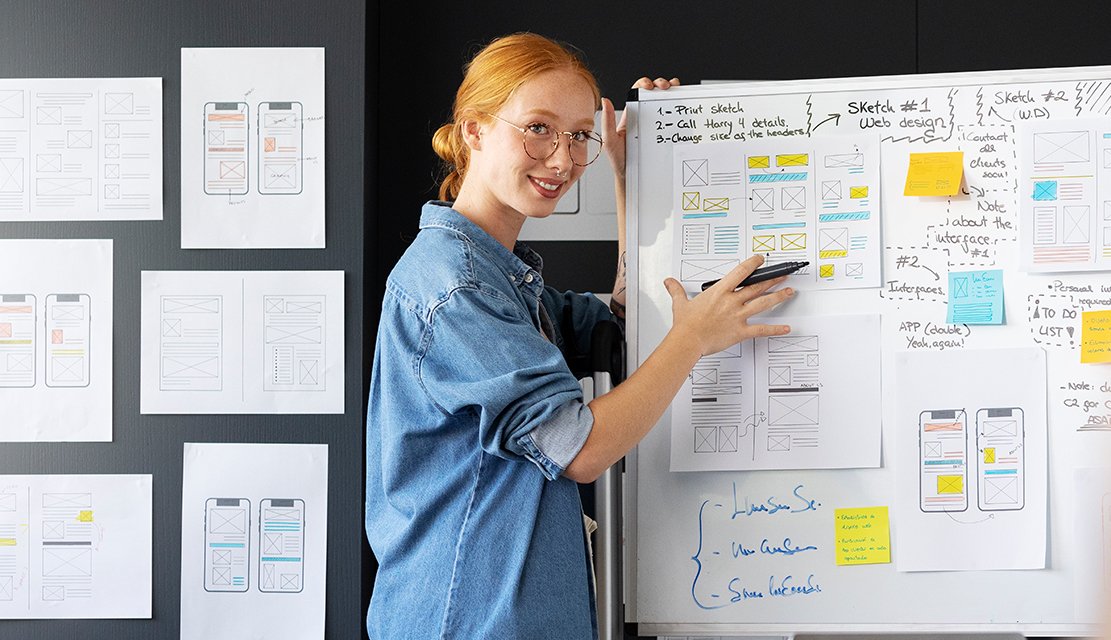
Visual design does not start before information architecture, navigation system, and core interaction models are defined. User flows and wireframes convert insights into organized layouts in line with the user mental models. In the case of complex products, it entails role-based access and progressive disclosure planning.

Visual design, libraries of components, and interaction specifications are then converted into structure through high-fidelity visual design. Design systems are created in a manner that is scaled with specified tokens of colour, typography, spacing, and behaviour. All the decisions are consistent with the previous strategic principles.

The interactive prototypes are put to the test against representative users to ensure usability, efficiency, and satisfaction standards. Problems are also identified, prioritised, and solved even before development commences. This makes sure that the design works in actual application and not in presentations only.

End products, annotated specifications, design systems, component libraries, and assets are provided in formats readable by the developer. There should be a collaborative walkthrough with engineering teams so that they are aware of behaviour, intent, and edge cases. Constant interactions create a rhythm of further design testing and reinforcement
In over 1,000 engagements in fintech, healthcare, e-commerce, real estate, education, and enterprise SaaS, our product design services have continued to achieve products that exceed the benchmarks regarding adoption, retention, and revenue generation. Learn through examples of work in areas of research-based design across industries and in product categories.
The digital product design needs to be sensitive to the commercial forces, regulatory requirements, and users’ expectations of a specific industry. An application in fintech that is compliant with regulations requires an entirely new type of interaction model that is not a direct-to-consumer marketplace that competes based on speed and conversion rate. The design firms in the medical equipment segment need interfaces that meet the clinical workflow and regulatory usability requirements, whereas industrial design segments require smooth physical and digital interactions.
Accessibility-based design systems with scalability principles based on WCAG 2.1 AA provide a consistent performance across devices, environments, and user groups – both early-stage prototyping and large-scale enterprise applications.
This cross-sector depth is created by deep work in fintech, healthcare, e-commerce, enterprise SaaS, education technology, insurance, and real estate, all of which all demand design strategies specific to their unique operations and decision-making processes.

Over hundreds of sustained engagements, refinement of methodology has resulted in a practice that has become known to be both strategic in depth and clear in implementation, as well as having measurable results.
VBBT Tested Previously: Prototypes are also used to test critical design decisions on real users, rather than incurring expensive rework.
Revenue-Related Design Metrics: Business results, adoption, conversion, and retention are used to measure design success, not subjectively.
Scalable Design Systems: The component libraries and interaction standards are designed with expansion in mind so that they can continue to expand feature-wise- and market-wise.
Each interaction is backed by an enterprise-level stack inclusive of research, design, prototype, system management, and handoff of the development, making the difference between the idea and the final result.









Vontier’s products worked but were not designed with the service technician or total cost of ownership in mind. Customers were spending excessive time and money on maintenance because our product design made simple repairs complicated. UX Stalwarts helped us redesign with serviceability as the primary requirement. Reducing customer operating costs $67 million annually through better product design created a competitive moat. The 98.7 percent uptime and 42 percent reduction in service time proved that design for serviceability is design for competitive advantage in B2B markets. Our service technician satisfaction jumping to 89 showed we got it right.
Newell’s heritage brands had trust and distribution but were losing relevance as they looked dated and did not reflect the sustainability values driving purchase decisions. Private label was winning on price and we were stuck in the middle. UX Stalwarts helped us modernize our portfolio through sustainable product design that honored our heritage while making our brands contemporary. Capturing $420 million in growth and taking Rubbermaid Brilliance to number one showed that design innovation can revitalize heritage brands. Achieving 43 percent recycled content proved you can do the right thing and win commercially.
Whirlpool’s first-generation connected appliances had WiFi but did not deliver meaningful value to justify the premium or complexity. Consumers were skeptical and adoption was disappointing. UX Stalwarts helped us design a connected platform that delivered genuine value through AI-powered optimization and proactive maintenance, not just remote control. Generating $890 million in revenue and shifting consumer willingness to pay from 34 to 67 percent proved we cracked the value proposition. The 23 percent reduction in warranty calls showed that smart appliances can be both more convenient and more reliable. This platform is our future.
Evaluating which product design company to choose when undertaking a new product? These answers address your practical questions posed by decision-makers before using the agency of product design.
A total digital product design service engagement encompasses both the end-to-end strategic research process and end-to-end production-ready delivery. The common deliverables are a product design brief, user research synthesis, information architecture and navigation models, wireframes and user flow diagrams, high-fidelity visual designs, interactive prototypes to validate the usability, a documented design system with a component library, developer-ready specifications with annotated assets, and post-launch optimisation recommendations. The scope will vary based upon the maturity and complexity of a product;uct, early concept validation will only result in a strategic brief and prototype, whereas a complete product design will produce the entire system that is ready to be engineered into implementation. Engaging a product design services company with end-to-end capabilities ensures these deliverables remain aligned across research, design, and engineering handoff.
An agency product design company engages in intense user research, strategic fra,ming and iteration prior to any design being delivered to an engineering team. Design-as-a-service development shops will generally make design and research work compressed or bypassed in order to shorten the way to code. What it means is that design decisions are made in the course of development sprints, where a change of direction is costly and disruptive. By hiring a specialist digital product design firm, structural decisions regarding information architecture, interaction model, and visual systems are solved via evidence and theory before the writing of a single line of code, thereby cutting costs and enhancing product quality in terms of the overall project cost. A specialist digital product design agency separates discovery from delivery, which is a discipline most development shops cannot replicate at the same depth.
Pricing will differ enormously depending on the complexity of the product, the depth of the researthe ch, number of user functions, coverage of the platform and availability of the ongoing design services. The cost of a targeted interaction to an individual platform product with a known user base may begin in the low five-figure range, whereas the overall enterprise level of digital product development involving research, system development, mentorship, and trial and error may run in the considerably higher range. Firms that provide product design consulting normally charge oa n project basis based on a defined deliverable. The cost assessment must include the investment made in the development of the hat design – creating the wrong product would never be cheaper than the investment in research and testing in the early days. Established product design consulting firms structure their pricing around outcomes rather than hours, and reputable studios itemise research, design, and validation as distinct workstreams.
A concentrated product design engagement around a single product with a defined scope is a six-to twelve-week effort, which includes research, architecture, design, prototyping, and validation. Larger programmes based on multiple platforms, much user research, enterprise complexity, and the design system development stretch to twelve to twenty weeks. The elements that show the greatest consistency in influencing timeline include the level of primary user research, speed of internal feedback loop, and the number of differentiated user roles that need unique interface treatment. When organisations assign a clear product owner and responsible feedback cycles, they are able to deliver at a faster rate and maintain quality. A capable prototype development company can compress validation cycles by running parallel usability sessions during the architecture and design phases.
Yes, and this cross-disciplinary ability is one of the particular strengths. The clients of medical equipment design companies and industrial design agencies frequently require digital interface layers on devices that have embedded screens, companion mobile apps, or web-based monitoring dashboards. The environmental restrictions considered in the design of these products include glare, glove interaction, and clinical workflow disruptions, which the pure-software products are not subjected to. The design methodology incorporates regulatory usability requirements, such as FDA human factors guidance to medical devices, at the very first stage of research. The outcome is digital interfaces that are operating reliably in the physical operation context in which they are used. Working alongside an industrial design agency under a coordinated framework reduces handoff risk between hardware engineering and digital interface teams.
Prototyping is not a product of the end-stage but is incorporated into the design process. The prototypes of low-fidelity are used to test the information architecture and navigation logic in the architecture phase. Medium-fidelity prototypes are used to test patterns of interaction and workflow sequences during the design development process. During the validation stage, high-fidelity interactive prototypes are formally tested with the representative users. This incremental prototype methodology identifies structural issues at a stage that is cheap to remedy and creates a sense of confidence amongst stakeholders by having visible and testable progress. Companies that use prototype design that only provide prototyping to one stage fail to have a chance of de-risking design decisions at each significant decision point. Prototype design companies that limit their scope to a single fidelity often leave critical interaction questions untested, which is why our practice covers all three stages.
E-commerce product design is based on a revenue-direct model in which each interaction results in a purchase decision progressing. The product discovery and filtering architecture, compelling presentation of product detail, cart and checkout friction minimisation, personalisation, logipost-purchaserchase experience design to generate repeat purchasing are all designed. In the case of product packaging design firms and clients of the food packaging design agency, the e-commerce design spans to the digital product presentation layer, where photography, information hierarchy, and comparison functionality are defined to determine whether the physical products are translated successfully to the shopping environments in digital format. Each design decision is translated into a certain conversion measure. Coordinating with a food packaging design agency at the product detail page stage ensures digital presentation reflects the physical product accurately, and a trusted label design company can advise on how on-pack information translates into digital comparison views. Many product packaging design companies now rely on digital twins of their artwork for accurate e-commerce display.
Startup engagements usually concern the quick concept validation, investor-ready prototype development, and the lean MVP design, which does not compromise the quality of the usability. Enterprise engagements are more inclusive: multi-stakeholder alignment, multi-role-based architecture of the interface, distributed implementation team design system governance, accessibility compliance, and integration with legacy system constraints. The product design company India practice serving both segments balances the methodology, deliverables, depth, and schedule to the organisational complexity so that the design investment is in proportion to the commercial context and stage of growth. The product design company India practice we operate scales engagement structure to match team maturity, from lean three-person sprints to multi-track enterprise programmes.
It should give precedence to those firms that show a well-organised process, with separate research, architecture, design, and validation stages, as opposed to going directly to visual work. Sample deliverables Requirement to determine the state of design handoffs: Are they indeed developer-ready or just presentation-level mock? Look at portfolio work to show evidence of system-level thinking – documented design systems, component libraries, and interaction standards, but not individual screen designs. Confirmation of the experience in the relevant sector, since knowledge of the industry will hasten the research design and the application of patterns. Lastly, get to know how the firm proafter-sales sales services since products need constant design attention as the users keep feeding back and the market becomes dynamic. When shortlisting product design consulting firms, request case studies that show measurable adoption or revenue impact rather than visual portfolios alone.
The product design and the product management are complementary disciplines that should work in close coordination. Product management determines what to develop depending on the business strategy, market opportunity, and technical feasibility. The product design identifies the method of building it according to the principles of user research, interaction design, and usability evidence. The best engagement models include the embedded designers who are part of the product management process – taking part in roadmap meetings, offering research support to prioritisation processes, and aligning design with product metrics. This integration eliminates the dysfunctional state in which design is often treated as a downstream activity of converting requirements into images instead of a strategic alliance that defines the direction of the product.
Numerous customers start with a focused intervention – a competitive product audit, a design sprint on a key user flow, a usability analysis of a current prototype, and grow to a whole engagement. This progressive model allows the decision-makers to determine the quality of the design, research rigour, and chemistry of the team, and invest larger resources. The first level of engagement generates standalone value and develops the contextual knowledge, which accelerates the further complex work and makes it more accurately directed to the most significant improvement opportunities of the product. This staged approach also helps when evaluating a product design services company before committing to a longer programme.
Cross-platform product design demands a common system of design that has visual and interactive consistency without ignoring platform conventions and constraints. The web interfaces are based on the principles of responsive design, which takes into consideration the change in screen size. Native iOS and Android apps observe platform-specific gesture patterns, navigation, and typography conventions. Industrial and medical device interfaces are embedded that consider hardware constraints, environment constraints, and input method constraints. The design system is the single source of truth that binds all platforms together, and the adaptation rules that are documented are used by the engineering teams to create platform-specific variations without maintaining the identity of the product. Established industrial design consulting firms bring hardware constraints into the conversation early, which prevents downstream rework on embedded interfaces.
The initial stage of product design is the most educational, as the actual data of user behaviour is presented instead of the assumptions made by the research. Post-launch design support consists of review of analytics to determine adoption and engagement trends, monitoring of usability to detect new areas of friction, design feature expansion that ensures system coherence, and governance of the design system to ensure that friction points do not drift in visual and interaction design as multiple teams come to work on the product. Product design retainers create a structured rhythm of these activities, and the product remains in the process of development according to the evidence, as opposed to a series of uncoordinated design-debt additions. Ongoing partnership with a prototype development company also allows feature concepts to be tested before they enter the development backlog.
Product design engagements are provided based on a remote-first model that has been just as effective for clients in India, the United States, Europe, and the Middle East. Structured communication cadences, collaborative design tools, and shared prototyping environments are used to guarantee that geographic distance does not impair the quality of design and team alignment. In the case of organisations that need industrial design companies close to me to work on physical products, the digital product design aspect, such as IoT dashboards, companion applications, and device interfaces, is provided remotely, mostly, but the work is coordinated smoothly with local manufacturing and industrial design partner the client hires to work on producing physical products. Whether you search for industrial design companies near me or evaluate remote partners, the determining factor is methodology depth rather than geographic proximity. A local label design company or packaging design agency can still integrate with our digital workstream through shared documentation, and product packaging design companies often coordinate with us via cloud collaboration. For physical work, partnering with a regional industrial design agency for fabrication while we handle the digital layer and consult with medical equipment design companies on device interfaces is a common arrangement.
Structured design methodology is favourable to every organisation with a digital product, although the payback is magnified in those industries where product complexity, regulatory pressure, risks, or competitive rivalry cause design quality to play a critical commercial role. Financial services, in which trust and regulatory constraints fine-tune all interface choices. In healthcare, interaction design is regulated by patient safety and accessibility requirements. E-commerce, in which conversion optimisation is directly proportional to revenue. Multi-role comp, Lexity Enterprise SaaS, adoption difficulties, and churn risk. Likewise, education technology, insurance, real estate, and IoT-enabled industrial products are also beneficiaries since their application to a diverse user base and high-stakes operational environrequiresequire design rigour, which can only be achieved with ad-hoc improvements. Industrial design consulting firms operating in IoT and connected device categories particularly benefit from integrated digital and physical design thinking, and prototype design companies serving these sectors must accommodate both software iteration cycles and hardware production timelines.

C – 81C, Sector – 8, Noida 201301, India


1025 Beamon Drive, Franklin 37064 Tennessee, USA
Sveavagen 34 111 34 Stockholm, Sweden
A-10, Sahastradhara Rd, Doon IT Park, Dehradun, Uttarakhand

© 2026 UX STALWARTS. All rights reserved.