Most digital teams make design and content decisions based on internal opinions, competitor imitation, or untested best practices. When a homepage is redesigned, a form is shortened, or a call-to-action is reworded, the change is typically pushed live with no mechanism to measure whether it actually improved outcomes. This absence of structured testing creates a hidden cost: resources are consumed by changes that may have zero or even negative impact, while genuinely effective improvements remain undiscovered. Without a formal experimentation program, organisations operate on assumptions that compound over time, gradually widening the gap between what teams believe is working and what visitor behavior data would reveal if anyone were measuring it.
AB testing services replace assumption-driven decision-making with controlled experimentation that isolates variables and measures impact with statistical precision. Each engagement is structured around a research-informed hypothesis backlog, where every proposed change is tied to a specific behavioral insight and a predicted outcome before any test is launched. The scope covers standard A/B split tests comparing two variations, multivariate testing services that evaluate multiple element combinations simultaneously, and split URL tests for fundamentally different page architectures. Whether the objective is improving lead capture forms, increasing ecommerce transaction rates, validating new navigation structures, or refining onboarding sequences, every experiment is designed to produce a clear verdict backed by data, not a subjective preference.
UX Stalwarts brings eighteen years of user experience expertise to every experimentation engagement, combining deep knowledge of how people interact with digital interfaces with the statistical discipline required to produce reliable test outcomes. This is not a marketing team running surface-level button color tests. It is a dedicated a/b testing agency with the behavioral research depth to form high-quality hypotheses and the technical rigour to validate them properly. The team has managed experimentation programs across ecommerce, SaaS, fintech, healthcare, education, and B2B lead generation, building a pattern library of tested solutions that accelerates hypothesis quality and increases win rates for every new client engagement.

Every experiment begins with a formally structured hypothesis linking a behavioral insight to a proposed change and a predicted outcome. Hypotheses are ranked using an impact, confidence, and effort scoring model, ensuring that the most valuable tests run first and experimentation resources are allocated toward changes with the highest revenue potential.

Test variations are not assembled by marketing teams guessing at layout changes. Each variant is crafted by experienced interface designers who understand visual hierarchy, cognitive load, and interaction patterns. This design intelligence produces test variations that are more likely to win because they are grounded in how real users process information.

No test is concluded prematurely. Every experiment runs to pre-calculated sample size requirements with confidence thresholds defined before launch. Sidak correction and segmentation controls are applied to multivariate tests to prevent false positives. This statistical discipline means every reported win reflects a genuine, replicable improvement.

The practice operates across all major experimentation platforms, including VWO, Optimizely, AB Tasty, and custom server-side implementations. This tool-agnostic approach means the testing strategy is never constrained by a single vendor’s limitations. Platform recommendations are based on your traffic volume, technical infrastructure, and testing maturity.

Capabilities span standard A/B split tests, multivariate landing page testing, split URL experiments, server-side tests for dynamic content, and sequential testing for low-traffic environments. This breadth ensures the right testing methodology is applied to every challenge, rather than forcing every problem through a single testing format regardless of suitability.

Every test, whether a win, a loss, or an inconclusive result, is documented in a structured experiment archive that captures the hypothesis, methodology, raw data, outcome, and derived learnings. This institutional knowledge base accelerates future testing cycles and prevents teams from repeating experiments that have already been resolved.

When experimentation is embedded into your decision-making process, the quality of every digital change improves. Validated tests eliminate the risk of deploying changes that reduce conversion, protect the investments already made in design and development, and create a compounding knowledge base that makes each subsequent improvement faster and more effective. Organisations that run structured testing programs consistently outperform competitors who rely on periodic redesigns and untested assumptions. The team managing these programs combines deep interface design expertise with rigorous experimental methodology, ensuring that every test is worth running and every result is worth trusting.
Engage an experienced a/b testing consultant team for measurable growth.
This experimentation framework has been refined across hundreds of testing engagements and is structured to maximise learning velocity and conversion impact.

The engagement opens by establishing accurate performance baselines across all pages and flows under consideration. Analytics configurations are audited, event tracking is verified, and conversion goals are validated to ensure that every future test measurement rests on reliable data. This foundational step prevents the common problem of testing against inaccurate benchmarks.

Quantitative analytics and qualitative research are combined to identify where visitors struggle, hesitate, or abandon. Heatmaps, scroll depth analysis, session recordings, and targeted on-site surveys surface friction points and behavioral patterns that inform hypothesis development. This research layer ensures that test ideas target real user problems rather than internal assumptions.

Each test idea is formally structured as a hypothesis with four components: the observed behavior, the proposed change, the predicted outcome, and the primary success metric. Hypotheses are scored and prioritized using an impact-confidence-effort framework, creating a ranked testing roadmap that allocates resources toward the highest-value experiments first.

Test variations are designed and built by interface specialists, ensuring that each variant is production-quality and aligned with brand standards. Detailed QA processes covering cross-browser rendering, mobile responsiveness, and page speed impact are completed before any experiment goes live. This rigour eliminates the technical noise that invalidates results in poorly executed tests.

Tests are launched with pre-defined traffic allocation, runtime calculations, and monitoring protocols. Real-time dashboards track performance without allowing premature conclusions. For experiments involving multiple elements, multivariate testing services isolate interaction effects between variables, revealing which combinations produce the strongest outcomes rather than testing elements in artificial isolation.

Results are analyzed against statistical significance thresholds and validated across audience segments, devices, and traffic sources. Every experiment outcome is documented in the shared knowledge archive with its hypothesis, data, and derived learnings. The testing backlog is then refreshed with new hypotheses informed by the latest findings, maintaining continuous experimentation momentum.
Across more than 1,000 client engagements spanning industries and digital platforms, explore how structured experimentation has delivered validated, sustained conversion improvements.
Effective experimentation requires awareness that different industries present different testing constraints. A healthcare portal with regulatory requirements around content disclosure demands a different testing approach than a direct-to-consumer ecommerce brand optimising product pages for impulse purchases. The methodology adapts to these realities, serving organisations from early-stage startups running their first experiments through global enterprises managing mature, high-velocity testing programs with dedicated internal teams.
Industries where structured experimentation programs have delivered measurable improvements include ecommerce and retail, SaaS and technology products, financial services and fintech, healthcare and life sciences, education and online learning, real estate and property platforms, travel and hospitality, and B2B professional services. Each sector contributes unique behavioral patterns and testing constraints to the practice, building a cross-industry pattern library that accelerates hypothesis quality for every subsequent engagement.

The experimentation market includes tool vendors, marketing agencies offering testing as a secondary service, and specialist firms focused exclusively on testing. This practice occupies a distinct position by combining the behavioral design depth of a UX consultancy with the statistical and technical rigour of a dedicated experimentation firm, producing consistently higher hypothesis win rates.
Behavioral Hypothesis Quality: Hypotheses are grounded in user research and cognitive principles, not sourced from competitor imitation or internal opinion, resulting in measurably higher test win rates.
Tool-Agnostic Execution: Experiments are designed independently of any single platform, selecting the optimal tool for each engagement based on technical requirements and traffic characteristics.
Institutional Learning Systems: Structured experiment archives capture every result and derived insight, preventing repeated tests and accelerating future programs through accumulated organizational knowledge that compounds over time.
Each engagement selects from a proven technology stack spanning experimentation platforms, behavioral analytics tools, and statistical analysis instruments matched to your traffic volume and technical environment.









Netflix growth depended on helping subscribers find content they love but we were making interface decisions based on opinions rather than data. UX Stalwarts established rigorous A/B testing program that transformed product development. Increasing discovery engagement 47 percent and running 250+ simultaneous experiments versus 30 annual tests proved systematic testing beats intuition. The $1.2 billion revenue impact showed experimentation is not optional — it is competitive necessity. This testing discipline became core to Netflix product culture.
Spotify was improving products constantly but shipping changes based on intuition rather than validated impact on conversion and engagement. UX Stalwarts implemented systematic A/B testing revealing what actually worked. Increasing premium conversion 34 percent and generating $680 million in incremental revenue proved testing discipline drives growth. The 2.8x conversion improvement from optimal timing showed small UX decisions create massive business impact. This experimentation culture transformed how Spotify builds products.
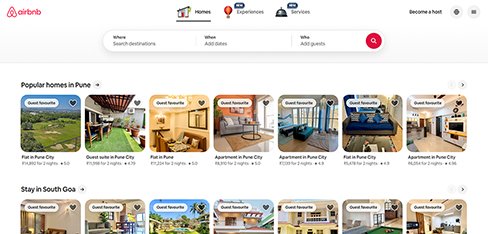
Airbnb booking conversion was far below potential because we were not systematically identifying and fixing friction points. UX Stalwarts implemented rigorous A/B testing across our entire booking funnel. Increasing completion 52 percent and capturing $2.1 billion in bookings proved experimentation drives growth. The 31 percent improvement from price transparency showed counterintuitive wins require testing rather than assumptions. This testing discipline became fundamental to how Airbnb optimizes experiences.
Considering a structured testing program? Common questions answered with clarity here.
A/B testing services provide end-to-end management of controlled experiments on your website, application, or digital product. A typical engagement includes performance baselining, behavioral research to identify friction points, hypothesis development and prioritisation, test variant design and build, experiment launch and monitoring, statistical analysis of results, and documentation of learnings for future testing cycles. The scope can range from individual test execution for organisations with internal strategy capability to fully managed experimentation programs where the a/b testing agency handles everything from research through implementation. The goal is always the same: replace assumption-driven changes with validated improvements backed by statistically significant data. Most a/b testing companies structure their engagements around this scope.
A/B testing compares two or more versions of a single variable, such as a headline, an image, or a call-to-action, to determine which performs better against a defined conversion metric. Multivariate testing evaluates multiple variables simultaneously, measuring not just which individual elements perform best but how different combinations of elements interact to produce optimal results. Multivariate testing services require significantly higher traffic volumes to reach statistical significance because the number of combinations grows rapidly with each added variable. A/B testing suits most scenarios, while multivariate testing is ideal for high-traffic pages where understanding element interactions can unlock conversion gains that isolated A/B tests would miss. A capable a/b testing company explains this distinction upfront.
Test duration depends on three factors: your page’s traffic volume, the baseline conversion rate, and the minimum detectable effect size you want to identify. A page receiving 10,000 visitors per week with a 3% conversion rate typically needs two to four weeks to detect a meaningful improvement with 95% confidence. Running tests for less time, or stopping early because one variation appears to be winning, introduces a high risk of false positives. Reliable a/b testing solutions always include pre-calculated runtime estimates before any experiment launches, ensuring that results are trustworthy and that winning variations reflect genuine performance differences rather than random statistical fluctuations. What top a/b testing firms call reliable runtime starts here.
Pricing depends on engagement scope, testing velocity, and the level of strategic support required. Standalone test audits represent the lowest investment tier, while fully managed experimentation programs with dedicated a/b testing consultant resources carry higher monthly commitments. Multivariate testing companies typically charge more for complex multi-variable experiments due to the additional design, development, and statistical analysis work involved. Established a/b testing agencies in india often deliver equivalent research depth, testing rigour, and design quality at a significantly lower investment than US or UK agencies. The cost should always be weighed against the revenue impact: even a single validated test win on a high-traffic page often generates returns that exceed the full engagement investment.
Testing prioritisation follows a structured framework. Start with the highest-traffic pages where even small conversion improvements produce measurable revenue impact. Within those pages, focus first on elements with the strongest behavioral research signal: areas where heatmap data shows visitor hesitation, where form analytics reveal high abandonment, or where session recordings capture repeated confusion patterns. Headlines and primary calls-to-action typically produce the largest initial lifts because they directly influence visitor decisions at the point of commitment. After early wins build confidence and data, the program expands into more complex experiments covering page structure, navigation, onboarding flows, and multi-step funnels where the testing complexity increases but so does the potential impact. Most top a/b testing firms recommend this prioritisation framework.
Low-traffic websites face a genuine challenge because A/B tests require sufficient sample sizes to produce statistically reliable results. However, several approaches make experimentation viable even at lower volumes. Sequential testing methods allow data to accumulate over longer periods. Larger-effect tests targeting significant changes rather than subtle variations reach significance faster with fewer visitors. Qualitative methods like user testing and session analysis can inform design changes that are then validated through longer-running experiments. For multivariate landing page testing, low-traffic environments are generally unsuitable because the number of combinations demands volumes most small sites cannot generate within practical timelines. The right ab testing consultant will recommend the methodology that matches your traffic reality. An experienced a/b testing company tailors methods to traffic reality.
The experimentation technology landscape includes several established platforms. VWO and Optimizely are widely used for both client-side and server-side experiments across web and mobile. A/B Tasty offers strong visual editing capabilities suited to marketing teams. Statsig supports feature flagging and server-side experimentation for product teams. For behavioral research that informs test hypotheses, tools like Hotjar, Microsoft Clarity, and Google Analytics 4 provide heatmaps, session recordings, scroll tracking, and funnel visualisation. The best a/b testing solutions are tool-agnostic, selecting the right platform based on your traffic volume, technical architecture, and team capability rather than defaulting to a single vendor regardless of fit. A capable a/b testing service matches the platform to your context.
Statistical validity is protected through several methodological controls applied before, during, and after each experiment. Before launch, minimum sample sizes and test durations are calculated based on baseline conversion rate and the minimum effect size worth detecting. During the experiment, traffic allocation is controlled and real-time monitoring watches for data integrity issues without allowing premature conclusions. After completion, results are validated at a minimum 95% confidence threshold, with segment-level analysis confirming that conversion lifts are consistent across devices, traffic sources, and audience groups. For multivariate testing services, Sidak correction or Bonferroni adjustment is applied to prevent the inflated false-positive risk that comes from evaluating many combinations simultaneously. Reputable a/b testing firms maintain these controls without exception.
A strong hypothesis has four components: an observation grounded in behavioral data, a proposed change that addresses the observed friction, a predicted outcome expressed as a specific metric improvement, and a rationale explaining why the change is expected to produce that outcome. Weak hypotheses lack one or more of these elements, typically proposing changes based on opinions or trends without anchoring them to observed visitor behavior. The quality of hypotheses directly determines the win rate of any experimentation program. Teams that invest in behavioral research before forming hypotheses consistently produce higher win rates than those that skip research and test random ideas. This is where working with an experienced ab testing agency produces measurable advantages over self-service testing.
Multivariate landing page testing services evaluate multiple elements on a single page simultaneously, such as headline, hero image, form length, and CTA copy, to determine which specific combination produces the highest conversion rate. Unlike sequential A/B tests that isolate one variable at a time, multivariate landing page testing services reveal interaction effects between elements, showing how changes to one component influence the performance of another. It requires substantially higher traffic volumes because the number of testable combinations grows multiplicatively with each added variable. This method is best suited for high-traffic landing pages where the interplay between elements significantly affects conversion outcomes. Our landing page optimization services often deploy multivariate tests as part of comprehensive page improvement programs.
Absolutely. Many engagements operate as collaborative extensions of internal teams rather than replacements. The experimentation partner handles research, hypothesis development, variant design, test configuration, and statistical analysis, while your product or engineering team manages implementation of validated changes. Shared dashboards, weekly alignment sessions, and a transparent testing roadmap ensure that experiments integrate smoothly with your product release schedule and marketing calendar. This model accelerates learning across your organisation and builds internal experimentation capability over time. For organisations with no prior testing infrastructure, the engagement also includes platform selection, configuration, and knowledge transfer to prepare your team for sustained independent experimentation. Reputable a/b testing agencies in india routinely embed this way.
A/B testing is one methodology within the broader discipline of conversion rate optimization. CRO encompasses the entire strategic framework: research, hypothesis development, testing, analysis, implementation, and iteration across the full conversion funnel. AB testing services focus specifically on the experimentation layer: designing, building, launching, and analyzing controlled tests that validate or invalidate specific hypotheses. Some organisations need the full CRO engagement covering funnel diagnostics, user research, and cross-channel optimization. Others have internal strategy capability and need a specialist ab testing agency to execute their experiment roadmap with technical precision and statistical rigour. Selecting the right a/b testing service depends on this distinction.
Yes. Ecommerce experimentation is a core competency. Product page tests commonly evaluate image presentation, pricing display, social proof placement, and add-to-cart button positioning. Checkout optimisation experiments focus on form field reduction, progress indicator design, trust signal placement, and payment option sequencing. Cart recovery tests examine abandonment messaging, incentive timing, and re-engagement flows. Each test is structured around observed shopper behavior data, not assumed best practices. Multivariate testing companies working in ecommerce apply multi-variable experiments to high-traffic product and category pages where element interactions significantly influence purchase decisions, producing combination insights that sequential A/B tests cannot uncover. Leading a/b testing companies treat ecommerce experimentation as a core competency.
Every completed experiment follows a structured post-test protocol. Winning variations are documented with full implementation specifications and handed to your development team for permanent deployment. Losing and inconclusive tests are analyzed for secondary learnings that refine the hypothesis backlog. All outcomes, wins, losses, and neutral results, are archived in the shared experiment knowledge base with their hypothesis, methodology, raw data, and derived insights. The testing roadmap is then refreshed with new priorities informed by the latest data. For organisations seeking sustained improvement, ongoing retainer programs maintain continuous experimentation momentum across testing cycles. Experienced a/b testing firms close every engagement with this post-test discipline. Explore how our web design services build experimentation-ready digital foundations that support long-term testing programs.
The fundamental distinction is treating experimentation as a design and behavioral science discipline rather than a marketing tactic. Most multivariate testing companies and ab testing solutions providers focus on the mechanics of running tests, configuring tools and interpreting dashboards, without investing in the behavioral research that determines hypothesis quality. This practice starts with understanding why visitors behave the way they do, using that insight to form higher-quality hypotheses, and then validating those hypotheses through statistically rigorous controlled experiments. Eighteen years of cross-industry user experience work provides a behavioral pattern library that consistently elevates test win rates above industry averages, delivered at the cost-efficient value point of an India-based experimentation partner.

C – 81C, Sector – 8, Noida 201301, India


1025 Beamon Drive, Franklin 37064 Tennessee, USA
Sveavagen 34 111 34 Stockholm, Sweden
A-10, Sahastradhara Rd, Doon IT Park, Dehradun, Uttarakhand

© 2026 UX STALWARTS. All rights reserved.