In healthcare, poor interface design is not simply an inconvenience. It creates clinical risk. When a physician cannot locate a critical lab result within three clicks, when a patient abandons a telehealth session because the interface is confusing, or when an administrator enters data into the wrong field because the form layout is ambiguous, the consequences extend beyond frustration. They affect diagnoses, treatment adherence, operational efficiency, and patient trust. Healthcare applications serve users under cognitive pressure, time constraints, and emotional stress. Designing for these conditions requires more than general usability principles. It demands domain-specific understanding of clinical workflows, regulatory frameworks, and patient behavior.
Our healthcare ui ux design services bring this domain-specific rigor to every engagement. We design for the full healthcare stakeholder ecosystem: patients navigating portals and telehealth platforms, clinicians managing EHR dashboards and clinical decision tools, and administrators operating scheduling, billing, and reporting systems. Whether you need ui ux design services for healthcare applications, a patient-facing mobile experience, or a clinical SaaS platform redesign, our team delivers interfaces grounded in user research, accessibility compliance, and the operational realities of care delivery. Every screen is designed to reduce cognitive load, prevent errors, and accelerate task completion for users working in high-stakes environments.
With eighteen years of design delivery across regulated industries, our healthcare design teams understand HIPAA constraints, WCAG accessibility requirements, and the clinical workflow patterns that shape how healthcare software is actually used. This experience means faster project ramp-up, fewer compliance-related revision cycles, and design decisions informed by pattern recognition across dozens of healthcare product engagements. Unlike general design agencies that apply consumer UX methods to clinical tools, UX Stalwarts positions healthcare ui/ux design as a specialized discipline requiring its own research protocols, validation standards, and safety-aware interaction logic. This approach reduces post-launch risk and accelerates regulatory acceptance.

Our designers understand HIPAA data handling requirements, WCAG accessibility standards, and FDA human factors guidance as foundational design constraints, not afterthoughts. This regulatory fluency means compliance is built into information architecture, data display, and interaction design from the earliest wireframes, preventing the costly redesign cycles that occur when compliance is addressed late.

Healthcare applications serve patients, clinicians, administrators, and often payers simultaneously. We design role-specific experiences that address the distinct needs, mental models, and task flows of each user group. This multi-stakeholder approach ensures that a feature designed for clinical efficiency does not compromise patient comprehension, and vice versa.

Before designing any interface, we map the clinical workflows our product must support. This includes understanding handoff points between care team members, documentation requirements during patient encounters, and the decision sequences clinicians follow under time pressure. Workflow-informed design reduces the friction that causes workarounds, data entry errors, and clinician frustration.

We design patient-facing experiences with health literacy, emotional state, and accessibility diversity as primary considerations. Navigation is simplified for users who may be anxious, elderly, or managing chronic conditions. Content is structured for clarity at lower reading levels. Every interaction path accounts for the reality that patients are not power users.

In healthcare, a design error can translate to a clinical error. We apply safety-centered interaction patterns including confirmation dialogs for high-consequence actions, visual hierarchy that surfaces critical data first, and error-prevention logic that reduces the likelihood of incorrect inputs. These patterns protect patients and reduce organizational liability.

Healthcare products generate and display complex data: vitals, lab trends, medication schedules, population health metrics, and billing summaries. We design data visualizations that make clinical information scannable, actionable, and contextually meaningful without overwhelming users. Our approach prioritizes decision-support clarity, ensuring that the most important data reaches the right user at the right time.

Well-designed healthcare software does more than satisfy usability checklists. It directly influences clinical outcomes by reducing medication errors through clearer prescription interfaces, improving treatment adherence through patient-friendly health management tools, and accelerating diagnosis through intuitive clinical dashboards. When healthcare organizations invest in professional healthcare product design services, they gain measurable returns: lower support ticket volumes, faster clinician task completion, higher patient portal adoption, and reduced training costs for new staff. Our team brings the discipline of healthcare-specific design to every engagement, combining clinical workflow knowledge with interaction design expertise to create products where safety, compliance, and usability reinforce each other.
Partner with healthcare design specialists who understand clinical reality.
Every healthcare design engagement follows a compliance-integrated methodology that balances clinical accuracy, patient safety, and usability from start to finish.

We begin by evaluating your product landscape, user stakeholder groups, regulatory requirements, and existing clinical workflows through structured discovery sessions. This phase identifies compliance obligations, accessibility gaps, and usability risks before design begins. The deliverable is a healthcare design brief that defines scope, constraints, and success criteria specific to your clinical context.

Our team conducts user research with actual healthcare stakeholders: clinicians, patients, administrators, and care coordinators. We observe real-world usage patterns, map clinical task flows, and document pain points unique to each user role. The output is a research synthesis that grounds every subsequent design decision in observed behavior and stated needs.

Using research findings, we define information architecture, navigation models, and role-based access structures that reflect how healthcare users actually interact with clinical data. This structural work ensures that critical information is accessible within minimum clicks and that the product supports compliant data handling. Stakeholders review and approve architecture before detailed design begins.

We produce healthcare-specific interface designs that integrate accessibility compliance, data visualization best practices, and safety-centered interaction patterns. Each screen is built with attention to color contrast for clinical environments, touch targets for bedside devices, and content hierarchy for users under cognitive load. Design system components ensure consistency across the complete product.

Before development handoff, we conduct internal compliance validation against HIPAA, WCAG, and any applicable FDA human factors requirements. This review identifies potential violations and triggers corrective design updates. The deliverable is a compliance-verified design package that reduces regulatory risk during development, QA, and eventual product certification or audit processes.

We package finalized designs with annotated specifications, interaction documentation, and accessibility notes for engineering teams. Our designers remain available during development to clarify design intent, review implementations, and validate visual fidelity against approved specifications. Post-launch, we support initial performance review and recommend experience improvements based on real usage data and clinical feedback.
Review outcomes from healthcare engagements where our design practice improved usability, compliance, and clinical efficiency across patient and provider experiences.
Healthcare is not a single industry. It spans hospitals, clinics, telehealth providers, pharmaceutical companies, medical device manufacturers, health insurance organizations, and digital health startups. Each segment presents distinct user requirements, regulatory landscapes, and technology integration challenges. Our team brings design experience across this full ecosystem, applying consistent user-centered methodology while adapting to the specific constraints and opportunities of each healthcare sub-sector and product category.
We have delivered healthcare ui ux design across telehealth platforms, electronic health records, patient portals, clinical decision support systems, remote patient monitoring tools, health and wellness applications, medical device companion apps, and healthcare analytics dashboards. This breadth means our designers bring validated patterns, accessibility solutions, and workflow optimizations from relevant healthcare contexts into every new engagement, reducing discovery time and improving the accuracy of early design decisions.

Healthcare design demands a level of regulatory awareness, clinical empathy, and safety consciousness that most design agencies cannot provide. Our team has earned recognition from healthcare clients for combining deep domain expertise with rigorous design methodology. The distinction lies in compliance integration, multi-stakeholder research depth, and the measurable clinical impact our designs consistently deliver.
Compliance Built Into Process: HIPAA, WCAG, and FDA human factors requirements are integrated into our design workflow from discovery, not bolted on before launch.
Clinical Workflow Expertise: Our designers map and design around real clinical workflows, reducing the workarounds and errors that occur when interfaces ignore how care is delivered.
Patient Safety by Design: We apply safety-centered interaction patterns that reduce clinical risk, prevent data entry errors, and protect patient outcomes through thoughtful interface architecture.
We use industry-standard design, prototyping, accessibility testing, and collaboration platforms adapted to healthcare project requirements, including secure workflows compatible with HIPAA-compliant environments.









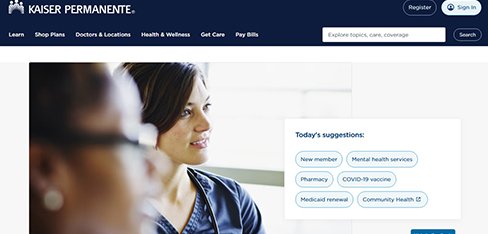
Kaiser Permanente patient portal had 23 percent adoption because complex medical interface excluded many patients. UX Stalwarts redesigned organizing by patient goals with plain language. Increasing adoption from 23 to 87 percent and elderly usage 456 percent proved healthcare UX must serve all literacy levels. The medication adherence improvement of 67 percent showed better UX drives health outcomes. This redesign made digital health accessible to everyone.
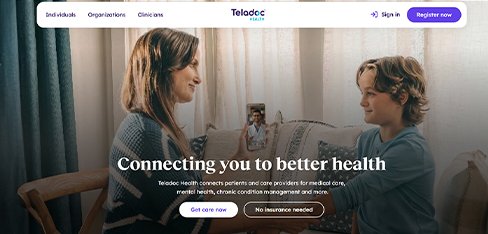
Teladoc had 34 percent no-show rate because patients could not navigate video technology or feared technical failures. UX Stalwarts redesigned eliminating barriers with one-click join and robust fallbacks. Reducing no-shows from 34 to 4 percent proved healthcare technology must be invisible. The satisfaction improvement from 6.4 to 9.1 showed seamless UX builds confidence in virtual care. This redesign made telemedicine accessible and reliable.
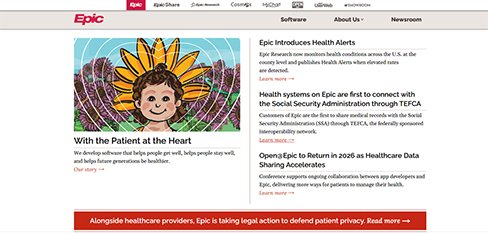
Epic EHR contributed to physician burnout because doctors spent 2 hours documenting for every 1 hour with patients. UX Stalwarts redesigned workflow optimizing clinical processes. Reducing burnout 73 percent and documentation time from 2 hours to 35 minutes proved healthcare software must match physician workflow. The satisfaction improvement from 3.2 to 8.1 showed technology should enable not burden clinicians. This redesign transformed EHR from obstacle to asset.
Evaluating a healthcare design partner? Here are the answers that help health technology leaders make confident decisions.
Healthcare applications operate under regulatory constraints, clinical safety requirements, and user conditions that general design services cannot adequately address. Patients may be anxious, elderly, or managing cognitive limitations. Clinicians work under time pressure with zero tolerance for interface-induced errors. Administrators handle sensitive data requiring compliant workflows. A healthcare UI UX design agency brings the domain knowledge needed to navigate HIPAA requirements, accessibility mandates, and clinical workflow patterns that general designers lack. Without this specialized understanding, healthcare products risk compliance violations, poor adoption by clinical staff, and patient safety incidents that could have been prevented through informed design. Related expertise: healthcare ui ux design companies and ui ux design services for healthcare applications.
HIPAA compliance is integrated into our design methodology from the assessment phase. We evaluate how protected health information flows through the product, identify screens where PHI is displayed or entered, and design role-based access controls, session timeout behaviors, and data masking patterns that meet regulatory requirements. Our compliance review phase validates every design against HIPAA standards before development handoff. This approach means compliance is a structural property of the product experience rather than a surface-level retrofit. We also coordinate with your legal and security teams to ensure alignment between design decisions and organizational compliance policies. Related expertise: healthcare ux/ui design firms and healthcare ui/ux design agency engagements.
We design across the full healthcare application spectrum. This includes telehealth platforms, electronic health records, patient portals, clinical decision support tools, remote patient monitoring applications, health and wellness apps, medical device companion interfaces, and healthcare analytics dashboards. As a healthcare app design agency with cross-sector experience, we bring validated design patterns and compliance awareness from each healthcare sub-domain into new engagements. Whether your product serves patients directly, supports clinical staff, or enables administrative operations, our team delivers custom healthcare UI UX solutions built for the specific user context and regulatory landscape of your application. Related expertise: Healthcare Website Design Agency engagements.
Timeline depends on project complexity and regulatory requirements. A focused usability audit or UX research sprint for an existing healthcare product can take three to five weeks. A full healthcare product design engagement covering assessment, clinical research, architecture, interface design, compliance review, and deployment support typically runs twelve to twenty weeks. Factors that influence duration include the number of user roles requiring research, the complexity of clinical workflows, regulatory review cycles, and accessibility testing depth. We provide detailed timeline estimates during the assessment phase. Related expertise: Healthcare Product Design Services scoping.
Accessibility is embedded throughout our healthcare design process, not treated as a final checklist. We design against WCAG 2.1 AA guidelines, test with screen readers and keyboard navigation, verify color contrast ratios for clinical display environments, and size touch targets for users with motor limitations. For healthcare products serving elderly or chronically ill populations, we apply additional inclusive design patterns. Our approach to accessibility auditing ensures that compliance is built into the component library itself, so every new screen inherits accessibility properties automatically as the product evolves and expands. Related expertise: healthcare ui ux design companies accessibility programs.
Yes. We approach healthcare redesigns with operational continuity as a primary constraint. Our process includes stakeholder alignment on which workflows can tolerate interface changes and which require stability during transition. We design migration paths that introduce improvements incrementally, allowing clinical staff to adapt without productivity disruption. A UX audit at the start of a redesign engagement identifies which areas offer the highest usability improvement with the lowest operational risk. This phased approach ensures that the redesigned product improves clinical efficiency without creating the training burden or workflow interruption that healthcare organizations rightfully want to avoid. Related expertise: healthcare ui ux design consultants for phased redesigns.
Healthcare products typically serve patients, clinicians, administrators, and sometimes payers through the same platform. We conduct separate research with each user group to understand their distinct mental models, task flows, and information needs. We then design role-based experiences within a unified design system that maintains visual consistency while delivering role-appropriate functionality. Navigation structures, data displays, and interaction patterns are tailored to each role without creating entirely separate products. This multi-stakeholder design approach ensures that a feature optimized for clinical efficiency does not compromise patient comprehension or administrative usability. Related expertise: Healthcare App Design Agency engagements and Custom Healthcare UI UX Solutions.
A secure healthcare app design company treats data security as a design discipline, not just a development concern. This means designing session management behaviors, PHI display patterns, authentication flows, and audit trail visibility into the user experience from the earliest wireframes. General agencies may create visually appealing interfaces but miss the security-sensitive interaction patterns healthcare requires. Our designers understand how to balance security measures with usability so that clinicians are not slowed down by excessive authentication steps while patients feel confident their information is protected. Security and usability must coexist in healthcare design. Related expertise: Healthcare UX Design Company and healthcare ui/ux design agency partnerships.
Healthcare data visualization requires balancing density with clarity. Clinicians need access to large amounts of patient data, but that data must be organized to support rapid scanning, pattern recognition, and clinical decision-making under time pressure. We design dashboards and data displays using visual hierarchy principles adapted for clinical environments, including color coding for critical values, trend-line visualizations for longitudinal data, and contextual grouping that reflects clinical reasoning patterns. Our medical app UI UX design services prioritize decision-support clarity so that the most important information reaches the right user at the right moment. Related expertise: Healthcare UI UX Design Agency teams and Healthcare Software UI Design specialists.
Absolutely. Our healthcare design practice covers responsive web applications, native mobile app experiences for iOS and Android, and cross-platform solutions. For telehealth products, we design experiences that work seamlessly across desktop, tablet, and smartphone. For clinical tools, we account for the specific device contexts of care delivery, including large-screen workstations, bedside tablets, and handheld devices used during patient rounds. Each platform receives interface design optimized for its interaction model and display constraints while maintaining visual and behavioral consistency through a shared healthcare design system. Related expertise: Healthcare Website Design Agency and Medical App UI UX Design Services.
Costs depend on engagement scope, application complexity, number of user roles, compliance requirements, and the depth of clinical research involved. A focused usability sprint costs less than a full-product healthcare software UI design engagement spanning research, architecture, interface design, compliance review, and deployment support. Healthcare design from India-based agencies offers globally competitive rates without sacrificing regulatory expertise or clinical design quality. We provide transparent scope-based estimates during the assessment phase, allowing you to evaluate investment against the measurable returns of improved clinical efficiency, patient adoption, and compliance readiness. Related expertise: healthcare ui ux design services and best healthcare ui ux design firms in india.
Digital health UX design specifically addresses software products that enable health monitoring, wellness management, and preventive care outside traditional clinical settings. This includes consumer health apps, wearable companion interfaces, mental health platforms, and remote patient monitoring tools. While traditional healthcare ui ux design focuses on clinical workflows and provider-facing tools, digital health UX design emphasizes patient engagement, behavior change, daily habit integration, and long-term retention. Both require compliance awareness, but digital health products often need stronger emphasis on motivational design, onboarding simplicity, and health literacy accommodation for non-clinical users. Related expertise: Healthcare UX Design Company and Digital Health UX Design firms.
Yes. If you need to hire healthcare UI UX designer talent for a focused engagement such as a usability audit, a patient portal redesign, or a compliance review sprint, we offer flexible project-based structures. Short-term healthcare design engagements follow the same compliance rigor and clinical research standards as longer partnerships. The key is clearly defining scope and deliverables upfront so the compressed timeline produces actionable, compliance-verified outcomes. For organizations with ongoing healthcare product development needs, we also offer retained and dedicated team models that provide continuous design capacity. Related expertise: Hire Healthcare UI UX Designer engagements.
We validate healthcare designs through structured usability testing with representative users from each stakeholder group. Clinicians test clinical workflows under simulated time pressure. Patients test portal and app flows with attention to comprehension and task completion. Administrators validate operational interfaces against their daily routines. We measure task success rates, error frequency, time-on-task, and subjective satisfaction. These findings drive iterative design refinements before development begins. Post-launch, we recommend ongoing measurement through the UX maturity model framework to ensure design quality continues improving as the product evolves and user needs change. Related expertise: healthcare ui ux design consultants for clinical validation.
Evaluate portfolio depth in healthcare specifically, not just general design work. The best healthcare UX design agency will show case studies demonstrating HIPAA-aware design, clinical workflow optimization, multi-stakeholder research, and measurable outcomes like reduced task time or improved patient adoption. Ask how they integrate compliance into their process rather than treating it as a final review. Check for experience with your specific product type (EHR, telehealth, patient portal, medical device). UX Stalwarts offers structured pilot engagements where you experience our healthcare design methodology, clinical research rigor, and compliance integration firsthand before committing to a full engagement. Related searches: healthcare ux/ui design firms, best healthcare ui ux design firms in india, and Digital Health UX Design firms.

C – 81C, Sector – 8, Noida 201301, India


1025 Beamon Drive, Franklin 37064 Tennessee, USA
Sveavagen 34 111 34 Stockholm, Sweden
A-10, Sahastradhara Rd, Doon IT Park, Dehradun, Uttarakhand

© 2026 UX STALWARTS. All rights reserved.