Most organizations operate with an incomplete picture of their competitive environment. They track competitor pricing or monitor social media mentions but overlook how rival products actually perform for users, how competitor interfaces guide decisions, and where experience gaps create opportunity. Without structured strategic competitive analysis, product roadmaps are built on internal bias, marketing messages lack differentiation, and design decisions repeat industry patterns instead of challenging them. When competitive analysis companies focus only on surface metrics, the deeper insights that drive product advantage and market positioning remain hidden.
Our competitive analysis services evaluate competitors across three dimensions that most firms overlook: digital experience quality, product interaction design, and conversion architecture. From SEO competitor audit and content strategy evaluation to UX competitor audit services, interaction flow benchmarking, and feature gap mapping, we deliver a complete competitive landscape assessment that informs both marketing strategy and product design. Deliverables include competitor scorecards, SWOT matrices, UX benchmarking reports, digital competitive intelligence summaries, and prioritized opportunity roadmaps. Each engagement equips your leadership with the clarity to make positioning, design, and investment decisions grounded in verified market reality.
With eighteen years of cross-industry digital experience, UX Stalwarts brings a perspective that pure marketing agencies and traditional research firms cannot replicate. Our analysts evaluate competitors through the lens of user experience, conversion performance, and interface design quality, not just keyword rankings and ad spend. This design-informed approach to competitor analysis consulting produces insights that connect directly to product improvement and customer acquisition strategy. Where competitive research firms deliver data reports, we deliver strategic direction that product, design, and marketing teams can act on immediately.

Most competitive analysis consulting firms evaluate competitors through traffic data and keyword rankings. We go deeper by auditing competitor user experiences, evaluating onboarding flows, navigation architecture, content hierarchy, and conversion mechanics. This experience-layer perspective reveals competitive advantages and vulnerabilities that quantitative metrics alone cannot surface.

Our competitive research companies methodology scores each competitor across multiple dimensions: digital presence strength, UX maturity, SEO visibility, content depth, conversion path effectiveness, and brand positioning clarity. This multi-axis framework prevents the narrow analysis that occurs when only one dimension is examined in isolation.

Identifying competitor strengths is only valuable when paired with clear direction on how to respond. Every gap we identify is mapped to a specific opportunity with an implementation pathway. Clients receive prioritized recommendations, not just observations, ensuring the analysis translates directly into strategic action.

Our saas competitor analysis and enterprise competitor analysis company capabilities cover the unique competitive dynamics of subscription-based products, complex B2B platforms, and multi-stakeholder purchase environments. We understand how product-led growth models, free trial funnels, and enterprise procurement cycles shape competitive positioning differently across business models.

Competitive UX benchmarking requires design fluency. Our analysts evaluate competitor interfaces with the trained perspective of interaction designers and UX researchers, assessing visual hierarchy, accessibility compliance, responsive behavior, and cognitive load across competitor products. This design literacy produces benchmarking depth that marketing-only agencies cannot achieve.

Markets shift continuously. Competitor websites change, messaging evolves, and new entrants appear. Our ongoing monitoring retainers track competitor digital footprints at defined intervals, alerting your team to significant positioning shifts, feature launches, or experience redesigns so you can respond proactively rather than reactively.

When leadership teams understand exactly how their digital product compares to competitors across experience quality, SEO performance, content strategy, and conversion design, every subsequent decision gains precision. Strategic competitive analysis eliminates the common failure mode of building products or marketing campaigns based on internal opinions about what competitors do well or poorly. Instead, verified competitor intelligence becomes the foundation for differentiation strategy, design investment priorities, and go-to-market positioning. Landscape assessment marketing becomes sharper when grounded in real data. Our competitive landscape assessment work gives organizations the confidence to invest in the right improvements at the right time.
Partner with analysts who decode competitor strategies and reveal your edge.
Our structured framework ensures that every competitive analysis engagement produces verified findings your teams can confidently act on.

We work with your stakeholders to define the competitive perimeter: direct competitors, indirect alternatives, emerging disruptors, and adjacent category players. Scoping criteria include market overlap, audience similarity, feature parity, and geographic relevance. The output is a validated competitor set with clear rationale for each inclusion.

Our analysts gather structured data on each competitor’s digital presence, including website architecture, content volume, SEO visibility metrics, paid advertising patterns, social engagement, and technology stack. This digital competitor analysis produces a standardized data set that enables consistent, objective comparison across the entire competitor landscape.

Beyond quantitative metrics, we conduct hands-on UX evaluations of competitor products. Analysts walk through registration flows, core task sequences, help systems, and conversion paths, documenting interaction quality, design maturity, accessibility gaps, and friction points. This ux competitor audit services layer captures intelligence that automated tools cannot provide.

All collected data is organized into a multi-axis scoring framework that rates each competitor across defined performance dimensions. Scores are calculated using consistent rubrics, producing competitor scorecards that visually communicate relative strengths and weaknesses. This phase also generates the competitor SWOT matrices included in deliverables.

With scoring complete, our team identifies the most significant competitive gaps, underserved audience segments, feature opportunities, and positioning white space. Each opportunity is evaluated for feasibility, estimated impact, and implementation complexity. The output is a prioritized opportunity matrix that connects competitive findings to strategic recommendations.

Findings, scorecards, and opportunity recommendations are compiled into a comprehensive competitive intelligence report and presented to your leadership team. The briefing includes specific guidance on product positioning, UX improvement priorities, content differentiation angles, and marketing messaging adjustments. Follow-up workshops are available for teams that need implementation support.
Across 1,000+ client engagements, our competitive research has shaped product strategies, repositioned brands, and revealed market opportunities others missed.
Our approach to digital competitive intelligence is rooted in analytical rigor, cross-functional perspective, and strategic alignment with each client’s specific market position. Whether supporting a venture-backed SaaS startup evaluating product-market fit against established players or helping an enterprise organization benchmark its digital experience against global competitors, we calibrate the depth, scope, and deliverable format to match each engagement’s decision-making context and organizational maturity.
Direct competitive analysis experience across healthcare, fintech, B2B SaaS, e-commerce, education, insurance, logistics, real estate, and government services has built deep fluency in sector-specific competitive dynamics. Healthcare competitors face regulatory differentiation. Fintech players compete on trust signals and onboarding simplicity. SaaS products differentiate through feature depth and pricing model design. This vertical knowledge accelerates competitor evaluation and sharpens the precision of strategic recommendations.

Many competitive analysis agencies deliver spreadsheets of SEO metrics and traffic estimates. Our competitive analysis consulting firms approach adds the design intelligence and experience evaluation layers that transform raw data into strategic direction. This combination of quantitative rigor and qualitative UX depth is what separates reporting from genuine competitive advantage.
UX-Informed Competitive Intelligence: We evaluate competitors as designers and researchers, not just marketers, revealing experience-level advantages and vulnerabilities that data-only firms miss.
Decision-Ready Deliverables: Every engagement produces scored competitor cards, prioritized opportunity matrices, and specific action recommendations, not open-ended observations requiring further interpretation.
Cross-Functional Strategic Applicability: Our findings inform product design, marketing positioning, sales enablement, and investment prioritization simultaneously, serving multiple stakeholders from a single analysis.
Our analysts work with a proven stack of competitive intelligence, SEO analysis, and UX evaluation tools to ensure every finding is data-backed, verifiable, and comprehensive.









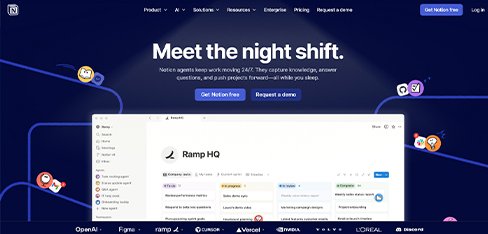
Notion competed in crowded productivity market without clear differentiation strategy. UX Stalwarts conducted comprehensive competitive analysis identifying 23 unique positioning opportunities. Growing users 156 percent and improving win rate from 34 to 67 percent proved differentiation beats feature parity. The strategic focus on flexibility versus specialization came directly from competitive insights. This analysis transformed Notion from another productivity tool to unique workspace platform.
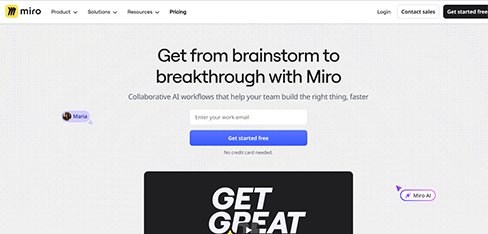
Miro competed with 15+ whiteboard platforms without clear differentiation. UX Stalwarts conducted competitive analysis identifying underserved collaboration use cases. Discovering $230 million market opportunity in strategic workflows proved category analysis reveals growth. The 189 percent enterprise adoption increase came from competitive insights about security requirements. This analysis transformed Miro from commodity whiteboard to strategic collaboration platform.
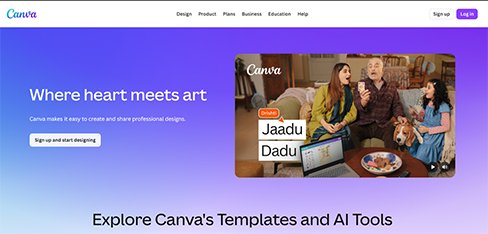
Canva faced pressure to add complexity to compete with Adobe but risked losing simplicity advantage. UX Stalwarts conducted competitive UX analysis revealing our 12x speed advantage for target users. Improving conversion 340 percent by emphasizing this advantage proved differentiation beats feature parity. The professional adoption increase of 67 percent showed we could add advanced features while maintaining accessibility. This analysis gave us confidence in strategic positioning.
Considering competitive analysis services? Here is what leaders typically ask.
Our competitive analysis services (part of our broader competitive analysis solutions) include competitor identification and landscape scoping, digital footprint data collection across SEO, content, advertising, and social channels, hands-on UX evaluation of competitor products, multi-axis competitor scoring and benchmarking, SWOT analysis, feature gap mapping, conversion path comparison, pricing model evaluation, and a prioritized opportunity roadmap. Deliverables are compiled into a comprehensive competitive intelligence report with actionable recommendations. The scope is tailored to your specific market, goals, and decision-making needs, delivered as a competitive analysis services agency, ensuring findings are relevant and immediately useful for product, marketing, and leadership teams.
Most competitive analysis companies focus primarily on SEO metrics, traffic estimates, and advertising spend analysis. Our approach adds a critical dimension: UX and design intelligence. We evaluate competitor products as experienced designers and researchers, auditing interaction flows, visual design quality, conversion mechanics, and accessibility standards alongside traditional digital marketing metrics. This dual perspective, combining quantitative data analysis with qualitative experience evaluation, as part of our competitor analysis consulting work, produces insights that inform both marketing strategy and product design decisions, which single-dimension analysis cannot achieve.
Pricing depends on the number of competitors analyzed, the depth of evaluation required, and whether the engagement is a one-time assessment or includes ongoing monitoring. Compared with other competitive research companies and competitive research firms, A focused analysis covering three to five competitors with digital footprint data, UX evaluation, and scored comparison typically falls within a mid-four-figure investment. Enterprise-scale engagements covering ten or more competitors across multiple markets, with ongoing monitoring and quarterly refreshes, represent larger investments. The cost is consistently justified by the strategic clarity gained and the missteps avoided through evidence-based competitive intelligence.
A standard engagement analyzing five to seven competitors across digital and experience dimensions takes four to six weeks from scoping to final briefing. More complex projects involving ten or more competitors, multiple product lines, or international market comparisons may extend to eight to ten weeks. Ongoing competitive monitoring retainers operate on monthly or quarterly review cycles after the initial baseline analysis is delivered. As a strategic competitive analysis agency,We establish clear timelines during the scoping phase so your team knows exactly when to expect deliverables.
A UX competitor audit evaluates how competitor products perform from a user experience perspective, examining navigation architecture, onboarding flows, content hierarchy, form design, visual consistency, responsive behavior, and conversion path clarity. Bundled within our competitive landscape assessment services, This matters because digital products increasingly compete on experience quality, not just features or price. Our UX audit services provide the internal assessment of your own product, while UX competitor audit services apply the same rigorous evaluation methodology to your competitors, creating a complete benchmarking picture that reveals where your experience leads or lags.
Yes. Our saas competitor analysis methodology is designed for the unique dynamics of subscription-based software markets. As a saas competitor analysis company, This includes evaluating competitor pricing tiers and packaging strategies, free trial and freemium onboarding experiences, feature comparison matrices, customer review sentiment analysis, product-led growth mechanics, and content marketing effectiveness. Our reputation as a saas competitor analysis company means SaaS competitive dynamics differ significantly from traditional product markets because conversion, activation, retention, and expansion all happen within the product experience itself, requiring analysis that understands software product design, not just marketing positioning.
An initial comprehensive analysis should be refreshed at minimum every six to twelve months for most industries. Fast-moving markets like SaaS, fintech, and e-commerce benefit from quarterly refreshes or continuous monitoring retainers. Major competitor events, including website redesigns, pricing changes, product launches, or new market entries, should trigger ad-hoc analysis updates regardless of the regular schedule. Renewable competitive analysis solutions help here, since The key is treating competitive intelligence as an ongoing practice rather than a one-time project, since competitor positioning evolves continuously and yesterday’s analysis loses relevance with each market shift.
Any industry with multiple digital competitors and online conversion goals benefits from competitive landscape assessment. Our competitive landscape assessment services span these industries, and the impact is particularly significant in SaaS, fintech, healthcare technology, e-commerce, insurance, education platforms, and B2B professional services because these sectors have dense competitive fields, high customer acquisition costs, and significant digital experience expectations. as a competitive analysis agency india clients trust, our Enterprise competitor analysis company engagements in regulated industries like healthcare and finance also benefit from compliance-focused competitor benchmarking that evaluates how rivals handle data privacy, accessibility, and regulatory requirements.
An SEO competitor audit examines which keywords your competitors rank for, their content depth by topic cluster, their backlink profiles, their technical SEO health, and their content publishing cadence. As a competitive analysis services agency, This intelligence directly shapes your own SEO strategy by revealing keyword opportunities your competitors have captured or missed, content formats that are generating organic visibility in your space, and link-building patterns you can learn from or surpass. Competitive SEO insights complement our broader conversion rate optimization work by ensuring that traffic quality and volume align with conversion goals.
Standard deliverables include a competitor landscape overview with market positioning map, individual competitor scorecards with multi-axis performance ratings, a SWOT analysis matrix for the full competitor set, annotated UX evaluation summaries with screenshots and interaction flow documentation, an SEO and content gap analysis report, a feature comparison matrix, and a prioritized opportunity roadmap with specific recommendations for product, marketing, and design teams. Delivered with the rigor of a landscape assessment marketing company, Enterprise engagements also include sales battlecard materials and competitive positioning workshop facilitation.
Significantly. Working with a strategic competitive analysis agency means Competitive analysis reveals design patterns that competitors use successfully, interaction models that confuse or frustrate their users, feature implementations that create market differentiation, and experience gaps that represent opportunities for your product. When paired with UX research, competitive findings create a complete picture of both user needs and market context, enabling your design team to make decisions that are simultaneously user-centered and competitively informed. This is why our analysis includes hands-on experience evaluation, not just marketing metric comparison.
Yes. We offer monitoring retainers on monthly or quarterly cycles. Ongoing retainers include automated competitor website change tracking, periodic UX re-evaluation of updated competitor flows, SEO visibility trend monitoring, content publishing cadence tracking, and scheduled briefings with your team. Retainer clients also receive priority access to ad-hoc analysis requests when significant competitor moves occur. This continuous approach ensures your competitive intelligence stays current and your strategic responses remain timely.
Accuracy is maintained through multiple verification methods. SEO and traffic data is cross-referenced across two or more tools to validate consistency. UX evaluations are conducted by multiple analysts independently to minimize subjective bias. Feature and pricing comparisons use primary source verification through direct product access, not secondhand reporting. All findings are timestamped and sourced, so your team can trace any claim back to its evidence. Operating as a landscape assessment marketing company, This methodological rigor is what distinguishes professional competitive intelligence services from informal competitor observation.
Landscape assessment marketing involves mapping the full competitive environment to understand how your messaging, positioning, and content strategy compare to the broader market context. It goes beyond individual competitor comparison to assess category-level patterns: how the entire market communicates value, which messaging angles are saturated, and where positioning white space exists. When connected to brand identity strategy, landscape assessment ensures that your brand voice and visual positioning are genuinely differentiated, not accidentally similar to multiple competitors.
Yes. For enterprise competitor analysis company engagements, we produce sales battlecards that summarize competitor strengths, known weaknesses, common objections, and recommended counter-positioning for your sales team. As a competitive analysis agency india leaders rely on, These materials are designed for use during active deals and RFP responses, giving your representatives verified, current competitive intelligence rather than outdated assumptions. Battlecards are especially valuable in markets where prospects routinely evaluate three to five competing solutions, since the sales team that demonstrates the deepest understanding of competitive positioning typically wins buyer confidence.

C – 81C, Sector – 8, Noida 201301, India


1025 Beamon Drive, Franklin 37064 Tennessee, USA
Sveavagen 34 111 34 Stockholm, Sweden
A-10, Sahastradhara Rd, Doon IT Park, Dehradun, Uttarakhand

© 2026 UX STALWARTS. All rights reserved.