Most digital products lose qualified prospects at the final step. A registration form with one unnecessary field, a call to action button buried below the fold, or an error message that confuses rather than corrects can silently erode months of marketing spend. Form abandonment rates across industries regularly exceed thirty percent, meaning nearly a third of interested visitors leave before completing their intended action. When form optimization services and CTA optimization services are missing from your digital strategy, every acquisition channel delivers diminished returns regardless of traffic volume.
Our form UX optimization agency approach begins with granular analytics on every field, label, validation rule, and button interaction across your conversion paths. From multi-step lead form optimization to CTA placement testing and micro-copy refinement, our team architects form experiences that reduce cognitive load and motivate completion. Deliverables include restructured form flows, interaction prototypes, CTA hierarchy maps, and annotated design specifications ready for development. Each engagement produces measurable improvements in form conversion optimization, submission quality, and downstream pipeline velocity for both B2B and B2C environments.
With eighteen years of cross-industry design execution, UX Stalwarts brings a behavioral science foundation to every form and CTA engagement. Our optimization decisions are grounded in session replay analysis, field-level drop-off data, and validated interaction patterns rather than assumptions or visual preferences. Where competitors offer surface-level CTA design best practices, we deliver end-to-end conversion funnel optimization that connects form UX design to lead quality and revenue outcomes. The result is a measurable, repeatable system for turning interface friction into business growth.

Every form optimization project begins with field-by-field abandonment analysis, not page-level guesswork. We map exactly where users hesitate, correct, or leave across each input, dropdown, and checkbox. This granular diagnostic precision means recommendations target actual friction points, producing faster and more measurable conversion lifts.

Call to action optimization services succeed when button text, microcopy, and instructional labels align with user motivation at each funnel stage. Our copywriting process applies cognitive load theory and action framing to every label, placeholder, and confirmation message, ensuring each word reduces hesitation and guides completion.

Having optimized forms and CTAs across healthcare, financial services, SaaS, education, and e-commerce, our team maintains validated interaction pattern libraries for each vertical. These libraries accelerate design decisions by applying sector-specific compliance requirements, user behavior norms, and proven field sequencing from real engagements.

Recommendations are never delivered as static documents alone. Every proposed form restructure and CTA redesign is prototyped as an interactive clickable flow, tested with representative users before development begins. This validation step eliminates costly rework and builds stakeholder confidence through observable evidence of improved task completion rates.

Form UX optimization agency work that ignores mobile is incomplete by default. Our team designs touch-optimized input sequences, device-appropriate keyboards, autofill-compatible field structures, and responsive CTA placement from the first wireframe. Mobile form conversion rates receive equal analytical rigor to desktop performance benchmarks.

Optimization does not end at deployment. We configure ongoing form analytics dashboards, CTA click-tracking event models, and automated alert thresholds that detect performance regressions before they impact revenue. Clients receive monthly performance summaries with recommended micro-adjustments, ensuring conversion improvements compound over time rather than decay.

Forms and calls to action are the final conversion gatekeepers of any digital product. When these elements are optimized with behavioral precision, they do far more than increase submission counts. They improve lead quality by attracting genuinely interested prospects, reduce support burden by eliminating confusion-driven errors, and accelerate sales cycles by delivering complete, accurate data to your teams from the first interaction. Surface-level button color changes rarely produce lasting gains. Meaningful form conversion optimization requires understanding the psychology behind every field sequence, error state, and action prompt. Our specialists bring exactly that depth to each engagement.
Partner with a team that turns friction into measurable revenue.
Our proven methodology isolates conversion barriers, validates solutions before deployment, and ensures every change produces traceable business results.

We collect field-level analytics, session recordings, and heatmap data across all existing forms and CTAs. This audit identifies specific abandonment triggers, confusing field labels, problematic validation rules, and underperforming button placements. The output is a prioritized friction map ranking every issue by estimated revenue impact.

User intent varies by entry point, funnel stage, and device type. We segment form interactions by traffic source and behavioral cohort to understand what each visitor expects at each step. This phase produces audience-specific journey models that inform field sequencing, CTA language, and progressive disclosure strategies.

Using audit findings and intent maps, our team restructures form architecture, field grouping, step progression, and CTA hierarchy. Decisions include consolidating redundant fields, introducing conditional logic, repositioning primary and secondary action buttons, and rewriting microcopy. Every structural choice is documented with its supporting evidence and expected outcome.

All redesigned forms and CTA configurations are built as interactive prototypes that replicate real user flows. These prototypes undergo moderated usability testing with representative participants to validate assumptions before any development investment. Testing outcomes are recorded with task completion rates, time-on-task, and qualitative feedback summaries.

Validated designs are translated into developer-ready specifications with annotated wireframes, interaction state documentation, responsive breakpoint rules, and accessibility compliance notes. Our team collaborates directly with your engineering group to ensure form logic, validation behaviors, and CTA event tracking are implemented precisely as designed and tested.

After deployment, we establish baseline metrics and configure continuous monitoring for form completion rates, CTA click-through rates, field error frequency, and downstream conversion quality. Monthly performance reviews identify emerging friction and recommend iterative adjustments. This ongoing cycle ensures that optimization gains are sustained and compounded.
Across 1,000+ client engagements and multiple industries, our form and CTA optimization work delivers outcomes that teams can measure directly.
Our approach to form field optimization and CTA design is built on scalability, compliance awareness, and measurable business alignment. Whether working with a seed-stage startup refining its first lead capture flow or an enterprise restructuring multi-step onboarding forms across regulatory environments, our team applies the same analytical rigor and behavioral design methodology adapted to each organization’s scale, user sophistication, and risk tolerance.
Direct experience across healthcare, fintech, SaaS, e-commerce, education, insurance, logistics, real estate, and government services has built a deep understanding of sector-specific form challenges. Healthcare intake forms require HIPAA-aware field handling. Financial applications demand compliant identity verification flows. B2B SaaS signups benefit from progressive profiling. This industry fluency means faster project ramp-up and higher-impact optimization recommendations.

While many agencies treat form and CTA adjustments as secondary tasks within broader CRO retainers, we have refined a specialized discipline around conversion interface optimization. This focused expertise, validated by measurable results across hundreds of engagements, produces outcomes that generalist teams consistently cannot replicate.
Behavioral Science Foundation: Every design decision is rooted in cognitive load theory, decision architecture, and validated interaction psychology, not aesthetic trends or assumptions.
Revenue-Connected Measurement: We track optimization impact through to pipeline and revenue metrics, not just submission volume, proving ROI with business outcomes, not vanity numbers.
Compliance-Embedded Design Thinking: Form structures are built with data privacy, accessibility standards, and regulatory requirements integrated from the first wireframe, not retrofitted.
Our team leverages a carefully selected technology stack that combines behavioral analytics, interaction prototyping, and performance testing to deliver precise, data-driven form and CTA optimization outcomes.









LinkedIn lead generation forms were limiting our content marketing because completion rates were terrible. We debated endlessly about required fields without data. UX Stalwarts implemented systematic form optimization and progressive profiling. Increasing completion 82 percent while maintaining lead quality through progressive collection proved you can have both. The 138 percent mobile improvement showed device-specific optimization is critical. This form optimization transformed our demand generation effectiveness.
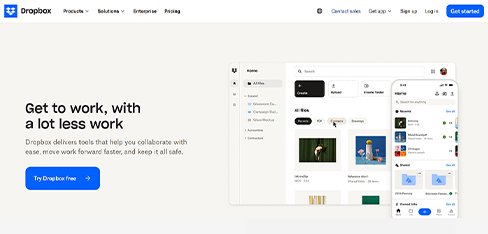
Dropbox was losing two-thirds of interested visitors during signup because our flow had too much friction. UX Stalwarts systematically optimized each element. Increasing conversion 94 percent and reducing signup time from 3.2 minutes to 47 seconds proved every click and field matters. The 73 percent social signup adoption showed users prefer convenience over email creation. This signup optimization fundamentally improved our user acquisition efficiency.
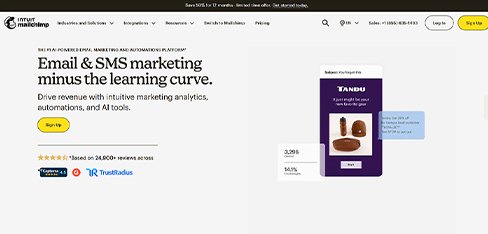
Mailchimp customers were building email lists but conversion rates were dismal because CTA messaging and placement were weak. UX Stalwarts created optimization framework for our customers. Increasing average conversion 127 percent and showing benefit-driven messaging outperformed generic subscribe 3.2x gave customers proven playbook. The 4.8x improvement from placement changes showed where matters as much as what. This CTA optimization became core to customer success.
Considering form and CTA optimization? Here is what decision-makers ask.
Start by evaluating whether the agency uses data-driven diagnostics or relies on generic best practices. Ask to see case studies with measurable outcomes such as conversion rate lifts, form completion increases, or lead quality improvements. Look for a team that analyzes field-level abandonment data rather than just page-level metrics. The right form optimization company India or globally should also demonstrate experience in your specific industry, since form UX challenges differ significantly between a healthcare intake flow and a SaaS trial signup. Finally, confirm that the agency provides post-launch monitoring rather than a one-time deliverable, a baseline expectation when engaging a credible Form & CTA Optimization company.
Comprehensive call to action optimization services cover much more than changing button colors. A thorough engagement includes CTA audit and placement analysis, copy testing across funnel stages, visual hierarchy mapping, A/B testing program setup, mobile responsiveness validation, and click-through performance tracking. The best CTA optimization agency teams also assess the alignment between CTA messaging and the landing page or form it connects to, since mismatches between button promises and destination content are a leading cause of post-click abandonment, a gap that a seasoned CTA optimization agency India team identifies early.
Pricing depends on the scope of your optimization needs. A focused audit of a single lead capture form with a prioritized recommendation report can range from modest four-figure investments. Enterprise engagements covering multiple form flows, multi-step onboarding sequences, CTA hierarchy redesigns, prototyping, and post-launch monitoring represent larger investments spread across several months. When evaluating cost, compare the investment against the revenue impact of even a small conversion lift. Increasing form completion rates by just five to ten percent on high-traffic pages often delivers returns that far exceed the project fee within the first quarter, which is why scoping with experienced Form & CTA Optimization solutions providers pays off.
Timeline varies based on the number of forms and CTAs under review. A single-form diagnostic and redesign can be completed in three to four weeks, including audit, prototyping, testing, and implementation handoff. Larger engagements covering full conversion funnels with multiple form types, CTA hierarchies across pages, and iterative A/B testing programs typically run eight to twelve weeks for the initial phase. Post-launch monitoring and iterative refinement continue on a monthly cadence after deployment, a standard timeline for mature form optimization services engagements.
Our process follows six structured phases. We begin with a diagnostic audit using field-level analytics and session recordings to identify specific friction points. Next, we map user intent by traffic source and behavioral segment. We then restructure form architecture and CTA placement based on audit findings. Interactive prototypes are built and tested with real users before development. Validated designs are handed off with full implementation specifications. After launch, we monitor performance continuously and recommend iterative improvements to sustain and compound gains, the working model used by established Form & CTA Optimization firms.
General CRO agencies spread their attention across landing pages, pricing pages, checkout flows, and many other conversion touchpoints. A specialized form UX optimization agency brings deeper expertise to the specific interaction patterns that govern how users complete data entry tasks and respond to action prompts. This specialization means more refined diagnostic methods, stronger pattern libraries from prior form engagements, and a sharper understanding of input-level friction, validation psychology, and progressive disclosure techniques that generalists typically lack, a distinction that separates specialist Form & CTA Optimization agencies from broader teams.
Absolutely. Well-optimized forms do more than increase submission counts. By using conditional logic, strategic field sequencing, and qualifying questions placed at the right step, forms can filter for intent and readiness without adding unnecessary friction. When form UX design is calibrated correctly, the result is a higher percentage of submissions from genuinely qualified prospects, which shortens sales cycles and reduces wasted outreach. Our work on conversion rate optimization consistently confirms that lead quality and form design are directly connected.
We measure CTA performance through a combination of click-through rate, downstream conversion rate (what happens after the click), engagement heatmaps, and scroll depth analysis to assess visibility. For CTAs connected to forms, we also track form start rate relative to CTA clicks to identify post-click drop-off. Revenue attribution modeling connects CTA performance to actual pipeline outcomes, ensuring that improvements are measured in business terms rather than isolated click metrics alone, a measurement discipline shared by leading CTA optimization agency India practices.
Yes. Form and CTA performance is not static. User behavior shifts as traffic sources change, product offerings evolve, and market conditions fluctuate. We offer post-launch monitoring retainers that include monthly performance reviews, automated alert configurations, and a set number of iterative design adjustments per cycle. This ongoing relationship ensures that optimization gains are protected and that new friction points are identified and addressed before they impact conversion rates or lead quality, an ongoing engagement model built into modern Form & CTA Optimization solutions.
Every industry with digital lead capture or conversion goals benefits, but the impact is especially significant in verticals where forms are long, complex, or involve sensitive data. Healthcare, financial services, insurance, higher education, B2B SaaS, and e-commerce consistently see large conversion gains from professional form field optimization because their forms often carry regulatory requirements, multiple decision stages, or high perceived commitment that amplifies user hesitation, which is why a specialist form optimization company India practice sees steady demand here .
Our optimization methodology is platform-agnostic. We work with forms built on WordPress, HubSpot, Marketo, Salesforce, Webflow, custom React applications, Shopify checkout flows, and native mobile platforms. The optimization process focuses on user experience principles, interaction design, and behavioral analysis rather than any single technology, which means our recommendations and prototypes translate effectively regardless of the underlying development framework your team uses, a flexibility most reputable Form & CTA Optimization firms now offer.
Button optimization covers visual prominence, copy clarity, placement strategy, size relative to surrounding elements, and contrast against the page background. Research consistently shows that specific, outcome-focused CTA copy outperforms generic labels like “Submit” or “Click Here.” Beyond individual button performance, the hierarchy between primary and secondary CTAs on a single page determines whether users feel guided or overwhelmed. Our work on A/B testing services provides the testing framework to validate every button change with statistical confidence.
Form redesign is a visual and structural overhaul of the entire form interface. Form optimization is a data-driven, iterative process that identifies and resolves specific friction points within the existing structure. Optimization may result in a redesign if the diagnostic findings warrant it, but it often produces significant conversion improvements through targeted adjustments such as reordering fields, refining validation messages, adjusting label copy, or introducing progressive disclosure, all without a complete visual rebuild, an approach commonly taken by a results-focused Form & CTA Optimization company.
Mobile form optimization requires attention to touch target sizing, input type mapping (triggering numeric keyboards for phone fields, email keyboards for email fields), autofill compatibility, thumb-friendly field and button placement, and scroll behavior within multi-step flows. We analyze mobile-specific session data separately from desktop to identify device-specific friction. Given that mobile traffic exceeds fifty percent for most digital products, mobile form UX receives dedicated analytical and design attention in every engagement, a focus area for mature Form & CTA Optimization agencies.
Form and CTA optimization is one component of a comprehensive conversion strategy. It connects directly to landing page optimization since forms often live on dedicated landing pages, and to broader CRO since forms and CTAs are the primary conversion mechanisms across most digital products. A UI UX agency for conversion improvement treats forms and CTAs as part of an integrated experience ecosystem rather than isolated page elements, ensuring that optimization at the form level aligns with messaging, navigation, and the full user journey, which is the working philosophy of any serious UI UX agency for conversion improvement.

C – 81C, Sector – 8, Noida 201301, India


1025 Beamon Drive, Franklin 37064 Tennessee, USA
Sveavagen 34 111 34 Stockholm, Sweden
A-10, Sahastradhara Rd, Doon IT Park, Dehradun, Uttarakhand

© 2026 UX STALWARTS. All rights reserved.