Building separate native apps for iOS and Android while maintaining a responsive website triples design effort, fragments the user experience, and inflates long-term maintenance costs. Users who resist downloading apps from stores miss your product entirely, while those who do download often abandon apps that feel slow or disconnected from the web experience they already know. Without a unified approach, organizations spend more to reach fewer people. Progressive web app design services solve this fragmentation by delivering app-quality experiences through the browser, eliminating store dependencies while preserving the performance users expect.
Our progressive web app design services create interfaces that load instantly, function offline, support push notifications, and install directly to home screens without requiring app store submission. From custom progressive web app design for content platforms and e-commerce storefronts to enterprise PWA development supporting field operations in low-connectivity environments, we deliver wireframes, interactive prototypes, high-fidelity mockups, and documented component libraries. Every engagement begins with understanding how your users access your product across devices and network conditions, ensuring the finished interface performs reliably regardless of bandwidth or screen size.
With eighteen years of cross-industry design experience and over a thousand completed product engagements, UX Stalwarts brings a design-first approach to progressive web apps that separates us from development-led agencies. Where competitors focus on service workers and caching strategies, we focus on how users experience loading states, offline transitions, installation prompts, and notification interactions. Our teams have designed PWAs for media platforms, logistics tools, healthcare portals, and retail experiences where seamless cross-device performance determines whether users return daily or abandon the product entirely.

PWAs must feel useful even when connectivity fails. We design offline states that communicate clearly what content is available, what actions are queued for sync, and when the connection resumes. Instead of displaying generic error screens, our interfaces maintain functionality and confidence so users continue working without confusion or frustration.

The moment a browser prompts users to install a PWA determines whether they adopt or dismiss it. We design custom installation flows that trigger at contextually appropriate moments, use clear value propositions, and avoid intrusive interruptions. This strategic approach increases home screen installation rates without creating the annoyance that premature prompts cause.

Mobile-first web app design is not simply shrinking desktop layouts. We design interactions calibrated for touch, thumb-zone navigation patterns, and vertical scroll behavior first, then expand for tablet and desktop contexts. This approach ensures that the primary device most users encounter delivers the strongest experience rather than a scaled compromise.

Responsive PWA design services require interfaces that maintain functional parity across smartphones, tablets, laptops, and desktops without duplicating design effort. We create adaptive component systems where navigation, content density, and interaction patterns adjust to each viewport while preserving visual identity and workflow continuity so users switch devices without relearning the interface.

Push notifications are the most powerful re-engagement tool PWAs offer, but poorly designed notification permissions and content destroy user trust. We design opt-in sequences that explain notification value before requesting permission, categorized notification preferences, and in-app notification centers that give users control over frequency, type, and delivery timing.

PWAs must feel fast regardless of network quality. We design loading sequences with skeleton screens, progressive image rendering, and content prioritization that ensures the most critical interface elements appear first. These performance-aware design patterns maintain the perception of speed even on slower connections, directly reducing bounce rates.
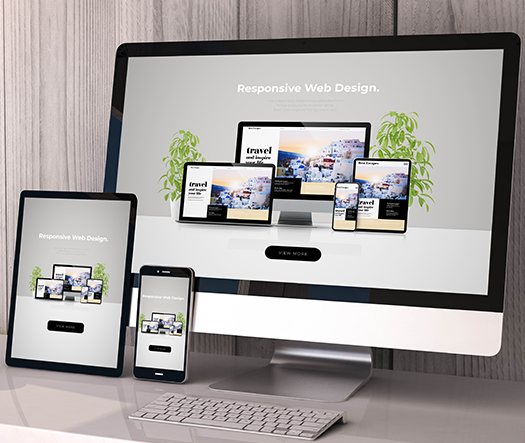
The benefits of progressive web apps extend beyond technical efficiency. From a user experience perspective, PWAs eliminate the friction of app store discovery, download waiting, and storage management that prevents many users from ever trying your product. Visitors can engage immediately through a URL, experience full app-like functionality, and install to their home screen when they are ready. This lowers the barrier between first visit and habitual use. When the design handles offline states gracefully, loads content progressively, and supports background sync without disrupting the user, engagement metrics approach those of well-built native applications at a fraction of the design and maintenance investment.
Partner with PWA design specialists who understand both web and native.
Each phase builds on validated outputs from the previous step, ensuring the final PWA delivers native-quality experience through disciplined, evidence-based design decisions.

We map your user base across devices, network conditions, and usage contexts to understand where a PWA delivers the greatest value over traditional web or native approaches. This phase identifies which features require offline capability, which interactions demand native-like responsiveness, and which user journeys span multiple devices within a single session.

App shell structure, navigation hierarchy, and content caching strategy are defined based on discovery findings. We determine which interface components load instantly from cache, which content refreshes from the server, and how the application handles transitions between online and offline states. Wireframe concepts validate structural decisions before visual investment.

PWA-specific interaction patterns are designed including installation prompts, push notification opt-in flows, offline indicators, background sync feedback, and loading state sequences. Each pattern accounts for how progressive web apps work technically while ensuring the user perceives a smooth, responsive experience regardless of what is happening behind the interface.

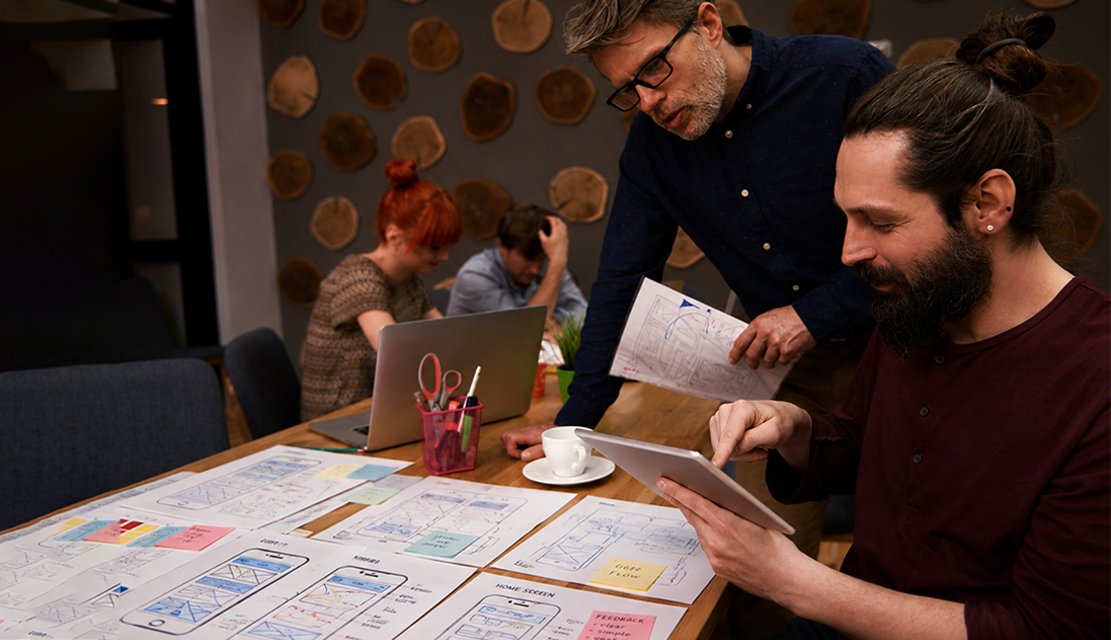
High-fidelity mockups apply brand identity, typography, color system, and imagery standards to validated wireframes. Component designs are specified for every state including loading, offline, error, empty, and success conditions. The visual layer maintains consistency across platforms so the PWA feels equally polished on mobile browsers, desktop windows, and installed home screen contexts.

Interactive prototypes undergo usability testing across target devices and simulated network conditions. We measure task completion rates, evaluate offline state comprehension, test notification permission acceptance rates, and assess installation flow effectiveness. Findings drive targeted refinements ensuring the PWA performs intuitively across every scenario before development begins.

We deliver annotated Figma files, a documented component library covering all PWA-specific patterns, responsive breakpoint specifications, and interactive prototypes. Post-handoff, we conduct design QA reviews during development sprints to confirm the implemented PWA matches approved designs across browsers, devices, and connectivity conditions.
Across 1,000+ client engagements spanning enterprise platforms, consumer products, and field operations tools, our PWA interfaces have delivered measurable engagement gains.
Our PWA design company approach is built on two commitments: performance that ensures app-quality speed regardless of network conditions, and accessibility that reaches users who cannot or will not install native applications. Whether serving a media platform requiring offline article reading, a logistics company needing field data capture without reliable connectivity, or a retail brand seeking frictionless mobile commerce, we calibrate offline capability, notification strategy, and installation flows to match operational needs.
We have delivered UI UX design for PWA across media publishing, retail, healthcare, logistics, education, financial services, field services, and internal enterprise tools. Each sector carries distinct requirements around offline data handling, security constraints, and user expertise levels. This cross-industry breadth allows our designers to apply validated PWA interaction patterns while customizing caching strategy, notification logic, and installation timing for each engagement.

Most agencies approach PWAs as a technical implementation challenge. We approach them as a user experience opportunity. The design decisions that determine whether a PWA feels like a native app or a compromised website have nothing to do with code frameworks. They depend on how loading, offline, notification, and installation moments are designed for human comprehension.
Connectivity-Aware Design Philosophy: We design for every network state, from high-speed broadband to complete offline, ensuring the experience degrades gracefully rather than breaking entirely.
Native-Parity Interaction Quality: Touch responses, transition animations, gesture handling, and scroll behaviors are designed to match native app expectations so users cannot distinguish the difference.
Engagement-Driven Pattern Library: Notification flows, installation prompts, and re-engagement patterns are delivered as documented, reusable components calibrated for maximum user adoption.
We use leading design, prototyping, and testing tools to create progressive web app interfaces that integrate with your development framework and deployment infrastructure.









Only 8 percent of our customers would download a native app but 74 percent shopped on mobile web with terrible conversion. UX Stalwarts built a PWA that gives the app experience without the app store friction. PWA users growing to 4X the native app base while conversion improved 88 percent proved that PWA is the right strategy for grocery where everyone browses but few download.
Our customers in small-town America are not downloading convenience store apps on their limited-storage phones, especially when cell coverage is spotty. UX Stalwarts designed a PWA that works offline on old phones over slow connections. Reaching 4.8X more users than our native app and pizza orders increasing 56 percent proved that PWA is the right technology for serving real America.
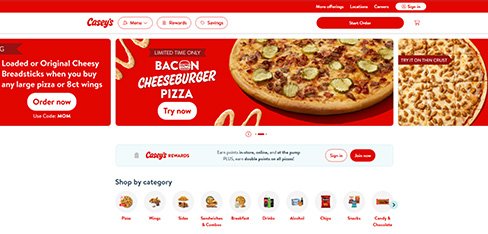
Asking first-time customers to download an app before they have even tried our food is a barrier that kills digital trial. UX Stalwarts built a PWA that gives the full ordering experience instantly through a QR code scan. Repeat orders jumping 72 percent and in-store PWA installations reaching 180,000 proved that removing the download step dramatically accelerates digital customer relationships.
Considering a PWA for your product? Here are detailed answers to what product and engineering teams ask most.
A progressive web app is a web application that uses modern browser capabilities to deliver app-like experiences including offline access, push notifications, and home screen installation without requiring app store distribution. When comparing progressive web app vs native app, the key differences are distribution method (URL vs. app store), development investment (single codebase vs. platform-specific builds), and update mechanism (instant vs. store approval). PWAs reach wider audiences at lower cost while native apps offer deeper hardware integration. Our design practice ensures your PWA delivers native-quality interaction without sacrificing the reach advantages the web provides. Our progressive web apps design services and progressive web app design solutions are calibrated to extract this advantage for each product context.
The best progressive web app design agency will demonstrate expertise in PWA-specific UX challenges that general web design agencies rarely address. These include offline state design, installation prompt timing, push notification UX, and connectivity-aware loading patterns. Ask for case studies showing engagement metrics, not just visual portfolios. Confirm they deliver documented component libraries covering all PWA interaction states. Evaluate whether their process begins with user research and device-context analysis rather than jumping directly to framework selection. Agencies that combine UX research discipline with progressive web technology understanding produce PWAs that users genuinely adopt. Evaluating any Progressive Web App UI Design Agency or one of the Progressive Web App UX Design Firms on these criteria reveals which partners are equipped for production-grade work.
PWA design services pricing varies based on the number of unique views and user flows, the depth of offline functionality required, the complexity of notification and installation UX, and whether the project includes a full design system with PWA-specific components. A focused content-consumption PWA costs differently than a comprehensive enterprise field application with complex offline data sync and multi-role access. India-based agencies with strong UX capabilities offer competitive pricing relative to US or European firms at comparable quality. Request a scoped proposal with itemized deliverables so you can compare progressive web app development companies meaningfully. When you assess any progressive web app design company against peer progressive web app design firms, the scope of offline UX usually explains the largest cost differences.
Timeline depends on complexity. A focused custom PWA design services engagement covering core screens with predefined offline and notification requirements typically takes six to ten weeks including discovery, wireframing, visual design, prototyping, and handoff. A comprehensive enterprise PWA development project spanning multiple user roles, extensive offline data handling, and a full component library may take three to five months. Projects requiring field testing across varied network conditions or accessibility compliance for regulated industries may extend further. We establish milestone-based timelines during discovery. Among progressive web app design companies, those that operate as a Custom PWA Design Agency tend to give cleaner milestone forecasts because their scope is shaped to your product rather than a fixed template.
The benefits of progressive web apps extend well beyond technical efficiency. From a user experience perspective, PWAs eliminate download friction since users access the full experience through a URL without visiting an app store. Instant loading through cached app shell architecture means returning users see content immediately. Offline capability allows continued access to previously loaded content and queued actions. Home screen installation happens naturally after users demonstrate interest, rather than requiring upfront commitment. Push notifications re-engage users with timely, relevant updates. These PWA features and advantages combine to create engagement patterns that rival native apps at significantly lower distribution cost. Mobile-Friendly PWA Design Services combined with Web Application PWA Design Services produce these engagement gains by aligning interaction design with how users actually access the product across devices.
Understanding how progressive web apps work from a design perspective involves three layers. The app shell provides the persistent structural framework including navigation, header, and layout containers that load instantly from cache. Content within the shell refreshes from the network when available or displays cached versions when offline. Service worker logic determines caching strategy, but the designer defines how each connectivity state looks and communicates to the user. Our design practice specifies every transition between online, offline, loading, and syncing states so users always understand what the interface is doing and what actions are available. Established Progressive Web App UI/UX Design agencies and any focused Progressive Web App UI/UX Design Company codify these state transitions inside reusable component libraries.
Yes. Enterprise PWA development is a core capability within our practice. Enterprise and field operations PWAs face challenges that consumer applications rarely encounter: unreliable network connectivity in remote locations, complex data entry requirements, multi-role access controls, and mandatory audit trail compliance. We design enterprise PWAs with robust offline data capture, queued submission workflows, and clear sync status indicators that field teams trust for mission-critical work. Our enterprise software design services complement PWA engagements where the application is part of a larger operational platform. A specialized PWA Development and Design Agency, or any partner offering Web Application PWA Design Services for regulated environments, gives field teams interfaces they can rely on.
The importance of mobile-first web apps cannot be overstated for PWA success because the majority of PWA users access these applications on smartphones. Mobile-first web app design ensures that touch interactions, thumb-zone navigation, vertical scroll patterns, and viewport-specific content density are designed as primary experiences rather than scaled-down desktop adaptations. PWAs that prioritize mobile deliver faster perceived performance, higher engagement rates, and stronger installation conversion because the experience feels native from the first interaction. Our mobile app design services inform our mobile-first PWA design approach. Mobile-Friendly PWA Design Services pair naturally with broader progressive web app design solutions where touch ergonomics drive the primary interaction model.
Yes. Scalable PWA solutions require design architecture that accommodates growing content libraries, expanding user bases, and evolving feature sets without requiring structural redesigns. We build PWA interfaces on modular component systems with documented patterns for navigation, content display, forms, and notifications that maintain consistency as new sections are added. Our design system approach ensures that scaling from ten screens to a hundred follows established patterns rather than introducing visual or functional inconsistency. Explore how our design system creation services support long-term PWA scalability. Our progressive web apps design services and partnerships with senior progressive web app design firms allow the system to grow without redesigning its foundation.
Responsive web design adapts visual layout to different screen sizes. PWA design goes further by addressing offline functionality, installability, push notifications, background sync, and app-like interaction quality alongside responsive layouts. A responsive website adjusts columns and font sizes; a PWA manages cached content, queued user actions, and connectivity transitions. Our responsive PWA design services incorporate both dimensions, ensuring the interface adapts visually to every viewport while also handling the behavioral complexity that separates a progressive web app from a standard responsive website. Our responsive web design services provide the foundational adaptive principles. Choosing a Progressive Web App UI Design Agency or a Custom PWA Design Agency over a generalist studio is the single biggest predictor of whether these dimensions are handled with discipline.
Yes. We offer affordable PWA development services scaled to startup budgets by focusing on the core screens and interaction patterns that deliver the most user value first. Our phased approach allows startups to launch with a focused PWA covering essential workflows, then expand functionality as the product gains traction and funding. This lean methodology avoids over-investing in features before market validation while ensuring the foundation supports growth. Startups benefit from the same design rigor we apply to enterprise engagements, calibrated to their specific resource constraints and growth timeline. Many startups shortlist progressive web app design companies and individual progressive web app design company options, then narrow based on which partner can phase delivery alongside funding milestones.
When you compare progressive web app development companies, evaluate three dimensions. First, determine whether they lead with design or development. Development-first agencies often produce technically functional PWAs with poor user experience. Second, review their PWA-specific case studies for engagement metrics like installation rates, offline usage, and notification opt-in percentages. Third, assess whether they deliver documented design systems or just static screen designs. Top PWA development companies invest in understanding your users’ device and connectivity context before writing any code or selecting any framework, producing applications that users genuinely prefer over alternatives. Shortlist a mix of focused Progressive Web App UX Design Firms and a hybrid PWA Development and Design Agency to see how each approaches your specific design and engineering trade-offs.
The PWA features and advantages you prioritize depend on your user context. If your audience frequently operates in low-connectivity environments, offline capability and background sync are essential. If re-engagement is your primary goal, push notification design with thoughtful opt-in timing delivers the highest return. If reducing acquisition friction is the priority, home screen installation flows and instant loading through app shell caching matter most. For content-heavy products, progressive image loading and skeleton screens maintain perceived speed. We help clients identify which capabilities align with their specific user behavior patterns and business objectives. Mature Progressive Web App UI/UX Design agencies and any well-organized Progressive Web App UI/UX Design Company will help you sequence these capabilities against your roadmap rather than building all of them at once.
Yes. Many clients engage our team specifically for UI UX design for PWA projects, whether they need full product design from discovery through handoff or targeted design support for PWA-specific interaction patterns like offline states, notification flows, and installation UX. We operate through both project-based and retainer models depending on your engagement scope and timeline. Our designers understand the unique design constraints and opportunities that progressive web apps present, delivering interfaces that feel native while respecting the technical boundaries of browser-based delivery.
Contact us through our consultation form with a brief description of your product, your target audience’s device and connectivity context, and the primary objectives you want the PWA to achieve. We schedule a discovery call to understand your current platform, user behavior patterns, and timeline requirements. From there, we provide a detailed proposal outlining phases, deliverables, and investment. There is no obligation at the discovery stage. Whether you are building a new PWA from concept, converting an existing website into a progressive web app, or enhancing a current PWA’s interaction quality, we scope every engagement to your specific needs.

C – 81C, Sector – 8, Noida 201301, India


1025 Beamon Drive, Franklin 37064 Tennessee, USA
Sveavagen 34 111 34 Stockholm, Sweden
A-10, Sahastradhara Rd, Doon IT Park, Dehradun, Uttarakhand

© 2026 UX STALWARTS. All rights reserved.