Products that confuse users waste revenue before one support ticket has been filed. When interfaces require too many clicks, hide important actions behind mysterious labels, or ignore the flow of real users, the financial consequences of this compound quickly-avoidance rates rise, customer acquisition costs balloon, and internal teams cycle through addressing avoidable friction. For enterprises that manage multiple digital touchpoints across regulated industries such as fintech, healthcare, insurance, etc., each poorly designed interaction compounds compliance risk and ruins brand credibility. Choosing not to invest in structured user experience design services costs a lot more than the contract itself, since retrofitting usability to a shipped product requires two to three times the initial design budget.
UX Stalwarts work backwards from the business objectives to measurable user outcomes before any single wireframe is drawn. The methodology starts with stakeholder alignment and behaviour research (contextual interview, task analysis, heuristic reviews, analytics audits) in order to expose the root causes behind interface friction. From here, information architecture, interaction flows, and high-fidelity prototypes are created in iterative sprints, each validated through moderated usability testing with representative users. Deliverables range from end-to-end application UX design, responsive web experiences, enterprise dashboards, and native mobile products based on scalable design systems to ensure consistency as your product ecosystem expands.
With eighteen years of cross-sector delivery and over one thousand two hundred and fifty client partnerships, the practice brings a depth of pattern recognition that is not possible with newer UX design studios and solo practitioners. From accessibility-first design in alignment with WCAG 2.1 AA to AI-augmented interface prototyping, every project benefits from frameworks that have been refined through fintech transaction flows, clinical decision support tools, and high-traffic commerce platforms. The upshot is a user experience consultancy that views design as a strategic lever, not a visual afterthought, and measures success according to the commercial metrics that matter to your leadership team.

Every design recommendation is based on validated user data and not subjective preference. Contextual inquiry, diary studies, and behavioral analytics create the base of evidence for wireframes and interaction models. This discipline removes guesswork and cuts costly redesign cycles after the product is launched, providing confidence for product owners that interface changes will move retention and conversion metrics in the right direction.

Before any visual design takes place, a structured discovery phase is used to align stakeholder goals, user needs, and technical constraints into a prioritised design roadmap. Experience maps, service blueprints, and opportunity matrices reveal the biggest improvements early on and help prevent scope creep and ensure that each sprint delivers commercial value. Decision-makers get clear reasoning behind each design trade-off.

Eighteen years of delivering in fintech, healthcare, real estate, insurance, logistics, and enterprise SaaS means recurring domain patterns are already known. Compliance nuances for regulated environments-from HIPAA-adjacent data handling in healthtech to PCI-aligned checkout flows in commerce-are built into the design process by default, not as an afterthought or an add-on charge.

Every deliverable goes through a multi-tier review: peer critique between senior user experience designers, automated accessibility audits to WCAG 2.1 AA, and cross-device fidelity checks. Component libraries and design tokens ensure pixel-level consistency, while annotated specification documents ensure development handoff preserves design intent without interpretation gaps.

Design engagements now include evaluation frameworks for conversational interfaces, generative content layouts, and predictive navigation patterns. Prototyping workflows make use of AI-assisted tools to speed up the testing process of variations without compromising the quality of craft. Organizations that are hiring a UX designer in the current landscape need reassurance that their digital products will remain usable as interaction paradigms change.

Engagement is not limited to file delivery. Post-launch analytics review sessions, design-system governance support, and optimisation sprints are available as ongoing retainer services. This continuity model removes the knowledge loss that usually occurs when UX design agencies leave a project behind and go on with their other projects, leaving internal teams to maintain unfamiliar frameworks on their own.

User experience design is important because it is the intersection of customer perception and commercial performance. A well-structured interface does more than reduce bounce rates; it will influence how prospects consider your credibility, how quickly new users will find their first moment of value, and how confidently existing customers ramp up their usage over time. Effective UX designing services look beyond the surface of aesthetics to the cognitive load, task architecture, and information hierarchy that will make or break a product’s level of effortlessness versus frustration. The team behind this practice is an interdisciplinary team of behavioral research experts coupled with visual design fluency and front-end awareness, to ensure that every recommendation is technically feasible, commercially sound, and grounded in evidence gathered directly from the people who will use the product.
Partner with a dedicated user experience design company to open up measurable product improvement.
Each project follows a repeatable, yet adaptable methodology with hundreds of enterprise and startup engagements, designed to reduce risk and bring time-to-value to market faster.

Stakeholder workshops and business goal mapping to achieve a common understanding of success criteria before any design work is ever started. This phase delivers a prioritised problem statement, audience segmentation brief, and constraints inventory to provide guidance for every subsequent decision. Without this foundation, even skilled user experience consultants can run the risk of solving the wrong problems.

Behavioral research, including contextual interviews, competitor benchmarking, analytics deep-dives, and heuristic evaluation of existing products, creates the body of evidence that differentiates between assumption and insight. Deliverables include user personas, journey maps, and an opportunity matrix prioritised by impact and feasibility. This is the phase where a credible user experience consulting practice stands out from agencies that forego research in order to get to mockups more quickly.

Design of information architecture, navigation models, and task flows is designed, tested through card sort and tree testing, and improved before visual design absorbs any attention. Content hierarchies and taxonomy frameworks are documented to guarantee scalability. Enterprises that are evaluating UX design companies should verify that this structural discipline exists; without it, visual fineness covers up underlying usability debt.

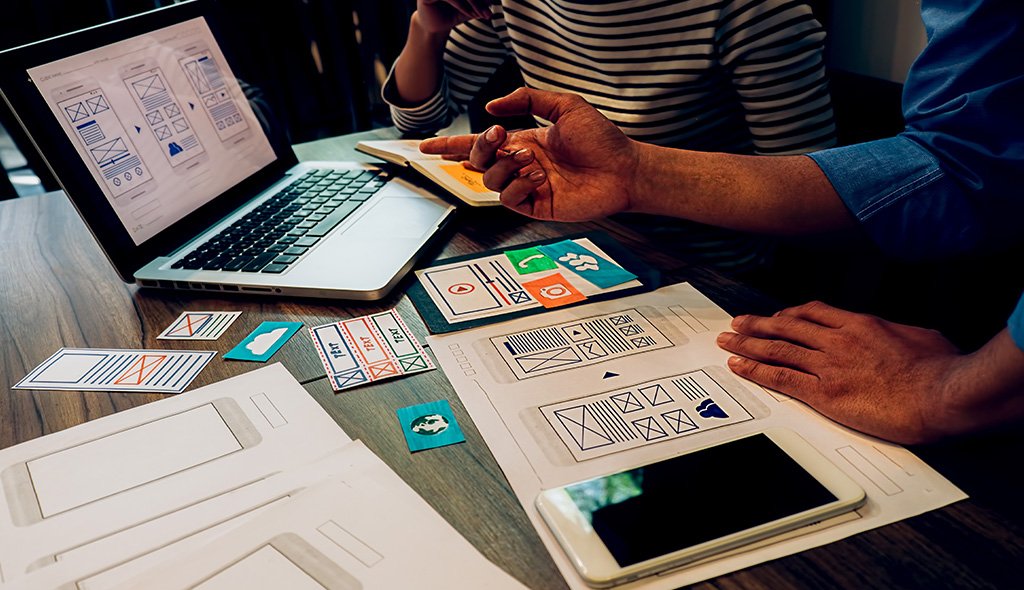
Interactive Wireframes / Mid-down Fidelity Interactive wireframes and mid-fidelity prototypes help bring concepts to life for quick validation. Moderated usability testing sessions reveal friction early to affordably iterate with the team. This phase helps to avoid the expensive situation where high-fidelity designs only make it to development to find out that one of the basic needs in the navigation fails, and the design needs to be reworked.

High-fidelity screens, micro-interaction specifications, responsive breakpoint guides, and a component-level design system are produced and annotated for developer handoff. Accessibility Compliance is checked against WCAG 2.1 AA standards. The output provides everything engineering teams need to build exactly what was validated to reduce drift in interpretation between design and code.

Post-launch analytics, session-replay analysis, and follow-up usability studies identify further gains. Conversion funnel data and task completion metrics are compared to baseline data set during the investigation phase. This closed-loop approach ensures that UX design services provide compounding returns instead of a one-time improvement.
Across over one thousand client partnerships in fintech, healthcare, commerce, logistics, and enterprise SaaS, the portfolio shows how structured user experience design services take research and turn it into revenue. Explore documented project outcomes to observe the application across scale and sector.
The basis of effective user experience services is a true understanding of the area in which a product is used. Designing a clinical decision support dashboard requires different mental models, awareness of regulations, and sensitivity to workflow than designing an e-commerce checkout or a real estate listing portal. Scalability, compliance, and sustainability are for every engagement, no matter the size of the organisation: from venture-backed companies building an MVP to publicly traded organisations modernising legacy systems used by thousands of internal users.
Deep delivery experience across fintech and banking, healthcare and life sciences, insurance, e-commerce and retail, real estate and proptech, logistics and supply chain, education technology, and enterprise SaaS means cross-pollinating proven patterns. A fraud-alert notification framework validated in a banking product, for instance, can provide information on the level of urgency in a logistics tracking dashboard. User experience companies that are in a single vertical are missing out on transferable insights. This breadth is what allows a UX design company to bring truly differentiated perspectives to each of its projects.

In a market full of user experience design firms, it’s not decoration that makes one stand out from the others; it’s discipline. The practice has gained acknowledgment from sustained delivery of results that stand up to post-launch scrutiny, measurable improvements in task completion rates, net promoter scores, and customer lifetime value. Three capabilities in particular define the competitive edge.
Compliance-Embedded Design Thinking: Regulatory and accessibility requirements are built in from the first wireframe, rather than being retro-fitted before release, decreasing certification timelines and audit remediation costs.
Cross-Cultural Interface Fluency: Global delivery experience across India, North America, Europe, and the Middle East ensures that designs take into account localisation, reading direction variability, and culturally specific expectations for interaction.
Engagement Model Flexibility: Whether you require a dedicated team on retainer, a more project-scoped engagement, or a specialist user experience consultant embedded within your internal squad, the operating model is flexible around your procurement and collaboration preferences.
The practice chooses the tools based on interoperability, collaboration efficiency, and developer handoff fidelity, not because of trend adoption. Every tool in the stack has been tested through hundreds of engagements and integrates into a known enterprise workflow.











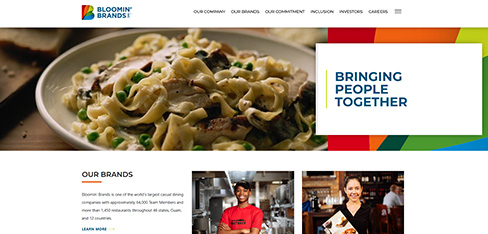
Four iconic restaurant brands sharing one clunky digital platform that felt the same regardless of which restaurant you were ordering from — that was our problem. UX Stalwarts built a multi-brand UX framework that gave each brand its own personality while sharing the underlying efficiency. Cutting the ordering flow from 11 taps to 5, lifting loyalty activation by 63 percent, and growing digital order frequency by 49 percent showed that UX design is a material revenue driver in casual dining. The post-dining re-engagement UX alone is recovering visits we would have completely lost.
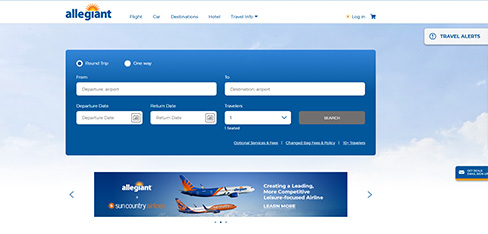
Allegiant’s value proposition is unbeatable prices to great leisure destinations, but our booking UX was undermining that promise at every step. Customers were hitting 14 steps, getting confused by our add-on presentation, and abandoning before they ever saw our lowest fares. UX Stalwarts rebuilt the entire funnel UX and the results were remarkable. Cutting abandonment from 71 to 34 percent and increasing ancillary attach rates from 28 to 51 percent in one redesign cycle is the kind of UX ROI that makes the investment an obvious decision. Our mobile booking is finally competitive.
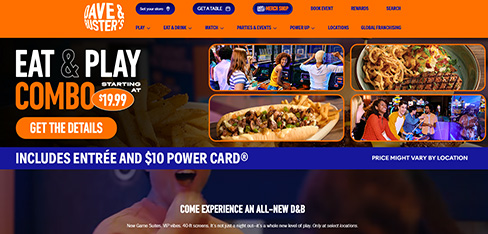
Dave and Buster’s lives on the energy of groups having fun, and our app UX was actively getting in the way of that. Guests were waiting at POS stations to reload cards, calling to book parties, and missing out on rewards they had earned. UX Stalwarts built an in-venue UX ecosystem that made every part of the visit smoother. A 43 percent increase in per-visit spend from app-active guests and 78 percent of reloads becoming self-service transformed how our floors operate. The event booking conversion jumping 84 percent is real revenue that used to walk out the door.
Considering an investment in professional user experience design? These answers are in response to practical concerns brought up most frequently by decision-makers.
Start by looking for portfolios that are relevant to the domain – a great UX design agency will have work in your industry or in similarly complex environments. Ask about their research methodology and not just their visual output. You can also review detailed case studies available on their UX design case studies page to understand real-world execution. Ask for references of past enterprise clients and verify whether your project’s senior designers who presented during the pitch will actually be working on your job. Evaluate their communication cadence and reporting structure, and verify that they have a structured discovery phase before quoting a fixed scope. Agencies that forego research to get to mockups more quickly tend to create visually appealing work that becomes a usability disaster. When shortlisting, look for the best ux design agency in india by verifying domain experience, research capability, and team continuity. A credible ux designer agency will always offer transparent process documentation before the contract is signed.
Cost is determined by project scope, the number of different user personas and workflows being designed, the levels of user research required, platforms (web, mobile, embedded, multi-platform), and levels of design-system documentation necessary for developer handoff. Enterprise UX design projects with regulatory compliance requirements and other multiple stakeholder groups have higher investment than single product engagements. A respectable UX design agency will offer a clear cost breakdown aligned to deliverables and not an opaque hourly estimate, so you know exactly what every phase of the engagement is creating. When comparing proposals, the best ux design companies in india will present phase-wise investment aligned to clear deliverables rather than ambiguous monthly retainers.
A concentrated redesign of an individual product flow takes four to six weeks. A full-scope engagement that combines discovery research, information architecture, wireframing, prototyping, usability testing, and high-fidelity design for a multi-platform product will take three to five months. Factors that add time include stakeholder review cycles, the number of unique user journeys, and difficulty in integrating with existing design systems. Timelines are compressively reduced when clients commit a responsive product owner to an engagement and agree to decision-making protocols upfront. For ux for startups, a focused MVP design sprint can be completed in as few as three to four weeks when scope and decision protocols are agreed early.
The process has six stages – alignment, investigation, architecture, prototyping, detailing, and optimisation. Alignment sets goals and constraints. Investigation to generate user research evidence. Architecture is the definition of structure and navigation. Prototyping constructs things that can be tested. Detailing results in pixel-level specifications and a component library. Optimisation uses data that is collected post-launch to make the experience even better. At each stage, client collaboration checkpoints ensure that the work has remained aligned to business priorities and real user needs. A strategic ux agency follows this structured sequence to ensure every design decision is anchored in evidence. As a ux design company india partner, this process is adapted to accommodate local market nuances and global product requirements.
Three factors distinguish the practice: compliance – embedded design thinking incorporating accessibility and regulatory requirements spanning from day one, cross-cultural interface fluency developed through global delivery in India and Western markets, and engagement model flexibility varying from embedded specialists to full project teams. You can also explore insights and expertise shared on their Dashboard UX design to understand their thought leadership and domain depth. Additionally, eighteen years of delivery across sectors ensures the practice carries with it a pattern library of proven solutions that ensures faster time-to-value than user experience agencies beginning from scratch in unfamiliar sectors. A credible ux design consulting firm combines these structural advantages with an operational model that adapts to client preferences. Decision-makers evaluating ux design companies will notice that few competitors offer compliance-embedded design as a default.
The process starts with a thirty-minute discovery call when your objectives, current challenges, and timeline expectations are discussed. Out of that conversation, a document called a scoping document is created that lays out recommended phases, deliverables, the range of investment, and team composition. There is no cost or commitment to this initial consultation. Once the alignment is confirmed, the engagement formally begins with a stakeholder workshop. User experience design agencies that force templates upon you before understanding your context are a red flag. The best ux design firms structure this onboarding to minimise client effort while maximising clarity on scope, deliverables, and expected outcomes.
Absolutely. Engagements are regularly customised for organisations that deal with regulated sectors such as financial services, healthcare, insurance, and government. This includes documentation of accessibility compliance against WCAG 2.1 AA, design of audit-ready consent flows, and creation of interface specifications following sector-specific data handling guidelines. The UX designing company is well acquainted with these environments and has adapted its process to accommodate compliance review gates without unnecessarily inflating timelines. Experienced ux consulting services providers build compliance checkpoints into the standard workflow rather than treating them as scope additions. Working with a ux design agency india practice experienced in these regulatory environments ensures compliance is never an afterthought.
Post-delivery support: analytics review sessions to compare live performance to usability goals, help with design system governance to preserve consistency as engineering teams make changes, iterative optimisation sprints based on quantitative data (not subjective opinion). Retainer arrangements are offered to organisations that need a continuing relationship with the senior user experience design firms and wish continuity between project phases. This model avoids the loss of knowledge that usually occurs when agencies hand off knowledge and control. This continuity model is what distinguishes a long-term ux design firm from agencies that treat handoff as the end of their responsibility. The best ux companies invest in maintaining these ongoing partnerships because sustained product performance depends on continuous design refinement.
The broadest and deepest ranges from fintech and banking, healthcare and life sciences, e-commerce and retail, real estate and proptech, insurance, logistics and supply chain, education technology, and enterprise SaaS. Within each vertical, the practice has come into contact with the specific regulatory frameworks, mental models of users, and technical integration issues that inform good design. User experience companies that claim to be agnostic to industry often don’t have the awareness of operations required to design complex, regulated workflows. Organisations evaluating the top ux companies in india will find this cross-sector depth essential for complex product ecosystems. The best ux companies in india distinguish themselves through this kind of deep operational familiarity within regulated environments.
A freelance user experience designer offers highly concentrated expertise and is often at a lower hourly availability, making this model suitable for clearly scoped tasks like a single-screen redesign or a usability audit. However, freelancers rarely provide the level of research depth, multi-disciplinary review processes, and project management infrastructure that enterprise engagements require. A UX design service based on a team structure offers cross-functional coverage (researchers, interaction designers, visual designers, and accessibility specialists) as well as quality assurance layers and continuity planning not possible for solo practitioners. A ux designer agency offers the structure, review processes, and multi-specialist teams that enterprise engagements require. Organisations seeking the best ux designer in india for complex projects benefit from the team model rather than relying on a single practitioner.
Research is not a checkbox phase to be completed once sprint 1 has been reached. It is a continuous thread – contextual interviews and analytics audits during discovery, card sorting and tree testing during architecture, moderated usability testing during prototyping, and A/B experimentation after launch. Every design decision is backed by a particular research finding, so that recommendations in user experience consulting processes are not opinion-based, but grounded in evidence. This discipline dramatically reduces the rework following assumption-based design. This is a core reason why a ux service design approach outperforms agencies that treat research as a one-time discovery activity. Established ux firms that embed research across every phase deliver measurably better outcomes than those that front-load it.
Standard deliverables include user research reports with persona and journey documentation, information architecture blueprints, annotated wireframes, interactive prototypes, a full high-fidelity screen library that includes responsive breakpoints, a documented component-based design system, micro interaction specifications, and accessibility compliance reports. All assets are delivered in Figma with developer-ready annotations and exported specification sheets. The scope and granularity of deliverables are specified during the alignment phase, so there are no surprises at handoff. A professional ux website design agency includes developer handoff annotations and responsive specifications as standard deliverables, not optional extras.
One of the key strengths is collaborative engagement models. Senior practitioners take part in product teams working for clients as extended team members, held in standups, sprint planning, and design reviews. This type of model is ideal for organisations with in-house design capacity but require specialist user experience consultancy support for complex issues, accessibility compliance, or a critical product launch. Communication protocols and access to tools are determined during the onboarding process to ensure seamless integration.
A skilled user experience consultant integrates into existing workflows without disrupting established team dynamics. When evaluating a ux consulting agency, verify that their collaboration model includes transparent communication protocols and shared tool access.
Across five departments, there is a vastly different approach to designing a mobile application for consumers. The practice has refined specific frameworks for enterprise contexts, such as role-based interface personalisation and progressive disclosure strategies.
accessibility after visual design is done is much more costly and rarely comprehensive.
Enterprise UX design is a higher complexity across many dimensions: a higher user population with a diverse set of roles and permissions, integration with legacy systems and proprietary data architectures, more stringent compliance and security requirements, and longer approval chains of stakeholders. Designing an internal operations dashboard that will be used by three thousand employees across five departments has a vastly different approach from designing a mobile. An experienced ux agency india practice brings tested frameworks for role-based interface design and progressive disclosure that generic agencies lack. This is precisely why enterprises looking for a b2b ux design agency need partners with demonstrated experience in multi-stakeholder, compliance-heavy environments.
Accessibility is regarded as a building block design constraint, rather than an optional enhancement. Colour contrast ratios, keyboard navigation flows, screen reader compatibility, and focus management are considered at all stages from wireframe through to high fidelity specification. Automated accessibility testing tools are run against every component in the design system, and manual audit checklists are used to ensure compliance against WCAG 2.1 AA. Organisations that hire UX designers should ensure this discipline is present; retrofitting accessibility after visual design is done is much more costly and rarely comprehensive. Organisations seeking the best ux designer in india should verify that accessibility auditing is embedded throughout the design process, not added as a final checkpoint. The top ux designers in india distinguish their practice by treating accessibility as a structural design constraint rather than an aesthetic preference.
As a ux design agency india and ux design company india, we work with founders and global enterprises through a single ux agency india delivery model. Many call us a strategic ux agency and a b2b ux design agency because engagements start with a business outcome rather than a design artefact. Independent benchmarks have listed us among the best ux design agency in india, best ux design companies in india, and top ux companies in india, alongside other respected ux design companies. Our principals are regularly cited as a leading user experience consultant when boards evaluate which ux firms to shortlist.
Clients typically engage us as their primary ux consultant, ux design consultant, or fractional user experience consultant for ongoing programs. The same team operates as a ux research agency, ux consulting agency, and ux design consulting firm so research, strategy, and design move as one workstream rather than disconnected handoffs. Our ux consulting services span discovery, behavioral research, journey design, and post-launch optimisation. Compared with traditional ux firms or a single ux design firm, this integrated model reduces friction between phases. Industry awards rank us among the best ux designer in india and top ux designers in india for consistent advisory quality.
Yes. Our ux design for startups and ux for startups programs are structured around speed, capital efficiency, and a clear path to product-market fit. Unlike a generic ux website design agency, we begin with ux service design fundamentals, mapping the end-to-end experience before specific screens are designed. This is also why founders choose our ux designer agency model over assembling freelancers individually. Recognition among the best ux companies and best ux companies in india reflects this dual capability across stages. Companies that previously evaluated other best ux design firms or a typical ux design firm tell us this integrated team explains the difference.
Our recognition as a leading ux design agency india, ux design company india, and ux agency india comes from eighteen years of cross-industry delivery, not from marketing claims. Independent rankings have listed us among the best ux design agency in india, best ux design companies in india, and top ux companies in india across multiple cycles. Boards engage us as a strategic ux agency and as a specialist b2b ux design agency when product decisions carry commercial weight. Founders looking for a senior user experience consultant or evaluating top ux designers in india frequently include us in their final shortlist.
Three factors. First, our ux consulting services and ux service design depth combine in one engagement rather than being sold as separate retainers, and the same applies to our ux research agency capability and ux consulting agency advisory. Second, our delivery includes a dedicated ux consultant and ux design consultant per program, which is uncommon among ux firms of similar size. Third, our ux design consulting firm pedigree pairs with a ux website design agency execution layer, so strategy turns into shipped product. Whether you need ux design for startups, ux for startups acceleration, or enterprise transformation, the same ux designer agency model applies.
Among ux design companies operating at our scale, we are routinely benchmarked against the best ux companies and named in lists of best ux design firms. Founders evaluating a ux design firm typically compare quality of outputs, senior involvement, and post-launch support, which is where our model differs. Recognition as a leading best ux design agency, alongside placement among best ux companies in india and best ux designer in india, reflects consistent delivery across product categories. This is also why peer ux firms reference our work when defining what good UX looks like.

C – 81C, Sector – 8, Noida 201301, India


1025 Beamon Drive, Franklin 37064 Tennessee, USA
Sveavagen 34 111 34 Stockholm, Sweden
A-10, Sahastradhara Rd, Doon IT Park, Dehradun, Uttarakhand

© 2026 UX STALWARTS. All rights reserved.