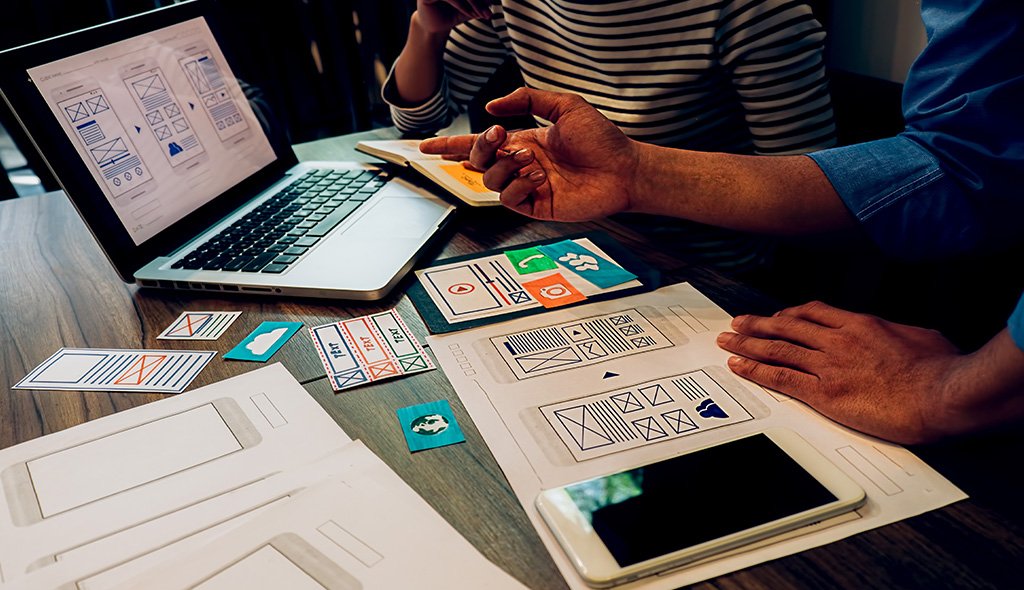
Organizations invest heavily in product design and development, yet a significant portion of digital products do not reach users with what they expect. When website UX testing is skipped or considered an afterthought, teams ship interfaces informed by assumptions from within, rather than observed behaviour. The result is high bounce rates, abandoned funnels, and expensive post-launch remediation that erodes revenue and customer trust. For enterprises in regulated industries, untested experiences pose additional compliance risk; a single inaccessible process can spark legal liability and reputational damage. Robust ui ux testing prevents this exposure.
A structured UX testing service addresses these risks by placing real users at the centre of product validation before the code is ever released to production. Moderated and un-moderated usability sessions, heuristic evaluations, accessibility audits, and cross-device benchmarking combine to deliver actionable findings to help inform interface refinement, information architecture adjustments, and interaction design improvements. Deliverables vary from prioritised issue reports, annotated screen recordings, to redesign recommendations calibrated to specific conversion goals. This methodology helps reduce development rework because usability failures are caught early, and at the same time, enhances task completion rates, satisfaction scores, and downstream revenue performance. A disciplined usability testing service quantifies that behavioural risk.
UX Stalwarts brings you eighteen years of cross-industry engagement to every testing programme. With our experience ranging from fintech onboarding flows, healthcare patient portals, ecommerce checkout flows, and enterprise SaaS dashboards, the team employs domain-specific behavioural benchmarks unavailable to generalist agencies. Every engagement is scoped to the client’s product maturity, whether validating an early-stage prototype or optimising a high-traffic production environment so that findings translate directly into design decisions with quantifiable business impact. Our user testing services link directly to commercial outcomes.

Every engagement begins with stakeholder alignment, behavioural hypothesis mapping, and participant recruitment to reflect actual user demographics. Test plans are not generic checklists but are scoped to defined conversion goals and task-success criteria. This ‘front-loaded rigour’ ensures that every session leads to findings that have a direct application to product and business decisions. A focused usability testing agency begins with verified questions.

Findings are presented in the form of prioritised severity-rated recommendations with links back to specific screens, flows, and interactions. Decision-makers have clear guidance about which fixes will provide the best return, allowing product teams to allocate engineering resources against validated usability data instead of opinion-led feature requests. These user testing services prioritise revenue impact.

Testing protocols are based on behavioural benchmarks accumulated from fintech, healthcare, e-commerce, real estate, education, and enterprise SaaS engagements. This cross-industry exposure means recurring usability patterns, such as form abandonment triggers in financial products or navigation confusion in multi-tenant platforms, are identified faster and resolved using proven design patterns. Our usability testing firm draws on documented sector playbooks.

Each study is applying the testing method best suited to the research question: moderated think-aloud sessions for qualitative depth, unmoderated remote tests for scale; heuristic evaluations for rapid expert review; and A/B experiments for statistically validated design choices. This methodological flexibility guarantees that the quality of evidence is appropriate to the stakeholders’ stakes in the product decision. Most user testing companies lack this calibrated flexibility.

Session recordings are run through a sentiment tagging process using AI and automated frustration detection to speed the identification of pain points across large participant pools. Human researchers then validate and contextualise these signals in a combination of analytical speed and interpretive depth that neither automation nor manual review can accomplish alone. Hybrid usability testing companies reach insight faster.

Engagements are not one-time efforts. Retesting cycles are incorporated into project timelines to ensure design changes are validated before release, and quarterly usability benchmarking is available to teams dedicated to continuous experience improvement. This long-term way of thinking turns testing from a one-off checkpoint to a sustained competitive edge. Ongoing website usability testing services sustain product alignment.

User experience testing services exist because the disconnect between what works on paper as designed by design teams and what is experienced by actual users is consistently greater than organisations anticipate. A product that passes internal QA can still bewilder, frustrate, or abandon its intended audience in mere seconds of first contact. Rigorous UX usability testing has the potential to close that gap with a source of behavioural evidence, observed task completion rates, measured time-on-task, recorded hesitation patterns, and articulated user expectations. When this evidence is used to inform the design iteration, the results go far beyond cosmetic improvement. Checkout conversions are increased since the friction is removed at the point of hesitation for users. Support ticket volumes are reduced due to the matching of navigation paths with mental models. Retention is strengthened as the experience gains trust through predictable, efficient interaction. Our team behind every engagement combines the expertise of research methodology and deep product design experience to ensure that test findings translate into implementable design recommendations, not abstract documents of insight that gather dust. Some teams write it as useability testing; the discipline is identical.
Partner with our dedicated UX testing consultant to validate your product decisions with real user data.
Every key testing UX design engagement follows a proven, six-phase methodology designed to reduce ambiguity, control research quality, and deliver findings that product teams can act on immediately.

Stakeholder interviews and product walkthroughs help set up the objectives of the testing, the target user profiles, and the specific screens, flows, or features being tested. Success measures task completion rate, error frequency, and time-on-task thresholds that are agreed upon during this stage. The output is a signed-off test plan that links the research scope with business priorities. Ux design testing goals link to commercial KPIs here.

Participants are drawn from demographic, technical, and domain familiarity user personas according to defined user personas. Screening criteria are used to ensure the testers are representative of the real audience and not convenience samples. For mobile UX testing companies and cross-platform studies, device-specific cohorts are put together to capture the device-based usability differences. Remote ux testing cohorts reflect real geographic distribution.

Task scenarios, moderator scripts, and data collection frameworks are developed to maximise the signal quality. Each task is crafted to reflect real-world objectives, such as placing an order, submitting a claim, and configuring account settings, not artificial exercises that are developed in a lab. This phase decides whether the study will take the form of moderated, unmoderated, or hybrid, depending on the depth and scale of the study needed. Usability testing research frameworks remain auditable and repeatable.

Sessions are delivered using standardised moderation techniques which reduce leading behaviour and observer bias. Screen recordings, think-aloud audio, click-path data, and facial expression data are collected at the same time. For remote usability testing engagements, secure video platforms provide comfort and data integrity to participants, no matter what geographic location they are in. Blended user testing usability testing techniques run together when required.

Raw session data is coded, categorised, and cross-referenced against success metrics that were defined during scoping. Usability problems are rated by their severity, frequency, and business impact to create a prioritised remediation roadmap. AI-assisted pattern detection speeds up the process of identifying recurring friction points across the pool of participants, with human analysts putting the findings into context. Ux accessibility testing findings share this severity scale.

Final deliverables include an annotated findings report, severity-rated issue log, screen-level redesign recommendations, and a video highlight reel of critical user moments. A collaborative review session guides the product team through findings and recommends actions. For clients on retesting agreements, the validated baseline is used as the measurement of improvement. Multi-region work includes ux testing agency india delivery context.
Across over 1,000 client engagements across a range of HQS foundational industries like fintech, healthcare, e-commerce, real estate, and enterprise SaaS, our UI UX testing services have been consistently able to identify those usability issues that prevent conversions, destroy retention, and increase support costs. Explore selected outcomes to understand how structured testing leads to measurable product improvement. Website usability testing services span both B2B and consumer outcomes.
The foundation of effective user experience testing is understanding that usability expectations differ dramatically depending on the industry context. A healthcare patient scheduling interface has a different cognitive load, compliance requirements, and error tolerance than an e-commerce product discovery experience. Scalable testing methodologies, paired with accessibility-first protocols based on the standards of WCAG 2.1 AA, mean that every evaluation considers the unique regulatory, demographic, and behavioural attributes of the user population in the target user base, whether the client is a seed-stage startup working on an MVP or a multinational enterprise optimising a platform serving millions. Our usability testing service adapts to each sector.
This cross-sector depth has been established by sustained engagements in fintech and banking, where compliance-aware UX and UI testing is used to validate onboarding sequences and transaction flows against VU and regulatory standards. Healthcare and life sciences projects implement testing protocols sensitive to patient literacy, accessibility mandates, and clinical workflow constraints. E-commerce and retail engagements have a focus on purchase-path optimisation, cart recovery, and mobile conversion benchmarking. Real estate, education tech, insurance, and enterprise SaaS complete a portfolio in which unique user expectations for each sector guide the design of tests, the recruitment of a sample, and the definition of success metrics. Usability testing research practices stay disciplined across domains.
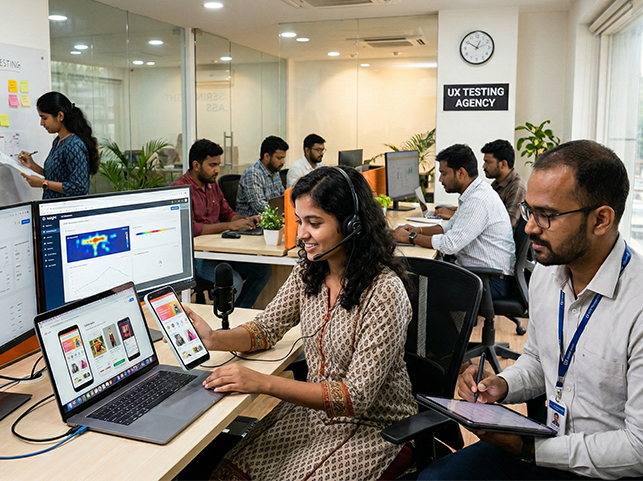
Sustained refinement of testing methodology across hundreds of engagements has resulted in a practice recognised for the specificity of the findings, the implementability of recommendations, and the measurable lift achieved by clients post-remediation.Three core differentiators consistently set our user experience testing consultancy apart from alternatives in the market. Clients evaluating a ux testing agency india option recognise this.
Compliance-Ready Testing Protocols: Testing frameworks are configured with regulated industries like fintech, healthcare, and insurance, cutting down the risk of compliance from the first session. Hallmark of our usability testing agency.
Conversion-Anchored Findings: Every usability issue is correlated with the associated revenue impact, providing product owners with clear cost-of-inaction information to prioritise engineering investment. Few user testing companies match this rigour.
Iterative Validation Built In: Retesting cycles check that fixes implemented are achieving your desired usability improvement before being released for production, allowing regression to be avoided. Hallmark of a serious usability testing firm.
Every website user experience testing engagement is backed by a curated technology stack that covers everything from session recording, analytics, prototype testing, accessibility auditing, and participant recruitment, all to provide comprehensive coverage from study design through final analysis. Ux design testing and ux accessibility testing share this stack.










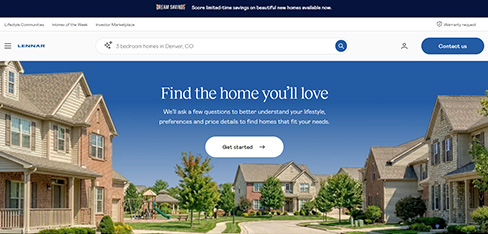
Lennar was 90 days from launching a $12 million digital home shopping platform when we engaged UX Stalwarts to validate we were ready. Running 240 usability tests felt like overkill until we saw the findings. Discovering that 64 percent of buyers fundamentally misunderstood our floor plan tools and that our construction tracking was creating anxiety instead of comfort stopped us from launching an experience that would have damaged our brand. Delaying launch 45 days to fix the 127 identified issues prevented an estimated $6.8 million in failure costs. This is what responsible digital product development looks like.
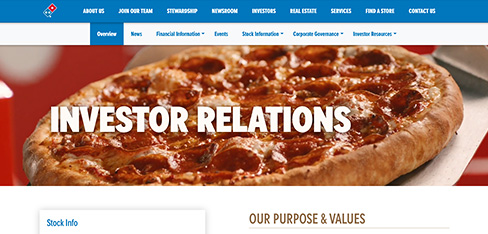
Domino’s digital ordering generates over $4 billion in annual sales, so redesigning that experience without rigorous validation would have been reckless. UX Stalwarts designed an A/B testing program that gave us statistical confidence in every design decision. Proving a 7.2 percent conversion improvement and quantifying $47 million in incremental revenue before launch turned a subjective design conversation into an objective business decision. Discovering through segmented testing that our frequent customers initially struggled with the new experience saved us from alienating our most valuable segment. This is how you innovate responsibly at scale.
Mobile represented 68 percent of our traffic but was converting at less than half the desktop rate. We suspected mobile UX issues but did not know where exactly the experience was breaking down. UX Stalwarts ran remote unmoderated testing with 520 participants that gave us the evidence we needed. Watching 68 percent of customers fail to apply Kohl’s Cash on mobile and 73 percent struggle to view product details was shocking. Identifying 89 specific mobile barriers with video evidence and quantified impact gave us a clear roadmap. Fixing the top 20 issues within 90 days and seeing mobile conversion jump 41 percent validated every dollar invested in testing.
Considering a user experience testing partner? These answers are to the practical questions decision-makers ask before engaging a UX testing consultancy.
A comprehensive UX testing service typically includes planning of the test, recruitment of participants, facilitation of sessions, data analysis, and a prioritised findings report. Your team is provided with an issue log of all the severity-rated usability issues found, annotated screenshots showing the specific screen area of issues, screen recordings showing the important user moment, and specific redesign recommendations. Some engagements also come with highlight reels for stakeholder presentations and follow-up retesting to ensure that fixes are making the intended improvement. The scope depends on whether you need to concentrate on evaluating one flow or need a wide evaluation of your entire product.
To start with, you should determine whether the company has experience in your particular industry, since domain familiarity directly impacts the quality of test design and relevance of findings. Ask to see some sample deliverables. There is a big difference between a summary and a severity-rated, screen-annotated report. Evaluate if they will provide the testing method that your project really needs: moderated sessions for complex qualitative questions, remote tests without moderation for scale, or heuristic evaluations for quick expert feedback. Check references to be sure that recommendations were implemented in the past and that clients saw measured improvement, and not just received a document. Favour usability testing companies that publish methodology.
Costs differ according to scope, methodology, number of participants, and complexity of the project. A focused usability test UX study with a single user flow and five moderated users, for example, could cost a few thousand dollars, but a full cross-platform assessment of a test product with multiple user segments, testing for accessibility, and performing iterations and retesting could cost far more. The factors that lead to the greatest cost increase are specialised participant recruitment, multi-device coverage, and depth of analysis required. So when it comes to pricing, weigh the cost of testing against the revenue cost of shipping an untested product, post-launch remediation and lost conversions almost always cost more than up-front validation. Some briefs spell it useability testing; the work is identical.
A single qualitative study focused on five to eight participants can be completed in two to four weeks (including planning, recruitment, session facilitation, and analysis). Larger studies with multiple user segments, devices, or methods of test extend to six to eight weeks. The most time-sensitive variable is participant recruitment, particularly when your target users are of a specific professional role, industry experience, or accessibility requirements. Un-moderated remote testing may enable data collection to be much faster, although analyses have approximately the same timelines because of the proportional increase in the amount of session data to be analyzed.
Moderated testing includes a trained facilitator who helps participants through tasks in real time (either in person or via video call). This format is especially good for getting to understand the thinking behind user behaviour by asking follow-up questions and observing the user’s body language or facial expressions. Unmoderated testing enables participants to work on their own with their own devices in their own time, so it is efficient for collecting data from more people in more than one geography. The choice depends on your research goals, moderated for depth and nuance on complex workflows, unmoderated for breadth and statistical confidence on simpler interaction patterns. Both can run as remote ux testing when needed.
Functional QA testing verifies whether software does what it is supposed to do, technically, buttons respond, forms submit, and pages load correctly. UX testing evaluates whether real humans are actually able to accomplish their goals in an efficient, intuitive, and non-confusing way with the product. A form may pass all of the QA checks yet still cause users to abandon it because of ambiguous labels, a faulty field order that conflicts with their mental model, or error messages that do not explain what went wrong. Both are essential, but they answer fundamentally different questions regarding product readiness. Ui ux testing covers behaviour, not just function.
Absolutely, and prototype stage testing is often the least costly investment in the entire product lifecycle. Testing interactive prototypes that were created in Figma or other similar tools will allow you to test navigation structures, interaction patterns, and content hierarchy before committing any development resources. Issues identified at this stage cost a fraction of what they would cost to fix after code has been written, deployed, and adopted by users. We conduct testing UX design evaluations regularly on clickable prototypes, wireframes, or even paper sketches in cases where early-stage validation is the priority. Usability testing in ux design starts at prototype stage.
Testing protocols are pre-configured for testing the compliance requirements that govern fintech, healthcare, insurance, and government-facing digital products. Participant screening for the specific user populations that these products are intended for, including users with accessibility needs and levels of digital literacy. Findings reports explicitly identify issues that have regulatory risk, for example, an inaccessible onboarding flow that violates WCAG standards or a consent interface that fails to satisfy data privacy disclosure requirements. This compliance-aware approach ensures that clients in regulated sectors get results they can immediately take action based on, without the need for a separate legal or accessibility review.
Yes, mobile UX testing companies and agencies are realizing that mobile experiences offer unique usability challenges, smaller touch targets, gesture-based navigation, variable network conditions, and platform-specific design conventions, all of which have an impact on how users interact with your product. Our mobile app usability testing includes native iOS and Android apps as well as responsive web experiences, mobile testing on real devices instead of emulators, so that real-world performance can be captured. Gesture analysis, tracking scroll behaviour, and device-specific interaction patterns are part of any mobile interactions. Blended user testing usability testing surfaces depth and scale.
Participant recruitment is adapted to fit the real user profiles that were identified in a scoping phase. Recruitment sources include professional participant panels, client customer databases, social media outreach, and specialised screening through recruitment partners. For B2B products, participants are drawn to fit job and industry experiences and technical proficiency levels. For consumer products, demographic targeting includes age, location, device preference, and purchasing behaviour. Screener questionnaires help to filter out unsuitable candidates before scheduling to ensure the quality and relevance of sessions.
Accessibility is built into all testing engagements as an integral part of evaluation, rather than an optional add-on. Automated scanning with tools such as axe DevTools to identify technical compliance gaps against WCAG 2.1 AA standards and manual testing with assistive technologies, screen readers, keyboard-only navigation, and voice control capture the lived experience of users with disabilities. This dual-layer approach helps ensure that products meet the letter, as well as the spirit, of accessibility requirements, which is becoming increasingly important as regulatory enforcement steps up and organisations realise that accessible design means better usability for all users. Usability testing in ux design now treats accessibility as core.
Many clients start with a focused evaluation with one critical flow, a checkout sequence, an onboarding process, and a key conversion page to get a sense for the quality of insights and the practicality of recommendations before expanding scope. This initial engagement usually consists of five to eight sessions of moderated study or a focused unmoderated study, and generates a full findings report with prioritised recommendations. It is both a discrete deliverable and a basis for more extensive testing if the initial results are shown to be valuable.
Findings delivery is not the end of the engagement. Collaborative review sessions guide your product and engineering teams through each recommendation and provide context that is not provided in written reports. For those clients who need it, design consultation aids in the conversion of findings to updated wireframes and specifications. Retesting agreements exist to validate that implemented changes meet the desired usability improvement before they are driven into production. This iterative cycle test, fix, retest is where the biggest and most sustained conversion and retention gains are realised.
Startups usually need to validate core assumptions rapidly, does the main value proposition land, can people get the job done (do they have the necessary functionality), and is the navigation structure intuitive? Testing will often be performed on prototypes or MVPs with lean participant pools and fast turnaround. Enterprise engagements are broader in scope: multiple user roles, complex permission structures, integration touchpoints, accessibility compliance, and legacy migration considerations. Methodology, deliverable depth, and timeline are calibrated to match product maturity and organisational decision-making complexity.
Any organisation that has a digital product to serve external users or internal teams stands to benefit from structured testing, but the return is especially high in industries where user error has financial, health, or compliance consequences. Fintech platforms in which a confusing interface is leading to transaction errors, healthcare portals in which navigation failures are delaying patient access, e-commerce sites in which checkout friction is driving the loss of revenue, and enterprise SaaS products in which poor usability is driving low adoption and high churn are disproportionately seeing returns from user experience testing. Education technology, insurance, real estate, and government digital services also have a similar benefit because of varied user populations and high usability expectations.

C – 81C, Sector – 8, Noida 201301, India


1025 Beamon Drive, Franklin 37064 Tennessee, USA
Sveavagen 34 111 34 Stockholm, Sweden
A-10, Sahastradhara Rd, Doon IT Park, Dehradun, Uttarakhand

© 2026 UX STALWARTS. All rights reserved.