Organizations pour significant budgets into paid search, social advertising, and email campaigns, but the moment a visitor clicks through and reaches a landing page, the experience often falls apart. Slow load times, unclear messaging, misaligned offers, and cluttered layouts quietly erode the returns on every marketing rupee spent. The disconnect between advertising promise and page delivery is one of the most expensive problems in digital marketing, yet it frequently goes undiagnosed. When a landing page fails to convert, the loss is not limited to a single missed lead. It cascades through your entire acquisition funnel, inflating cost per lead, reducing return on ad spend, and creating a false impression that your campaigns are underperforming.
Landing page optimization services address this gap by treating every page as a testable, improvable conversion asset rather than a static design deliverable. The approach begins with behavioral analysis of how visitors interact with existing pages, followed by structured hypothesis development, controlled A/B testing, and iterative refinement grounded in statistical evidence. Deliverables include redesigned page architectures aligned to specific campaign objectives, optimized form structures that reduce abandonment, CTA placements validated through attention mapping, and mobile experiences built for thumb-friendly navigation. Whether the goal is lead capture for a B2B sales team, product signups for a SaaS platform, or purchase completions for an ecommerce store, each page is engineered to close the gap between click and conversion.
UX Stalwarts brings eighteen years of interface design and user behavior expertise to every landing page engagement. This is not a design agency that builds attractive pages and walks away. It is a landing page optimization agency that designs, tests, measures, and iterates until each page reaches its measurable performance ceiling. The team has optimized pages across regulated industries, high-volume ecommerce environments, and complex B2B funnels where form completion rates directly determine pipeline quality. Every recommendation is informed by how real users process visual information, evaluate trust signals, and make micro-decisions under cognitive load. The outcome is pages that convert because they are built around how people actually behave, not how designers assume they will.

Every page follows a proven attention sequence: relevance, mechanism, confidence, then action. Instead of arranging elements by visual preference, each component is positioned based on how visitors process information and form intent. This architecture reduces cognitive friction and shortens the path from impression to conversion across both desktop and mobile.

Ad copy, email subject lines, and social creatives are analyzed alongside the landing page to ensure consistent messaging from first impression through conversion. This ad-to-page alignment, often called message match, eliminates the disorientation that causes visitors to bounce within seconds of arrival. Campaigns perform better when the promise thread remains unbroken.

No change reaches production without validation. Every headline variation, form adjustment, and CTA repositioning is tested against a control with pre-defined sample size and confidence thresholds. This eliminates opinion-driven decisions and ensures that each published improvement has been confirmed through rigorous experimentation rather than subjective design review.

Page performance is treated as a conversion variable, not a technical afterthought. Load times are optimized against Core Web Vitals benchmarks, with image compression, script minimization, and CDN deployment handled as standard deliverables. Because every additional second of load time costs measurable conversion loss, speed optimization is embedded in every engagement.

With mobile traffic exceeding desktop across most industries, pages are designed mobile-first rather than adapted from desktop layouts. Touch targets, scroll behavior, form input experiences, and viewport-specific content prioritization are all addressed during the initial design phase, not treated as responsive afterthoughts that degrade conversion on smaller screens.

Every experiment is logged with its hypothesis, methodology, raw data, and outcome, whether it produced a win, a loss, or an inconclusive result. This shared archive builds institutional knowledge that accelerates future optimization cycles and ensures your team retains full ownership of the learnings generated during the engagement.
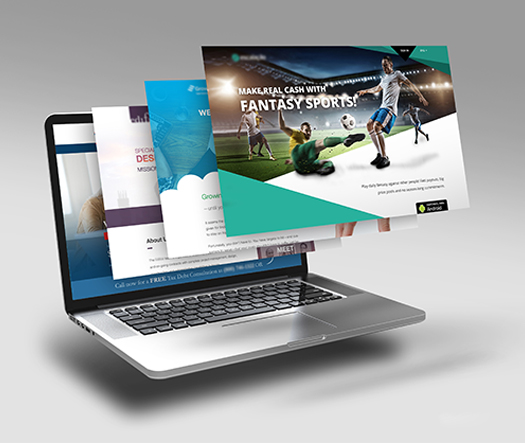
A well-optimized landing page changes the economics of your entire marketing operation. When conversion rates increase, cost per acquisition drops, return on ad spend improves, and the same traffic budget generates more qualified pipeline. The impact extends beyond individual campaigns. Organizations that treat landing page conversion optimization as an ongoing discipline rather than a one-time design project build a compounding advantage over competitors who rely on untested assumptions. The team behind this service combines deep user experience knowledge with conversion science, ensuring that every page improvement is rooted in behavioral evidence and validated through controlled experimentation before deployment.
Work with a landing page design agency focused on results.
This page-level optimization methodology isolates variables, validates changes through controlled testing, and produces measurable conversion improvements within defined timelines.

The engagement begins with a comprehensive audit of existing landing pages, covering load speed, mobile responsiveness, content hierarchy, CTA visibility, form structure, and message alignment with upstream campaigns. Analytics data is reviewed to establish baseline metrics including bounce rate, scroll depth, and current conversion rate for each page evaluated.

Heatmaps, click maps, scroll tracking, and session recordings reveal how visitors actually navigate each page. Attention hotspots, ignored content zones, and abandonment triggers are documented. On-page surveys capture qualitative visitor feedback about clarity, trust, and intent. This behavioral layer transforms assumptions about visitor behavior into evidence that directly informs optimization priorities.

Based on audit findings and behavioral data, page architectures are restructured to follow the relevance-mechanism-confidence-action sequence. Headlines are rewritten for clarity and specificity, visual hierarchy is adjusted to guide attention toward conversion points, and form fields are reduced to the minimum necessary for qualification without creating unnecessary friction.

Redesigned elements are launched as controlled A/B or multivariate tests, each with clearly defined success metrics, minimum traffic requirements, and statistical confidence thresholds. Tests are structured to isolate individual variables, preventing confounding results. Traffic allocation is managed carefully to maintain data integrity while minimizing exposure risk during the experimental window.

Winning test variations are evaluated across segments, devices, and traffic sources to confirm that conversion lifts are genuine and not artifacts of specific audience subsets. Results are stress-tested to determine durability under varying conditions. Losing or inconclusive tests are mined for secondary insights that refine future hypotheses.

Validated improvements are documented with complete specifications and deployed to production. The optimization playbook, including all test results, behavioral research findings, and a forward-looking hypothesis backlog, is transferred to your team. For ongoing engagements, the cycle restarts with refreshed data, ensuring continuous improvement that adapts to seasonal shifts and campaign evolution.
With over 1,000 client engagements across sectors and geographies, explore how targeted page optimization has generated sustained conversion improvements.
Effective landing page optimization requires an understanding that different industries present fundamentally different conversion challenges. A healthcare lead capture form operates under different regulatory and trust constraints than a SaaS free-trial signup. An ecommerce product page demands different visual emphasis than a B2B whitepaper download. The approach adapts to these realities, serving organizations from early-stage startups through global enterprises with consistent methodology and sector-aware execution.
Industries where this expertise has produced measurable landing page improvements include ecommerce and direct-to-consumer retail, SaaS and technology platforms, financial services and insurance, healthcare and wellness, education and professional training, real estate and property technology, travel and hospitality, and B2B professional services. Cross-sector experience enables the transfer of proven design patterns and behavioral insights, accelerating results for each new engagement by applying validated frameworks rather than starting from assumptions.

Many agencies offer landing page creation as a deliverable. Few treat each page as a living conversion asset that demands ongoing measurement, testing, and behavioral refinement. This practice has been built over hundreds of engagements to close the gap between page delivery and page performance, earning recognition for producing results that persist long after the initial build.
Attention Science Application: Page layouts are informed by eye-tracking research and cognitive load principles, positioning conversion elements where visitor attention naturally concentrates during scanning.
Campaign-Integrated Optimization: Pages are never optimized in isolation. Every test accounts for upstream ad creative, audience segmentation, and traffic source behavior for holistic performance.
Institutional Knowledge Transfer: Complete experiment archives, behavioral research data, and optimization playbooks are delivered to clients, building internal capability that outlasts every individual engagement.
Every engagement deploys a purpose-selected technology stack combining page building, behavioral analytics, experimentation, and performance measurement tools calibrated to the complexity and traffic volume of your digital properties.









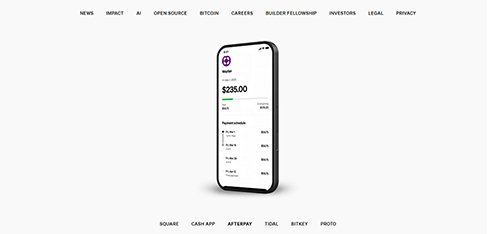
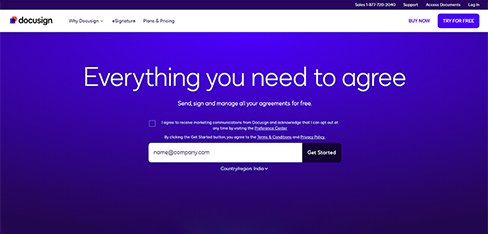
HubSpot was spending millions on paid advertising but our landing pages were not converting traffic efficiently. Visitors did not understand our value and signup forms were intimidating. UX Stalwarts optimized with outcome-focused messaging and simplified signup. Increasing conversion 142 percent while reducing cost per acquisition 59 percent transformed our marketing economics. The 244 percent mobile improvement showed that device-specific optimization is critical. This work fundamentally improved how we acquire customers.
Shopify landing pages were not converting aspiring entrepreneurs because visitors were uncertain whether they could succeed or had the skills needed. UX Stalwarts optimized with success stories, interactive demos, and skill-level messaging. Increasing conversion 89 percent while reducing acquisition costs 47 percent transformed our growth economics. The 87 percent engagement with merchant stories proved that aspirational social proof drives entrepreneurial action. This optimization fundamentally improved how we acquire merchants.
Square landing pages were showing all products to all businesses creating confusion about which solutions were right for specific needs. UX Stalwarts optimized with business-type segmentation and solution matching. Increasing conversion 76 percent and mobile from 3.1 to 8.1 percent transformed our acquisition. The 2.6x performance of tailored pages proved that one-size-fits-all landing pages fail in complex product portfolios. This optimization fundamentally improved how we match solutions to businesses.
Evaluating a landing page optimization partner? Common questions answered clearly here.
Landing page optimization is the systematic process of improving individual web pages to increase the percentage of visitors who complete a desired action, whether that is filling out a form, making a purchase, starting a trial, or booking a consultation. It matters because landing pages are the bridge between your marketing spend and your business results. A poorly performing page wastes every rupee invested in the campaign that drives traffic to it. Effective landing page optimization uses behavioral data, structured testing, and design refinements to close the gap between visitor arrival and conversion completion. Even small improvements in conversion rate can produce substantial gains in campaign ROI. Working with experienced landing page optimization consultants accelerates this learning curve significantly.
A web design agency builds pages that look polished and align with brand guidelines, but rarely commits to post-launch performance outcomes. A landing page optimization agency goes further by treating each page as a testable conversion asset. This means conducting behavioral research, running controlled A/B tests, analyzing visitor engagement data, and iterating based on statistical evidence rather than design opinions. The difference is in accountability: a landing page design agency focused on optimization measures success by conversion rate improvements, not deliverable completion. If your pages look great but underperform against campaign goals, you likely need an optimization partner rather than another design refresh.
A thorough engagement typically begins with an audit of existing page performance, covering analytics data, load speed, mobile experience, form structure, and message alignment with upstream campaigns. From there, behavioral research using heatmaps, session recordings, and visitor surveys reveals how users actually interact with the page. This research informs hypothesis-driven redesigns and A/B tests, which are run to statistical significance before any changes reach production. Deliverables usually include optimized page architectures, validated design variations, documented test results, and a forward-looking optimization roadmap. The scope can range from single-page projects to ongoing programs covering multiple campaign-specific pages. Tailored landing page optimization solutions adapt this scope to fit campaign volume and growth goals.
Initial behavioral insights and audit findings are typically delivered within two to three weeks. The first round of A/B tests can be launched within four to six weeks, with statistically significant results available once sufficient traffic has been accumulated, often within another two to four weeks depending on page volume. Meaningful conversion improvements are commonly observed within the first 60 to 90 days of a structured landing page optimization program. However, the most impactful results come from sustained iteration, where each testing cycle builds on validated learnings from previous rounds, producing compounding improvements over six to twelve months. Mature landing page conversion optimization services build this compounding timeline into the engagement model.
High-converting landing pages share several structural characteristics. The headline immediately communicates relevance to the visitor’s intent. Visual hierarchy guides attention from headline to benefit statement to call-to-action without distraction. The page loads in under three seconds on both desktop and mobile devices. Forms request only essential information, reducing abandonment through minimal friction. Social proof, including testimonials, client logos, and specific outcome statements, appears near decision points rather than isolated in a separate section. Navigation menus are removed or minimized to eliminate exit paths. Perhaps most importantly, the page content matches the promise made in the ad or email that brought the visitor there. Explore how responsive web design principles reinforce landing page performance across devices and screen sizes. Seasoned landing page conversion rate optimization experts evaluate these elements against benchmarked data before recommending changes.
Message match refers to the consistency between the language, offer, and visual tone used in an advertisement and the corresponding landing page the visitor reaches after clicking. When a visitor clicks an ad promising a specific benefit and arrives at a page with different messaging, the resulting disorientation increases bounce rates dramatically. Strong message match ensures continuity across the entire click-through experience, reinforcing the visitor’s initial intent and reducing cognitive friction. Effective landing page conversion optimization always includes a message match audit as an early-stage priority, because even a well-designed page will underperform if it fails to deliver on the promise that generated the click. Trusted landing page conversion rate optimization experts treat message match as a non-negotiable diagnostic, and full landing page conversion optimization services begin every engagement here.
Pricing depends on the scope of the engagement, including the number of pages being optimized, the volume of traffic available for testing, and whether the program is a one-time audit or an ongoing optimization retainer. Standalone audits typically represent a lower investment, while comprehensive testing programs with dedicated specialist support carry higher monthly commitments. Landing page optimization companies based in India often provide substantial cost advantages compared to US or UK agencies, delivering equivalent research depth, testing rigor, and design quality at a significantly lower investment threshold. The cost should always be evaluated against the revenue impact: even modest conversion rate improvements on high-traffic pages can generate returns that far exceed the optimization investment. Among landing page optimization companies in India, evaluate methodology depth and case transparency over headline pricing.
In most cases, removing navigation menus from landing pages improves conversion rates. Data from large-scale testing shows that eliminating navigation can double conversion performance on campaign-specific pages. The rationale is straightforward: every link that leads away from the page is a potential exit point competing with your primary call-to-action. When visitors arrive through a paid campaign, the page should focus their attention on a single desired action, not offer a menu of alternative destinations. Exceptions exist for SEO-focused landing pages that serve organic traffic, where some navigation may support user experience and search engine crawlability, but for PPC and email campaign pages, a distraction-free environment consistently outperforms. A focused landing page optimization firm typically removes navigation as a default starting test on PPC pages.
A website page serves multiple purposes within a broader site architecture, offering navigation to other sections, supporting brand exploration, and accommodating various visitor intents simultaneously. A landing page, by contrast, is designed around a single conversion objective and typically strips away global navigation, sidebar content, and other elements that might distract from the primary call-to-action. Landing pages are purpose-built for specific campaigns, audiences, or offers, making them more focused and measurable than general website pages. This focus is what makes landing page conversion rate optimization so effective: by controlling the variables on a single-purpose page, every element can be tested and refined toward a defined outcome.
Page speed is one of the highest-impact conversion variables. Research consistently shows that pages loading in under two seconds convert significantly better than slower alternatives, with every additional second of load time costing approximately seven percent in conversion rate. Beyond user experience impact, page speed directly affects advertising costs through Quality Score adjustments in Google Ads, meaning slower pages cost more per click on top of converting fewer visitors. Landing page optimization services should always include technical performance assessment as a standard component, covering image compression, script optimization, server response time, and content delivery network deployment to ensure pages meet Core Web Vitals benchmarks. Any reputable landing page optimization firm includes Core Web Vitals diagnostics as a baseline deliverable.
Absolutely. Many engagements begin with existing pages that are underperforming against campaign targets. The process starts with a comprehensive audit that evaluates current performance data, identifies behavioral friction points through heatmaps and session recordings, and pinpoints specific elements contributing to conversion loss. From there, targeted optimizations are prioritized and tested without requiring a full redesign. In many cases, focused adjustments to headline clarity, form length, CTA positioning, and page speed produce significant conversion lifts within existing page frameworks. A complete rebuild is recommended only when the page architecture has fundamental structural issues that cannot be resolved through incremental testing and refinement. Right-sized landing page optimization solutions often unlock conversion lifts without requiring a full redesign.
Testing prioritization follows a structured framework that evaluates three factors for every potential change: expected conversion impact, confidence in the supporting hypothesis, and effort required for implementation. Elements with the highest combination of potential impact and hypothesis confidence are tested first. In practice, headline clarity and form length reduction tend to produce the largest initial lifts, followed by CTA copy and placement adjustments, trust signal positioning, and visual hierarchy refinements. This framework ensures that early tests deliver meaningful results that build stakeholder confidence while simultaneously advancing more complex experiments that require larger sample sizes and longer testing windows to validate.
Both. For organizations launching new campaigns, new landing pages are designed from the ground stage using behavioral research and conversion architecture principles, then tested and refined post-launch. For organizations with existing pages that are underperforming, the focus shifts to auditing, diagnosing, and optimizing what is already live. The team functions as a complete landing page design company capable of producing pages from concept through deployment, as well as a specialized landing page optimization agency that improves page performance through ongoing experimentation. Whether the engagement is new-build or optimization-focused, the methodology prioritizes measurable outcomes over aesthetic preferences. For related design expertise, see how our web design approach builds conversion-ready foundations from the start. As a dedicated landing page design company, the team scopes projects around either new-build or optimization-led needs.
Any industry running paid digital campaigns benefits from landing page optimization, but the impact is especially pronounced in sectors with high customer acquisition costs. SaaS companies see significant gains through trial signup and demo request page optimization. Ecommerce brands benefit from product-specific landing pages that reduce the gap between ad click and purchase. B2B professional services firms improve lead quality through form optimization and qualification-focused page design. Financial services and insurance companies gain from trust-signal-rich page architectures that address regulatory and credibility concerns. Healthcare and education organizations benefit from pages that simplify complex offerings into clear, action-oriented pathways. Across all sectors, the common denominator is measurable return on landing page investment. The top landing page optimization agencies in India apply these cross-sector patterns to accelerate first wins, and landing page optimization companies in India often carry stronger ecommerce playbooks than global peers.
The core difference is treating landing page optimization as a behavioral design discipline rather than a marketing checkbox. While most landing page optimization companies focus on surface-level changes like button color or headline wording, this practice examines how visitors process information, form trust judgments, and make micro-decisions under cognitive load. Every page architecture follows a tested attention sequence rooted in how people actually scan, evaluate, and act on digital content. This behavioral foundation, combined with eighteen years of cross-industry product design experience and the cost advantages of operating from India, means clients receive optimization grounded in user science rather than guesswork, at a value point that dedicated global CRO firms rarely match. Experienced landing page optimization consultants combine behavioral science with statistical rigor, which is why the top landing page optimization agencies in India consistently outperform generalist design shops on conversion outcomes.

C – 81C, Sector – 8, Noida 201301, India


1025 Beamon Drive, Franklin 37064 Tennessee, USA
Sveavagen 34 111 34 Stockholm, Sweden
A-10, Sahastradhara Rd, Doon IT Park, Dehradun, Uttarakhand

© 2026 UX STALWARTS. All rights reserved.