Hybrid apps carry a reputation problem for reasons most buyers underestimate. A scroll that visibly stutters because the WebView never matched native rendering. A bottom sheet that drags awkwardly when users expect native-feeling gestures. A splash screen that betrays the Cordova wrapper before the first real screen even loads. A progressive web app deployed without thought to app-shell performance, leaving users staring at loading states that feel slower than native equivalents users compare against daily. Weak hybrid app design shows up as app store ratings mentioning sluggishness explicitly, abandoned signups on web-rendered onboarding screens, and the quiet migration away from Ionic or Capacitor to cross-platform frameworks teams often regret waiting too long to execute meaningfully.
Our approach treats hybrid as a specific design discipline separate from cross-platform compiled frameworks. Before any screen is produced, our team studies WebView rendering realities, framework choice between Ionic, Capacitor, Cordova, or PWA-first approaches, and the specific scenarios where hybrid development wins economically without compromising perceived performance. From there we deliver research-backed information architecture, WebView-aware screens, design tokens that theme cleanly across iOS and Android shells, component libraries matched to hybrid framework capabilities, and handoff files that respect rendering constraints web-based hybrid imposes. As a specialized hybrid app UI UX design partner, we engineer the moments where single-codebase efficiency meets user expectation without the sluggish reputation hybrid has traditionally earned through careless implementation.
Eighteen years of design work across thirty-plus countries gives our team practical fluency in when hybrid frameworks genuinely save effort and when native or cross-platform alternatives serve users better. UX Stalwarts has partnered with early-stage founders choosing Ionic or Capacitor for fast launches and with established brands maintaining hybrid mobile apps across years of feature expansion before considering migration. Our designers collaborate with hybrid engineering teams daily, study WebView performance optimization, work alongside DevOps teams managing shared web-to-mobile pipelines, and speak the vocabulary of Cordova plugins, Capacitor bridges, Ionic components, PWA service workers, and the specific design decisions that separate hybrid apps feeling acceptable from hybrid apps feeling genuinely smooth. That grounding separates generic mobile shops from a hybrid app design company serious about WebView realities.

WebView rendering is not the same as native rendering. Our team designs with WebView performance realities in mind, specifying motion, scroll, and animation patterns that render smoothly inside Ionic or Capacitor shells rather than demanding effects WebViews handle poorly. Perceived performance holds up because design decisions respect what web-rendered mobile actually delivers well.

Ionic, Capacitor, Cordova, and PWA-first approaches each carry different design implications. Ionic components behave differently from custom HTML wrapped in Capacitor. Cordova bridges impose specific patterns. PWA apps live in browsers with service worker constraints. Our team designs knowing which framework ships the product so visual choices match framework strengths rather than fighting implementation.

Hybrid apps lose users to perceived slowness more often than actual performance problems. Our designs specify skeleton loading states, optimistic UI patterns, app-shell rendering, and smart caching visuals that make hybrid products feel native-paced. Users rarely notice hybrid when perceived performance stays high through deliberate design rather than accidentally revealing implementation details constantly.

Progressive web apps now serve as a hybrid strategy in their own right, shipping one codebase across mobile web, home screen installs, and web-only users simultaneously. Our designs consider PWA viability during discovery, helping teams evaluate whether a Capacitor wrapper adds enough value over PWA-only distribution or whether full hybrid shells remain the right choice.

Not every product benefits from hybrid. Our engagements begin with honest assessment of whether hybrid, cross-platform, or native development serves your specific product better. Content apps, internal business tools, and MVPs often ship faster hybrid. Performance-critical apps, graphics-intensive products, and platform-deep integrations usually benefit from cross-platform or native. We recommend fit, not framework loyalty.

Hybrid apps sometimes outgrow their framework choice as products scale. Our collaboration model supports migration planning from Ionic or Cordova to React Native, Flutter, or native separately when performance demands or platform depth justifies the switch. Designs document patterns that translate cleanly across framework migrations rather than locking teams into hybrid permanently without exit strategy.
Hybrid interfaces carry measurable consequences when WebView realities get ignored. A laggy scroll collapses session length immediately. A heavy animation reveals WebView rendering limits and triggers one-star reviews. A PWA deployed without app-shell thinking leaves users staring at loading states native equivalents never show. Strong hybrid mobile app design shifts metrics that compound: ratings hold steady despite hybrid architecture, perceived performance approaches native feel, engineering velocity through shared codebase genuinely pays off, and users rarely complain about the implementation choice. A thoughtful hybrid UI design services partner understands both WebView craft and user expectations that shape successful hybrid product outcomes across iOS and Android platforms simultaneously.
Partner with specialists who design hybrid apps users rarely identify as hybrid.
Every engagement follows a deliberate sequence built to respect WebView rendering realities, framework choices, and the single-codebase economics that drive hybrid decisions in the first place.

We begin by mapping the technical reality around your product: framework choice between Ionic, Capacitor, Cordova, or PWA-first approaches, engineering team composition, target device mix across iOS and Android, and hybrid economics driving the decision. Existing analytics, app store review patterns, and competitor hybrid examples establish the measurable baseline every design decision must improve meaningfully through deliberate craft application.

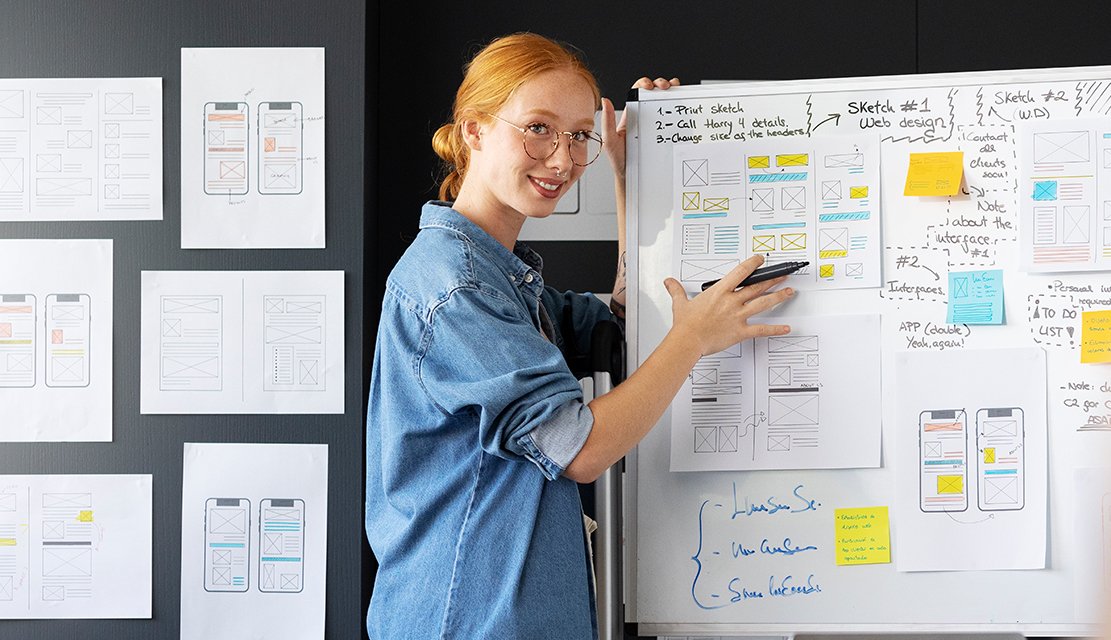
Hybrid design hinges on understanding WebView rendering constraints. We map every interface pattern against what WebViews handle well, including static content, simple transitions, and standard form interactions, versus what WebViews struggle with, including complex gesture choreography, high-frame-rate animations, and heavy compositing. Design decisions get documented with rendering implications clear rather than forcing engineering to reverse-engineer expectations mid-sprint.

Design tokens drive consistency across hybrid codebases especially. Color roles, spacing units, elevation levels, motion curves, and typography scales flow into CSS variables for Ionic apps or framework-specific theming systems directly. Tokens are structured to support Dark Mode, platform-specific adjustments where possible, accessibility scaling, and localization expansion without forcing engineering to maintain parallel design sources across web and wrapper layers.

High-fidelity screens ship alongside a component library matched to framework capabilities. Ionic component pairings, Capacitor-friendly patterns, and PWA-appropriate layouts are documented explicitly. Animation specifications respect WebView performance limits, custom iconography balances readability with file size, and responsive patterns accommodate phone and tablet form factors across both platforms cleanly despite the shared web codebase underneath.

Designs are reviewed with hybrid engineering leads before production sprints commit effort. WebView rendering feasibility, scroll performance, gesture handling across framework bridges, and accessibility behavior are validated against hybrid capabilities. Edge cases like keyboard management inside WebViews, deep linking through Cordova plugins, and native-bridge interactions are designed explicitly rather than discovered as surprises during feature implementation cycles that extend timelines frustratingly.

Post-launch, analytics across both platforms guide refinement. Rating trends segmented by iOS and Android, WebView performance reports, feature adoption, and framework-specific issues are monitored against the Phase One baseline. Where gaps emerge, revisions ship aligned with framework release cycles so the app stays current as Ionic, Capacitor, or chosen hybrid stacks evolve their underlying capabilities through major versions across each development year typically.
Drawn from over one thousand engagements, these projects reflect measurable outcomes across Ionic, Capacitor, Cordova, and PWA-based hybrid apps launched across iOS and Android globally.
Foundational values behind every hybrid engagement are WebView respect, framework-specific fluency, and honest trade-off assessment. Teams evaluating top hybrid app design companies weigh hybrid-specific craft against execution speed, and both matter in real WebView-based work. From founders choosing Ionic for first launches to established teams maintaining hybrid application design across years of feature expansion, our team operates across the maturity spectrum. Design decisions balance immediate user needs against the architectural runway shared codebase hybrid creates for efficient feature velocity.
Industry coverage spans internal business tools where hybrid wins economically, content-focused consumer apps, commerce platforms with moderate performance requirements, booking and reservation apps, B2B dashboards delivered through PWA-first approaches, and enterprise field apps where hybrid development and design suffices for occasional-use workflows. Our hybrid app development and design work extends across Ionic, Capacitor, Cordova, and PWA-centric strategies. Cross platform app design engagements often compare against hybrid options during discovery so teams choose framework based on actual fit.
Choosing the best hybrid app design agency comes down to framework fit and WebView craft, not reputation alone. UX Stalwarts has been cited in mobile development publications, shortlisted for international design awards, and referenced in hybrid product case studies because the output defies typical hybrid reputation by shipping apps that actually feel smooth rather than just efficient to build from one web codebase across both iOS and Android platforms simultaneously.
WebView As Design Input: WebView rendering realities shape every decision from first wireframe, so hybrid apps actually perform where traditional hybrid work reveals implementation through visible lag.
Framework-Specific Adaptation: Ionic, Capacitor, Cordova, and PWA-first approaches each inform design decisions deliberately, so visual choices match framework capabilities without fighting implementation layers.
Honest Framework Recommendation: Engagements start with honest assessment of whether hybrid, cross-platform, or native approaches serve your specific product better, so teams commit with full understanding of trade-offs.
Our studio uses category-leading tools selected for hybrid framework handoff precision, WebView performance prototyping, and token-system discipline across every hybrid app design services engagement and hybrid mobile app design agency project we run.









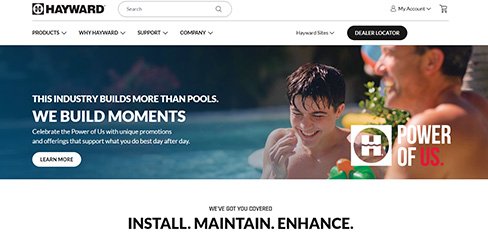
Only 18 percent of customers who bought our smart pool equipment actually used the app. The experience was too frustrating. UX Stalwarts built a hybrid app that makes controlling your pool as easy as adjusting your thermostat. Adoption tripling and energy savings of 22 percent proved that hybrid design can deliver native-quality IoT experiences.
Paper safety reports arriving 14 days late from 1,200 job sites meant we were always looking backward. UX Stalwarts built a hybrid app that works offline at remote quarries and captures safety data in real time. OSHA incidents dropping 22 percent proved that construction safety apps need to work where construction actually happens, not just where WiFi exists.
Homeowners had zero visibility into their water usage until a surprise bill arrived. Meanwhile, our smart meters were collecting data every 15 minutes that nobody could see. UX Stalwarts built a hybrid app that turns meter data into meaningful insights. Water consumption dropping 8 percent across deployed communities proved that visibility drives conservation.
The questions hybrid app teams ask before choosing a design partner
Start with framework and WebView specificity. A studio that has never shipped an Ionic, Capacitor, or Cordova app into production will miss where hybrid apps actually fail during WebView-specific edge cases. Candidates among top hybrid app design companies worth considering bring framework fluency, WebView craft awareness, and honest framework-fit assessment rather than generic mobile portfolios. Ask for before-and-after rating numbers, WebView performance improvements, and evidence of framework-aware design choices. Check experience with PWA strategy and hybrid-to-native migration planning where relevant. A credible hybrid UI design services candidate defends decisions to product, mobile engineering, and performance leads simultaneously rather than in isolated meetings that hide real trade-offs. When comparing hybrid app ui design Firms or hybrid app ux design Agencies, ask each candidate for production case studies, because the strongest hybrid app ui design Firms and hybrid app ux design Agencies show evidence before slides.
Pricing for hybrid app design services varies with scope, framework choice, and performance optimization depth. A focused audit on an existing hybrid app typically starts in the low five figures. A complete hybrid app UI UX services engagement covering research, WebView reality assessment, token system, hybrid interface craft across iOS and Android shells, and a shared component library usually runs mid-five to six figures. Enterprise app design services programs involving PWA strategy, hybrid-to-native migration planning, or ongoing optimization reach higher. Hybrid app design services pricing depends on framework complexity, performance optimization scope, localization languages, and post-launch support. Transparent scoping prevents commercial surprises during mobile engineering review cycles. Teams comparing hybrid app design services noida quotes against global benchmarks often find that strong hybrid app design solutions deliver better commercial value, and hybrid app design solutions sourced through hybrid app design services noida partnerships balance cost and quality.
Timelines depend on scope and framework choice. A targeted audit with prioritized recommendations typically takes three to four weeks. A single-flow redesign like onboarding or checkout runs six to eight weeks including WebView performance validation. A complete hybrid application design engagement covering discovery, WebView reality assessment, token system, hybrid interface craft, and a documented component library generally runs fourteen to twenty weeks. Cross platform app design engagements compared against hybrid during discovery often shift scope before commitment. Enterprise rebuilds involving PWA transitions or framework migrations extend further. We scope in two-week milestones aligned with your sprint cadence so product and engineering teams can evaluate progress continuously through real builds. Hybrid Application Design Services engagements and Hybrid App Product Design Services engagements both follow the same milestone cadence, so timelines for Hybrid Application Design Services align closely with timelines for Hybrid App Product Design Services.
A structured engagement follows six sequential phases. First, framework discovery maps engineering stack, device mix, and hybrid economics driving the decision. Second, WebView reality assessment maps every interface pattern against rendering capabilities honestly. Third, token system defines colors, spacing, typography, motion, and elevation for framework theming consumption. Fourth, hybrid interface craft produces high-fidelity iOS and Android shell variants with framework-specific component libraries. Fifth, performance validation reviews designs with hybrid engineering leads. Sixth, post-launch iteration tracks metrics. This reflects UI UX best practices for hybrid apps drawn from many shipped engagements rather than generic framework marketing claims agencies repeat without real production experience. This same sequence governs Hybrid Mobile App UI UX Design Services projects and Hybrid Mobile UI Design Services projects, so Hybrid Mobile App UI UX Design Services teams and Hybrid Mobile UI Design Services teams plan against identical phase exits.
Three things separate our hybrid work. First, WebView as design input. Rendering realities shape decisions from first wireframe rather than being discovered during engineering. Second, framework-specific adaptation. Ionic, Capacitor, Cordova, and PWA approaches each inform design decisions deliberately, so visual choices match framework capabilities. Third, honest framework recommendation. We recommend hybrid, cross-platform, or native based on your specific product fit rather than pushing whichever approach we prefer. A proven hybrid app development company partnership applying these commitments consistently appears on shortlists when teams evaluate partners. Portfolio polish alone rarely reveals whether a studio has shipped Ionic or Capacitor apps through production. Choosing a Hybrid Mobile UI UX Design Company or a hybrid mobile app design company often comes down to these three commitments, which is why every shortlisted Hybrid Mobile UI UX Design Company and every shortlisted hybrid mobile app design company should be tested against them.
Starting is deliberately lightweight. A brief discovery call covers product stage, framework choice or openness, target platform mix, engineering team composition, known pain points, and desired outcomes. Within five working days you receive a scoped proposal covering phased milestones aligned with your sprint cadence, deliverable samples, team composition, timeline, and commercial terms. A paid pilot sprint focused on one high-leverage surface like onboarding is available for teams wanting to test chemistry before committing to full engagement. Most clients move from first conversation to kickoff within two weeks. You can begin with a short enquiry, share framework documentation under NDA, or explore related capabilities through our broader UX design services page. Teams who want to Hire Hybrid App Designer talent or Hire Hybrid UI UX Designer talent can start with the same lightweight intake, and we routinely Hire Hybrid App Designer profiles and Hire Hybrid UI UX Designer profiles through this exact discovery path.
Several adjacent capabilities compound the impact of hybrid product design. A mature design system accelerates every new feature release and protects consistency across iOS, Android, web, and marketing surfaces built from token foundations designed for hybrid theming. Conversion rate optimization sharpens acquisition funnel performance through continuous A/B testing on signup and activation flows rendered through WebViews. UI UX agency for apps work pairs with dedicated usability testing, accessibility audits for inclusive hybrid experiences, and motion design for WebView-compatible state transitions. Selection depends on stage; early founders prioritize MVP flows, while mature platforms gain more from optimization and framework evolution. A hybrid mobile app ui design Agency typically pairs design system work with Hybrid Mobile Product Design Solutions, and choosing a hybrid mobile app ui design Agency that already delivers Hybrid Mobile Product Design Solutions reduces vendor sprawl meaningfully.
Every engagement is scoped around the specific product, not a template. A consumer fintech app has different hybrid considerations than an internal enterprise field tool. A content platform requires different performance attention than a transaction-heavy commerce app. A PWA-first product demands different architecture than a Capacitor-wrapped web app. Our hybrid app interface design adapts across lifestyle, finance, commerce, productivity, media, and enterprise categories. Framework choice also shapes the engagement; Ionic apps benefit from component library customization while Capacitor apps can pull custom HTML more freely. Discovery produces a custom engagement plan accounting for framework, performance requirements, audience expectations, and distribution channel specifics. Whether engaged as a Hybrid App UI UX Design Agency or a Hybrid App Interface Design Agency, the discovery plan adapts to category, which is why a single Hybrid App UI UX Design Agency partner can also operate as a Hybrid App Interface Design Agency without changing methodology.
Yes, and it is where meaningful hybrid wins show up over time. After launch, real user behavior often differs from research predictions in small but important ways, and framework evolution requires ongoing alignment. Retainer options cover ongoing design iteration, component library expansion, framework version upgrades as Ionic or Capacitor release new major versions, feature releases across both platforms simultaneously, and accessibility improvements. A dedicated hybrid mobile app design agency partnership keeps that rhythm consistent through evolving framework capabilities and WebView performance improvements. Remote validation plays a central role in retainer work, covered in our guide to remote usability testing for distributed iOS and Android user cohorts sampled across regions. Mature hybrid app design firms structure retainers around framework release cycles, and hybrid mobile app design Companies offering ongoing support keep teams current; the best hybrid app design firms and hybrid mobile app design Companies blend both rhythms cleanly.
Coverage spans consumer lifestyle, fintech, productivity, content platforms, commerce, media, education, health, and enterprise hybrid mobile tools. Clients range from pre-launch founders to established brands across India, the United States, the United Kingdom, the GCC, and Southeast Asia. A regionally experienced team understands that Indian markets combine entry-level device performance concerns with mass hybrid adoption, US markets prioritize subscription clarity across iOS and Android, GCC markets increasingly require Arabic-first interfaces with right-to-left layouts built into shared codebases, and SEA markets mix budget and flagship device realities simultaneously. India delivery advantages make us a strong option for global founders seeking best hybrid app design agency experience alongside cost efficiency for fast time-to-market. Global founders evaluating a Hybrid iOS and Android App Design Agency often weigh delivery quality against pricing when picking the best hybrid app design Company for their region, so a Hybrid iOS and Android App Design Agency selected as the best hybrid app design Company should evidence both.
Framework trade-offs deserve honest assessment without agency bias. Hybrid approaches like Ionic, Capacitor, and Cordova win economically for content-focused apps, internal business tools, MVPs needing fast iteration, PWA-friendly products, and teams with strong web talent who want to reuse skills. Trends in hybrid app design increasingly favor Capacitor and PWA approaches over older Cordova patterns. Cross platform app design using Flutter or React Native wins when performance matters more and web-rendering limits become visible. Native wins where deep platform integration matters most. Hybrid app design company engagements typically begin with this assessment so teams choose framework based on real fit rather than fashionable recommendation following market trends blindly. A Top Hybrid App Design Agency conducts this assessment before recommending hybrid apps ux design Solutions, because the same Top Hybrid App Design Agency offering hybrid apps ux design Solutions should defend the framework choice with evidence.
Accessibility shapes design inputs rather than post-launch patches. Hybrid apps rely on WebView accessibility APIs that vary across platforms and versions. Color contrast meets WCAG standards while aligning with both Apple and Google aesthetic systems. Typography scales support accessibility scaling through CSS-based token systems. Touch targets respect minimum sizes. Motion systems respect both Reduce Motion preferences across platforms. VoiceOver and TalkBack navigation require explicit ARIA roles and semantic HTML. Our article on UX accessibility audits covers broader inclusive thinking. Accessible hybrid apps reach wider audiences and protect against policy shifts both Apple and Google tighten regularly around accessibility compliance across app stores. Accessibility-led hybrid apps ui & ux design Firms treat WCAG compliance as design input rather than QA gate, and credible hybrid apps ui & ux design Firms document this commitment in handoff.
International hybrid launches demand careful token and system planning. Font rendering for CJK and Indic scripts, right-to-left layout support for Arabic and Hebrew, text expansion for German and Russian, and cultural symbol sensitivity all affect shared hybrid codebases more severely than native apps because WebViews inherit web rendering behaviors. Our article on multi-language interface design for global platforms covers broader approach. Localization-first design from day one costs less than retrofitting multi-language support across Ionic or Capacitor apps later. Shared codebases amplify localization mistakes when expansion timing arrives unexpectedly during product-market fit discovery phases.
Yes. Hybrid design systems carry specific requirements beyond generic product systems. Components must work inside WebView rendering contexts, map cleanly to Ionic components or custom HTML in Capacitor shells, handle platform-adaptive variants for iOS and Android theming, support Dark Mode through CSS variables, respect accessibility scaling, and tolerate localization expansion. Our system engagements produce tokenized foundations, a production-ready component library, documented accessibility behavior, animation patterns aligned with WebView performance capabilities, and handoff kits that reduce engineering rework meaningfully. For long-running hybrid apps, stewardship matters, which we cover in our article on design system governance.
Measurement begins before design. During discovery we capture baselines segmented by platform: iOS App Store rating, Android Play Store rating, first-week retention on each platform, activation rate, WebView-specific performance signals, jank reports, and framework-specific issues. After launch the same metrics are re-measured at thirty, sixty, and ninety days. Secondary signals include engineering-reported velocity changes, handoff satisfaction, shared component reuse rates, and feature parity achievement across both platforms. Quarterly reviews tie design decisions back to LTV, CAC, and platform-specific rating movement. Measurement discipline across every hybrid mobile app design process engagement separates cosmetic redesigns from durable hybrid product success across both platforms simultaneously over extended periods meaningfully.

C – 81C, Sector – 8, Noida 201301, India


1025 Beamon Drive, Franklin 37064 Tennessee, USA
Sveavagen 34 111 34 Stockholm, Sweden
A-10, Sahastradhara Rd, Doon IT Park, Dehradun, Uttarakhand

© 2026 UX STALWARTS. All rights reserved.