Products fail not from a lack of engineering capability but because the problems being solved were never properly understood. When organisations skip structured user experience research or build from boardroom consensus, they ship features that fit internal logic but miss real user motivations, mental models, and workflow realities. Costs compound: untested personas, unvalidated flows, sprints spent on features users never requested. For enterprises in regulated sectors, consequences extend to compliance exposure, retention loss, and the credibility gap a user research agency is hired to close.
UX Stalwarts delivers ux research services that combine discovery, generative, and evaluative methods across the entire product lifecycle. Engagements move from stakeholder alignment and study design into participant recruitment, fieldwork (contextual inquiry, depth interviews, diary studies, card sorting, tree testing, moderated and unmoderated usability testing), rigorous analysis, and insight synthesis. For regulated organisations, we deliver enterprise ux research services with compliance-aware protocols and audit-ready documentation, ensuring every finding feeds directly into prioritised product decisions backed by validated user experience research at scale.
Eighteen years of cross-sector delivery and over twelve hundred engagements have produced methodological breadth uncommon among specialist UX research companies or solo user experience research consultants. Practitioners draw on training in psychology, anthropology, human-computer interaction, and data science, so methodology follows the question rather than habit. Among recognised ux research companies in india, the practice is sought for regulated-sector engagements where transcripts and persona decks are not enough; clients receive prioritised insight frameworks tied to roadmap decisions, separating research that informs from research that transforms.

Programmes are not designed around methodology with insights expected to emerge. This question-first discipline ensures every participant session, survey instrument, and analysis framework is oriented to answerable questions tied to decisions. Engagements with this ux research consultancy are calibrated to your timeline and risk profile.

Single-method research produces single-dimensional insight. Combining qualitative depth (interviews, diary studies) with quantitative validation (surveys, analytics, task benchmarking) ensures behavioural patterns are confirmed at scale, while statistical trends gain human context. As a UX research company and usability testing agency, every programme uses this pairing.

Research quality is bounded by participant quality. Recruitment uses stringent screening so participants reflect the target user segment rather than respondents chasing incentives. Screener design, quota management, and over-recruitment are managed in-house, because a user experience research firm that outsources recruitment loses control of findings.

Raw data becomes actionable insight only when interpreted through domain knowledge. Delivery across fintech, healthcare, insurance, ecommerce, real estate, logistics, and enterprise SaaS gives analysts fluency in regulatory constraints, workflow conventions, and dynamics shaping user behaviour. This depth separates user research firms from generalist vendors.

Research findings stranded on slide decks produce zero value. Activation runs through opportunity mapping, design-sprint facilitation informed by outputs, and roadmap sessions that convert insights into backlog items with acceptance criteria. This rigour is rare among ux research consulting firms and ensures research delivers impact.

Single-session studies capture snapshots; sustained programmes capture trajectories. Longitudinal diary studies, cohort tracking, and continuous-discovery cadences reveal how needs, behaviours, and satisfaction shift over time. This is critical for subscription products where retention depends on evolving expectations, central to credible user experience research services.

Structured user experience research is the only reliable way to separate what your team thinks users need from what users actually need. Roadmaps run on assumptions about motivations, task priorities, and adoption appetite; some are right, many are quietly wrong. Without testing them, the wrong ones absorb the same investment as the right ones, and the product reflects internal consensus rather than market reality. Effective user experience research services do more than confirm hypotheses; they surface unexpected opportunities, reframe problems, and supply the human context that converts data into product strategy.
Engage a specialist user experience research firm built around evidence.
A disciplined methodology by an experienced ux research consultancy ensures every study yields findings reliable enough for executive scrutiny.

Research objectives are developed with product stakeholders in structured assumption-mapping workshops. The team defines the key questions, the decisions those answers will support, and the required confidence level. This framing avoids a common failure mode where research yields interesting observations disconnected from pending product decisions.

Methodology follows from the questions framed rather than practitioner preference. Qualitative techniques such as contextual inquiry, depth interviews, and participatory design support generative exploration. Quantitative methods including surveys, analytics, and benchmarking validate patterns at scale. Sampling, recruitment criteria, and analysis frameworks are documented before fieldwork.

Participant recruitment follows strict screener protocols matched to demographic, behavioural, and attitudinal profiles of target user segments. Quota frameworks safeguard representation across key variables, and over-recruitment buffers no-show attrition. Unlike usability research firms that treat recruitment as a commodity, sourcing stays in-house to protect validity.

Sessions run by senior practitioners trained in interview facilitation, observation, and adaptive probing. Contextual interviews happen in participants’ natural settings where possible; remote interviews use secure video platforms with screen-sharing. Usability testing follows think-aloud protocols and task scenarios, every session recorded and tagged for analysis.

Raw data is synthesised through affinity diagramming, thematic coding, and triangulation across qualitative and quantitative inputs. Analysts separate recurring patterns from isolated observations. Findings are classified by confidence and mapped to questions defined in framing, separating a senior user research consultant from one producing summaries.

Findings are translated into prioritised opportunity statements, design principles, persona refinements, and journey-map updates that feed directly into the roadmap. A live presentation places findings in context for product, design, and engineering stakeholders. Where useful, design-sprint facilitation converts insights into testable concepts within the engagement.
Across more than twelve hundred client partnerships, the portfolio shows how this ux research agency india delivers measurable product outcomes.
Research quality depends on the investigator’s grasp of the domain in which users operate. Interviewing a cardiac surgeon about clinical decision support requires probing approaches, language awareness, and contextual sensitivity that an ecommerce checkout study does not. The practice draws on sustained delivery within each vertical to ask the right questions, recruit the right participants, and interpret findings through the right lens.
Deep delivery experience spans fintech, healthcare, insurance, ecommerce, real estate, logistics, education technology, and enterprise SaaS, and underpins demand for enterprise ux research services in regulated environments. Cross-sector programmes create transferable insight: a mental-model mapping run with wealth advisors informs an interview protocol for an insurance claims study because both audiences make high-stakes decisions under time pressure. Single-vertical vendors miss these methodological cross-pollinations.

In a market crowded with self-service testing and AI-generated interview summaries, real differentiation comes from interpretive depth and methodological rigour that experienced human researchers bring to ambiguous findings. Sustained referral growth follows three capabilities that automated alternatives and generalist agencies struggle to replicate.
Behavioural Science Foundation: Researchers trained in psychology, anthropology, and human-computer interaction analyse motivation, cognition, and decision-making beyond surface preferences.
Multilingual and Multi-Market Reach: Programmes serve global product teams across India, North America, Europe, and Southeast Asia with culturally adapted protocols and local recruitment.
Research Operations at Scale: For continuous discovery, the team designs recruitment pipelines, insight repositories, and reporting rhythms that make research a permanent product function.
Tool selection prioritises methodological flexibility, data security compliance, and synthesis efficiency. Every platform below has been tested in hundreds of engagements and integrates into established enterprise product workflows.












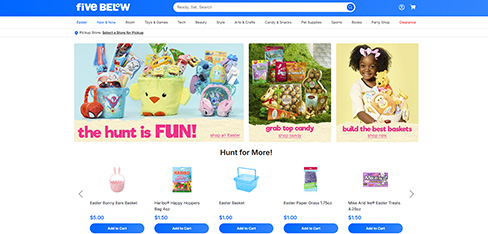
Five Below was growing fast but we needed to deeply understand what made our stores culturally relevant to Gen Z beyond just low prices. UX Stalwarts designed an ethnographic research program that got us out of conference rooms and into stores, homes, and social media where our customers actually experience the brand. Learning that treasure hunt appeal was about trend discovery, not just $5, fundamentally shifted our category strategy. The revelation that 73 percent of our customers shop in social groups transformed how we think about store layout. This research gave us the confidence to launch Five Beyond with higher price points because we understood what customers truly valued.
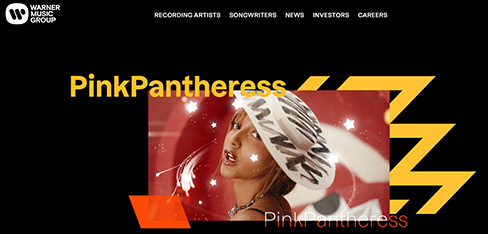
The streaming era fundamentally changed how fans discover and engage with music, and Warner Music needed research that went beyond surface-level analytics to understand the human behavior behind the data. UX Stalwarts designed a global UX research program that gave us genuine insights into how different generations and markets experience music. Learning that Gen Z discovery was driven by TikTok participation and that emerging markets required WhatsApp-first strategies completely reshaped our approach. The revelation that fans wanted vulnerability over polish in artist content transformed our creative strategy. This research directly informed platform investments and artist development programs that generated 28 percent subscriber growth.
Cracker Barrel was seeing traffic declines and there was a real question whether our nostalgic positioning was becoming a liability with younger families. UX Stalwarts designed behavioral research that observed real dining experiences and talked to actual guests rather than relying on assumptions. Learning that Millennial parents valued the unhurried, screen-free family experience — not in spite of the nostalgia but because of it — gave us confidence in our brand foundation. The revelation that wait time rocking chairs and retail browsing were part of the valued experience, not friction, stopped us from making operational changes that would have hurt what makes us unique. This research reversed our traffic trajectory.
Common questions from product leaders evaluating a structured research investment.
Several signals indicate that structured research would add value: feature adoption rates lower than projections despite marketing spend; support volumes suggesting users cannot complete intended tasks unaided; churn that analytics alone cannot explain; or a roadmap built largely on stakeholder opinion rather than user evidence. When meetings about user needs reference no recent behavioural data, that absence is itself diagnostic. A well-scoped ux research services engagement replaces these assumption cycles with prioritised, evidence-based clarity, giving product, design, and engineering a shared and defensible understanding of what users actually do, why they do it, and where the next opportunity sits.
Cost depends on the number of research questions, methodology complexity, recruitment difficulty, geographic scope, and the depth of analysis and activation support included. A targeted evaluative study testing one flow with eight participants is far cheaper than a generative programme spanning contextual inquiry across three markets, diary studies, and a large-scale survey. Reputable ux research consulting firms scope by methodology and participant access rather than by raw headcount, and a credible ux research company india will provide a transparent scope and cost breakdown linked to specific deliverables and decision outcomes so that you can assess the investment against the product decisions the research will inform.
A specific evaluative study, such as usability testing of one feature within a single user segment, can complete in two to three weeks. A comprehensive generative programme involving stakeholder framing, multi-method fieldwork, and insight activation usually takes four to eight weeks. Timeline drivers include recruitment difficulty for specialised participant profiles, the number of geographic markets, and stakeholder availability for framing and activation workshops. Reputable usability research firms set timelines based on study design and recruitment realities rather than artificial delivery pressure. Timelines compress when clients arrive with existing analytics, persona documentation, and access to representative participants from the outset.
Generative research explores the problem space, investigating user needs, motivations, workflows, and pain points to determine what should be built and why. Common methods include contextual inquiry, depth interviews, diary studies, and ethnographic observation. Evaluative research, by contrast, assesses a proposed or existing solution, testing whether a design, prototype, or live product enables users to achieve their goals effectively. Common methods include usability testing, A/B testing, and task-completion benchmarking. Most products benefit from both: generative research to define the right problem and evaluative research to validate the right solution. The sequence matters because evaluating the wrong solution at speed is more expensive than discovering it.
Three capabilities separate the practice. First, a behavioural science foundation that frames inquiry around motivation and decision-making rather than surface preferences. Second, multilingual, multi-market reach that supports global product teams across India, North America, Europe, and Southeast Asia. Third, research operations capability that embeds continuous discovery into your product cadence as a permanent function. Eighteen years of cross-sector delivery means the team interprets findings through domain context that most ux research firms cannot replicate, and this ux research agency extends beyond research delivery into prioritisation, activation, and direct integration with the product roadmap, treating insight as a means to action rather than as a deliverable.
The process starts with a thirty-minute consultation that covers product context, research questions, decision timeline, and budget parameters. A scoping document follows, outlining recommended methodology, participant profiles, fieldwork logistics, analysis depth, and investment. There is no cost associated with the initial consultation. Once scope is confirmed, the engagement opens with a framing workshop. Senior user experience research consultants then lead the scoping discussion and recommend the right engagement shape for your decision timeline. Vendors that propose methodology before understanding your product decisions are typically using generic study templates rather than designing a programme calibrated to your specific needs.
Yes. Remote research is a core capability, not an accommodation. Moderated remote sessions run on secure video platforms with screen-sharing and recording. Unmoderated tests release task-based scenarios that participants complete asynchronously across time zones. Diary studies capture longitudinal behaviour in participants’ natural environments wherever they live. Survey instruments scale to global audiences. This approach is standard among leading ux research companies in india supporting products used across India, North America, Europe, and Southeast Asia, because remote methodology delivers breadth that in-person studies cannot match and, when designed well, the depth of insight that serious user experience research demands.
Support extends well beyond report delivery to include design-sprint facilitation that converts priority insights into testable concepts, roadmap integration sessions translating findings into backlog items, and ongoing continuous-discovery programme management for organisations embedding research permanently. Retainer arrangements provide ongoing access to a senior user experience research consultant who can hold context as your research needs evolve. This activation model avoids the all too common failure where research findings prompt initial enthusiasm during a presentation but make no measurable difference to product decisions in the months that follow, because momentum has nowhere to land without explicit ownership and a translation path.
The most extensive portfolios cover fintech and digital banking, healthcare and clinical systems, insurance and insurtech, ecommerce and direct-to-consumer, real estate and proptech, logistics, education technology, and enterprise SaaS. Within each sector, the team understands participant recruitment constraints, interview protocol sensitivities, and regulatory limits that shape study design. Few ux research firms can demonstrate this depth of regulated-sector exposure backed by measurable outcomes, and research programmes that use a monolithic methodology across every industry produce findings too generic to inform product decisions where domain nuance, compliance posture, and workflow complexity carry meaningful business and operational weight.
A freelance UX research consultant brings focused expertise and flexibility for well-scoped briefs, especially evaluative testing of a single feature or a contained interview programme. A user research consultant working solo can move quickly when scope is narrow. For programmes requiring multi-method design, large-scale recruitment, cross-market fieldwork, and integrated activation, a full-service user research agency offers team breadth, operational infrastructure, and quality assurance that individual practitioners cannot maintain. The deciding factor is programme complexity. If your questions require more than one methodology, more than one researcher, or more than one geographic market, an agency structure produces more reliable and comprehensive results.
Project-based research answers a specific set of questions within a fixed window and produces a discrete deliverable. Continuous discovery makes research a standing function in your product team’s operating rhythm: regular user touchpoints, a live recruitment pipeline, an accumulating insight repository, and findings feeding directly into weekly sprint planning. The continuous model prevents the insight decay that occurs between episodic studies and ensures product decisions rest on current understanding, not on research conducted months or quarters earlier. Long-horizon teams often retain a single ux research agency india across multiple discovery and evaluative cycles to preserve methodological continuity and institutional context.
Standard deliverables include a research findings report with thematic analysis, supporting evidence clips, and confidence-level classifications; refined or newly created personas grounded in fieldwork data; journey maps depicting real user workflows rather than assumed ones; an opportunity matrix prioritising gaps by impact and feasibility; and an activation roadmap translating insight into product-backlog recommendations. Evaluative studies also include task-completion metrics, severity-ranked usability issues, and comparative benchmarking data. All deliverables are presented in a live stakeholder session and made available in editable formats for ongoing reference, setting the work apart from user research firms that conclude engagements with summary slides and no decision-grade artefacts.
Embedded collaboration is a core engagement model. Senior researchers join existing sprint ceremonies, contribute research-informed input to backlog refinement, and maintain shared insight repositories accessible across your product organisation. This model suits teams that hold some internal research capability but need specialist support for complex studies, hard-to-recruit participant segments, or methodologies outside in-house expertise. Cross-border product teams frequently engage this ux research company india as their embedded research partner for regulated-sector studies. Research practices that operate in isolation from client teams produce findings detached from the product decisions those findings are meant to inform, which is precisely the failure mode embedded collaboration is designed to prevent.
Research findings feed four downstream outputs: persona and journey-map updates that ground interaction design in validated user understanding; opportunity statements that inform feature prioritisation in the product backlog; design principles that shape visual and interaction decisions without requiring researchers in every design review; and acceptance criteria attached to user stories that reference specific research findings. Unlike a transactional usability testing agency that concludes engagements with a defect list, this structured integration ensures that investment in user experience research services compounds through every subsequent product decision rather than ending at a single presentation milestone, building cumulative product intelligence over time.
The right frequency depends on product velocity, competitive dynamics, and the rate at which user bases evolve. High-velocity products shipping features weekly benefit from continuous-discovery cadences that sustain ongoing user contact. Stable categories may find quarterly focused studies sufficient, with lightweight signal monitoring between formal cycles. The guiding principle is that research frequency should match decision frequency: if your team makes product decisions monthly, monthly user touchpoints keep those decisions out of assumption territory. Establishing the right cadence is a strategic conversation that this user experience research agency supports during scoping, well before any methodology is locked in.

C – 81C, Sector – 8, Noida 201301, India


1025 Beamon Drive, Franklin 37064 Tennessee, USA
Sveavagen 34 111 34 Stockholm, Sweden
A-10, Sahastradhara Rd, Doon IT Park, Dehradun, Uttarakhand

© 2026 UX STALWARTS. All rights reserved.