B2B SaaS products fail in quiet moments. A signup form asks for information the prospect is not ready to share and loses the account. A first-session experience buries the aha moment behind empty dashboards and setup wizards nobody finishes. An admin panel confuses the buyer who signs renewals. A pricing page fails to explain what teams get for the upgrade they cannot find. Weak b2b saas ui ux design shows up in cold activation numbers, painful onboarding calls, rising CAC-to-LTV ratios, stalled expansion revenue, and renewal conversations that grow harder every quarter. In SaaS, every interface decision compounds across cohorts for years, so the gap between a good product and a great one is rarely features.
Our approach treats SaaS as a compounding product system, not a one-time design project. Before any screen is produced, our team studies signup cohorts, activation funnels, churn reasons, expansion triggers, admin workflows, and the integration patterns that determine whether customers stay for the long haul. From there we deliver research-backed information architecture, signup and activation flows, product onboarding surfaces, admin consoles, billing and expansion interfaces, integration marketplaces, and component libraries tuned for multi-tenant complexity. As a specialized b2b saas ux design agency, we engineer the moments that decide LTV: first-value delivery, team invitations, usage-limit negotiation, upgrade trigger, and integration setup. Every screen ships tied to a named growth metric.
Eighteen years of design work across thirty-plus countries gives our team practical fluency in how SaaS buyers, champions, end users, and admins actually experience products across very different contexts. UX Stalwarts has partnered with early-stage SaaS founders preparing for first enterprise logos and with mature platforms modernizing aging interfaces that thousands of teams rely on. Our designers read cohort analytics, shadow customer success calls, work alongside growth and revenue operations, and speak the vocabulary of PLG, sales-assist, activation, time-to-value, SSO, multi-tenant data isolation, expansion revenue, and seat-based licensing. That grounding separates surface polish from a b2b product design agency capable of shifting real SaaS metrics rather than refreshing marketing screenshots for a relaunch cycle.

Signup is the easy part. Activation is where products live or die. Our interfaces are designed around the specific aha moment each product needs to deliver fast, removing empty states, unnecessary configuration, and setup tasks that delay value. Users see what they came for in minutes, not sessions.

Most SaaS growth comes from existing customers growing, not new logos. Our designs treat upgrade moments, seat additions, usage-limit warnings, and feature unlocks as first-class surfaces rather than aggressive popups. Customers expand willingly when the path is clear and the value is honest.

Workspace switching, role hierarchies, data isolation, billing separation, and SSO federation shape SaaS interfaces long before visual polish matters. We design with these realities in mind from day one, so products ship cleanly and scale without expensive architectural rework six months after launch.

Pure PLG works for some categories; enterprise sales assist works for others; most B2B SaaS needs both. Our designs support self-serve signup paths and sales-led deal motions simultaneously, letting prospects explore freely while sales teams step in when deal size and complexity warrant human guidance.

Modern SaaS rarely stands alone. Integration marketplaces, connector configurations, webhook management, and API documentation shape retention as much as core product surfaces. Our work treats these operational edges with the same craft as hero dashboards, because integrations often decide whether customers stay past renewal.

SaaS teams move on quarterly cycles, product-led growth experiments, and annual planning windows. Our collaboration cadence matches that pace with weekly product syncs, shared Figma spaces, written design decisions, and direct senior designer access. Deliverables tie to measurable outcomes so sponsors can defend the engagement at every quarterly business review.

B2B SaaS interfaces carry measurable growth consequences. A slow signup form drops trial starts. A confusing first session crashes activation cohorts. A clunky admin panel frustrates the buyer who renews. Strong saas ux design for b2b shifts metrics that compound: activation rates climb, time-to-value shortens, expansion revenue accelerates, churn moves below benchmark, and renewal conversations become routine rather than painful. A thoughtful saas product design services partner understands activation psychology, buyer-champion-user dynamics, and the quiet product moments where customers either commit deeper or begin evaluating replacements for the next contract cycle.
Partner with specialists who design SaaS products built for compounding growth.
Every engagement follows a deliberate sequence built to lift activation, expand revenue, and protect retention across the full SaaS product lifecycle design.

We begin by mapping the SaaS reality around your business: buyer personas, user segments, competitive positioning, pricing structure, and integration landscape. Existing cohort analytics, activation funnels, churn reasons, and expansion data establish the measurable baseline every design decision must eventually improve across signup, activation, and retention surfaces.

SaaS journeys vary by user type. We separate buyer, champion, admin, power user, and occasional user journeys into independent maps documenting decision pressure, task frequency, and expansion triggers. These artifacts guide every subsequent screen so each role gets interfaces tuned to actual daily reality rather than compromised middle-ground designs.

Activation is the highest-leverage surface in any SaaS product. We structure signup flows, empty states, template libraries, sample data, onboarding tours, and first-value moments through rigorous testing. Friction on signup, sample content quality, and time-to-first-value targets are set explicitly so activation becomes engineered rather than hoped for.

High-fidelity signup screens, product surfaces, admin consoles, billing pages, and integration marketplaces ship alongside a component library tuned for multi-tenant SaaS. Data tables, permission matrices, workspace switchers, and upgrade prompts are weighted through visual hierarchy designed for daily use across weeks and months, not just first impressions during a demo.

Designs are tested with real signup cohorts, not just one-hour sessions. We measure activation rates, time-to-value, dropoff points, and qualitative friction signals across enough volume to produce honest answers. Edge cases like empty workspaces, invite-only features, and first-admin setup get specific attention rather than general usability review.

Post-launch, cohort data guides continuous refinement. Activation rate, time-to-value, expansion conversion, churn reasons, feature adoption, and support ticket categories are monitored against the Phase One baseline. Where gaps surface, targeted revisions ship in structured sprints so the product keeps improving unit economics quarter after quarter across new cohorts.
Drawn from over one thousand engagements, these projects reflect measurable outcomes across vertical SaaS, horizontal productivity platforms, and developer tools.
Foundational values behind every SaaS engagement are activation discipline, expansion-revenue honesty, and retention through real product value. Teams evaluating b2b saas design services or comparing top b2b saas design agencies weigh domain fluency against execution speed, and both matter in SaaS work. From pre-seed founders launching first products to public SaaS companies modernizing legacy interfaces serving millions of users, our team operates across the maturity spectrum. Design decisions balance immediate user needs against the architectural runway required for seat growth.
Industry coverage spans vertical SaaS for healthcare, legal, construction, education, and finance, alongside horizontal platforms for sales operations, marketing automation, HR, analytics, developer tools, collaboration, and customer support. Our ui ux design for saas companies extends across PLG-native startups, sales-led enterprise platforms, and hybrid motion products. That cross-category pattern library sharpens decisions on how saas interface design should feel natural on first use rather than demanding extensive onboarding before users see their first moment of product value.

Choosing the best saas ux design services company comes down to growth fit, not reputation alone. UX Stalwarts has been cited in product growth publications, shortlisted for international design awards, and referenced in SaaS case studies because the output lifts activation, expansion, and retention rather than just refreshing visual style. Three commitments explain why SaaS founders and growth leaders choose our team repeatedly.
Activation Metric Ownership: Every engagement ships tied to a named activation or time-to-value number, and our team stays engaged until the metric moves meaningfully in cohort data.
Expansion Revenue Craft: Upgrade flows, seat growth prompts, and usage-limit negotiations are designed for honest customer growth rather than aggressive revenue extraction that hurts long-term relationships.
Multi-Tenant Design Fluency: Workspace switching, role hierarchies, and tenant isolation are treated as foundational architecture rather than afterthoughts, so products scale cleanly across enterprise segments.
Our studio uses category-leading tools selected for collaboration speed, engineering handoff accuracy, and analytics integration across every saas platform design services and saas product design services engagement we deliver.









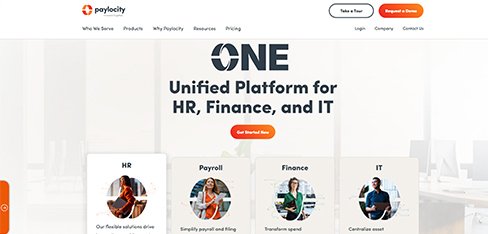
Our mid-market clients were churning because their HR administrators felt overwhelmed by a platform that grew more complex every year. UX Stalwarts simplified payroll to 6 clicks and gave every role exactly what they need. Churn dropping 34 percent proved that for B2B SaaS, usability is retention.
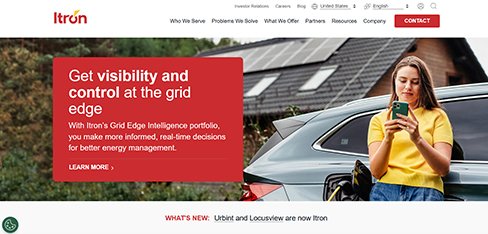
Utilities were paying for analytics they could not use because the interface was built for data scientists, not operators. UX Stalwarts designed templates, visual builders, and mobile tools that put IoT intelligence in the hands of the people who maintain infrastructure every day. Feature adoption tripling proved that accessibility drives SaaS expansion revenue.
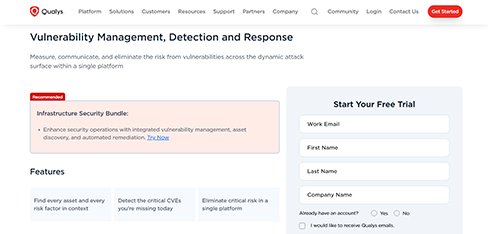
Our analysts were drowning in alerts and spending more time figuring out what to fix than actually fixing it. UX Stalwarts designed an interface that cuts through the noise with AI prioritization and unified remediation workflows. Response time dropping 68 percent means our clients are significantly more secure because their teams can act faster.
The questions SaaS founders and product leaders ask before selecting a design partner.
Start with SaaS specificity. A studio that has never shipped an activation funnel or expansion-revenue flow will miss where products actually fail. Top b2b saas design agencies worth considering bring measurable cohort experience, not just visual portfolios. Ask for before-and-after activation rate numbers rather than aesthetic case studies. Check experience with multi-tenant architecture, SSO, and integration marketplaces your engineering team actually needs. Review component libraries designed for enterprise SaaS density. Candidates for the best saas ux design services company defend decisions to product, growth, engineering, and revenue operations leads in one meeting. Portfolios alone never reveal whether the studio has shipped products across full multi-quarter growth cycles. Shortlists often compare B2B SaaS design firms and B2B SaaS UX Design firms.
Pricing for b2b saas design services varies with scope, cohort complexity, and growth stage. A focused UX audit on an existing SaaS product typically starts in the low five figures. A complete b2b saas product design engagement covering research, journey cohorts, activation architecture, admin surfaces, and a component library usually runs mid-five to six figures. Enterprise programs involving multi-product platforms, PLG-to-sales-assist transitions, or ongoing optimization reach higher. Enterprise saas design agency engagements for listed SaaS companies often involve multi-quarter roadmaps. Transparent scoping prevents commercial surprises during procurement and legal review. Pilot sprints focused on one high-leverage surface are also available for early-stage founders. B2B SaaS design companies offering custom B2B SaaS UI UX design company or B2B SaaS design agency.
Timelines depend on scope and product maturity. A targeted audit with prioritized recommendations typically takes three to four weeks. A single-flow redesign like signup, activation, or admin console runs six to ten weeks including cohort validation. A full b2b software design services engagement covering discovery, journey cohorts, activation architecture, interface craft, and a documented component library generally runs sixteen to twenty-four weeks. Enterprise rebuilds involving PLG transitions, multi-product suites, or legacy replacements extend further. We scope in two-week milestones with visible deliverables so product, engineering, and growth teams can evaluate progress continuously across real cohort data rather than just design reviews. B2B SaaS UI UX design services, B2B SaaS design solutions, and SaaS Product Design Company work follow this.
A structured engagement follows six sequential phases. First, growth discovery collects cohort analytics, pricing data, and competitive benchmarks. Second, journey cohort mapping separates buyer, champion, admin, and user paths. Third, activation architecture validates signup flows, empty states, and time-to-value moments through rigorous testing. Fourth, interface craft produces high-fidelity screens against a component library. Fifth, activation cohort validation tests designs with real signup volumes before wider rollout. Sixth, retention iteration tracks metrics and ships refinements. Each phase ends with a signed-off deliverable. This sequencing aligns with proven saas product design process discipline and represents b2b saas ux design best practices distilled from many engagements. B2B SaaS UI UX Design solutions, B2B SaaS Product Design Services, B2B Software UX Design company follow.
Three things separate our SaaS work. First, activation metric ownership. Every engagement ships tied to a named activation or time-to-value number rather than a visual KPI. Second, expansion revenue craft. Upgrade flows are designed for honest growth rather than aggressive extraction. Third, multi-tenant architecture fluency. Workspace switching, role hierarchies, and tenant isolation are treated as foundational. A proven b2b saas ux design agency applying this discipline consistently appears on shortlists when SaaS founders and growth leaders evaluate partners. Ui ux design for saas companies done well is rare; portfolio polish alone never reveals whether a studio has shipped products across full multi-quarter growth cycles under real metric scrutiny. B2B SaaS UI UX Design Agency and SaaS Product Design Company differ.
Starting is deliberately lightweight. A brief discovery call covers SaaS stage, core user segments, pricing model, integration landscape, known pain points, and desired outcomes. Within five working days you receive a scoped proposal covering phased milestones, deliverable samples, team composition, timeline, and commercial terms. A paid pilot sprint focused on one high-leverage surface is available for teams wanting to test chemistry before committing to larger work. Most clients move from first conversation to kickoff within two weeks. You can begin with a short enquiry, share product documentation under NDA, or explore related capabilities through our broader UX design services page as a starting reference. Teams choose B2B SaaS UI UX design services or hire B2B SaaS UI UX designer talent.
Several adjacent capabilities compound the impact of SaaS product design. A mature design system accelerates every new feature release and protects consistency across signup, product, admin, billing, and marketing surfaces. Conversion rate optimization sharpens acquisition funnel performance through continuous A/B testing on signup and pricing flows. Customer journey mapping saas work, product usability design sprints, and usability testing for saas new features complement core work. Enterprise ux design services often pair alongside saas dashboard design services when products serve both internal and customer-facing audiences. Selection depends on stage; early founders prioritize activation flows, while mature platforms gain more from optimization and system governance. Adjacent SaaS website design Services and seasoned B2B SaaS design firms often pair alongside this work.
Every engagement is scoped around the specific SaaS product, not a template. A vertical SaaS for clinical research has different needs than a horizontal productivity platform. A developer tool requires different hierarchy than a sales automation platform. Our interaction design for enterprise apps work differs meaningfully from PLG-native consumer SaaS or B2B marketplace platforms. Customer journey mapping saas exercises produce engagement plans accounting for pricing motion, user base complexity, integration landscape, and regulatory jurisdiction. Sprint cadence, deliverable format, and stakeholder involvement adjust to match how your SaaS organization actually makes decisions across product, engineering, growth, and revenue operations during quarterly planning cycles. UI UX design for B2B SaaS platforms, B2B SaaS Product Design Services, B2B SaaS design solutions adapt.
Yes, and it is usually where meaningful SaaS wins show up. After launch, real cohort behavior often differs from research predictions in small but important ways. Retainer options range from enterprise programs to lighter engagements covering specific surfaces. Typical support covers ongoing design iteration, component library expansion, seasonal campaign support, integration partner launches, periodic saas user experience optimization work, and analytics-driven refinement of activation and expansion flows. A dedicated b2b product design agency partner keeps that rhythm consistent through growth experiments, pricing changes, and platform expansions. Remote validation plays a central role here, covered in our guide to remote usability testing for distributed SaaS cohorts across geographies. B2B SaaS product design agency and B2B Software UX Design company retainers apply.
Coverage spans vertical SaaS for healthcare, legal, construction, education, finance, and logistics, plus horizontal platforms for sales, marketing, HR, analytics, developer tools, collaboration, and customer support. Clients range from pre-seed founders to listed SaaS companies operating across India, the United States, the United Kingdom, the European Union, the GCC, and Southeast Asia. A regionally experienced team understands that Indian B2B SaaS often targets US buyers requiring SOC 2 readiness, EU customers demand GDPR transparency, and GCC markets frequently require Arabic localization. Pattern transfer across verticals is deliberate; a proven activation flow for analytics often accelerates onboarding decisions for marketing automation because cohort psychology repeats. Seasoned B2B SaaS design companies and B2B SaaS UX Design firms transfer these patterns across verticals.
Activation reflects specific design decisions, not feature count. Our method combines four techniques. First, strip signup to the minimum required for first value; collect additional data only when users need the features requiring it. Second, sample data and templates so new users see meaningful content immediately instead of empty dashboards. Third, contextual guidance inline rather than long product tours users skip. Fourth, clear next-step nudges toward the specific aha moment each product needs users to reach. Disciplined product usability design and thoughtful enterprise usability design patterns lift activation rates by double-digit percentages within the first ninety days post-launch without changes to pricing or positioning. B2B SaaS UI UX Design Agency or B2B SaaS UI UX Design solutions partners deliver.
Pure PLG works for some categories, enterprise sales motion works for others, and most B2B SaaS benefits from both running simultaneously. Our approach designs self-serve signup and activation paths that let prospects explore freely while sales teams step in when deal size or complexity warrant human guidance. Usage signals trigger sales outreach rather than aggressive paywalls. Enterprise prospects enter structured pilots with admin-level controls, while smaller teams remain on self-serve tiers. Our article on UX accessibility audits covers adjacent compliance work often surfacing during enterprise sales cycles when SOC 2 or WCAG attestation becomes a deal gate. Founders sometimes hire B2B SaaS UI UX designer specialists when planning best b2b saas website designs and SaaS website design Services for activation.
Expansion revenue reflects trust built over time. Our approach designs upgrade moments as honest value delivery rather than aggressive paywalls. Usage limits communicate clearly before impact. Feature discovery happens through natural product exploration, not locked-door frustration. Seat addition flows respect both buyer and end-user perspectives. Pricing pages explain tier differences in plain language so customers choose willingly rather than feeling trapped into upgrades. Saas product lifecycle design treats expansion as a long-term relationship rather than a quarterly squeeze. Combined with disciplined saas user experience optimization, expansion revenue grows as a natural outcome of product value rather than manufactured through interface pressure that customers eventually resent. A SaaS UI/UX Design Agency or B2B SaaS product design agency handles this rhythm.
Yes. SaaS design systems carry specific requirements beyond general enterprise systems. Components must handle multi-tenant theming, workspace switchers, role badges, permission matrices, billing states, usage meters, empty states, onboarding cards, integration catalog layouts, and compliance disclosure blocks. Our system engagements produce tokenized foundations, a production-ready component library, documented accessibility behavior, and developer handoff kits that scale across multiple products within a SaaS suite. For mature SaaS companies, long-term stewardship matters as much as the initial build, which we explore in our article on design system governance. System maturity often anchors the ROI story for multi-year platform roadmaps. Custom B2B SaaS UI UX design company teams handle UI UX design for B2B SaaS platforms and best SaaS Web Design company audits.
Measurement begins before design. During discovery we capture baselines for flows being redesigned: activation rate, time-to-value, signup-to-paid conversion, expansion revenue per account, feature adoption rate, churn reasons, and customer-reported friction scores. After launch the same metrics are re-measured at thirty, sixty, and ninety days, and again during quarterly business reviews. Secondary signals include NPS among admins, integration setup completion, support ticket categories, and renewal pipeline health. Quarterly reviews tie design decisions back to ARR, CAC-to-LTV ratios, and net revenue retention. Whether the engagement is activation-focused or a broader saas platform design services build, measurement discipline separates cosmetic redesigns from durable SaaS growth. Best SaaS Web Design company audits, best b2b saas website designs, and SaaS UI/UX Design Agency builds benefit.

C – 81C, Sector – 8, Noida 201301, India


1025 Beamon Drive, Franklin 37064 Tennessee, USA
Sveavagen 34 111 34 Stockholm, Sweden
A-10, Sahastradhara Rd, Doon IT Park, Dehradun, Uttarakhand

© 2026 UX STALWARTS. All rights reserved.