Organisations competing for attention in crowded markets face an uncomfortable truth: visual inconsistency destroys credibility at a pace that most leadership teams are unaware of. Once the logo of a company does not act the same way on its website as on product packs, when colour schemes shift between different departments, when presentation slides do not match the brand seen by the customer, all of this has the cumulative effect of suggesting disorganisation that will hurt sales discussions, recruitment, and investor confidence. The brand identity design solves this issue on a deeper level by developing a single system of visual and verbal representation that makes every interaction, no matter what media and market, strengthen the same message.
An extreme method of developing a brand identity starts with competitive positioning studies, audience perception studies, and stakeholder alignment forums that define what the organisation is to be before any visual element is ventured into. Basing the design process on this strategic base, the full identity system of logo architecture, colour specification, typographic hierarchy, graphic language, photography direction, and a full brand guidelines document is developed. These deliverables serve as a working toolkit that can allow marketing, product, and communications teams to operate on a regular basis without necessitating design approval on every deliverable.
The UX Stalwarts is an eighteen-year-old brand with cross-industry brand development experience on every engagement. With experience providing identity systems to fintech platforms, healthcare networks, e-commerce brands, real estate enterprises, and enterprise SaaS products, the team is well-informed on how to create visual languages that will connect with the target markets and the governance needs of regulated industries. The scope of each project is tailored to the stage of development of the client, be it an introduction of a new business, repositioning of an existing brand, or consolidation of a portfolio of acquired sub-brands such that the identity system can meet the requirements of a short-term market and the developmental goals of a scalable long-term plan.

Each and every engagement initiates with positioning research, mapping of the competitive landscape, and perception analysis of the audience before a visual exploration is initiated. Design choices do not rely on the aesthetic choice but rather on market demonstration and the organisation’s strategy. This makes sure that the resultant identity system enhances a certain business agenda and is not just pretty to the eye in a presentation package.

The identity deliverables are not standalone entities, but rather systems. The Logo architecture, colour specification, typographic hierarchy, and graphical language are constructed to operate as a unit through digital interfaces, print material, environmental signage, and motion application. This system-level rigour implies that brand consistency is preserved despite organisations expanding to new channels and markets.

Having operated in fintech, healthcare, e-commerce, education, real estate, and enterprise SaaS has created a collection of proven design patterns that help speed up the creative process. Sector-specific knowledge Sector-specific knowledge, like the conventions of trust-signalling in financial services or the colour contrast requirements of accessibility in health care, can be considered at the earliest concept stage, and can save time and cost in later stages of the design.

The brand guidelines are organized into operational guidelines with definite rules of use, specification tables, and examples of application in all the relevant media. Those teams that are given these guidelines are able to apply the identity on their own with no ambiguity, avoiding dependence on external design assistance to run on a daily basis and ensure consistency in distributed organisations.

Stress-testing of identity systems in both digital and physical applications is done at the design stage and not after. Screen rendering, responsive behaviour, reproduction of prints, finishing of materials, and environmental scale are all checked to be complete before final delivery. This dual context rigour eliminates the usual issue of identities that appear convincing on screen but cannot be executed in real life.

The engagements do not end with the first delivery by the brand stewardship contracts, which are renewed as the organisation expands. Regular brand audits, library management, and sub-brand extension advice keep the identity system up to date and consistent in the long-term, turning a one-time project into brand equity insurance.
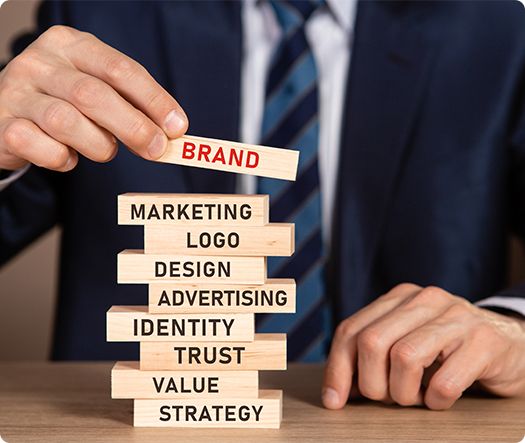
Corporate brand identity is a silent marketing tool that influences the judgment of the prospects regarding your organisation prior to a single conversation. This has been proven through research that visual coherence in the touchpoints enhances the perceived credibility, reduces sales cycles, and builds power in the prices, whose effects compound as time goes by, whereby the identity becomes integrated into the market consciousness. Strategic intent, which entails the creation of a brand identity, would entail coming up with a system in which all the visual items support the same story: the logo suggests authority on a pitch deck, colour scheme gives a feeling of trust on a product interface, and the typography system will allow legibility on a regulatory document as well as on a marketing campaign. Such coherence is not the result of a logo design program; it needs to be built up systematically as an identity architecture that is tuned to the commercial reality of the organisation, the demands of the audience, and the growth curve. The group of people handling all the engagements brings together brand strategy insights with profound product design experiences so that an identity system becomes not only aesthetically unique but can be implemented day one.
Engage an exclusive brand image designer team to match your business aspirations with appearance.
Every brand identity creation engagement follows a structured six-stage approach that guides the process of the creation of the brand identity, starting with organisational awareness and ending with the stage of implementing a complete identity system, with decision points at every stage ensuring the process is not derailed in line with business goals.

The strategic context of the identity work is formed by stakeholder interviews, competitive landscape audits, and the analysis of the perception of the audience. This stage identifies the positioning sphere, value proposition, and the perceptual gap that the identity has to fill against the competition. The result is a positioning brief that the creative guide on all future design decisions.

Several creative paths are formulated simultaneously, where each one of them converts the positioning brief into a unique visual language. Concept boards include typography combinations, colour schemes, graphic patterns, and initial logo concepts, and a written explanation as to how each solution would be compatible with the strategic goals. This conscious difference provides the stakeholders with meaningful options based on strategy, and not mere aesthetic decisions.

The chosen direction is developed through the repetitive cycles of the main and secondary logo versions, full colouring, typographic hierarchy in both online and print formats, graphic language details, and visual support pattern. All the elements are put to test with real application scenarios; website headers, business cards, presentation templates, social media profiles, etc., so that before they are finalised, they must be tested to have functional viability.

The refined identity is used in a specified range of priority touchpoints to ensure coherence at scale. Digital products, such as site implementation and social media templates, are designed along with print materials such as stationery, pitch decks, and marketing materials. This applied validation shows any loopholes or discrepancies that may have to be corrected prior to the identity being used on a wider organisational scale.

An exhaustive brand guidelines document formalizes all the details of the identity system using rules of usage, specification tables, clear/incorrect application examples, and file format guidelines. This document is designed in the format of an operational toolkit, which allows internal teams and external partners to implement the identity with the same outcomes in all channels and contexts.

Finishing asset libraries are stocked and moved in systematised, manufacturability formats encompassing digital, print, and motion needs. A joint review takes the team members of the client through the asset system and the guidelines document. In the case of clients under a stewardship agreement, the handoff also defines the frequency of further brand audit, asset library, and identity development.
Across more than 1,000 client engagements spanning fintech, healthcare, e-commerce, real estate, education, and enterprise SaaS, our branding and identity design services have consistently produced identity systems that strengthen market positioning and drive commercial outcomes. Experience selected projects to see strategy-led identity design applied in practice.
Brand identity development requires that one be sensitive to the commercial, cultural, and regulatory environment in which the brand is operating. An app with a fintech solution entering a market that is based on compliance demands would need a completely different visual trust system than a direct-to-consumer lifestyle brand fighting based on aestheticism and emotional appeal. Scalable identity systems, based on the accessibility-first colour contrast standards aimed at WCAG 2.1 AA and responsive typography systems, will be used to guarantee that any brand touchpoint will work, irrespective of medium, device, and audience segment, be it the client just starting its first market presence with a seed-stage startup or a multinational enterprise consolidating its post-acquisition portfolio.
The cross-sector depth has been achieved based on the long-term work on fintech and banking, where a compliance-conscious visual identity develops credibility with regulators and customers at the same time. The projects in healthcare and life sciences must have identity systems that are friendly and, at the same time, have clinical authority. The identity of e-commerce and retail brands requires optimisation to be quickly recognised at thumbnail size and in a packaging context. A portfolio consisting of real estate, education technology, insurance, and enterprise SaaS makes each sector unique in its audience expectations, competitive pressures, and regulatory limitations. The design of identity, starting with the initial positioning workshop and up to the last delivery of assets.

Sustained refinement of brand identity design through hundreds of engagements has generated what is known as a practice in the depth of strategy of positioning work, the practicality of its deliverables in the operation of the clients, and the quantifiable business consequences after the launch. Three fundamental distinguishing factors always make this branding and corporate identity practice stand out from the market alternatives.
Positioning Before Pixels: No graphic piece is started until the competitive positioning, audience analysis, and alignment of the stakeholders have created a validated strategic brief that guides all the design decisions.
Implementation-Tested Systems: All identity elements are tested in real application conditions at the stage of design, which means that the system is functional in production conditions and not just in the presentation mockups.
Scalable Identity Architecture: The identity systems are designed to grow and have modular designs that support sub-brands, expansion of markets, and introduction of new product lines, without necessarily having to redesign them.
Every brand identity service interaction is backed by a professional-grade technology stack that comprises visual design, prototyping, collaboration, asset management, and production - allowing accuracy throughout the process, starting with the initial idea and culminating in the final delivery.











Abercrombie had become culturally toxic. Our brand stood for everything modern consumers rejected — exclusion, elitism, and superficiality. We needed to fundamentally transform who we were, not just update a logo. UX Stalwarts partnered with us to rebuild our brand identity from the ground up around inclusion, quality, and authentic American style. Growing revenue 89 percent and shifting brand sentiment from 34 percent negative to 78 percent positive proved you can transform a damaged brand if you commit to real change. This was not a rebrand. This was a revival.
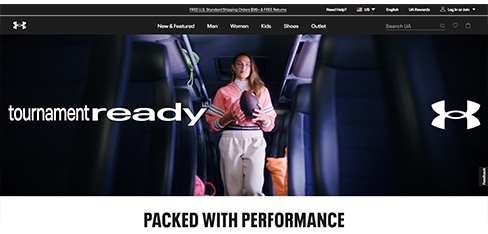
Under Armour had lost its way. We chased lifestyle categories and casual consumers, and in the process we diluted the performance brand identity that made us relevant in the first place. UX Stalwarts helped us refocus on who we are — a performance brand built by and for athletes. Recovering $1.2 billion in market share and growing our women’s business 156 percent by returning to our authentic brand identity proved that focus beats breadth. The ‘Unlike Any’ women’s campaign showed we could expand without losing our performance soul. This brand transformation saved Under Armour.
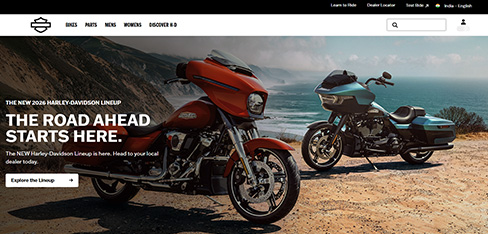
Harley-Davidson faced an existential threat. Our customers were aging out and younger riders did not see themselves in our brand. We needed to evolve our identity to welcome new generations without betraying 120 years of heritage. UX Stalwarts helped us articulate ‘United by Independence’ — a positioning that honors our rebellion roots while embracing contemporary diversity. Growing under-40 riders by 47 percent and women riders from 11 to 22 percent proved we could modernize without losing our soul. The LiveWire sub-brand success showed our identity was flexible enough for electric motorcycles. This was cultural evolution, not abandonment.
Evaluating brand identity design agencies for your organisation? These responses will answer practical questions that decision-makers have prior to investing in a brand identity company.
A full brand identity design service involves the entire range of strategic positioning to the production-ready assets. Standard deliverables are a positioning brief, primary and secondary logo variations, full colour specifications using Pantone, CMYK, RGB, and HEX, typographic hierarchy, digital and print, graphics language variations, patterns, iconography, and photography direction, and a brand guidelines document. The higher-scope work is expanded into application design in stationery, presentation templates, social media kits, packaging, and environmental signage. The guidelines document is more of an operational manual, which allows the internal teams and external vendors to enforce the identity uniformly. Working with a brand identity design agency India businesses trust means strategy precedes every visual choice. A corporate identity design company aligned with enterprise procurement will integrate vendor documentation requirements into core deliverables.
A logo is one graphic symbol. Brand identity design refers to the overall system of visuals and words that all convey the positioning, personality, and values of an organisation through all touchpoints. This involves the logo, yet goes to colour architecture, typography, the graphic language, the photography style, tone of voice guidelines, and the rules of interaction of all these elements with each other. You can invest in logo design, but that is equivalent to printing a business card without knowing what your company is. Creation of brand identity develops the strategic and visual context that provides the logo with meaning, context, and commercial strength. Robust logo and brand identity design begins with positioning research, not mood-board aesthetics. Coherent brand design identity choices unify product, marketing, and corporate communications under a single perceptual signature.
The prices depend greatly on the scope, complexity of the organisation, and the extent of the strategic work needed. An interesting identity engagement on a start-up can be as little as a few thousand dollars, whereas a comprehensive corporate brand identity programme, including several sub-brands, application design, and governance documentation, can be much more. The top cost drivers are depth of positioning research, quantity of creative directions pursued, volume of application deliverables, and the existence of continual brand stewardship in the engagement. When considering cost, the commercial effects of brand coherence must always be taken into consideration: organisations with robust and stable identities outperform organisations with fractured visual presence among the metrics of customer acquisition, price formation, and attracting talent in a way that is measurable. Buyers comparing brand identity firms should examine portfolio breadth across digital, print, and environmental applications. Procurement teams evaluating professional branding services should weight governance documentation as heavily as creative concepts.
A full brand identity development project has a duration of six to twelve weeks, depending on size and the complexity of the organisation. The phase of immersion and strategy lasts between two and three weeks. Exploration of concepts and reviewing with stakeholders creates an additional two to three weeks. The rest of the timeline is occupied by refinement, application design, and guidelines documentation. The aspect that has continued to lengthen timelines the most is the speed of internal decision-making, especially when several stakeholders must coordinate on the creative direction. Companies with an identified decision maker and a responsive feedback loop always deliver faster without compromising on quality. Mature brand identity agency India engagements pair sector insight with measurable commercial outcomes after launch. A brand identity design company evaluated on outcomes will publish operational guidelines, not decorative posters. A brand identity design agency India relies on for fast delivery still anchors timelines to strategy approvals.
Visual refresh is suitable in cases when the strategic placement of the existing brand is sound, but its visual implementation is old or uneven. Development of a full brand identity is needed in the circumstances of the fundamental change in the organisation’s market positioning, when mergers or acquisitions necessitate the unification of the portfolio, when the current identity actively does not reflect who the organisation has become, or when the existing visual system was not created as a coherent system. It is significant since the refresh maintains the brand equity that is already developed in the market, whereas the total identity creation creates the strategic and visual base that has not been developed yet. An incorrect diagnosis of the need results in either a wasted investment or poor intervention. Selecting a brand design company India clients endorse signals discipline in both research and execution. Buyers should treat any brand identity design company that skips positioning research as a styling vendor.
Fintech, healthcare, insurance, and governmental technology are controlled industries where visual and verbal identity is subject to certain limitations that general branding identity designers tend to ignore. Accessibility (compliance factor): colour choice is influenced by the necessity to have a colour palette that is more readable to everyone, disclosure requirements (compliance factor) affect the layout design, and readability in legal and regulatory documents is influenced by typography. These constraints are considered as design parameters and are incorporated at the positioning stage instead of as an afterthought, as is the case with the other approaches. This implies that the resultant identity system is already compliant, unlike when a generic identity undergoes costly rework once its regulatory review is delivered. Engaging a corporate identity agency familiar with regulated sectors prevents costly post-launch rework after compliance review. A visual identity design agency capable of dual digital-physical execution avoids identity fragmentation across regulated channels.
Strategise agencies that are capable of showing a definite process of strategy before visual work, as those that lack strategy make decoration and not commercial property. Request sample outputs to evaluate the extent to which guidelines are actually operational or designed to look good. Analyze work in portfolios to see that system coherence exists in multiple touchpoints, and not just single logo presentations. Ensure that the agency possesses experience in the relevant sector, as industry familiarity is directly related to positioning work quality. Last but not least, get to know what the agency does in providing post-delivery support, since without the continued governance of an identity system, it will be destroyed within a few months of its introduction. Experienced brand identity consultants frame questions before they offer answers, beginning with audience and competitive context. Among brand identity firms, the meaningful differentiator is operational depth six months after handoff. A brand identity company that ships rules without examples leaves teams to interpret intent on their own. A brand identity design firm worth retaining publishes implementation tooling alongside its written guidelines.
Brand architecture Post-acquisition is a strength. With the acquisition of other organisations, the brand portfolio created will have conflicting visual languages, overlapping positioning, and a lack of hierarchy between parent and subsidiary brands. This process starts with a portfolio audit, mapping out current equity and audience overlap of each entity,y as well as its strategic role. Based on it, an architecture recommendation is made to decide between a branded house, house of brands, or hybrid mode, as the most appropriate to the commercial goals of the organisation. This architecture is then to be built in the identity system with clear governance rules on how each entity projects itself both at an individual and relative to the parent brand. Buyers researching a corporate identity design agency for post-acquisition consolidation should request portfolio architecture case studies. A specialist corporate identity design agency will recommend a branded house, house of brands, or hybrid structure based on commercial fit.
Yes, and the combination of digital and physical identity is one of the strengths. The reason is that most brand identity design companies create identities that work on screen but not in print, packaging, or environmental implementations, as the design constraints of the material, colour reproduction variation,s and scale needs are not considered at the design stage. Each identity system is stress-tested in both settings in the context of refinement. Scalability before final delivery is confirmed at screen rendering at the different resolutions, web and mobile responsiveness, print reproduction of different paper stocks, and environmental scale of signage to retail interiors. Strong logo and brand identity design holds up across thumbnail favicons, retail packaging, and conference signage alike. A visual identity design agency worth its fee will stress-test colour and typography across screen and substrate before sign-off.
Multicultural identity design has to be aware of the differences in colour symbolism, typography legibility between scripts, and visual metaphor interpretation, which can be different in various regions. In organisations that deal with markets, the identity system is developed with a flexible architecture, which enables global coherence while being locally adapted. This encompasses variable colour application policies within markets where particular tones have various meanings and typographic couplet arrangement policies within multilingual use and direction of imagery that does not make culturally specific assumptions. It is aimed to have an identity system that is resilient enough to ensure it is recognized at the international level, and it is also sensitive to the needs of the local audience. A brand identity creative agency that understands commerce will brief strategy with the same rigour applied to craft. When a brand identity creative agency publishes scenario tests alongside concept boards, decision-makers can evaluate fit rather than appearance.
Accessibility is also a fundamental design parameter, which is considered starting with the very colour and typography choices. The colour palettes are also checked with WCAG 2.1 AA contrast ratios to make sure the users with visual impairments can understand the contents. The typography choices are based on the readability in both screen-based and print-based settings and assistive technology. Graphic elements are meant to give meaning without necessarily using colour distinction. This approach of accessibility-first is not only becoming more essential due to its ethical and legal implications but also because accessible design has proven to be more beneficial to usability across all segments of the audience and has increased the usability of the identity system. A visual identity agency disciplined in accessibility codifies WCAG-compliant colour pairs into the system from day one. Mature visual identity agency engagements bake responsive typography rules into the system, not into project addenda.
The start point of many clients is a focused scope, such as a positioning audit, a logo system redesign, or a guidelines document for an existing but undocumented identity, then proceeds on to a full brand identity service engagement. Such a staged process allows the decision-makers to assess the quality of strategic thinking, design implementation, and deliverable rigour before investing on a larger scale. The first interaction generates independent value and also constructs the underlying knowledge that accelerates later all-inclusive effort and better prepares the organization for the requirements of the organization. Engaging a brand identity agency India partners rely on for scalable systems begins with positioning clarity. Specialist brand identity consultants build measurement frameworks alongside the visual system so impact can be tracked post-launch.
The brand has not reached the end of its operation because of the identity delivery. Brand stewardship agreements include continued support, such as regular brand audits to determine consistency of touchpoints, updating of asset library as new channels or formats develop, advice on sub-brand extensions when the organisation introduces new products or services, and evolution of identity as market positioning develops. This long-term relationship aids in avoiding the pitfall of identity degradation, where a well-thought-out system is slowly broken down as various teams apply rules and regulations without supervision. A corporate branding company suited to enterprise scale will design stakeholder approval workflows alongside the identity itself. Reviewing a corporate identity design company’s stewardship offer reveals whether the relationship is transactional or programmatic. Mature brand design identity practice treats motion, sound, and tone as system components, not as launch afterthoughts.
Startups have a distinctive identity system that is lean and focused, and can be launched fast and developed as the business proves its niche. The interaction puts a premium on speed, underlying consistency, and agility. Enterprise clients need a more comprehensive set: a combination of stakeholder alignment mechanisms, a complex brand hierarchy that allows divisions and sub-brands, comprehensive development of applications with many touchpoints, and distributed governance and implementation teams. Strategic depth, the amount of deliverables, and the project schedule are focused on aligning with the complexity of the organisation, so that the identity investment is commensurate with the commercial environment in which it is deployed. Mature corporate branding company practices integrate legal, compliance, and procurement input from the positioning stage onward. A corporate identity agency operating at enterprise scale will treat sub-brand governance as a first-class deliverable. Procurement-led professional branding services engagements often require deeper documentation than founder-led ones.
Coherent brand identity is advantageous to every organisation that functions in a competitive market; the dividend payoff is particularly high in the industries where trust, credibility, and perceived professionalism have a direct proportional effect on buying choices. Finance services, where the perception of regulation and trusting customers are the key factors. Healthcare, where the visual power and availability determine the trust of the patient. Enterprise technology, where the credibility of the vendors would determine the procurement decisions of large contract values. In crowded retail spaces, where shelf space and online presence define which brands make it to the consideration list, consumer brands operate. Education, property, and professional services are no exception, as their audiences have high-stakes choices that are affected by perceived organisational quality. Choosing a creative agency brand identity buyers can trust requires evidence of strategy, not just gallery aesthetics. A creative agency brand identity engagement that omits governance documentation usually erodes within twelve months of launch. Evaluating a brand identity design firm involves reviewing how identities have aged in market, not just how they launched. A brand design company India counts on for portfolio governance reduces long-term rework across acquired sub-brands.

C – 81C, Sector – 8, Noida 201301, India


1025 Beamon Drive, Franklin 37064 Tennessee, USA
Sveavagen 34 111 34 Stockholm, Sweden
A-10, Sahastradhara Rd, Doon IT Park, Dehradun, Uttarakhand

© 2026 UX STALWARTS. All rights reserved.