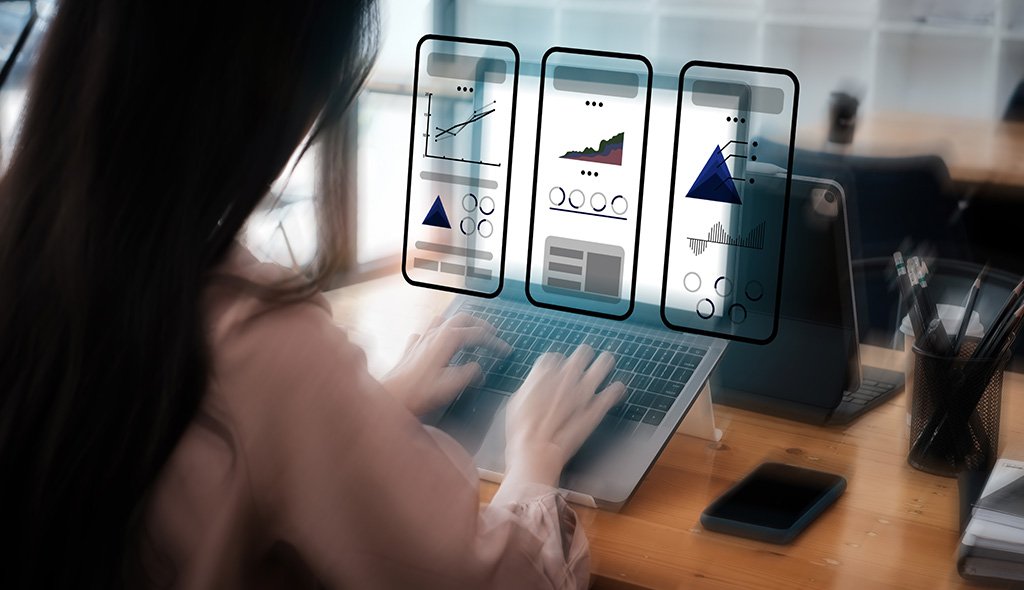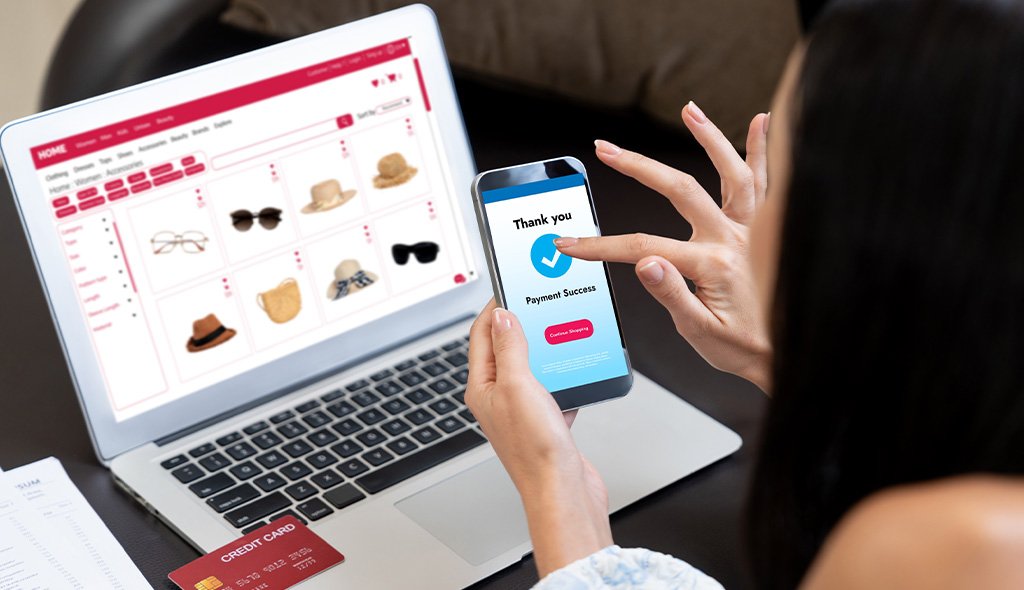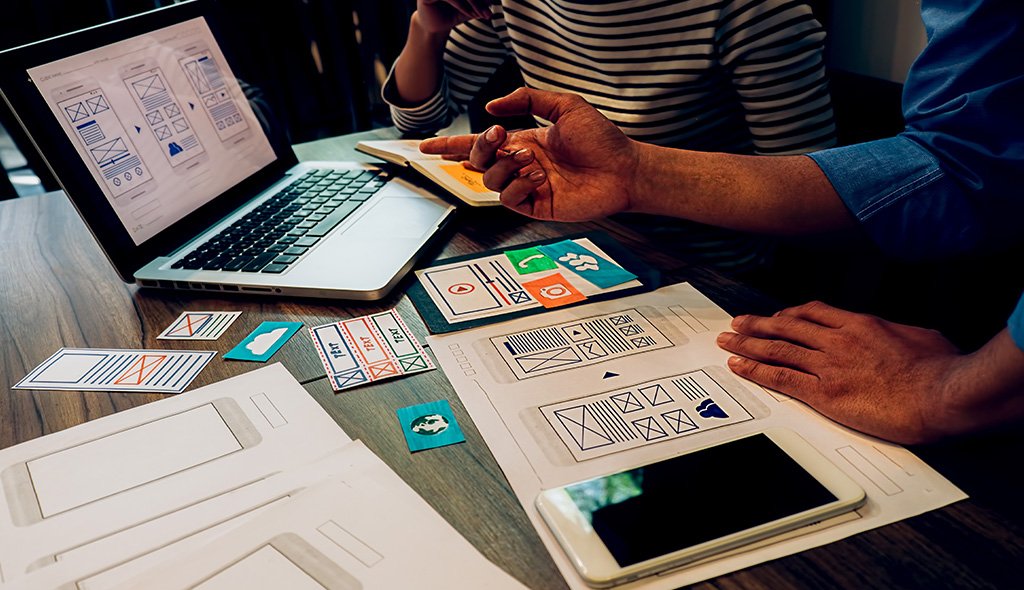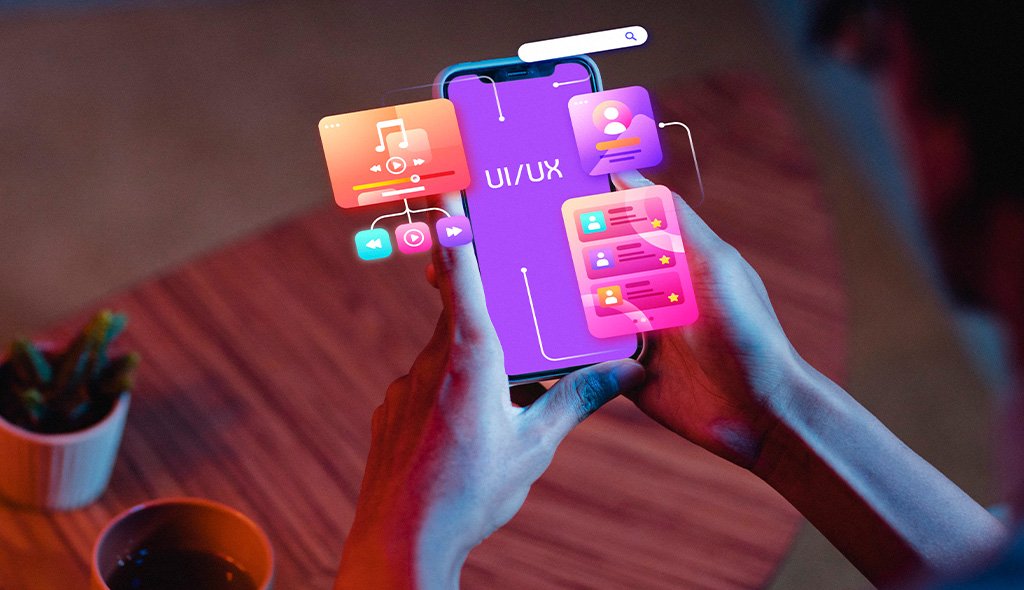
The gap between a product that feels polished and one that feels incomplete often comes down to what happens in the fractions of a second after a user taps, scrolls, or submits. Without deliberate micro interaction design, button presses go unacknowledged, state changes happen abruptly, loading sequences leave users guessing, and form submissions provide no confirmation. These missing signals create friction that compounds across every session. Users lose confidence, abandon tasks, and default to competitors whose interfaces simply feel more responsive. What appears to be a visual detail is actually a functional gap, and that gap shows up in lower engagement, higher support volume, and reduced retention over time.
UX Stalwarts delivers micro animation design services that transform static interfaces into responsive, communicative products. Every animation is designed with Dan Saffer’s four-part framework at its core: trigger, rules, feedback, and loops. The output includes hover states, loading indicators, toggle transitions, scroll-triggered reveals, success confirmations, and error alerts, all specified with precise easing curves, duration tokens, and Lottie-ready export files. Whether the project requires motion design for UI on a consumer mobile app, micro interactions ui design across a SaaS dashboard, or enterprise UX animation services for complex data platforms, each deliverable is engineered for developer handoff and optimized for performance across devices and frameworks.
With eighteen years of cross-industry delivery and more than a thousand client engagements, the depth behind every micro-interaction project goes beyond surface-level animation. The approach considers cognitive load, user attention patterns, accessibility compliance, and brand alignment in every motion decision. Where most agencies treat motion as a finishing touch applied after visual design is locked, the practice here integrates micro animation ux into the core design workflow from the earliest prototyping stages. That early integration ensures animations serve a clear functional purpose rather than decorating an interface that was never designed to move.

Every micro-interaction begins with a defined purpose: confirm an action, signal a state change, prevent an error, or guide attention. Decorative motion without a functional role is excluded by default. This discipline ensures animations reduce user effort rather than adding cognitive noise, keeping interfaces fast, clear, and intentional.

Animations are delivered with complete technical specifications including duration values, easing curves, delay sequences, and property transformations. Developers receive frame-accurate documentation alongside Lottie JSON files or CSS animation code. This precision eliminates the interpretation gap between what a designer envisions and what engineering teams implement in production.

Every animation respects the prefers-reduced-motion media query and accounts for vestibular sensitivity. Alternative static states are designed for every animated component, ensuring users who disable motion still receive full feedback. Accessible micro interaction design is a baseline standard, never an afterthought or a separate compliance sprint.

Animations are optimized for GPU-accelerated properties like transform and opacity, avoiding layout-triggering changes that cause jank on lower-powered devices. File sizes for exported Lottie assets are kept lean through path simplification and layer reduction. The result is smooth, consistent motion that performs reliably across mobile and desktop environments.

For organizations managing multiple products, a single micro-interaction cannot be an isolated creative decision. The approach builds a motion design system with reusable timing tokens, standardized easing values, and categorized animation patterns. This scalable framework ensures motion consistency across your entire product ecosystem without requiring per-screen animation decisions.

Motion design work is embedded within your existing design and development sprints, not delivered as a separate handoff at the end. Designers, developers, and product managers review animation prototypes together during sprint cycles, ensuring motion decisions are validated against real user flows before they reach production code.
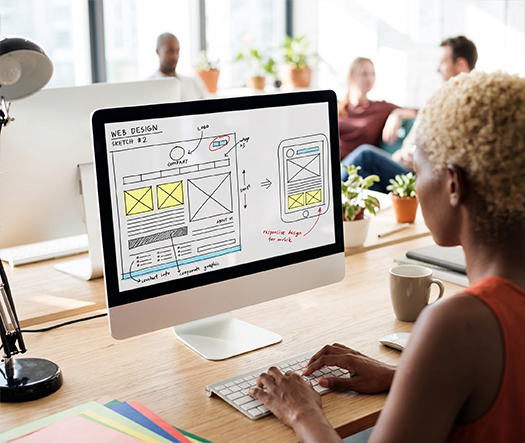
When an interface acknowledges every user action with immediate, purposeful feedback, something shifts in how people perceive the product. Confidence increases because the system communicates clearly. Task completion rates rise because users understand what happened and what comes next. Support requests decrease because common confusion points are resolved through visual cues rather than documentation. Micro interaction web design turns passive screens into active conversations between the product and its users. The team behind each engagement brings deep expertise in motion design for UI, ensuring every animation serves a measurable role in improving usability, engagement, and user satisfaction across the full product experience.
Work with a UI micro interactions agency that delivers precision.
This proven methodology ensures every animation decision is grounded in user behavior data, brand context, and technical feasibility.

We evaluate your existing product interfaces to identify every touchpoint where motion is missing, inconsistent, or causing usability issues. This audit catalogs current animations, flags jarring transitions, and maps opportunities where micro animation ux can reduce friction. The output is a prioritized motion opportunity report.

Using session recordings and analytics, we study how users navigate key flows to identify where feedback gaps cause hesitation, errors, or abandonment. This behavioral data determines which interactions need motion most urgently. The phase produces an interaction priority matrix ranked by user impact and implementation effort.

Candidate micro-interactions are designed and prototyped in Figma, After Effects, or Principle. Each animation is tested at multiple duration and easing configurations to find the optimal feel. Prototypes are reviewed in the context of real user flows, not in isolation, ensuring motion works within the broader interface rhythm.

Approved animations are documented with precise technical specifications: duration in milliseconds, easing function names, property values, delay offsets, and trigger conditions. Lottie JSON exports are generated where applicable. This specification package gives developers everything needed to implement animations without interpretation, eliminating back-and-forth and reducing integration time significantly.

Implemented animations are reviewed in staging environments across target devices and browsers. We verify timing accuracy, performance metrics, reduced-motion fallbacks, and visual consistency with the approved prototypes. Any discrepancies between the specification and the live implementation are documented and resolved before release to production environments.

For ongoing engagements, we establish a motion design system with reusable animation tokens, naming conventions, and contribution guidelines. This governance framework ensures that new animations added by your team follow the established motion language. Periodic reviews verify consistency as the product evolves and new features introduce additional interaction points.
Across more than 1,000 client engagements and diverse product categories, explore how purposeful motion transformed real interface experiences.
The motion behavior appropriate for a fintech trading dashboard differs fundamentally from what works in a children’s education app or a healthcare records portal. Each engagement starts with the specific context of your users, your compliance environment, and the performance constraints of your target platforms. From early-stage products validating their first release to enterprises refining mature applications, the motion strategy adapts to match organizational needs.
Cross-sector experience spanning financial services, healthcare, e-commerce, SaaS platforms, logistics, media, and government digital services informs every motion decision. When a healthcare app needs subtle confirmation animations that work under clinical time pressure, or when an e-commerce checkout requires progress indicators that reduce cart abandonment, that industry context directly shapes duration choices, easing selections, and feedback patterns. Domain familiarity accelerates delivery and improves outcome quality.
When teams evaluate a ux motion design agency, portfolio quality is only part of the picture. The real measure is whether animations ship to production intact, perform on every device, and remain consistent as the product scales. Recognition in this space comes from repeated delivery of motion that works under real-world conditions.
Motion Systems, Not Isolated Animations: Every engagement produces reusable motion tokens and governance guidelines, ensuring animation consistency scales across your entire product portfolio.
Specification-Grade Developer Handoff: Animations ship with frame-accurate specs, Lottie exports, and CSS code so developers implement exactly what was designed, every time.
Behavior-Driven, Not Decoration-Driven: Every micro-interaction is mapped to a measured user behavior gap, ensuring motion solves real problems instead of adding visual noise.
Each micro-interaction project leverages industry-standard tools selected for precision, collaboration, and production-readiness. The technology choices ensure seamless integration with your existing design workflows.









Twitter like button was functional but boring providing no emotional reward. UX Stalwarts designed delightful heart animation. Increasing engagement 127 percent and satisfaction from 7.1 to 8.8 proved micro interactions drive macro results. The animation becoming iconic that others copied showed great micro interaction design creates brand value. This heart animation transformed basic feature into delightful moment.
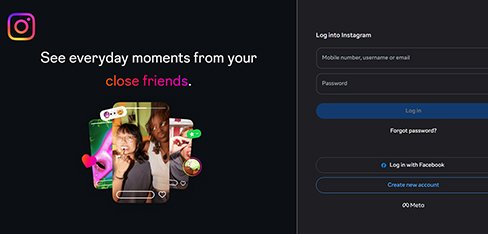
Instagram content refresh required manual button tap creating friction that limited engagement. UX Stalwarts designed pull-to-refresh micro interaction. Increasing sessions 89 percent and satisfaction from 7.6 to 9.2 proved intuitive gestures drive mobile engagement. The interaction becoming industry standard showed great micro interactions create new design patterns. This gesture transformed how users access fresh content.
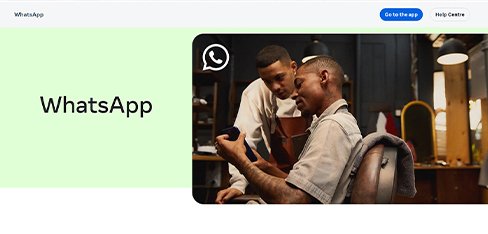
WhatsApp message waiting created anxiety because users did not know if conversation partners were typing replies. UX Stalwarts designed animated typing indicator. Reducing perceived wait time 73 percent and abandonment 56 percent proved awareness micro interactions manage expectations. The privacy-balanced design showed thoughtful micro interactions respect user concerns. This indicator transformed messaging conversation dynamics.
Practical answers to the questions product teams ask before investing in motion.
Micro interaction design is the practice of creating small, single-purpose animations that respond to user actions within a digital interface. These include button state changes, loading indicators, toggle animations, form validation cues, and success confirmations. Each micro-interaction follows a trigger-feedback model where a user action or system event initiates a brief, purposeful visual response. These small motions matter because they communicate system status, prevent errors, guide attention, and reinforce the sense that a product is responsive and reliable. Products without deliberate micro-interactions feel static and unresponsive, which leads to higher user confusion, increased task abandonment, and lower overall satisfaction scores. Selecting a Micro interaction design company or peer Micro interaction design firms is a strategic decision.
Interaction design covers the full scope of how users engage with a product, including navigation structures, task flows, input methods, and information architecture. Micro interaction design operates within that broader discipline but focuses specifically on the small, single-purpose animations and feedback responses tied to individual interface elements. Think of interaction design as the blueprint for how a user completes a task, and micro interaction design as the tactile feedback they receive at each step along the way. The two disciplines are complementary. For a broader view of how we approach the full interaction design process, explore our interaction design services. A capable Micro interaction design agency delivers integrated Micro interaction design solutions across both layers.
Deliverables typically include an interaction audit report, animated prototypes in Figma or After Effects, technical motion specifications (duration, easing, delays, and property values), Lottie JSON exports for web and mobile implementation, CSS animation code snippets where applicable, and a motion style guide documenting reusable patterns. For larger engagements, the output also includes a motion token system with standardized timing and easing values that developers can reference across the codebase. Each deliverable is designed for direct developer consumption, eliminating the need for interpretation and ensuring that what ships to production matches the approved animation prototypes precisely. Reputable micro interactions ui design company teams and any seasoned Micro interaction design consultancy provide this list.
Most effective micro-interactions fall within the 100 to 500 millisecond range. Simple state changes like button presses or checkbox toggles should complete in 100 to 200 milliseconds to feel instant. Transitions between states, such as a panel opening or a card flipping, typically work best at 200 to 350 milliseconds. More complex sequences like onboarding reveals or data loading animations can extend to 500 milliseconds, but anything longer risks feeling sluggish. The optimal duration depends on the complexity of the visual change and the user’s context. Animations that interrupt task flow should be shorter, while those that communicate important state transitions can be slightly longer. The best Micro interaction design companies and leading Micro interaction design agencies validate durations through testing.
Costs depend on the scope, complexity, and number of interactions required. A focused engagement covering 15 to 25 core micro-interactions for a single product typically ranges from $8,000 to $25,000. Enterprise-grade projects involving full motion audits, motion token systems, and animations across multiple product surfaces may range from $30,000 to $80,000. Key cost drivers include the number of unique animation patterns, the need for Lottie or Rive exports, whether reduced-motion accessibility variants are required, and the depth of developer handoff documentation. A detailed scope assessment is the most reliable way to establish accurate project budgets for your specific motion requirements. A transparent Micro interaction design company will benchmark fees against peer micro interaction web design firms.
The most common tools include Figma for prototyping simple transitions and smart animate sequences, Adobe After Effects for detailed motion studies and Lottie export via the Bodymovin plugin, Principle for rapid interaction prototyping on macOS, Rive for runtime-controllable vector animations, and Framer Motion for React-based animation code. For developer handoff, CSS Animations and GSAP (GreenSock Animation Platform) are used for web implementations, while Lottie handles cross-platform rendering on iOS, Android, and web. Tool selection depends on your engineering stack, the complexity of animations needed, and whether the output requires real-time interactivity or pre-rendered playback sequences. A specialized Micro interaction design agency or dedicated UI Micro interactions Agency selects the right tooling per project.
Yes, and this is one of the most common engagement types. A motion audit identifies where existing interfaces lack feedback, have jarring transitions, or miss opportunities for user guidance. Targeted micro-interactions are then designed and specified for specific touchpoints without altering layout, navigation, or visual design. This approach is especially effective for products that function well structurally but feel flat or unresponsive to users. Adding purposeful motion to key moments like form submissions, data loading, error handling, and onboarding steps can measurably improve perceived quality and user satisfaction without requiring any significant rework of the underlying interface structure. Many Micro interaction design solutions are layered onto live products by experienced Micro interaction design firms.
Micro-interactions improve conversions by reducing friction at critical decision points. Progress indicators during checkout flows reduce cart abandonment by setting clear expectations. Confirmation animations after form submissions decrease support inquiries by assuring users their action succeeded. Animated CTAs draw attention to primary actions without being intrusive. Feature discovery animations increase adoption of underused capabilities. Studies have shown that thoughtful micro-interaction design can increase activation rates by up to 47 percent and improve user engagement measurably. The business case for motion is strongest at moments where users hesitate, abandon, or misunderstand. When validated through prototyping and testing, the ROI becomes concrete and trackable. A trusted micro interactions ui design company or UX Motion Design Agency can model these gains before committing.
Micro animation design services focus on functional interface animations tied to user actions within a digital product. These are interactive, event-driven, and designed to enhance usability. General motion graphics are typically linear, pre-rendered video content used for marketing, explainer videos, or branding materials. The two require different skill sets. Micro animation ux demands understanding of interaction states, easing physics, accessibility constraints, and developer handoff workflows. Motion graphics require storytelling, editorial pacing, and visual effects expertise. Some agencies blend both, but the disciplines serve different goals. This practice focuses exclusively on the interactive product side of motion. The best Micro interaction design companies, including any Interactive Product Design Agency, separate these disciplines clearly.
Every animation respects the prefers-reduced-motion CSS media query, which allows users who experience vestibular sensitivity to opt out of non-essential motion. For each animated component, a static fallback state is designed that conveys the same information without movement. Color and contrast changes are never the sole indicator of state changes, ensuring compatibility with color vision deficiencies. Screen reader announcements accompany visual transitions where appropriate. Timing is tested to ensure animations do not interfere with keyboard navigation or assistive technology focus management. Accessibility compliance follows WCAG 2.1 AA standards and is verified through both automated testing and manual assistive technology validation. A senior Micro interaction design consultancy provides Enterprise UX Animation Services that include full accessibility validation.
Absolutely. In many cases, adding a motion layer to an existing design system is more valuable than building one from scratch. The process begins by auditing the current component library to identify which components lack animation specifications. Motion tokens covering duration, easing, and delay values are then added to the existing token architecture. Each component receives documented animation behaviors for all applicable states, such as hover, focus, active, disabled, loading, and error. This work integrates directly with your design system governance framework, ensuring motion specifications live alongside typography, color, and spacing tokens as a unified reference. Established Micro interaction design agencies and specialist micro interaction web design firms follow this layered approach.
Every industry with a digital product benefits, but the impact is most measurable in sectors where user trust, task accuracy, and completion rates directly affect revenue. Financial services platforms see gains through clear confirmation feedback that reduces transaction anxiety. Healthcare applications benefit from subtle progress cues that guide clinicians through complex workflows without distraction. E-commerce experiences improve through cart animations, wishlist feedback, and checkout progress indicators. SaaS products with complex onboarding sequences use micro animation ux to increase feature discovery and reduce time-to-value. Government and enterprise platforms gain from clearer system status communication that reduces training and support costs. These outcomes explain why demand for Micro Interaction Design Services continues to grow across sectors.
Developer handoff includes frame-accurate motion specifications documenting every animation property: the CSS or native property being animated, start and end values, duration in milliseconds, easing function (cubic-bezier values), delay offset, and trigger condition. For complex animations, Lottie JSON files are exported for direct integration into web, iOS, and Android environments. React and web projects receive Framer Motion or GSAP code snippets where applicable. Each specification is reviewed with the engineering team before implementation begins, and a validation review is conducted after deployment to ensure the shipped animation matches the approved prototype. This level of detail ensures that the intended motion design for UI reaches users exactly as designed.
A dedicated ui animation design company brings specialized expertise in timing, easing physics, performance optimization, and animation accessibility that general design agencies typically lack. Motion design requires understanding frame budgets, GPU-accelerated properties, reduced-motion compliance, and the technical constraints of Lottie, Rive, or native animation frameworks. General agencies may produce visually appealing motion concepts that fail under real-device testing or arrive without developer-ready specifications. A specialized interactive product design agency ensures every animation performs on target hardware, meets accessibility standards, and ships with implementation-ready documentation. The distinction matters most in enterprise contexts where animation failures affect thousands of users.
Micro-interactions are the tactical execution layer of a broader UX strategy. They work alongside information architecture, visual hierarchy, and content design to create a complete user experience. Starting a project is straightforward. The typical entry point is a motion audit of your current product, which identifies the highest-impact opportunities for improvement. From there, a prioritized roadmap guides implementation based on user impact and technical feasibility. For organizations exploring the strategic value of motion in their product experience, reviewing our insights on measuring UX impact beyond conversions provides a useful framework for evaluating where micro-interactions can deliver the strongest return.

C – 81C, Sector – 8, Noida 201301, India


1025 Beamon Drive, Franklin 37064 Tennessee, USA
Sveavagen 34 111 34 Stockholm, Sweden
A-10, Sahastradhara Rd, Doon IT Park, Dehradun, Uttarakhand

© 2026 UX STALWARTS. All rights reserved.