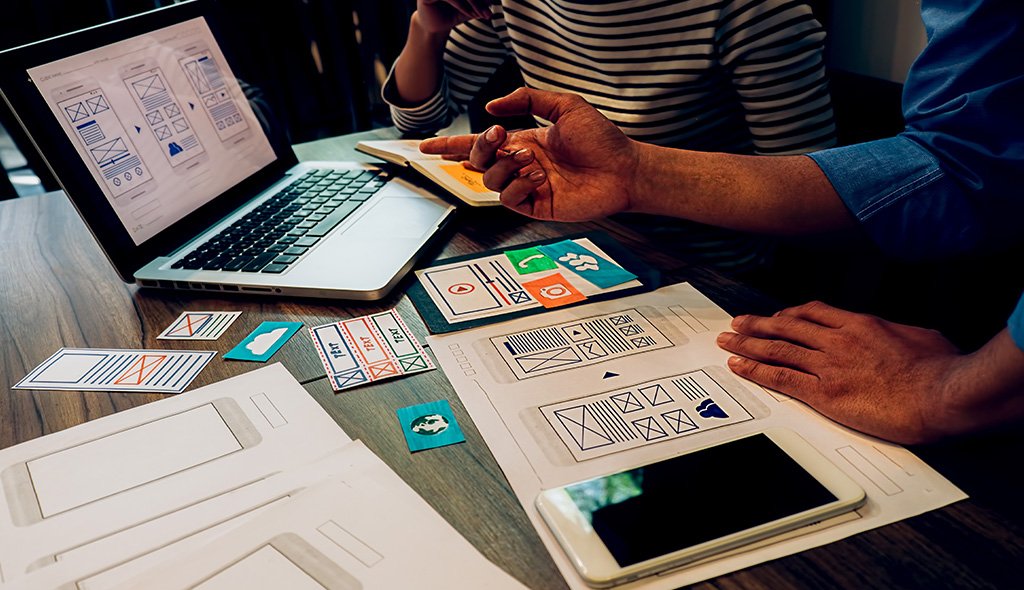
Social apps fail faster than almost any product category. A new user opens an app, sees an empty feed, and uninstalls within two minutes. A creator posts three times, gets no engagement, and moves their audience to a competitor platform. A young user encounters content nobody anticipated, and parents delete the app overnight. A moderator drowns in flagged posts because the admin console buries context behind six clicks. Weak Social Media App Design shows up as collapsing daily active users, creator churn, safety-related press coverage, and growth loops that stop compounding once founder enthusiasm fades. In social, product decisions and community health become indistinguishable almost immediately after launch.
Our approach treats a social platform as a living community rather than a content feed. Before any screen is produced, our team studies how real users discover others, create content, give reactions, handle unwanted attention, and build belonging within niche communities. From there we deliver research-backed information architecture, feed and discovery surfaces, creator tools, messaging flows, notification logic, moderation consoles, and component libraries tuned for user-generated content density. As a specialized social platform design company, we engineer the moments that shape community health: first follow, first post, first negative interaction, creator monetization, and safety response. Every screen ties to a named engagement or safety metric rather than pursuing hollow vanity numbers.
Eighteen years of design work across thirty-plus countries gives our team practical fluency in how social behavior differs across cultures, age groups, and community types. UX Stalwarts has partnered with early-stage founders launching niche communities and with established platforms modernizing aging moderation and creator systems. Our designers read community-health research, shadow trust-and-safety teams, work alongside creator operations, and speak the vocabulary of feed algorithms, recommendation systems, creator funds, community guidelines, and the sensitive design choices that shape whether a platform becomes a place people return to daily or quietly abandon. That grounding separates surface polish from a partner genuinely capable of shifting community and business metrics simultaneously.

Generic engagement gamification destroys communities over time. Our work is grounded in community-health research, designing notifications, reactions, and recommendation surfaces that reward genuine participation rather than anxiety-driven engagement. Platforms built on this foundation retain users longer and avoid the regulatory attention that hollow-engagement apps attract.

Creators decide whether social platforms thrive. Our designs treat creator tools as first-class work, including publishing surfaces, analytics dashboards, monetization flows like tipping and subscriptions, brand-deal management, and creator-fund payout interfaces. Happy creators post more, bring audiences along, and reinvest their time where they feel genuinely supported by the platform.

Teen safety, mental health impact, and vulnerable-user protection are not optional considerations. Our interfaces include opt-out paths for sensitive content, screen-time awareness, supportive flags for users expressing distress, and deliberate friction on actions that produce regret. This protects users and shields platforms from the reputational and regulatory fallout of design negligence.

Consumer-facing apps usually get polish while moderation consoles get ignored. We design both with equal rigor, so trust-and-safety teams can triage flags quickly, escalate fairly, and document decisions for appeals. Strong moderation tools are the invisible foundation that decides whether communities stay healthy or collapse into toxic chaos over time.

Empty social graphs kill apps faster than missing features ever do. Our designs anticipate cold-start problems, surfacing suggested connections, seeded content, interest-based onboarding, and nearby-user discovery that keeps new users engaged during the fragile weeks before network effects compound on their own.

Social platforms operate under evolving regulations, app-store policies, and community expectations. Our collaboration rhythm accounts for these realities with structured design decision logs, policy-aware feature reviews, and transparent trade-off documentation so product leadership can defend choices to regulators, app-store reviewers, and community members when scrutiny arrives.
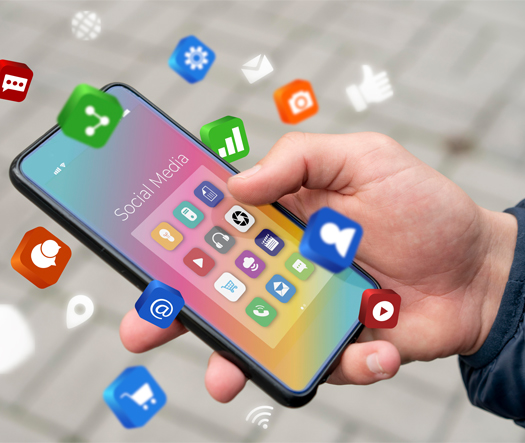
Social interfaces carry measurable community consequences. A confusing onboarding flow loses new users before they ever find a reason to return. A clunky creator tool pushes talented posters to competing platforms. A slow moderation console allows harmful content to stay visible while harm compounds. Strong social media app UX design services shift metrics that actually matter: daily active usage grows, creator retention climbs, reported content drops, and community health signals improve alongside commercial growth. A thoughtful social media app UI design company understands community psychology, creator economics, and the fragile moments where platform trust either earns long-term loyalty or produces uninstalls during controversy cycles.
Partner with specialists who design social apps communities genuinely love.
Every engagement follows a deliberate sequence built to bootstrap community, support creators, and protect users across the full social product lifecycle.

We begin by mapping the social reality around your platform: target communities, creator segments, moderation landscape, and existing safety posture. Cohort analytics, creator churn reasons, safety incident patterns, and engagement health signals establish the measurable baseline every design decision must eventually improve across community, creator, and safety dimensions simultaneously.

Social platforms serve consumers, creators, moderators, and administrators with sharply different needs. We separate each journey into independent maps documenting discovery moments, content creation pressure, moderation context, and monetization touchpoints. These blueprints guide every subsequent screen so each participant type gets interfaces tuned to real daily usage rather than compromised middle-ground compromises.

Cold-start problems kill more social apps than poor features ever do. We structure onboarding, interest-based discovery, suggested connections, seeded content, and first-post moments through rigorous testing. Empty-feed states become conversion surfaces rather than dead ends, and first-week retention targets get engineered deliberately rather than hoped for through feature additions.

High-fidelity feed surfaces, creator tools, messaging flows, profile screens, moderation consoles, and safety controls ship alongside a component library tuned for user-generated content density. Post cards, reaction patterns, comment threads, notification surfaces, and moderation queues are weighted through visual hierarchy designed for daily use without producing the anxiety typical of hollow-engagement design patterns.

Designs are tested with real moderators and creators in simulated peak conditions. Flag queue throughput under volume, creator tool usability during live posting, and notification tolerance across user cohorts are all validated before launch. Edge cases like appeals, repeat-offender escalations, and creator monetization disputes get specific attention rather than general usability review.

Post-launch, multi-dimensional data guides refinement. Daily active usage, creator retention, moderation throughput, safety incident rates, and community health signals are monitored against the Phase One baseline. Where gaps surface, targeted revisions ship in structured sprints so the platform keeps building community rather than optimizing engagement metrics at the expense of long-term user welfare.
Drawn from over one thousand engagements, these projects reflect measurable outcomes across consumer social apps, creator platforms, and community networks worldwide.
Foundational values behind every social engagement are community integrity, creator respect, and duty of care across vulnerable user groups. Teams evaluating top UI UX companies for social apps weigh domain fluency against execution speed, and both matter here. From pre-launch founders building niche community MVPs to established platforms modernizing aging moderation and creator systems, our team operates across the maturity spectrum. Design decisions balance immediate user needs against the architectural runway required for community growth.
Industry coverage spans consumer social feeds, short-form video platforms, creator communities, professional networks, niche interest communities, dating and relationship apps, local and neighborhood platforms, photo and creative-sharing networks, and private messaging ecosystems. Our social networking app design and custom social media app design work extends across general-audience and vertical-community platforms. Pattern transfer from social media product design services engagements shapes decisions on where UX design for mobile social apps should emphasize creator tools versus community moderation infrastructure.
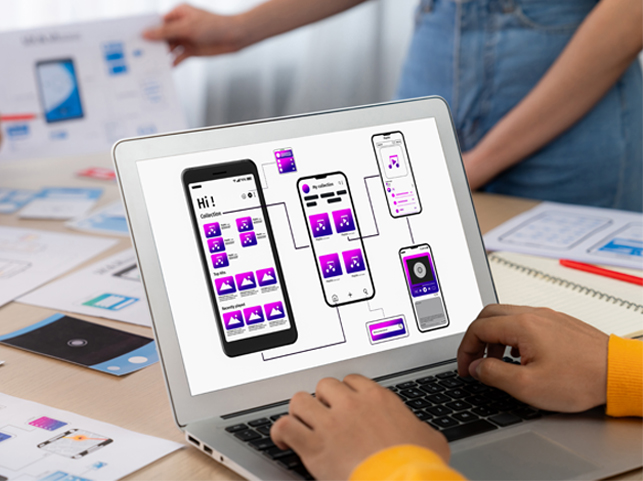
Choosing the best social media app design agency comes down to community fit, not reputation alone. UX Stalwarts has been cited in product and community publications, shortlisted for international design awards, and referenced in creator-platform case studies because the output builds real community health rather than just refreshing visual style or chasing short-term engagement spikes. Three commitments explain why social platform teams repeatedly choose our team.
Honest Engagement Craft: Engagement is designed for genuine participation rather than anxiety-driven return loops, so communities stay healthy across the long retention curve platforms need.
Creator-First Economic Thinking: Monetization, analytics, and publishing tools are built with creators in the room, because creator health determines platform viability more than any other variable.
Safety And Moderation Parity: Trust-and-safety consoles receive the same design investment as consumer apps, so moderators work efficiently and users actually experience the protection promised.
Our studio uses category-leading tools selected for collaboration speed, engineering handoff accuracy, and content-density testing across every social app UI design and social app interface design engagement we run.









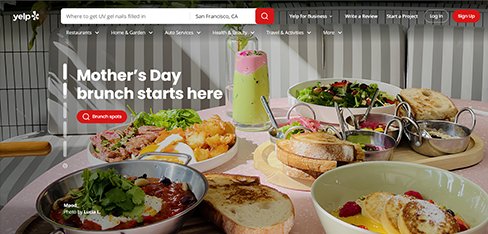
Younger consumers were discovering local businesses on Instagram and TikTok while our text-heavy review format felt like a different era. UX Stalwarts designed a visual discovery experience with video reviews and social sharing that made Yelp relevant again for the next generation. Monthly active users growing 44 percent and under-30 users nearly doubling validated that review platforms can evolve without losing depth.
Our audiences consumed one article and left. UX Stalwarts transformed our publications from content destinations into technology communities where readers contribute, discuss, and return daily. Engagement tripling and community participation growing from 3 to 18 percent proved that media brands can build social platforms around their expertise without building a social network from scratch.
Homeowners came to us only when something was broken. They went everywhere else for inspiration and advice. UX Stalwarts built a community layer that captures the project sharing and neighbor recommendations that drive hiring decisions. Project sharing increasing 5X and repeat engagement more than doubling proved that social features create ongoing platform value beyond transactions.
The questions social platform founders and operators ask before choosing a design partner.
Start with community specificity. A studio that has never shipped a feed, a creator tool, or a moderation console will miss where social platforms actually break down. Candidates among top UI UX companies for social apps worth considering bring proven community-health experience, not just consumer product portfolios. Ask for before-and-after retention and safety metrics rather than aesthetic case studies. Check experience with cold-start design, creator monetization, and moderation tooling. Review component libraries designed for user-generated content density. A credible best social media app design agency defends decisions to product, community operations, trust-and-safety, and creator teams in one meeting. Portfolios alone never reveal whether the studio has shipped platforms to real communities at scale. Best social media app design firms and credible social media app ui design agency partners demonstrate these capabilities before signature.
Pricing for social media app design services varies with scope, participant count, and community complexity. A focused UX audit on an existing social app typically starts in the low five figures. A complete social media mobile app design engagement covering research, participant journeys, network bootstrap, feed and creator surfaces, moderation consoles, and a component library usually runs mid-five to six figures. Enterprise programs involving creator funds, multi-region rollouts, or advanced safety infrastructure reach higher. Social media app design services pricing ultimately depends on community type, creator economy scope, moderation maturity, localization scope, and post-launch support. Transparent scoping before contract signature prevents commercial surprises during growth planning cycles. Quotes from a social media mobile app design company, Social Media Mobile App Design Agency, or Social Media App UI Design Services partner are shared upfront.
Timelines depend on scope and platform maturity. A targeted audit with prioritized recommendations typically takes three to four weeks. A single-surface redesign like a feed, profile, or moderation console runs eight to ten weeks including cohort validation. A full engagement covering discovery, participant journeys, network bootstrap, interface craft, and a documented component library generally runs twenty to twenty-six weeks. Enterprise rebuilds involving creator economy features, multi-region rollouts, or advanced safety infrastructure extend further. We scope in two-week milestones with visible deliverables so product, community operations, and engineering teams can evaluate progress continuously across real cohort data rather than design reviews alone. Engagements include Social Media App Wireframe Design, Social Media App Prototyping Services, full Social Media App UI UX Design services, and broader Social Media UX Design Services across milestones.
A structured engagement follows six sequential phases. First, community discovery collects participant analytics, creator feedback, and safety incident patterns. Second, participant journey mapping separates consumer, creator, moderator, and admin paths. Third, network bootstrap work validates onboarding, discovery, and first-week retention patterns. Fourth, social interface craft produces high-fidelity surfaces against a component library. Fifth, safety and creator validation tests designs with real moderators and creators in simulated peak conditions. Sixth, community iteration tracks metrics and ships refinements. Each phase ends with a signed-off deliverable. This disciplined social media app design process reflects proven social networking app UX best practices applied consistently across engagements of different sizes. Mature Social Media UX Design Services, Social Media App UX Design Services, and Social Media Product Design Agency engagements follow this cadence.
Three things separate our social work. First, honest engagement craft. Our designs reward genuine participation rather than anxiety-driven return loops. Second, creator-first economic thinking. Monetization and analytics tools are built with creators in the room. Third, safety and moderation parity. Trust-and-safety consoles get the same design rigor as consumer feeds. A proven social media app UI design company and social platform UI/UX design practice applying these commitments consistently appears on shortlists when platform founders evaluate partners. Portfolio polish alone never reveals whether a studio can ship communities that survive the regulatory scrutiny, creator churn waves, and safety incidents every social platform eventually faces. Social Networking App Design Company, Social Media UI UX Design Agency, Social Media UX Design Company, and Social Media Product Design Agency teams applying these commitments earn repeat selection.
Starting is deliberately lightweight. A brief discovery call covers platform stage, target community, creator strategy, moderation maturity, known pain points, and desired outcomes. Within five working days you receive a scoped proposal covering phased milestones, deliverable samples, team composition, timeline, and commercial terms. A paid pilot sprint focused on one high-leverage surface like onboarding or creator tools is available for teams wanting to test chemistry before committing to larger work. Most clients move from first conversation to kickoff within two weeks. You can begin with a short enquiry, share platform documentation under NDA, or explore related capabilities through our broader UX design services page as a starting reference for how engagements are structured. Discovery with a Social Media Platform UX Design company or Social Media Mobile App Design Agency calibrates scope quickly.
Several adjacent capabilities compound the impact of social product design. A mature design system accelerates every new feature release and protects consistency across consumer app, creator tools, moderation consoles, and web surfaces. Conversion rate optimization sharpens acquisition and activation flows through continuous A/B testing on signup and onboarding. A mobile app design agency for social apps typically pairs core work with motion design for micro-interactions, dedicated usability testing for new features, and accessibility audits for inclusive community access. Selection depends on stage; early platforms prioritize network bootstrap and participant journeys, while mature platforms gain more from system governance and optimization. Complementary Social Platform UI Design Services, Social Media Platform Design firms outputs, Social Media UI Design solutions, and Social Media App UX Design agency capabilities extend long-term value.
Every engagement is scoped around the specific social product, not a template. A general-audience photo-sharing platform has different needs than a professional networking app. A short-form video platform requires different hierarchy than a niche interest community. A dating app demands different trust signals than a local neighborhood platform. Our UI UX design for social media platforms differs across general consumer, vertical community, creator-economy, and professional-networking contexts. Social app interface design for teens requires stricter duty-of-care patterns than adult-audience platforms. Discovery produces a custom engagement plan accounting for community type, audience demographics, creator strategy, and regulatory jurisdiction. Sprint cadence adjusts to match how your team actually makes decisions. Custom Social Media App Design firms, Social Media App Design companies, and Social Media App Design solutions teams scope every engagement this way.
Yes, and it is usually where meaningful social wins show up. After launch, real community behavior often differs from research predictions in small but important ways. Retainer options range from enterprise programs to lighter engagements covering specific surfaces. Typical support covers ongoing design iteration, component library expansion, creator feature releases, periodic safety design reviews, usability studies with creators and moderators, and analytics-driven refinement of discovery and engagement flows. A dedicated social platform design company partner keeps that rhythm consistent through community growth phases, creator economy launches, and regulatory changes. Remote validation plays a central role here, covered in our guide to remote usability testing for distributed social platform cohorts. Trusted Social Media App UX Design agency, Social Media UX Design Company, and Social Media App UI Design Services retainers keep cadence consistent.
Coverage spans consumer social feeds, short-form video, creator communities, professional networks, niche interest platforms, dating apps, local and neighborhood platforms, creative-sharing networks, and private messaging ecosystems. Clients range from pre-launch community founders to listed platforms operating across India, the United States, the United Kingdom, the GCC, and Southeast Asia. A regionally experienced team understands that Indian social platforms often succeed through vernacular-first feeds, SEA markets prefer WhatsApp-integrated messaging, GCC platforms require modesty-aware imagery and Arabic interfaces, and Western markets demand stricter teen-safety controls. Pattern transfer across categories is deliberate; a proven creator-monetization flow for a video platform often accelerates monetization design decisions for audio or newsletter platforms because creator psychology repeats across adjacent contexts. Experienced social media app designing companies and Social Media UI UX Design Agency teams adapt patterns regionally.
Engagement and addiction are different outcomes produced by different design choices. Our method combines four techniques. First, meaningful notifications trigger only around genuine interactions rather than artificial urgency. Second, content sessions include natural stopping cues like daily summaries rather than infinite scroll traps. Third, engagement metrics reward quality of interaction over raw time-on-app. Fourth, screen-time awareness surfaces gently without shaming users into either overuse or avoidance. UI UX trends for social media apps increasingly favor this approach as regulators and app stores scrutinize hollow-engagement design. Social networking app UX design built on this foundation produces healthier retention curves that survive regulatory review and user trust cycles both. Social Media UI Design solutions, Social Media App UI Design Services, and social media app ui design agency practitioners apply this rigorously.
Teen safety shapes design inputs rather than post-launch reviews. Before wireframes begin, our team maps duty-of-care expectations across target jurisdictions: default privacy settings for minors, age verification flows, restricted discovery for young users, parental controls, and opt-outs for sensitive content categories. Mental-health-sensitive flows like crisis support, bullying reporting, and self-harm prevention receive deliberate design attention rather than being left as afterthought features. Our article on UX accessibility audits covers adjacent inclusive-design considerations. These decisions protect vulnerable users, satisfy evolving regulations, and shield platforms from the reputational damage that accompanies safety incidents that become public. Standards like these distinguish best social media app design firms, Social Media App Design companies, social media app designing companies, and Social Media App Design solutions teams from generic vendors.
Cross-border social platforms demand more than translated interfaces. Community norms, content preferences, messaging patterns, and regulatory disclosures vary sharply by market. Our approach builds flexible templates that localize content presentation, engagement patterns, and legal disclosures while preserving brand coherence. Right-to-left layouts for Gulf communities, localized character support for Indic and East Asian scripts, and culturally aware imagery guidelines are designed in from day one. Our article on multi-language interface design for global platforms covers the broader localization approach. Social platforms expanding internationally benefit from this flexibility early; retrofitted localization often costs more than designing global-ready from first wireframe. Effective Social Media Platform UI UX Design, Social Media Platform UX Design company, Social Media Platform Design firms, and Custom Social Media App Design firms partners build localization into v1.
Yes. Social design systems carry specific requirements beyond general product systems. Components must handle post cards with varied media types, reaction systems, comment thread hierarchies, creator profile variants, moderation status chips, verification badges, notification density patterns, and accessibility for diverse content formats. Our system engagements produce tokenized foundations, a production-ready component library, documented accessibility behavior, and developer handoff kits scaling across consumer app, creator tools, and moderation surfaces. For platforms with multiple products or white-label community strategies, long-term stewardship matters as much as the initial build, which we explore in our article on design system governance. A mature Social Networking App Design Company, social media mobile app design company, Social Media App UI UX Design services partner, and Social Media App Wireframe Design specialist sustains all these systems.
Measurement begins before design. During discovery we capture baselines for flows being redesigned: daily active usage, weekly retention, creator activation rate, content reporting volume, moderation resolution time, and community health signals across cohorts. After launch the same metrics are re-measured at thirty, sixty, and ninety days, and again during quarterly business reviews. Secondary signals include creator monetization engagement, notification open rates, safety incident trends, and app store sentiment across participant types. Quarterly reviews tie design decisions back to community growth, creator retention, and platform safety posture. Measurement discipline across every social media product design services engagement separates cosmetic redesigns from durable community building over real time horizons. Strong Social Platform UI Design Services, Social Media App Prototyping Services, and Social Media Platform UI UX Design teams tie measurement to community outcomes.

C – 81C, Sector – 8, Noida 201301, India


1025 Beamon Drive, Franklin 37064 Tennessee, USA
Sveavagen 34 111 34 Stockholm, Sweden
A-10, Sahastradhara Rd, Doon IT Park, Dehradun, Uttarakhand

© 2026 UX STALWARTS. All rights reserved.