A mobile app with poor usability loses users within the first 72 hours. When navigation feels confusing, load times stretch, or visual hierarchy fails to guide decisions, your acquisition spend delivers diminishing returns. Organizations that treat mobile app design as an afterthought face higher churn rates, lower in-app conversions, and weaker brand perception in competitive marketplaces. The cost of redesigning after launch is three to five times higher than investing in research-backed design from day one, making early-stage design quality a direct financial lever.
Our mobile app design service covers the full spectrum of user experience and interface design for iOS and Android platforms. From behavioral research and information architecture to interactive prototyping and pixel-level UI production, every deliverable is shaped around your users and validated through testing. We create design systems that scale with your product roadmap, ensuring visual and functional consistency as features expand. Whether you are building a consumer marketplace, an enterprise workflow tool, or a patient-facing health application, our process adapts to your domain without compromising usability standards.
With eighteen years of cross-industry delivery and partnerships spanning startups to Fortune-level enterprises, UX Stalwarts brings a rare combination of strategic depth and production discipline to mobile app design. Our team understands platform-specific guidelines, accessibility requirements, and the technical constraints developers face during implementation. That understanding translates into design files that are buildable, testable, and aligned with real engineering workflows, not just visually attractive screens that fall apart in development.

Every mobile app design project begins with structured user research, competitive audits, and stakeholder interviews. We map behavioral patterns before sketching a single screen, ensuring design decisions are grounded in evidence rather than assumptions. This approach reduces revision cycles and accelerates stakeholder alignment from the earliest phases.

Our designers work within Apple Human Interface Guidelines and Google Material Design standards as a baseline, not a limitation. Each interaction pattern, gesture, and transition respects the conventions users already know, resulting in apps that feel native on both iOS and Android. Adoption rates consistently reflect this discipline.

We deliver component libraries and token-based design systems that grow alongside your product. When new features or modules are introduced, your development team reuses validated patterns instead of building from scratch. This reduces design debt and keeps visual consistency intact across releases and platform updates.

Design files include annotated specifications, responsive behavior documentation, and organized asset exports. Our handoff process integrates with engineering workflows so developers receive everything they need without interpretation gaps. This practice shortens the front-end build cycle and significantly lowers the defect rate during quality assurance.

Color contrast ratios, touch target sizing, screen reader compatibility, and cognitive load reduction are embedded into every design decision. Accessible design is not treated as a compliance checkbox but as a quality standard that widens your addressable audience and mitigates legal exposure in regulated markets.

Clients access shared project boards, participate in weekly design reviews, and receive documented rationale behind key decisions. You are never waiting for a reveal. This collaborative model builds internal confidence, accelerates feedback loops, and ensures the final product reflects both user needs and business priorities.
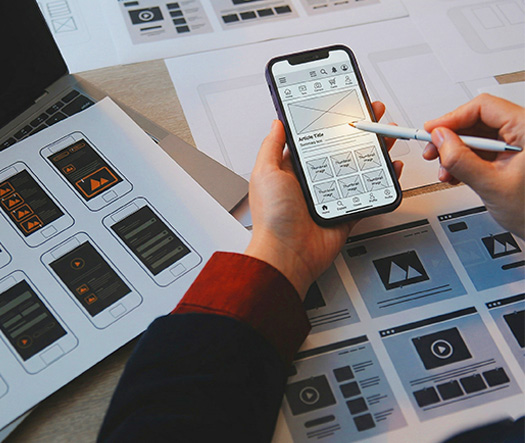
Mobile app design is not a visual exercise. It is a strategic function that determines whether users complete tasks, return the next day, and recommend your product to others. Strong interface design reduces support tickets by making features self-explanatory. Thoughtful experience architecture lifts conversion rates by removing friction from critical user journeys. When design decisions are backed by behavioral data and validated through usability testing, the result is an app that earns trust, retains attention, and delivers compounding value over time. Our team applies this discipline across every engagement, regardless of industry or platform complexity.
Partner with a mobile design agency that measures outcomes.
A proven, structured process built to reduce uncertainty, align stakeholders early, and deliver production-ready mobile app designs on schedule.

We conduct stakeholder workshops, user interviews, and competitive landscape analysis to define core objectives and user expectations. Technical constraints and business goals are documented in a shared brief. By the end of this phase, the project scope, success metrics, and design priorities are clearly established and approved.

Information architecture, user flows, and navigation structures are mapped to ensure every screen serves a purpose within the broader experience. We identify edge cases, error states, and multi-path scenarios during this phase. The output is a validated sitemap and flow diagram ready for wireframing.

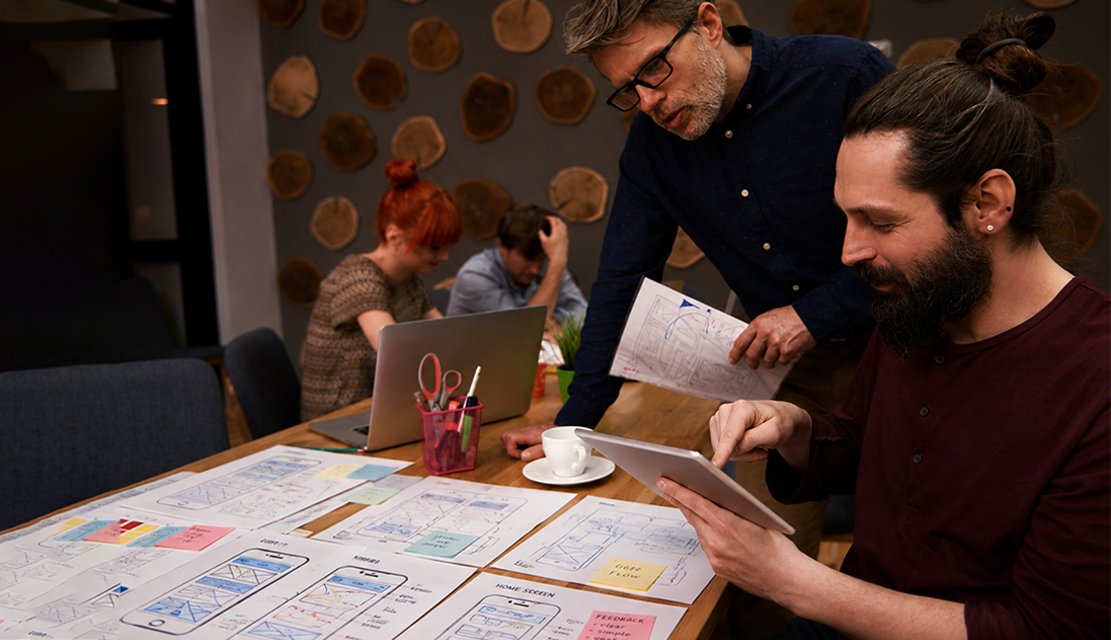
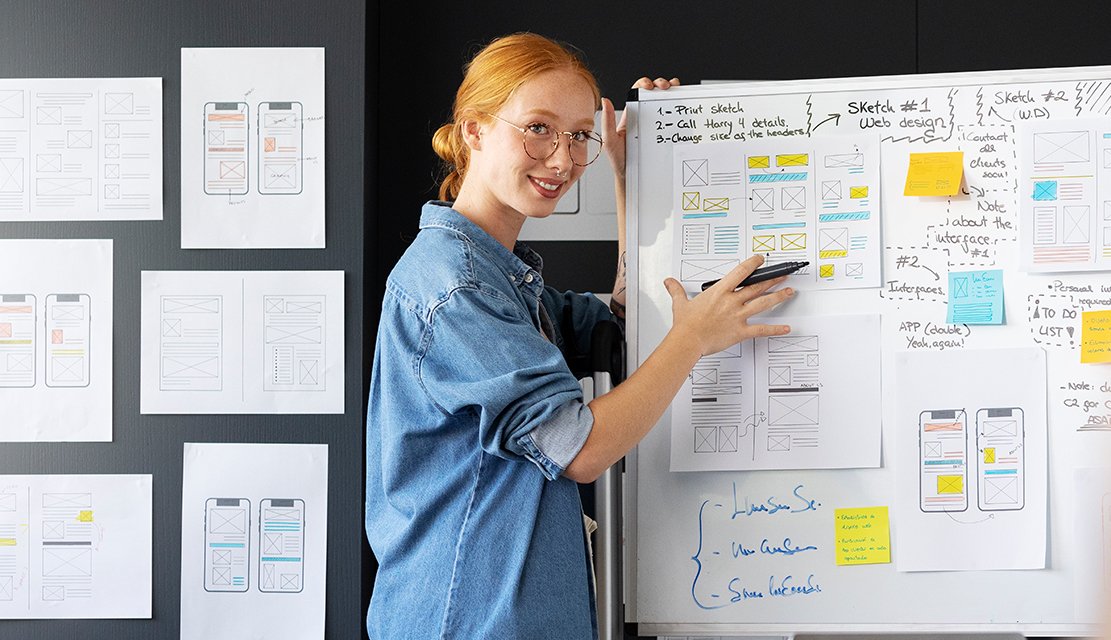
Low-fidelity wireframes translate the architecture into screen-level layouts. Each wireframe defines content hierarchy, interaction zones, and functional placement without visual styling. These wireframes undergo internal review and client feedback sessions to confirm usability logic before any visual design effort begins, saving significant time downstream.

High-fidelity UI mockups bring brand identity, typography, color systems, and iconography into every screen. We design for both iOS and Android guidelines simultaneously, ensuring platform-native feel without duplicating effort. Interactive prototypes are created so stakeholders can experience the app before a single line of code is written.

Usability testing sessions with representative users reveal friction points, comprehension gaps, and interaction failures. We analyze session recordings, heatmaps, and task completion data to refine designs with precision. Only designs that meet predefined usability benchmarks proceed to the development handoff stage.

Final design files are organized with developer annotations, component specifications, spacing tokens, and exportable assets. We conduct a handoff walkthrough with your engineering team to clarify interaction behaviors and responsive rules. Post-handoff design support is available throughout the build cycle to resolve implementation questions quickly.
With over 1,000 clients served across multiple industries, explore how research-backed mobile design has delivered measurable results in real engagements.
Effective mobile app ui ux design starts with understanding industry-specific user behaviors, compliance demands, and operational workflows. Our design practice serves organizations ranging from early-stage startups validating product-market fit to large enterprises modernizing legacy systems. Regardless of scale, every engagement is guided by principles of usability, scalability, and measurable performance, ensuring your mobile application design delivers long-term value beyond launch.
Our cross-industry portfolio includes healthcare, fintech, retail, logistics, education, real estate, SaaS, and on-demand services. This breadth of experience means that patterns proven in one sector inform smarter design decisions in another. An enterprise app design company with this range can anticipate regulatory requirements, accessibility standards, and platform-specific behaviors that single-industry agencies often overlook during the design process.
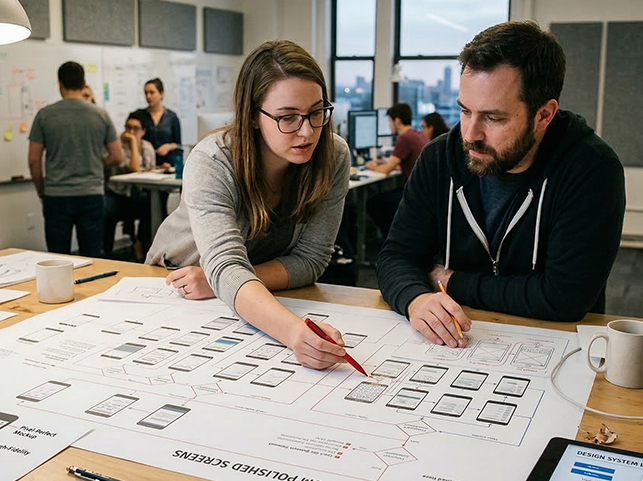
Delivering mobile app design that performs under real-world conditions requires more than visual skill. It demands a deep understanding of platform engineering, user psychology, and business operations. Our practice has earned recognition from clients across 30+ countries for combining design excellence with disciplined, outcome-driven execution.
Design Validated by Data : Every major interface decision is supported by usability testing results, not designer preference, reducing post-launch redesign costs significantly.
Full-Spectrum Platform Expertise : Native iOS app design, Android app design, and cross-platform experiences are handled by dedicated specialists familiar with each ecosystem’s nuances.
Compliance-Ready Mobile Interfaces : Designs for healthcare, finance, and government apps meet HIPAA, GDPR, PCI-DSS, and regional accessibility standards from day one.
Our mobile app design firm uses industry-leading platforms for prototyping, collaboration, and design system management, ensuring seamless workflows from concept through developer handoff and beyond.








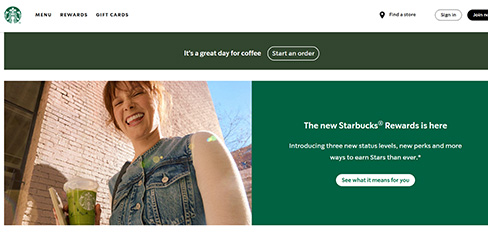
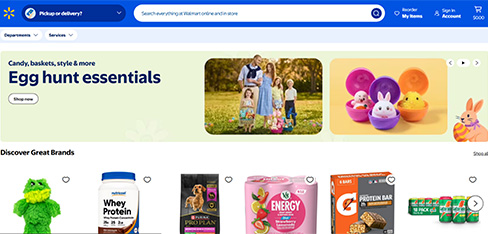
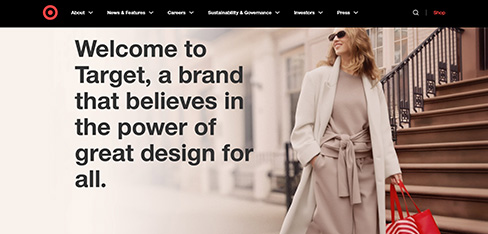
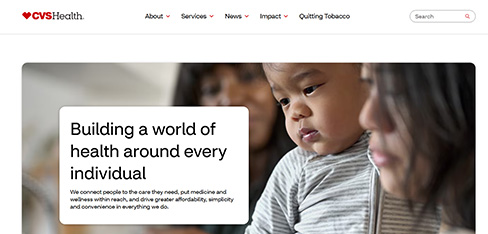
CVS had pharmacy, MinuteClinic care, retail stores, and Aetna insurance but our app treated them as separate businesses. Customers managing chronic conditions were juggling prescriptions, appointments, health tracking, and product purchases across disconnected experiences. UX Stalwarts redesigned our app as an integrated health platform. Growing digital health revenue to $890 million and improving medication adherence 34 percent proved integration created value. The 3.8x lifetime value of integrated users showed that health platforms are more valuable than pharmacy apps. This is CVS’s competitive advantage against Amazon Pharmacy.
Target’s same-day services had 94 percent customer satisfaction but only 23 percent adoption. We had a discovery problem, not an experience problem. Customers did not know they could get Target products in 2 hours. UX Stalwarts redesigned our app to make convenience the default with upfront mode selection and Drive Up optimization. Growing same-day services from $4.2 billion to $5.6 billion in revenue proved we unlocked latent demand. The 134 percent Drive Up growth showed that when you make convenience frictionless, customers choose it. This capability is how Target competes with Amazon.
Walmart’s stores are our competitive advantage but our mobile app was not leveraging them. We had an e-commerce app and a separate store experience with no connection. Customers shopping both channels spent 4.7 times more but we were not enabling that journey. UX Stalwarts redesigned our app as an omnichannel hub with in-store mode, seamless cart switching, and location-aware experiences. Achieving 73 percent cross-channel adoption and growing to 98 million monthly users made our app the bridge between physical and digital. The 34 percent store mode usage proved customers wanted mobile tools while shopping. This is how stores win the digital era.
Exploring your options for a mobile app design partner? Here is what you should know.
Start by evaluating their portfolio for projects similar to yours in complexity and industry. A credible app design company will show process documentation, not just polished screenshots. Look for evidence of user research, usability testing, and cross-platform experience. Ask about their handoff process and how they collaborate with development teams. References from past clients in your sector are more valuable than generic testimonials. Also verify whether they follow platform-specific guidelines for iOS and Android, because a one-size-fits-all approach typically results in apps that feel foreign on at least one platform. When comparing the best mobile app design company options or the best app design company in your region, request samples from the top app design companies in your specific industry vertical.
The primary cost drivers include the number of unique screens, the complexity of user interactions, the number of platforms being designed for, and the depth of research and testing involved. A simple consumer app with 15 to 20 screens will cost significantly less than an enterprise application with role-based dashboards, complex data visualizations, and multi-step workflows. Custom illustration, animation, and design system development also add to the investment. Most mobile app design agencies provide estimates after an initial discovery session, which helps scope the project accurately before committing to a budget. Cost expectations also differ significantly between a boutique mobile app design agency and larger mobile app design companies, so request itemized estimates before committing.
Timelines vary based on project scope. A straightforward app with a focused feature set can be designed in four to six weeks. More complex products involving multiple user roles, platform-specific designs, extensive prototyping, and multiple rounds of usability testing typically require eight to fourteen weeks. Factors like stakeholder availability for feedback, the volume of screens, and whether a design system needs to be built from scratch also affect duration. Setting clear milestones during the discovery phase helps keep the project on track. A mid-sized mobile app design firm or specialized mobile design agency will typically share a Gantt-style schedule during kickoff so dependencies stay visible throughout the engagement.
A comprehensive mobile app ui ux design service covers user research, persona development, journey mapping, information architecture, wireframing, interactive prototyping, visual UI design, usability testing, and developer handoff documentation. Some providers also include design system creation, accessibility audits, and post-launch design optimization. The goal is to deliver a complete, validated design package that your engineering team can build from without ambiguity. Always confirm what is included before signing an agreement, since some firms only deliver static mockups without testing or specifications. Engagements categorized as mobile app ui ux design services, mobile app ui design services, or mobile app ux design services may differ slightly in scope, so clarify deliverables upfront.
Three things set this practice apart. First, every design decision is validated through usability testing with real users before handoff, not just reviewed internally. Second, our team designs natively for each platform rather than adapting a single design across iOS and Android. Third, we deliver developer-ready files with complete annotations, component specs, and responsive behavior documentation, which reduces front-end build time and minimizes back-and-forth between design and engineering. Compared to a generic mobile app ui ux design agency or a broad mobile ui ux design company, this practice combines validated research with platform-native execution at every milestone.
The process begins with a discovery conversation where we understand your business objectives, target audience, technical constraints, and timeline expectations. After this initial discussion, we provide a detailed proposal outlining scope, deliverables, team composition, and investment. Once approved, the project kicks off with a structured discovery phase. You do not need a finalized feature list to begin. Many clients come with a concept and refine requirements collaboratively during the research and architecture stages. Whether you reach out to an app design agency or a mobile design company, the first step should be a short brief covering objectives, target audience, and timeline expectations.
Yes. Our team includes specialists in both Apple Human Interface Guidelines and Google Material Design standards. We design natively for each platform, which means your iOS app design will respect the patterns iPhone users expect, while your Android app design will follow Material Design conventions that feel natural on Samsung, Pixel, and other Android devices. For teams building cross-platform apps using Flutter or React Native, we create unified design systems that respect both ecosystems without sacrificing platform-native feel. Teams searching for a dedicated ios app design agency for iPhone-first products, an android app design agency for the Material ecosystem, or a combined ios app design company and android app design company partnership will find this expertise embedded across delivery. Even a focused iphone app design company brief is handled by the same core team without scope dilution.
Absolutely. Mobile app redesign starts with a thorough UX audit of your current application. We analyze user behavior data, identify drop-off points, review session recordings, and benchmark against competitor apps. From there, we recommend targeted improvements or a comprehensive redesign based on the severity of usability issues. Many clients see measurable improvements in retention and conversion after a data-informed redesign, because the changes are driven by actual user behavior rather than aesthetic preferences alone. Redesign engagements often blend collaboration with a mobile ux design agency for behavioral analysis, paired with a mobile ui design company or mobile app ui design company for interface refinement.
Yes. Post-launch support includes monitoring user feedback, analyzing in-app analytics, and making iterative design improvements based on real usage data. We also assist with designing new feature additions, onboarding flow refinements, and seasonal UI updates. Ongoing design partnerships can be structured as retained engagements or project-based sprints, depending on your product roadmap and release cadence. Continuous design attention ensures your app stays competitive and responsive to evolving user expectations. Learn more about measuring UX-driven performance beyond conversions. Working with a custom mobile app design agency or custom app design agency for ongoing support ensures iteration is tailored to your roadmap, while some clients retain a custom app design firm or custom mobile app design firm specifically for post-launch experiments.
Our mobile app design portfolio spans healthcare, fintech, e-commerce, logistics, education, real estate, SaaS platforms, media, and on-demand services. This breadth matters because regulated industries like healthcare and finance require compliance-aware design practices that general-purpose agencies may not offer. Our cross-sector experience also means we bring proven UX patterns from one industry into another, which accelerates decision-making and reduces the risk of untested design approaches in your specific domain. Enterprises often need an enterprise app design company that understands cross-departmental compliance constraints. Whether engaged as a mobile application design company or a mobile application design agency, this cross-sector experience translates directly into safer, faster design decisions.
We use shared design platforms like Figma for real-time collaboration, combined with structured review sessions over video calls. Project progress is tracked through shared boards with clear milestones and approval checkpoints. Clients receive documented design rationale for every major decision, so feedback is informed rather than subjective. This workflow has been refined through years of working with international teams across different time zones, and it ensures that geographic distance never compromises quality or communication. Some clients pair our design engagement with bundled app design and development services through partner studios, which simplifies coordination across time zones and release windows.
Yes. Building a custom mobile app design system is one of our core offerings. A design system includes reusable components, typography scales, color tokens, spacing rules, iconography libraries, and interaction patterns documented for both designers and developers. This investment pays for itself over time by reducing design inconsistency, speeding up feature development, and making onboarding easier for new team members. We build design systems that integrate directly with your engineering frameworks. Many clients ask whether to choose a mobile app design agency for system creation alone or bundle it with full product engagement, and a mature mobile app design agency india will support either model based on internal capacity.
Final deliverables typically include Figma source files with organized component libraries, interactive prototypes, annotated specification documents, exportable asset packages in required formats (SVG, PNG, PDF), and a design system reference guide. If your team uses Zeplin or other handoff tools, we publish directly to those platforms. Every deliverable is structured to minimize ambiguity during development, with clear documentation of responsive behavior, interaction states, and edge-case handling. If you are evaluating a mobile app design company india or a mobile app design company in india for offshore delivery, confirm that deliverables include source files, prototypes, and full handoff documentation. A reliable app design company india will publish to Figma, Zeplin, or your preferred handoff platform.
Yes. Our mobile app design consultancy service is structured for organizations that already have design talent but need strategic guidance, UX audits, or specialized expertise for complex projects. We work alongside your internal team through workshops, design reviews, and mentorship sessions. This model is particularly useful for enterprise teams scaling their mobile products or navigating unfamiliar platform requirements without hiring additional full-time specialists. When shortlisting a mobile app design agency india for consultancy support, evaluate both creative depth and operational maturity. The best app design company for consultancy is rarely the loudest in the market, and the best mobile app design company partnerships are usually built on long-term mentorship. Cross-reference reviews of any mobile design company you consider, and confirm the firm appears credibly among top app design companies in independent rankings.
Design fidelity is maintained through detailed handoff documentation, developer walkthroughs, and an active support channel during the build phase. We conduct design QA reviews at key development milestones, comparing the implemented interface against approved mockups and flagging deviations. Spacing, color accuracy, typography rendering, animation timing, and interaction behavior are all verified. This structured quality assurance process ensures the live product reflects the experience users tested and stakeholders approved. Mobile app design companies that also coordinate app design and development services through partners or in-house engineers tend to maintain higher fidelity during build, and a credible app design agency will provide detailed QA checklists at handoff.
The mobile app design field uses several overlapping labels. You may see firms positioning themselves as an android app design agency, an ios app design agency, an android app design company, or an ios app design company depending on platform focus. Others present themselves as a custom mobile app design agency, custom app design agency, custom app design firm, or custom mobile app design firm when emphasizing bespoke work. Studios sometimes prefer mobile app ui design services, mobile app ux design services, or mobile app ui ux design agency phrasing. Smaller boutique teams may use mobile ui design company, mobile app ui design company, mobile ui ux design company, or mobile ux design agency. Functionally the distinctions are marketing more than methodology, so evaluate portfolio quality and process maturity over the label.
The decision depends on collaboration needs and budget. A mobile app design company in india or mobile app design company india typically delivers strong value when remote workflows are well-established. An experienced app design company india will offer overlapping timezone coverage, structured communication, and detailed documentation throughout the engagement. Some teams prefer working with a mobile application design company or mobile application design agency that has dedicated specialists for premium iPhone-first products. A focused iphone app design company can be valuable when targeting affluent markets where iPhone share is high. Ultimately, evaluate references, portfolio quality, and process discipline over geography alone.

C – 81C, Sector – 8, Noida 201301, India


1025 Beamon Drive, Franklin 37064 Tennessee, USA
Sveavagen 34 111 34 Stockholm, Sweden
A-10, Sahastradhara Rd, Doon IT Park, Dehradun, Uttarakhand

© 2026 UX STALWARTS. All rights reserved.