Online retail is a zero-tolerance environment. Shoppers who encounter a slow product page leave for a competitor in a single tap. A confusing filter, a cluttered cart, or a checkout that asks for too much information quietly erodes revenue that marketing teams worked months to attract. Weak Ecommerce UI UX design shows up as abandoned baskets, falling repeat purchase rates, rising customer support tickets, and steadily climbing customer acquisition costs. Most stores lose more money to preventable friction in the purchase journey than they spend on paid acquisition. The gap between a visitor and a buyer is almost always a design decision, not a discount.
Our approach treats the storefront as a revenue engine, not a brochure. Before any screen is produced, we analyze your shopper segments, product taxonomy, existing analytics, platform capabilities across Shopify, WooCommerce, Magento, or headless stacks, and the specific funnel points where buyers currently drop off. From there we deliver research-backed information architecture, product detail page systems, filtering and search UX, cart and checkout flows, account area design, and a scalable component library. As a specialized Ecommerce UI UX Design Agency, we engineer the moments where decisions happen: add to cart, enter shipping, confirm payment. Each screen is scoped to move measurable metrics like conversion rate, average order value, and repeat purchase frequency.
Eighteen years of hands-on work across thirty-plus countries gives our team a lived sense of what converts in direct-to-consumer fashion, cross-border marketplaces, subscription commerce, B2B catalog portals, and omnichannel retail apps. UX Stalwarts has partnered with founder-led brands preparing for first-round growth and with listed retailers modernizing sprawling legacy storefronts. Our designers fluently translate merchandising logic, logistics constraints, and tax or regional compliance into interfaces shoppers find effortless. Where generalist studios ship a Figma file and wish you luck, we commit to the specific revenue number each screen is meant to move, and stay connected to the data until the store earns back its design investment.

Generic personas miss what actually happens during a purchase. We combine session recordings, cart analysis, review mining, and moderated interviews with real buyers across devices. Every design decision starts from how your shoppers browse, hesitate, compare, and decide rather than assumed best practices.

Shopify, WooCommerce, Magento, BigCommerce, and headless setups each carry different constraints. A Shopify UI UX Design Agency that ignores these realities ships files rebuilt at development time. Our team works inside these systems daily, so every mockup can actually ship without rework.

Over seventy percent of storefront traffic arrives on phones, yet most designs still start from desktop. Our process reverses the order. Mobile layouts, thumb zones, and single-hand flows are designed first; desktop is an enhancement layer, not the source of truth.

Every screen is reviewed against a conversion checklist before handoff. Button placement, trust cues, scarcity signals, and error recovery are chosen from evidence, not taste. Heatmap data, session recordings, and A/B testing inputs validate designs before engineering spends a cycle on anything speculative.

Regional shoppers behave differently. Payment preferences, address formats, tax display rules, currency conversion, and cultural color meaning change by market. Our global exposure across thirty-plus countries informs flexible templates that localize without splintering into separate codebases or brand identities.

Commerce teams move fast because shopping behavior shifts weekly. Our collaboration model matches that pace with shared Figma spaces, weekly merchandising reviews, written design decisions, and direct access to the senior designer owning your account. Nothing gets buried in account management layers.

Commerce interfaces carry a measurable price tag. A cluttered product grid costs you impulse adds. A checkout that demands unnecessary fields surrenders sales to competitors with one-click flows. Well-crafted Ecommerce UI UX design raises average order value, shortens time-to-purchase, and brings shoppers back without paid retargeting. A skilled Ecommerce UI UX Design Agency understands retail psychology: loss aversion, social proof, anchoring, and the cues that make a stranger trust a purchase button. Our designers apply that craft to produce stores that feel genuinely easy while nudging revenue in the right direction.
Partner with specialists who design stores engineered for conversion.
Every engagement follows a deliberate path built to eliminate guesswork and convert more of the traffic you already earn.

We begin by measuring your current storefront against real buyer behavior. Analytics, heatmaps, support ticket categories, and competitor benchmarking identify exactly where funnel leakage happens. Existing platform capabilities and merchandising workflows are documented so every subsequent design decision fits inside what your team can ship.

We map the shopper path from first ad click through post-purchase review. Each moment is captured with the shopper’s intent, emotional state, and the objections that typically prevent the next tap. Journey artifacts drive every wireframe decision, page layout, and interaction detail.

Product taxonomy, filtering logic, and search experience determine whether shoppers find what they want. We structure navigation, faceted filters, sort orders, and merchandising hierarchies through tree testing and card sorting. Category pages are engineered for scanning speed while protecting cross-sell exposure for related items.

High-fidelity product detail pages, cart layouts, and checkout screens are produced alongside a component library tuned for commerce density. Imagery, pricing, availability, reviews, and shipping cues are weighted through visual hierarchy guiding the next tap. Designs pass accessibility review and responsive validation before handoff.

Designs are tested with real shoppers on real devices before code ships. We observe cart-to-purchase completion rates, field abandonment points, payment preferences, and the exact moments where confidence dips. Findings drive documented revisions so the final checkout earns buyer trust at every step.

Post-launch, performance data guides continuous refinement. Conversion funnels, product page engagement, filter usage, and checkout completion are monitored against the baseline from Phase One. Where gaps surface, targeted revisions ship in structured sprints so the store keeps earning its design investment quarter after quarter.
Drawn from over one thousand engagements across retail, fashion, and marketplace clients, these projects reflect measurable commerce outcomes.
The values behind every commerce engagement are clarity, shopper trust, and scalable performance. Teams evaluating an Ecommerce Website Design Agency weigh retail fluency against execution speed. From bootstrapped DTC brands preparing for holiday peaks to listed retailers modernizing multi-brand storefronts, our team operates across the maturity spectrum, balancing immediate revenue opportunities against the architectural runway required for catalog growth.
Industry coverage spans fashion and apparel, beauty, electronics, furniture, groceries, health supplements, B2B catalogs, marketplaces, and subscription commerce. Our ecommerce web design agency services cover these categories at both early and mature stages. Exposure to adjacent verticals gives designers transferable merchandising patterns that determine whether ecommerce ui ux design services feel right on first use or require learning effort.

Choosing the Best Ecommerce Design Agency for your product comes down to fit, not reputation. UX Stalwarts’ commerce work has been cited in retail industry publications, shortlisted for international design awards, and referenced in merchant case studies because the output consistently lifts revenue rather than just refreshing appearances. Three commitments explain why clients choose our team.
Revenue Metric Ownership: Every screen ships tied to a named conversion metric, and our team stays engaged until the number actually moves.
Platform And Stack Fluency: Shopify, WooCommerce, Magento, and headless builds each have hard limits. Our designs respect them, so every mockup actually ships.
Mobile Conversion Priority: Mobile drives most retail traffic yet earns little design attention. We reverse this, designing thumb-native flows before desktop.
Our studio relies on category-leading tools selected for collaboration speed, engineering handoff accuracy, and analytics integration across every customized ecommerce website design program we run.









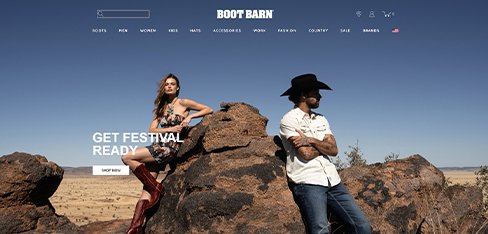
Our online store felt like a catalog while our physical stores feel like a lifestyle destination. UX Stalwarts bridged that gap with shop-the-look experiences and occasion-based browsing that mirrors how our customers actually think about western wear. Average order value jumping 38 percent online proved we can replicate the in-store magic digitally.
Running six brand storefronts meant six different checkout experiences and consistently high abandonment. UX Stalwarts built a unified checkout system that respects each brand identity while eliminating the friction points that were costing us sales. Cutting abandonment by 41 percent across the entire portfolio was the most impactful e-commerce initiative we have ever undertaken.
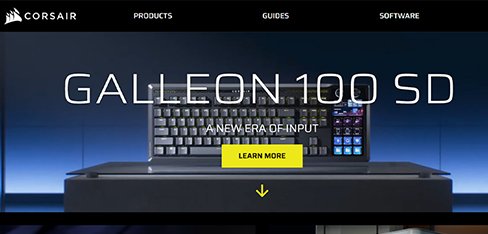
Our custom build tool was losing three-quarters of users because selecting compatible components was too confusing. UX Stalwarts replaced it with a visual configurator that makes building a gaming PC feel as intuitive as a video game itself. Completion rates nearly tripling and custom orders converting 2.4X higher validated the investment in design-led product customization.
The answers retailers and founders seek before choosing a commerce design partner.
Start with retail specificity. A generalist studio that has never shipped a cart flow will miss the exact places shoppers drop off. The best ecommerce web design services come from teams with proven storefront experience, not general web portfolios. Ask to see before-and-after conversion numbers rather than just aesthetics. Check that the agency works inside your actual platform (Shopify, Magento, WooCommerce, BigCommerce, or headless). Review component libraries and checkout case studies. The best ecommerce web design service companies will happily share performance data from previous engagements. A credible Ecommerce UX Design Company should also feel comfortable defending design choices to your merchandising, marketing, and engineering leads in one meeting.
Pricing for ecommerce web design service engagements varies with scope, catalog depth, and platform complexity. A focused UX audit on an existing store typically starts in the low five figures. A full custom ecommerce web design services project covering research, category architecture, product detail pages, checkout, and a component library usually runs mid-five to low-six figures. Enterprise programs involving multi-brand setups, international localization, or ongoing optimization reach higher. Affordable ecommerce web design services also exist as structured pilot sprints designed to prove value before larger commitment. Variables that move price are catalog size, jurisdictions served, platform constraints, and depth of post-launch support. The best ecommerce web design services share transparent pricing bands.
Timelines depend on scope and catalog complexity. A targeted audit with prioritized recommendations typically takes three to four weeks. A single-flow redesign like checkout or product detail page runs six to eight weeks including validation. A complete ecommerce web design services engagement covering discovery, category architecture, high-fidelity screens, and a documented component library generally runs twelve to twenty weeks. Enterprise rebuilds involving multi-brand setups, new platform migrations, or ongoing custom ecommerce web design services retainer work can extend further. We scope in two-week milestones with visible deliverables at each checkpoint so your team can evaluate progress and redirect priorities as live store data emerges.
A structured engagement follows six sequential phases. First, a commerce audit phase collects analytics, heatmap data, and competitor benchmarks. Second, buyer journey mapping captures every shopper path and hesitation point. Third, catalog architecture work validates navigation, filtering, and search through tree testing. Fourth, interface craft produces high-fidelity product and checkout screens against a component library. Fifth, checkout validation tests designs with real shoppers before development begins. Sixth, post-launch growth iteration tracks performance and ships targeted refinements. Each phase ends with a signed-off deliverable before the next begins. This disciplined sequencing is why our Ecommerce UI UX design and ecommerce web design & development services approach protects timeline integrity and keeps rework costs low.
Three things separate our commerce work. First, measurable outcomes drive every decision. Button placement, badge treatment, and field ordering are chosen from evidence, not taste. Second, platform fluency means designs actually ship. Most teams hand over Figma files that break the moment developers touch them; as an Ecommerce UI Design Agency that works inside real stacks, we design around what can actually be built. Third, retail psychology runs deep. Loss aversion, social proof, and anchoring are applied with restraint rather than manipulation. We handle custom ecommerce website design projects with the same rigor applied to enterprise retail platforms, giving founders and listed brands equal access to our craft. Teams evaluating candidates for Best Ecommerce Design Agency ask for this consistency.
Starting is deliberately lightweight. A brief discovery call covers store stage, primary shopper segments, platform, existing pain points, and desired outcomes. Within five working days you receive a scoped proposal covering phased milestones, deliverable samples, team composition, timeline, and commercial terms. A paid pilot sprint is available for teams wanting to test chemistry before committing to a full engagement. Most clients move from first conversation to kickoff within two weeks. You can begin with a short discovery form, share store documentation under NDA, or explore related ecommerce web designing services and web design ecommerce services through our broader UX design services page. A capable Custom ecommerce website design company or custom ecommerce website design agency keeps onboarding light.
Several adjacent capabilities compound the impact of store design. A mature design system accelerates every feature release and protects consistency across storefront, app, email, and marketing surfaces. Conversion rate optimization sharpens funnel performance after launch through continuous A/B testing. Brand identity work aligns storytelling across product pages, packaging, and paid campaigns. Customized ecommerce website design projects benefit from dedicated usability testing, motion design for micro-interactions, and accessibility audits for regional compliance. The right combination of web design ecommerce services depends on store stage. Early brands prioritize flows and systems, while established retailers gain more from optimization, analytics, and repeated custom design ecommerce website experiments. Leading Ecommerce UI UX design company partners deliver Ecommerce UI UX design solutions tuned for growth.
Every engagement is scoped around the specific store platform and shopper segment, not a template. Any Ecommerce UI Design Agency claiming platform fluency must demonstrate it on your actual stack. A Shopify UI UX Design Agency engagement looks different from a Magento or BigCommerce build. A WooCommerce UX Design Agency has to respect plugin constraints and theme conventions. Custom Ecommerce UX Design work for headless commerce demands tighter developer collaboration and often folds into broader ecommerce web design & development services engagements. Our discovery produces a custom engagement plan accounting for platform, catalog depth, merchandising workflow, team capacity, and commercial priorities. Seasoned Ecommerce UI UX design firms and Mobile ecommerce app design firms scope this carefully.
Yes, and it is usually where the real wins show up. Retainer options range from full enterprise programs to affordable ecommerce web design services designed for smaller merchants. After launch, real shopper behavior almost always differs from research predictions in small but meaningful ways. Retainers typically cover continuous design iteration, component library expansion, seasonal campaign support, promotional templates, periodic usability studies, and analytics-driven optimization of checkout and category pages. A dedicated Ecommerce UX Design Company partner keeps that rhythm consistent. Remote validation plays a central role here, covered in our guide to remote usability testing. A retained Custom ecommerce website design company or custom ecommerce website design agency sustains gains.
Coverage spans fashion and apparel, beauty, electronics, furniture and home, groceries, health supplements, footwear, jewelry, B2B catalogs, marketplaces, and subscription commerce. Clients range from early-stage DTC brands to listed retail groups operating in India, the United States, the United Kingdom, the European Union, the GCC, and Southeast Asia. Ecommerce web design services india engagements often deepen into cross-border storefronts with multi-currency and tax-jurisdiction support. A regionally experienced Ecommerce Website Design Agency offering custom ecommerce website design services can translate shopper behavior across markets rather than forcing one design to fit every context. Pattern transfer across verticals is deliberate; a proven fashion PDP often accelerates launch decisions for adjacent categories.
Cart abandonment reflects friction, not intent. Customized ecommerce website design treats the cart and checkout as the highest-value real estate. Custom ecommerce website design services should optimize it relentlessly. Our method combines four techniques. First, strip optional fields and use smart defaults so checkout requires only what is truly needed. Second, guest checkout is always available; forced account creation kills more sales than any discount recovers. Third, trust signals appear where hesitation spikes: shipping cost, return policy, security badges. Fourth, progress is visible so buyers always know how far they have to go. Disciplined ecommerce ui ux design services can lift completion rates by double-digit percentages without touching pricing.
Mobile commerce now accounts for the majority of retail traffic, and the design approach differs meaningfully from desktop. Our Mobile ecommerce app design practice prioritizes thumb zones, one-hand reachability, instant feedback on taps, and short forms with native input types. Product pages lean heavily on imagery and concise hierarchy rather than long descriptions. Cart and checkout remove every unnecessary step, using platform-native patterns like Apple Pay and Google Pay wherever possible. Mobile ecommerce app design also demands careful management of image weights, skeleton loading states, and offline recovery so shoppers never lose a cart to a weak connection or a lost tap. Effective ecommerce web designing services anticipate these constraints from the first wireframe.
Cross-border stores demand more than translated copy. Currency display, address formats, tax handling, payment method preferences, shipping transparency, and even color semantics vary by market. Ecommerce web design services india teams often begin with home-market success before expanding abroad; the design system must stretch without splintering. Custom design ecommerce website builds that account for international expansion from day one scale faster than retrofitted localization. We build flexible templates that localize content, pricing, and legal disclosures while preserving brand consistency. Right-to-left layouts, Unicode edge cases, and multi-script rendering are designed in, not added later. Our detailed approach is covered in our article on multi-language interface design for global ecommerce platforms. Experienced Ecommerce UI UX design company partners localize Ecommerce UI UX design solutions cleanly.
Yes. Commerce design systems carry specific requirements beyond general product systems. Components must handle price formatting across currencies, promotional badges, availability states, rating summaries, and regional legal disclosures. A WooCommerce UX Design Agency builds systems within plugin ecosystems, while headless builds require tighter token discipline. Our system engagements produce tokenized foundations, a production-ready component library, documented accessibility behavior, and developer handoff kits. Custom Ecommerce UX Design work built on top of a disciplined system scales faster when you add new categories, markets, or campaigns. For enterprise retailers, long-term stewardship matters as much as the initial build, which we explore in our article on design system governance. Seasoned Ecommerce UI UX design firms and Mobile ecommerce app design firms standardize handoffs.
Measurement begins before design. During discovery we capture baselines for the flows being redesigned: conversion rate, average order value, cart abandonment rate, time-to-purchase, and support ticket categories. After launch we re-measure at thirty, sixty, and ninety-day marks. Secondary signals include add-to-cart rate, filter engagement, search exit rate, repeat purchase frequency, and accessibility audit coverage. Quarterly reviews tie design decisions back to revenue, cost, and retention movement. The best ecommerce web design services earn their fee by moving these numbers, not by shipping pretty files. The best ecommerce web design service companies stay engaged until results cross the threshold both sides agreed to chase. A measurable ecommerce web design agency keeps reporting honest.

C – 81C, Sector – 8, Noida 201301, India


1025 Beamon Drive, Franklin 37064 Tennessee, USA
Sveavagen 34 111 34 Stockholm, Sweden
A-10, Sahastradhara Rd, Doon IT Park, Dehradun, Uttarakhand

© 2026 UX STALWARTS. All rights reserved.