A poorly designed interface does not just frustrate users. It increases support costs, stalls product adoption, and quietly drives revenue loss across every digital touchpoint. When organizations treat UI design as an afterthought or hand it off to developers without interface expertise, they end up with products that function but fail to engage. Buttons get ignored, navigation confuses, and conversion funnels leak at every step. For companies operating in competitive sectors like fintech, healthcare, ecommerce, and enterprise SaaS, these losses compound fast. The interface is often the first and last impression your product makes.
Our approach to UI design services begins with understanding your business model, user segments, and product goals before a single pixel is placed. We deliver end-to-end interface design through a structured workflow that includes visual auditing, component architecture, responsive layout systems, and pixel-perfect screens ready for developer handoff. Whether you need to hire UI designers for a new product launch, a legacy platform redesign, or a mobile-first experience, our team produces interfaces grounded in usability principles and aligned with your brand system. Every screen is built for clarity, speed, and measurable engagement.
With eighteen years of cross-industry delivery, our design teams have shipped interfaces for startups refining their first product and enterprises transforming complex internal tools. This depth of experience means faster ramp-up, fewer revision cycles, and design decisions backed by pattern recognition across hundreds of projects. Unlike generalist agencies that treat UI as a visual layer, we position interface design as a strategic function tied directly to product performance. When you hire a UI UX designer from our team, you gain a partner who understands both the craft and the business outcome it must support.

Our designers have shipped interfaces across fintech, healthcare, ecommerce, real estate, and enterprise verticals. This cross-sector experience means faster comprehension of regulatory constraints, user expectations, and domain-specific workflows, resulting in designs that reflect real industry understanding rather than generic templates applied across unrelated products.

Every interface we deliver is built on a scalable component architecture. Rather than designing isolated screens, we create reusable UI systems that maintain visual consistency as your product grows. This approach reduces design debt, accelerates future development cycles, and ensures your interface stays coherent across releases and platforms.

Our UI decisions are grounded in user behavior data, heatmap analysis, and task-flow mapping. We do not rely on aesthetic preferences alone. Every layout choice, from button placement to content hierarchy, is informed by evidence of how users actually navigate, read, and interact with digital interfaces.

Design files from our team arrive production-ready with annotated specifications, spacing tokens, interaction states, and responsive breakpoints documented clearly. This eliminates the interpretation gaps that cause rework during development. Engineers receive precisely what they need to build accurately, saving weeks that other handoff approaches routinely waste.

Whether you need a dedicated UI designer from agency for a six-month product build or a focused sprint team for a four-week redesign, we structure engagements around your timeline and scope. Scale your design capacity up or down without recruitment delays or long-term overhead commitments.

We measure success by what the interface achieves after launch, not just how it looks in review. Our teams track usability benchmarks, task completion rates, and conversion impact as part of the engagement. This accountability ensures design decisions remain tied to business performance throughout the project.

The value of professional UI design services extends far beyond visual polish. A well-structured interface reduces cognitive load, shortens task completion time, and removes friction from the conversion path. These are measurable gains that directly influence customer acquisition costs, retention rates, and lifetime value. When your product is intuitive to use, support tickets decrease, onboarding accelerates, and users become advocates rather than detractors. Our team brings the discipline of systematic interface design to every engagement, combining visual precision with interaction logic that guides users toward the actions your business depends on.
Partner with our team to design interfaces that perform.
Every project follows a proven, phase-gated methodology designed to reduce ambiguity and deliver production-ready interfaces with confidence.

We begin by documenting your product goals, user segments, technical constraints, and brand parameters through structured intake sessions. This phase is critical because misaligned assumptions at the start create costly corrections later. By the end, we produce a design brief that becomes the single source of truth for every subsequent decision.

Before creating anything new, we evaluate existing interfaces, competitor products, and user feedback for patterns that reveal friction points and missed opportunities. This audit surfaces the specific problems the redesign must solve. The deliverable is an annotated assessment report with prioritized recommendations mapped to business impact and implementation effort.

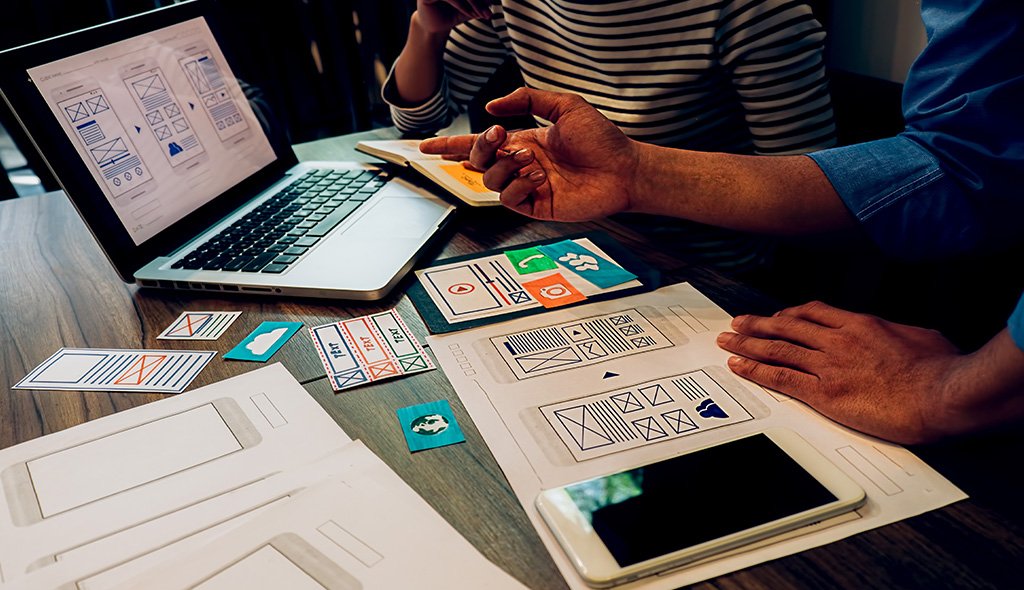
We define information hierarchy, screen flows, navigation models, and content placement through wireframes and low-fidelity layouts. This structural foundation determines how users will move through the product. Stakeholder review happens here before visual design begins, which prevents expensive direction changes once high-fidelity work is underway.

We build the visual design language including color systems, typography scales, spacing grids, icon sets, and component styles that will govern every screen. This phase produces a living style foundation that ensures consistency across the entire product. Approval of the visual system locks the aesthetic direction before full-scale screen production.

With the architecture and visual system confirmed, we produce pixel-perfect screen designs across all required breakpoints and device formats. Each screen includes documented interaction states, micro-animation specifications, and responsive behavior notes. This phase delivers the complete interface library ready for engineering implementation.

We package all design assets into developer-ready files with annotated redlines, exportable components, and interaction documentation. Our team remains available during the build cycle to answer questions, review implementations, and approve visual fidelity. This phase ensures nothing is lost between what was designed and what gets built.
Explore outcomes from over 1,000 client engagements across industries where our interface design work solved real product challenges.
Effective UI design requires more than visual skill. It demands familiarity with the regulatory environments, user behaviors, and product conventions specific to each industry. Our team works with organizations ranging from early-stage startups to global enterprises, applying the same rigor to a fintech dashboard as to a consumer mobile application. Scalability, compliance readiness, and platform adaptability guide every engagement.
We have delivered interface solutions across fintech, healthcare, ecommerce, real estate, education, logistics, media, and enterprise SaaS. This breadth means our designers recognize common UX pitfalls in each sector and avoid them by default. When you hire UI designers with this cross-industry background, you benefit from pattern libraries, interaction models, and layout strategies that have already been validated in production environments.

In a market saturated with agencies offering surface-level design output, our team has earned recognition for delivering interfaces that perform under real-world conditions. The distinction lies not in aesthetic trends but in the structural decisions, component engineering, and user-centered rigor that define every project we undertake.
Production-Grade from Day One: Every design we deliver is built with engineering constraints already factored in, eliminating the rework cycle between design and development.
Industry-Embedded Design Teams: Our designers specialize by vertical, bringing domain knowledge to fintech UI, healthcare interfaces, and enterprise dashboards without a learning curve.
Measurable Interface Performance: We tie every UI engagement to defined performance metrics, so design impact is tracked and reported alongside your product analytics.
We use industry-leading design, prototyping, and collaboration platforms to produce interfaces that are visually precise, developer-friendly, and built for seamless integration into modern engineering workflows.









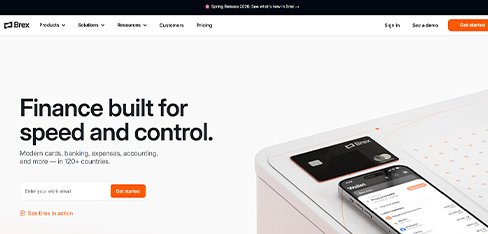
Brex interface quality was suffering because we lacked senior UI expertise while scaling rapidly. UX Stalwarts provided experienced UI designer immediately. Improving quality from 4.2 to 9.8 and satisfaction from 6.1 to 9.3 proved senior talent makes difference. The junior designer mentorship created lasting capability. This engagement solved immediate need while building long-term team strength.
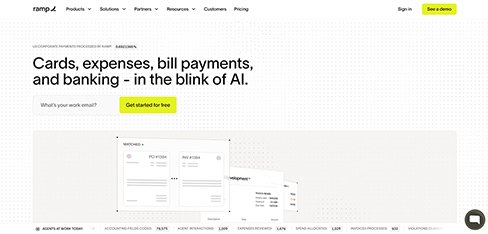
Ramp engineering team was spending 60 percent of implementation time clarifying unclear design specs. UX Stalwarts provided UI designer with engineering mindset creating pixel-perfect documentation. Reducing iteration 78 percent and increasing velocity 2.4x proved specifications matter as much as designs. The developer satisfaction improvement from 5.8 to 9.1 showed clarity reduces frustration. This engagement transformed design-development collaboration.
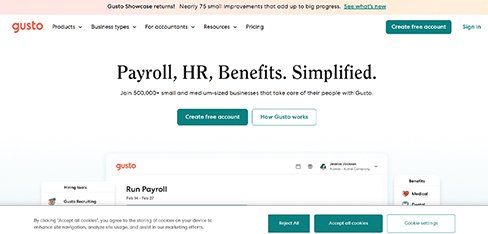
Gusto had 8 products with completely different visual treatments creating fragmented experience. UX Stalwarts provided UI designer establishing unified design system. Increasing consistency 267 percent and NPS from 42 to 68 proved visual cohesion matters. The design efficiency improvement of 3.4x showed systems enable scale. This engagement transformed Gusto from product collection to integrated platform.
Considering a UI design partner? Here are the answers decision-makers ask before getting started.
Look for a company that demonstrates both visual design craft and strategic product thinking. Review their portfolio for consistency, attention to interaction details, and evidence of work across industries relevant to yours. Ask about their process for handling developer handoff, how they manage design system documentation, and whether they measure interface performance post-launch. A strong UI design services company will show you structured case studies with clear before-and-after outcomes rather than just polished screenshots. Check their client retention rate as well, because repeat clients signal reliable delivery. Also verify they have experience working within your technical stack and product environment. Leading hire ui design firms publish structured case work alongside such checks.
Costs vary based on project scope, complexity, engagement duration, and the seniority of designers assigned. Most agencies structure pricing around fixed-project fees, monthly retainers, or hourly rates. For a single-product interface redesign, you can expect a range from a few thousand to several tens of thousands of dollars depending on screen count and platform coverage. When you hire UI designers from an agency in India, you typically get competitive rates without sacrificing quality, since Indian agencies benefit from lower operational costs while employing globally trained talent. Request a detailed scope breakdown before comparing quotes across providers. A typical ui designer hire engagement is also priced by scope clarity.
A freelancer can be effective for small, well-defined tasks but carries risk around availability, consistency, and scalability. An agency provides a structured team with project management, quality assurance, and the ability to scale resources as your project grows. When you hire a UI UX designer from an agency, you also gain access to complementary skills like UX research, prototyping, and interaction design without assembling those capabilities yourself. For product teams with ongoing design needs or complex multi-platform projects, an agency engagement offers more reliability and broader expertise than a single freelancer can provide. This advantage is sharper when a hire ui ux designers expert leads delivery.
Timeline depends on project scope and complexity. A focused redesign of five to ten screens for a single platform can take three to six weeks. A full-product UI design engagement covering web, mobile, and tablet with a complete design system typically runs eight to sixteen weeks. Factors that influence duration include the number of stakeholder review cycles, the complexity of user flows, and whether wireframing and research phases are included. We provide detailed timeline estimates during the intake phase, with milestone checkpoints so you can track progress at every stage.
Yes. We offer flexible engagement models that include fixed-scope projects, sprint-based assignments, and short-term augmentation. If you need a dedicated UI designer from agency for a four-week sprint to redesign a checkout flow or onboard a new product feature, we can structure the engagement accordingly. Short-term projects follow the same quality standards and process rigor as longer engagements. The key is clearly defining scope and deliverables upfront so the compressed timeline produces results that are complete and production-ready rather than rushed. Many teams ui designer hire this way for focused product sprints.
Absolutely. Our team includes specialists in both web and mobile interface design. When you need a UI designer for web and mobile, we assign designers with platform-specific expertise who understand the interaction patterns, navigation conventions, and technical constraints unique to each environment. For responsive web applications, we design across desktop, tablet, and mobile breakpoints. For native mobile apps, we follow iOS Human Interface Guidelines and Android Material Design standards. If your product spans multiple platforms, we create a unified design system that maintains visual consistency across all of them. A skilled UI Designer for Web & Mobile balances both contexts seamlessly.
Our teams have delivered interface solutions across fintech, healthcare, ecommerce, real estate, education, logistics, media, and enterprise SaaS. As a fintech UI design agency, we understand the compliance and trust requirements that govern financial interfaces. As a healthcare UI design company, we design with patient safety, accessibility, and data sensitivity in mind. Our ecommerce UI design agency work focuses on conversion optimization, product discovery, and checkout friction reduction. This industry depth means our designers bring domain-specific judgment to every project rather than generic visual skills. We also hire ui design consultants with vertical-specific judgment for sensitive sectors.
Getting started is straightforward. Share your project requirements through our contact form or schedule a consultation call. We review your brief, assess scope, and propose an engagement structure that fits your timeline and budget. Once the scope is agreed, we begin the intake phase where we document product goals, user context, and technical parameters. From there, our team moves through auditing, architecture, visual system development, screen production, and developer handoff. The entire process is transparent, with regular checkpoints and deliverable reviews at each phase.
Every interface we design is evaluated against WCAG accessibility standards. This includes color contrast verification, keyboard navigation support, screen reader compatibility, and touch target sizing for mobile interfaces. For regulated industries, we factor in compliance requirements from the earliest design phase rather than treating accessibility as a retrofit. Our professional UI design services integrate accessibility into the component library itself, so compliance is maintained automatically as the product evolves and new screens are added. You can learn more about our approach in our guide on conducting a UX accessibility audit.
Custom UI design services are built around your specific users, product goals, and brand identity. Unlike template-based approaches that apply pre-built layouts with minor modifications, custom work starts with user research and information architecture tailored to your audience. Every component, layout, and interaction is designed for your particular use case. This means the interface supports your business logic rather than forcing your product into a generic structure. For companies in competitive markets, custom design creates meaningful visual differentiation and a user experience that cannot be replicated by competitors using the same templates.
Yes. Many of our engagements include a post-launch support window during which our designers review the implemented interface, flag visual discrepancies, and provide corrective guidance. For clients with ongoing product development, we offer retained design support where our team handles new feature design, interface refinements, and component library updates on a monthly basis. This continuity ensures that the design quality established during the initial project is maintained as the product grows and iterates over time. Retainer pods often include a hire ui ux designers expert for design governance.
We build and maintain comprehensive design systems that define every visual and interactive element in your product. These systems include documented components, spacing rules, color tokens, typography scales, and interaction patterns stored in shared libraries. When multiple designers or development teams contribute to a product, the design system serves as the single source of truth, preventing visual drift. You can learn more about how we approach this in our component library design services and our blog on design system governance for enterprise UX, which we treat as a core deliverable in every large-scale engagement. Supported by hire ui design consultants who govern component evolution across squads.
Yes. We have designers who specialize exclusively in mobile interface design for iOS and Android platforms. When you hire mobile UI designers from our team, you get professionals who understand platform-specific conventions, gesture-based navigation, adaptive layouts, and the performance constraints of mobile devices. Whether you are building a consumer-facing app, an internal enterprise tool, or a mobile-first product, our mobile specialists design interfaces that feel native to each platform while maintaining your brand identity across devices. This complements our broader UI Designer for Web & Mobile capabilities.
When international companies hire UI designer agency in India, they gain access to highly skilled talent at rates significantly lower than US or European markets. This cost advantage does not come at the expense of quality. Indian design agencies employ designers trained in global UX standards, fluent in English, and experienced in collaborating across time zones. The time zone overlap with European and Asian markets is a natural advantage, and many agencies, including ours, maintain flexible working hours to accommodate US-based clients. The result is expert UI design services delivered with strong communication and substantial cost efficiency. Another reason to hire ui designer agency in india for retained work.
Start by reviewing their portfolio for projects similar to yours in scope, industry, or complexity. Ask for case studies that show measurable outcomes, not just visual presentations. Evaluate their process transparency: a best UI UX design service company will clearly explain their methodology and deliverable structure before the engagement begins. Request references from clients who have worked with them on projects of comparable scale. Finally, consider a small pilot engagement to assess communication quality, design thinking, and delivery reliability before committing to a larger contract. This approach reduces risk and builds confidence in the partnership. Shortlisted hire ui design firms welcome a small pilot before scaling commitment.

C – 81C, Sector – 8, Noida 201301, India


1025 Beamon Drive, Franklin 37064 Tennessee, USA
Sveavagen 34 111 34 Stockholm, Sweden
A-10, Sahastradhara Rd, Doon IT Park, Dehradun, Uttarakhand

© 2026 UX STALWARTS. All rights reserved.