AI products fail users not because the models are weak, but because the interfaces surrounding them are. When machine learning outputs appear without context, when confidence levels are hidden, and when users cannot understand why a system made a specific recommendation, trust erodes quickly. Poor ai user interface design forces users to treat powerful systems as black boxes. The result is low adoption, increased support requests, and product investments that never reach their intended business impact.
Our ai interface design services focus on making intelligent systems legible to the people who rely on them. We design transparency layers that surface confidence scores, explainability patterns that clarify model reasoning, and feedback loops that let users correct and guide AI behavior. Deliverables span from AI dashboard wireframes and prediction display components to full interactive prototypes for LLM-powered products, recommendation engines, and autonomous decision-support platforms, all validated through structured usability testing.
Eighteen years of designing interfaces across regulated, data-intensive industries gives us a foundation that most AI-focused studios lack. We understand the compliance requirements of healthcare AI, the precision expectations of financial modeling dashboards, and the cognitive load constraints of enterprise automation tools. That depth means our artificial intelligence user interface design work produces products that earn adoption from day one, not skepticism.

Every AI interface we design starts with a core question: can the user understand why the system produced this output? We build explanation layers, reasoning traces, and source attribution patterns into the interface architecture from the start. This is not a cosmetic addition. It is the structural foundation of user trust.

Our designers have worked on AI products across healthcare diagnostics, financial risk modeling, supply chain forecasting, and SaaS analytics. They understand the regulatory context, data sensitivity, and user expertise levels specific to each sector. That domain training eliminates the learning curve that generalist agencies require.

AI systems perform best when users can intervene, correct, and guide them. We design override controls, feedback capture mechanisms, and manual adjustment interfaces that keep humans productively in the loop without creating workflow friction. The balance between automation and user agency is calibrated to each product’s risk profile.

AI does not produce binary answers. It generates predictions, scores, and ranked recommendations with varying confidence levels. We specialize in designing visual systems that communicate uncertainty clearly, using calibrated indicators, range displays, and conditional formatting so users make informed decisions instead of blindly following outputs.

AI products evolve rapidly as models improve and new capabilities emerge. We build modular design systems with reusable components for common AI interaction patterns like prompt inputs, streaming responses, model selectors, and output containers. This gives your engineering team a flexible foundation that adapts without full redesigns.

We test every AI interface prototype with representative users before a single line of production code is written. Usability sessions measure comprehension accuracy, trust calibration, and task completion under realistic conditions. Only validated designs proceed to development, protecting your engineering budget from preventable rework.

The gap between a capable AI model and a successful AI product is almost always the interface. When users cannot interpret predictions, do not know how to correct errors, or feel uncertain about what the system is doing with their data, even the most advanced model loses its value. Effective ai user interface design closes that gap by giving users visibility into the reasoning, control over the behavior, and clarity about the limitations of every AI-driven feature. Our team combines interaction design expertise with deep understanding of machine learning workflows to create interfaces where intelligence feels transparent, not opaque.
Work with designers who specialize in making intelligence accessible.
Each phase produces documented outputs that reduce ambiguity and ensure your AI product reaches users in a form they understand.

Before designing any screen, we study the AI model’s inputs, outputs, confidence characteristics, known failure modes, and data dependencies. We interview your ML engineering team to understand what the system can and cannot do reliably. This audit produces a capability map that governs every subsequent design decision.

We research the people who will use this AI product. What decisions are they making? How much domain expertise do they have? What level of AI literacy can we assume? Findings shape information density, explanation depth, and control granularity. This phase delivers user personas with AI-specific behavioral profiles.

We define how the interface will communicate AI behavior to users. This includes designing explainability patterns, confidence display systems, data provenance indicators, and boundary disclosures. Every transparency element is mapped to a specific user need identified in the previous phase. The output is a documented transparency framework.

High-fidelity prototypes are built for all core AI interaction flows, including prompt submission, output review, feedback capture, error recovery, and manual override. We design for both expected outputs and edge cases where the model underperforms. Interactive prototypes allow stakeholders to experience the complete AI interaction before build.

Usability testing with target users measures whether they trust the AI appropriately, neither over-relying on outputs nor dismissing useful recommendations. We track comprehension accuracy, decision confidence, and error identification rates. Results directly inform design refinements. This phase ensures the interface produces calibrated trust, not blind faith or unnecessary skepticism.

Final deliverables include annotated component specifications, interaction state documentation, API response mapping to UI elements, and accessibility compliance notes. We work with your development team during implementation to resolve edge cases and ensure the designed experience survives the build process without degradation or reinterpretation.
From healthcare AI dashboards to financial prediction platforms, our work across 1,000+ engagements proves intelligent design drives product success.
Every ai interface design firm must recognize that AI products carry different stakes in different contexts. A false positive in a medical diagnostic tool has different consequences than an incorrect recommendation in an e-commerce engine. We design with that awareness embedded in every decision, from the prominence of confidence indicators to the friction applied before irreversible actions. Our clients range from funded startups to multinational enterprises.
Industries we serve include healthcare and clinical decision support, financial services and risk analytics, insurance underwriting, e-commerce personalization, supply chain and logistics forecasting, cybersecurity threat detection, legal document analysis, education technology, and enterprise SaaS platforms with embedded AI features. Each industry introduces specific data sensitivity, regulatory compliance, and user expertise requirements that shape the interface architecture from the foundation up.

Most design agencies treat AI products like any other software project. They apply standard UI patterns to systems that behave probabilistically, produce variable outputs, and require fundamentally different trust-building mechanisms. Our ai interface design agency operates with a different premise: AI products require their own design discipline, informed by cognitive science, model behavior, and real-world validation.
Model-Aware Design Methodology: We study your AI model’s behavior characteristics before designing. Interface decisions are grounded in what the system actually does.
Trust-Calibrated Interaction Testing: Our usability testing measures trust accuracy, not just task completion. We ensure users trust the AI appropriately, neither too much nor too little.
Compliance-Ready AI Interface Patterns: For regulated industries, we deliver audit-ready transparency documentation and consent flows integrated directly into the interface layer.
We select design and prototyping tools based on each project's complexity and your team's existing workflows. Our platform-agnostic approach keeps deliverables compatible with any engineering environment.











JPMorgan Chase trading teams were hesitant to trust AI algorithms they could not understand, limiting adoption despite superior performance. Black-box models created compliance risk and prevented trader optimization. UX Stalwarts designed an explainability interface that made AI reasoning transparent and actionable. Improving strategy performance 47 percent and adoption from 34 to 89 percent proved that AI interface design is not about automation replacing humans — it is about augmenting human judgment with machine intelligence. This platform transformed how we trade.
Johnson & Johnson AI models were generating promising drug compounds but overwhelming our researchers with too many options and too little context. UX Stalwarts designed interface that turned AI from data firehose into collaborative partner. Accelerating compound identification 68 percent and improving synthesis success from 34 to 67 percent proved that AI interface design is critical to realizing AI ROI in drug discovery. The 41 percent accuracy improvement showed human feedback makes AI smarter. This platform is competitive advantage in pharmaceutical R&D.
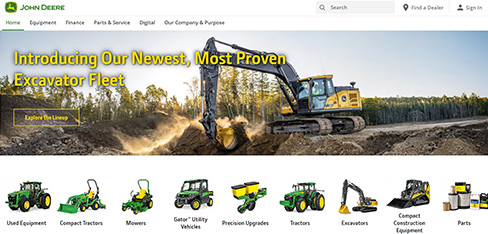
John Deere AI models could predict field performance but farmers could not translate data science into farming actions. UX Stalwarts designed interface that made AI insights practical and profitable. Increasing yields 34 percent and profitability $47 per acre proved that agricultural AI is only valuable if farmers can actually use it. The 73 percent adoption rate showed we made precision farming accessible to mainstream farmers, not just tech-savvy early adopters. This platform transformed how modern agriculture operates.
Building an AI-powered product? Here is what product leaders and engineering teams typically need to know before starting.
AI interface design is the practice of creating user interfaces specifically for products powered by artificial intelligence, machine learning, or large language models. It differs from standard UI design because AI systems produce probabilistic outputs rather than deterministic ones. Users need to understand confidence levels, interpret recommendations, provide feedback to improve the model, and recognize when the system might be wrong. Standard UI patterns built for static data displays and fixed workflows do not address these needs. AI interface design introduces transparency layers, explainability patterns, and human-in-the-loop controls that traditional design methodologies do not cover. Strong ai user interface design services close that gap.
Look for agencies that demonstrate direct experience designing interfaces for AI-powered products, not agencies that simply use AI tools in their design process. Ask whether their designers understand model behavior, confidence scoring, and error recovery patterns specific to AI. Request case studies that show how they handled explainability, trust calibration, or probabilistic output display. Verify that they conduct usability testing focused on trust accuracy rather than just task completion. A strong ai interface design agency will also show familiarity with your specific industry’s regulatory requirements and data sensitivity concerns. A specialized ai interface design company shows these qualities, and leading ai interface design companies india meet these benchmarks.
Costs depend on the complexity of the AI system, the number of user-facing features, and whether the product requires regulatory compliance documentation. A focused project designing the interface for a single AI feature within an existing product might range from $8,000 to $20,000. Comprehensive AI product interface design covering multiple model interactions, dashboard views, and user roles typically ranges from $30,000 to $100,000 or more for enterprise-scale deployments. The primary cost driver is the number of distinct AI interaction patterns that need to be designed and validated, not the number of screens. Top ai interface design firms india follow similar timelines.
A typical engagement covering model audit, user research, transparency framework, prototyping, trust testing, and engineering handoff takes eight to fourteen weeks. Smaller projects focused on a single AI feature integration can be completed in five to seven weeks. Enterprise platforms with multiple AI capabilities, role-based access, and compliance requirements often extend to sixteen or twenty weeks. The model audit and trust calibration phases are unique to AI projects and cannot be rushed. Skipping either phase consistently produces interfaces that users either distrust or over-rely on, both of which create business risk. Experienced ai interface design agencies plan timelines this way.
Yes. LLM interface design is one of our core capabilities. We design prompt input experiences, streaming response displays, citation and source attribution patterns, conversation memory indicators, and output editing interfaces. LLM products present specific challenges including unpredictable response length, variable output quality, and the need for clear capability boundary communication. We address each of these through tested interaction patterns that help users understand what the model can do, set appropriate expectations, and provide structured feedback when outputs need correction. For deeper insight into how conversational flows are structured for AI-powered products, explore our conversational UI design services. Our ai interface design solutions cover this fully.
Three specific practices define our approach. First, every project begins with a model audit where our designers study the AI system’s actual behavior, outputs, and failure modes before designing any interface element. Most ai interface design companies skip this step and apply generic patterns. Second, our usability testing measures trust calibration, ensuring users neither blindly follow AI recommendations nor dismiss valuable outputs. Third, we deliver compliance-ready transparency documentation for regulated industries, embedding consent flows and audit trails directly into the interface architecture rather than treating them as afterthoughts. A serious artificial intelligence user interface design company operates this way, which is what defines the best ai interface design agency india.
Explainability is not a single feature but a layered system. We design progressive disclosure patterns where users can access increasing levels of detail about how the AI reached its output. The first layer is a summary indicator showing the confidence level or key factors. The second layer provides a readable explanation of the reasoning path. The third layer, where needed, offers access to source data or model parameters for expert users. Each layer is designed for a specific audience and decision context, ensuring that explanations are useful rather than overwhelming.
Yes. AI dashboard design is a significant part of our work. We design monitoring interfaces for model performance, prediction accuracy tracking, anomaly detection displays, and business intelligence dashboards powered by machine learning. The key challenge with AI dashboards is presenting probabilistic data in ways that support accurate decision-making rather than creating false certainty. We use calibrated visual encodings, uncertainty ranges, and contextual benchmarks so that dashboard users interpret AI-generated insights correctly and take appropriate action. Our ai interface design solutions support this rigorously.
We serve healthcare and clinical decision support, financial services, insurance, e-commerce, supply chain and logistics, cybersecurity, legal technology, education, and enterprise SaaS. Each industry introduces unique requirements. Healthcare AI products must comply with patient safety regulations and communicate diagnostic uncertainty carefully. Financial AI platforms need audit-ready decision trails and risk visualization. Legal AI tools require source citation transparency. Our cross-industry experience means we bring proven patterns from adjacent sectors while respecting the specific compliance and user expertise requirements of your domain. A focused ai interface design company adapts to each sector, and leading ai interface design companies india serve diverse verticals.
We design for the user’s expertise level, not the system’s complexity. During the user context phase, we map the AI literacy and domain knowledge of each user role. Interfaces are then layered so that non-technical users see clear outcomes, plain-language explanations, and simple controls, while power users can access detailed model parameters and advanced configuration. Jargon is replaced with contextual language that matches the user’s vocabulary. We also follow WCAG accessibility standards and test with assistive technologies to ensure AI features are usable by people with disabilities. Inclusive ai user interface design services protect every user.
Yes. Many of our engagements begin with auditing an existing AI product that users are not adopting or not trusting. We analyze usage logs, identify where users abandon AI-assisted workflows, and evaluate whether the current interface communicates model behavior effectively. Common problems include hidden confidence information, missing error recovery paths, unclear capability boundaries, and overwhelming information density. Our redesign process addresses these issues systematically, typically producing measurable adoption improvements within the first month after relaunch. For a broader view of how we approach product redesigns across digital platforms, see our product design services. Most ai interface design agencies overlook this step.
AI systems will produce incorrect or uncertain outputs. The interface must handle these situations gracefully rather than hiding them. We design error states that communicate what went wrong in user-friendly language, offer alternative actions, and provide a clear path to human assistance when needed. For uncertain outputs, we use visual confidence indicators, qualifying language, and structured comparison views that help users evaluate the output against their own knowledge. The goal is to maintain user trust even when the system underperforms, because transparent error handling builds more long-term confidence than false perfection. Engage the best ai interface design agency india for this.
Standard deliverables include an AI capability map documenting model behavior and constraints, user personas with AI-specific interaction profiles, a transparency framework defining explainability patterns and confidence displays, high-fidelity interactive prototypes covering all core AI interactions, usability test findings with trust calibration analysis, engineering handoff documentation with component specifications and API response mapping, and accessibility compliance notes. Enterprise engagements may also include design system components for common AI interaction patterns, compliance documentation, and post-launch monitoring frameworks. Expect this from any artificial intelligence user interface design company.
Yes. AI products evolve continuously as models are retrained and new capabilities are added. We provide structured post-launch support that includes monitoring user trust metrics, analyzing adoption patterns for AI features, and recommending interface refinements based on real usage data. Quarterly optimization reports identify underperforming interaction patterns, suggest new explainability approaches for updated model behaviors, and provide design specifications for new AI capabilities. This ongoing partnership ensures your interface keeps pace with your AI system’s evolution rather than falling behind. To understand how structured testing validates post-launch interface changes, explore our A/B testing services. A committed ai interface design firm sustains this partnership.
AI generated ui design refers to using AI tools like Figma Make, Uizard, or Motiff to automatically produce interface layouts from text prompts. That is a design production tool. What we offer is fundamentally different: we design the user interfaces for AI-powered products. Our work focuses on how humans interact with, understand, correct, and trust AI systems. This requires specialized knowledge of model behavior, probabilistic output communication, trust calibration, and human-in-the-loop design patterns that no AI generation tool can provide. Both practices are valuable, but they solve entirely different problems. Top ai interface design firms india understand this distinction.

C – 81C, Sector – 8, Noida 201301, India


1025 Beamon Drive, Franklin 37064 Tennessee, USA
Sveavagen 34 111 34 Stockholm, Sweden
A-10, Sahastradhara Rd, Doon IT Park, Dehradun, Uttarakhand

© 2026 UX STALWARTS. All rights reserved.