Virtual reality products fail at an alarming rate when their interfaces ignore how humans actually perceive and interact within three-dimensional space. Flat-screen UI patterns forced into headsets cause disorientation, eye strain, and task abandonment. Organizations that invest heavily in VR development but treat interface design as secondary lose users within the first session. Poor spatial layouts, illegible typography at VR scale, and awkward interaction zones translate directly into low retention, wasted development budgets, and missed market opportunities.
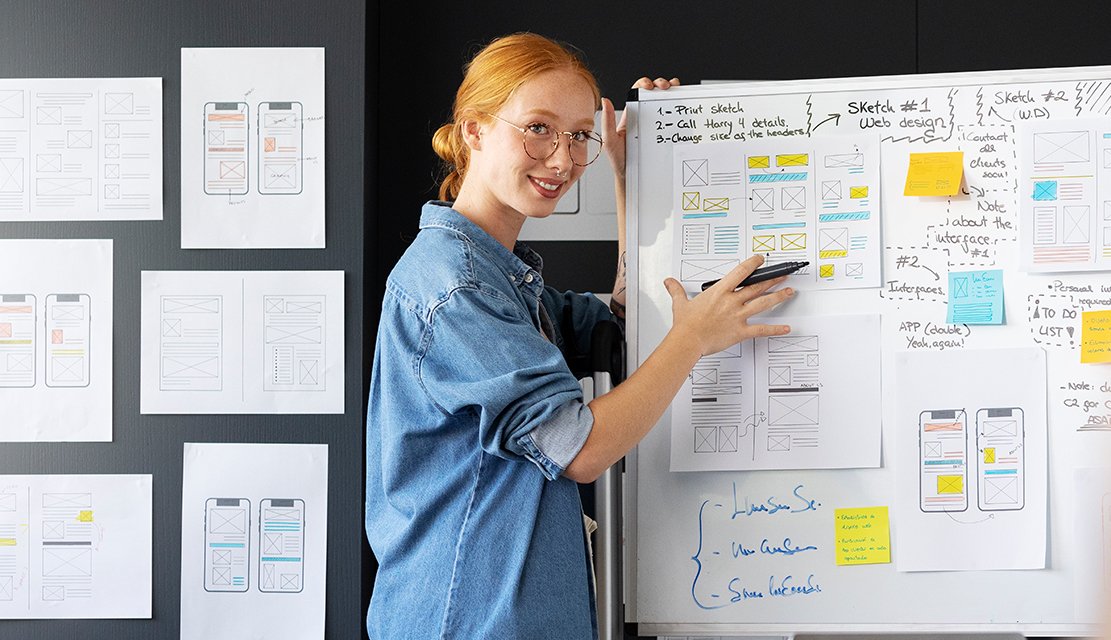
Our approach to virtual reality interface design starts with spatial ergonomics and human perception research before a single wireframe is drawn. We map comfort zones, define gaze-driven interaction hierarchies, and prototype UI elements at real-world VR scale using tools like Unity, Figma, and ShapesXR. Deliverables range from spatial interaction maps and 3D wireframes to fully tested high-fidelity VR UI prototypes validated on target headsets. Every interface is built to reduce simulator sickness, support intuitive navigation, and accelerate task completion across training, enterprise, healthcare, and consumer applications.
With eighteen years of designing digital products for complex, regulated, and high-stakes industries, UX Stalwarts brings a depth of user research rigor and cross-platform design maturity that most VR-focused studios lack. Our team understands that VR interface design is not about spectacle. It is about making three-dimensional digital environments genuinely usable. That distinction is what separates products users adopt from products users abandon after the novelty fades.

Every VR interface we design begins with the user’s physical reality: field of view, head movement range, and hand reach. We define ergonomic interaction zones before choosing visual styles. This approach prevents common failures like UI elements placed outside comfortable viewing angles or controls that cause arm fatigue during extended sessions.

We do not guess how users will behave inside a headset. Our team conducts in-headset usability studies, gaze-tracking analysis, and task-flow observation during early prototyping stages. These findings directly shape layout hierarchy, element sizing, and interaction sequencing. The result is an interface grounded in observed behavior, not design assumptions.

VR interface challenges vary significantly between healthcare training, industrial simulation, retail visualization, and consumer gaming. Our portfolio spans regulated medical environments, logistics operations, and real estate walkthroughs. This breadth allows us to apply proven patterns from one sector to solve emerging problems in another without starting from zero.

Visual fidelity means nothing if the interface causes frame drops or input lag inside a headset. We optimize every UI component for rendering performance on target hardware, whether Meta Quest, Apple Vision Pro, or custom enterprise rigs. Clients receive interfaces that maintain smooth frame rates while preserving visual clarity and interaction responsiveness.

Simulator sickness is not a minor inconvenience. It is a product-killing issue. We apply strict comfort thresholds across every project: minimum viewing distances, controlled motion cues, and adaptive UI placement relative to user position. Our quality benchmarks ensure prolonged use without disorientation, which directly impacts training completion rates and session duration.

Clients receive access to in-progress VR prototypes, recorded usability sessions, and detailed rationale documents at each design milestone. We do not deliver finished screens behind closed doors. Stakeholders test and validate in-headset at every phase, ensuring alignment between business objectives and spatial design decisions without late-stage surprises.
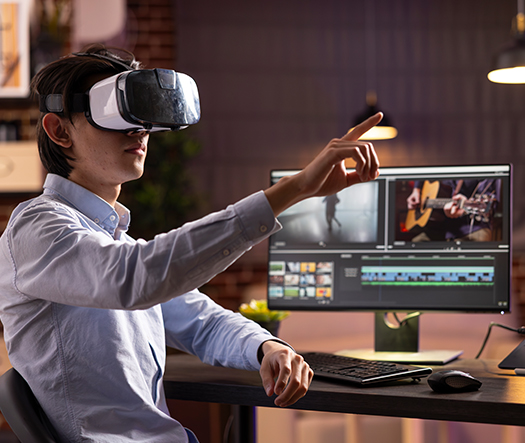
A well-designed virtual reality user interface does more than display information in three-dimensional space. It removes friction between the user and their goal. When spatial hierarchy is clear, interactive elements respond predictably, and visual cues guide attention without overwhelming the senses, users complete tasks faster and return more often. This translates into measurable outcomes: higher training completion, stronger product engagement, and reduced support costs. The difference between a VR product that feels clunky and one that feels invisible lies in how deliberately its interface was crafted. Our team brings structured research methods, ergonomic rigor, and iterative in-headset testing to ensure every element earns its place in the user’s field of view.
Partner with a VR design company that builds for real users.
Our methodology is built to reduce spatial design risk, validate assumptions inside actual headsets, and deliver VR interfaces ready for development handoff.

We begin by mapping your product goals, target hardware, user demographics, and use-case scenarios. This phase identifies the core tasks users must accomplish, the environments they will operate in, and the physical constraints of your deployment context. The output is a detailed spatial design brief that guides every subsequent decision.

With the brief established, we define how users will move through your VR experience: gaze paths, hand-interaction zones, menu hierarchies, and transition logic between scenes. We document input modalities (controllers, hand tracking, gaze selection) and assign each UI component an interaction model. This phase delivers a complete spatial interaction architecture.

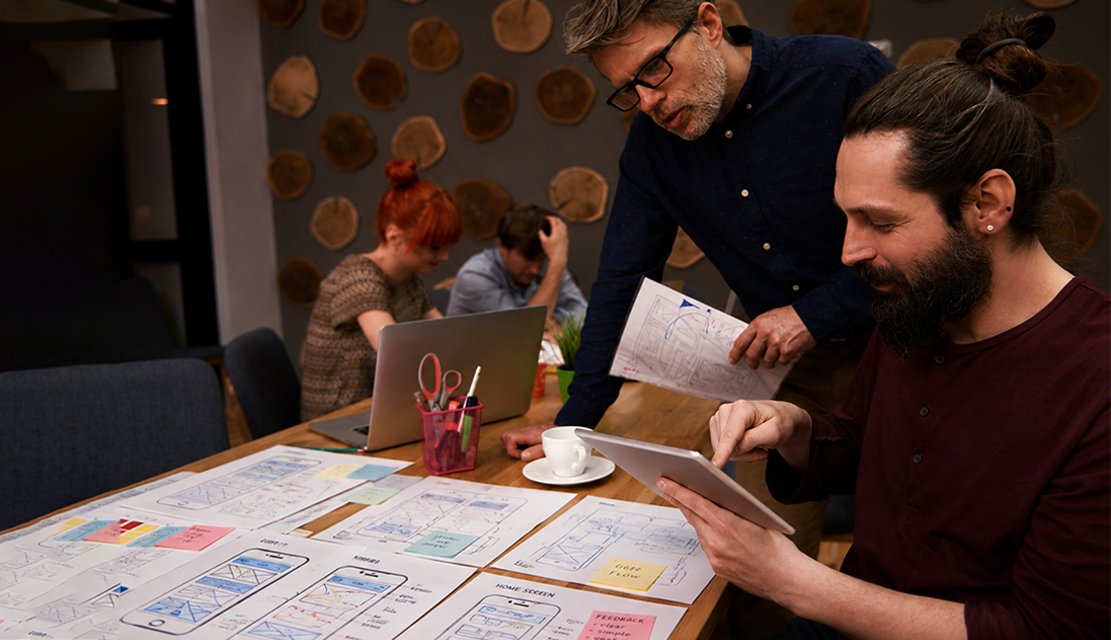
We translate the interaction architecture into three-dimensional wireframes positioned at ergonomically validated distances and angles. Element sizing, typography scale, and depth layering are tested against target headset resolution and field-of-view specifications. Stakeholders review wireframes in-headset to confirm layout comfort and navigational logic before visual design begins.

High-fidelity UI components are designed with attention to contrast ratios at VR viewing distances, lighting consistency across virtual environments, and icon legibility at spatial scale. Color palettes account for headset display characteristics and prolonged-use eye comfort. This phase produces a complete VR design system with reusable, development-ready components.

Functional prototypes are built and tested on target hardware with representative users. We capture gaze heatmaps, task completion rates, error frequency, and subjective comfort scores. Identified friction points are prioritized and resolved through targeted design revisions. The output is a validated, user-tested prototype with documented performance metrics.

Final assets, interaction specifications, animation parameters, and spatial placement coordinates are packaged for your development team. We provide Unity or Unreal-compatible files, a component library, and a behavioral specification document. Post-handoff support includes implementation review sessions to ensure design intent is preserved during development.
Across 1,000+ engagements spanning healthcare, enterprise training, retail, and industrial simulation, our VR interface design projects have consistently delivered measurable improvements in usability and adoption. Explore the outcomes below.
Our VR ui design practice is grounded in three commitments: scalability across hardware platforms, accessibility for diverse user populations, and measurable performance against defined business KPIs. Whether your organization is an early-stage startup prototyping its first spatial product or a large enterprise deploying VR training at scale, the design rigor remains consistent. We calibrate complexity and fidelity to match your stage, budget, and deployment timeline.
Industry-specific constraints shape every VR interface differently. Healthcare VR demands strict compliance and zero tolerance for disorientation. Industrial training requires rapid task orientation and fail-safe navigation. Retail and real estate applications prioritize visual immersion and product clarity. Education platforms need intuitive onboarding for users unfamiliar with headsets. Our portfolio covers all of these sectors, and that accumulated knowledge accelerates every new engagement.

Most agencies offering ui design for VR apply flat-screen conventions to three-dimensional space and call it done. Our practice was built from the ground up around spatial cognition, physical ergonomics, and in-headset validation. That difference shows in measurable user outcomes: faster task completion, longer session durations, and higher return-use rates across every project we deliver.
In-Headset Validation at Every Stage: Every design decision is tested on actual hardware with real users before sign-off, not reviewed on flat monitors.
Comfort Metrics as Core Deliverables: We measure and report simulator sickness indicators alongside usability scores, treating user comfort as a quantifiable design requirement.
Hardware-Agnostic Design Systems: Our VR component libraries adapt across Meta Quest, Apple Vision Pro, and custom enterprise headsets without redesign.
We select tools based on project requirements, target hardware, and team workflow compatibility. Our toolkit spans spatial prototyping, 3D design, usability testing, and development handoff to cover every stage of VR interface creation.









Electronic Arts had the most realistic sports simulations in gaming but they were designed for entertainment, not training. Professional teams wanted to use our technology for athlete development but our interfaces were built for controllers, not actual athletic practice. UX Stalwarts designed VR training platform that transformed our games into legitimate performance tools. Improving athlete performance 34 percent and getting adopted by 18 NFL teams proved VR training is not science fiction — it is competitive advantage. The $67 million in B2B revenue showed we can monetize our technology beyond consumer gaming.
Intuit’s TurboTax made tax filing accessible but complex tax situations overwhelmed users in traditional 2D interfaces. People were missing deductions because they could not visualize relationships between income, expenses, and tax strategies. UX Stalwarts designed VR tax workspace that made financial data spatial and interactive. Reducing errors 68 percent and increasing average refunds $1,247 proved VR is not just for gaming — it is for understanding complexity. The 2.1x engagement increase showed we transformed painful compliance into financial empowerment. This VR innovation is our competitive moat.
Marriott’s group business depended on site visits but event planners could not physically tour every venue option, especially destination properties. We were losing bookings to venues planners actually visited while our superior properties went unseen. UX Stalwarts designed VR walkthroughs that finally let planners experience our spaces virtually. Growing conversion 89 percent and reducing sales cycle from 47 to 18 days transformed our group sales process. The 43 percent of bookings from new geographic markets proved VR breaks down physical barriers. This is how hospitality competes in digital commerce.
Considering a VR design agency for your next spatial product? Here is what decision-makers typically ask.
Start by examining their portfolio for projects on your target hardware and within your industry. Ask whether they conduct usability testing inside actual headsets or only review designs on flat screens. A credible vr interface design company will show you documented usability metrics from past projects, not just visual mockups. Check if they have experience with your specific input modalities, whether that is controller-based, hand-tracked, or gaze-driven interaction. Finally, ask about their design handoff process. You need a partner whose deliverables integrate cleanly with your development workflow. Choosing a virtual reality interface design agency with these credentials de-risks your project, and any reputable vr interface design agency will welcome these questions early in the conversation.
Pricing depends on project scope, target hardware complexity, number of unique screens or environments, and the depth of usability testing required. A focused VR UI design engagement for a single application with defined screens might range from $15,000 to $50,000. Enterprise-scale projects with multiple user roles, cross-headset compatibility, and extended testing cycles can exceed $100,000. The most reliable way to get accurate pricing is to share a project brief with a vr design agency and request a scoped proposal. Avoid providers who quote flat rates without understanding your requirements first. Mature vr interface design services and transparent vr ui design services partners will always anchor pricing to scope and deliverables, not opaque retainer minimums.
A straightforward project with a clear scope and defined hardware target typically takes eight to fourteen weeks from discovery through tested prototype handoff. More complex engagements involving multiple headset targets, custom interaction models, or regulatory requirements can extend to five or six months. Timeline is also affected by stakeholder review cadence and development team readiness. We structure our process around defined milestones so you have visibility into progress at every stage. Most credible vr interface design companies share full milestone schedules and review gates with stakeholders before kickoff.
Traditional UI design operates on flat, two-dimensional screens with fixed dimensions. Virtual reality interface design operates in three-dimensional space where the user’s head position, gaze direction, and physical reach all influence how elements are perceived and accessed. Typography must be sized for headset resolution at specific viewing distances. Interactive elements need to account for depth, parallax, and stereoscopic rendering. Comfort constraints like minimum focal distance and motion sensitivity have no equivalent in flat-screen work. That is why specialised ui design for vr requires a different mental model, and any credible vr interface design solution must respect three-dimensional constraints from day one.
We design for specific target hardware while building component systems that adapt across platforms. Meta Quest, Apple Vision Pro, HTC Vive, PlayStation VR, and custom enterprise headsets each have different field-of-view specifications, input capabilities, and rendering constraints. We optimize primary designs for your priority headset and document the adaptations needed for secondary platforms. This approach ensures performance and comfort on your primary device without locking you into a single ecosystem. Working with a vr interface design company india clients trust, or evaluating vr interface design firms india teams locally, the hardware-first principle remains the same.
Three things set our process apart. First, every design decision is validated inside an actual headset with representative users before it moves to development. Second, we treat comfort and simulator sickness prevention as quantifiable deliverables with defined thresholds, not afterthoughts. Third, our spatial wireframing phase positions every UI element at ergonomically validated distances and angles before any visual styling begins. Most agencies skip one or more of these steps and compensate with visual polish that does not solve the underlying spatial usability problems. The result is vr interface design solutions that hold up in real-world use, which is the standard decision-makers expect from a senior virtual reality interface design agency.
Begin by sharing your project goals, target audience, and hardware requirements. If you have existing prototypes, development documentation, or competitive references, include those as well. We schedule a discovery call to clarify scope, identify constraints, and define success metrics. From there, we produce a project proposal with phased deliverables, timeline, and investment breakdown. There is no cost for the initial consultation. Most engagements begin with a single, structured conversation between your product owner and our lead vr design company contact.
Yes. Redesign engagements begin with an in-headset audit of your current interface, including usability testing with representative users. We identify specific friction points: elements placed outside comfortable interaction zones, illegible text at VR scale, confusing navigation hierarchies, or interaction models that conflict with user expectations. The audit produces a prioritized list of improvements with estimated impact. We then execute the redesign in phases, validating each change through in-headset testing before moving to the next. Many clients arrive after disappointing engagements with other vr interface design firms india teams or generalist providers, and a focused vr interface design agency redesign typically restores both comfort and confidence.
Healthcare, industrial training, real estate, education, retail, and defense are the sectors where professional VR UI design delivers the clearest returns. Healthcare VR requires strict usability for clinical simulations. Industrial training demands rapid orientation and error-proof navigation. Real estate and retail benefit from immersive product visualization that drives purchase confidence. Education needs intuitive onboarding for users who may never have worn a headset before. In every case, the quality of the interface directly determines whether the VR investment achieves its intended outcome. For each of these sectors, our vr ui design services adapt to the regulatory, behavioural, and hardware nuances unique to that industry.
Yes. Post-handoff support includes implementation review sessions where we evaluate the developed product against our design specifications and flag any deviations. We also offer ongoing retainer engagements for iterative improvement based on live user data, new feature additions, and hardware updates. If your product expands to a new headset platform, we handle the interface adaptation. Support scope and duration are defined during the proposal phase. Few vr interface design companies offer this level of structured continuity after handoff.
Standard deliverables include spatial interaction maps, 3D wireframes, high-fidelity VR UI designs, a reusable component library, annotated interaction specifications, and a validated in-headset prototype. Development handoff packages are formatted for Unity or Unreal Engine workflows and include asset files, spatial placement coordinates, animation parameters, and behavioral documentation. Usability test reports with recorded sessions and metric summaries are also included. You also receive a roadmap document that keeps future vr interface design solution decisions aligned with original goals, plus a vr interface design company india client reference deck on request.
Accessibility in VR is about more than visual contrast. We design for users who may be seated, have limited mobility, or experience heightened sensitivity to motion. UI elements are positioned relative to the user’s actual eye level and reach range rather than at fixed world coordinates. We implement repositioning controls so users can adjust interface placement. Text meets legibility thresholds at VR scale. Audio and haptic feedback supplement visual cues for users with reduced vision. Every project includes an the objective is a virtual reality user interface that adapts to the person inside the headset, not the other way around. accessibility review as part of our standard quality process.
Yes. Spatial design principles overlap significantly between VR and AR/MR environments. If your product roadmap includes both virtual and mixed reality experiences, we build design systems with shared components that adapt to each modality. The core differences lie in how digital elements interact with the physical environment in AR versus fully immersive VR scenes. We account for these distinctions during the interaction mapping phase so your design system supports both without duplication of effort.
Motion in VR interfaces serves a functional purpose beyond aesthetics. Transitions between screens, feedback animations on button activation, and guided attention cues all help users maintain spatial orientation and understand system state. Poorly executed motion causes discomfort and confusion. We define animation timing, easing curves, and motion boundaries with strict comfort thresholds. Every animation is tested in-headset to confirm it enhances usability rather than triggering disorientation or nausea.
Our handoff process is structured specifically for VR development workflows. Designs are built with real-world spatial units (meters), not arbitrary pixel dimensions. Component libraries include prefab-ready assets with documented interaction behaviors. Placement specifications use coordinate systems compatible with Unity and Unreal Engine scene graphs. We conduct a pre-handoff review with your development team to confirm all specifications are clear and all edge cases are documented. This reduces back-and-forth during implementation and prevents costly design reinterpretation.

C – 81C, Sector – 8, Noida 201301, India


1025 Beamon Drive, Franklin 37064 Tennessee, USA
Sveavagen 34 111 34 Stockholm, Sweden
A-10, Sahastradhara Rd, Doon IT Park, Dehradun, Uttarakhand

© 2026 UX STALWARTS. All rights reserved.