Most digital products fail not because of missing features, but because of poorly considered interactions. When buttons confuse, navigation stalls, or feedback loops break, users abandon tasks, support costs rise, and conversion funnels collapse. A product with weak user interaction design creates friction at every touchpoint. That friction translates directly into lost revenue, lower retention, and growing dissatisfaction among the people your product is supposed to serve.
Our interaction design services focus on structuring how users engage with every screen, control, and transition in your product. From mapping task flows and defining input behaviors to prototyping microinteractions and validating feedback mechanisms, the work produces interfaces where every action feels deliberate and clear. The result is a ui interaction design system built around real behavior patterns, reducing cognitive load while guiding users toward completion with confidence.
With eighteen years of cross-industry delivery, UX Stalwarts brings depth that specialist studios and generalist agencies rarely combine. Our team has designed interaction models for regulated healthcare platforms, high-traffic consumer apps, and enterprise SaaS dashboards. That range sharpens our ability to solve complex usability problems without defaulting to templated patterns or surface-level fixes.

Every engagement starts with observing how real users navigate, hesitate, and recover within existing products. We map behavioral friction before designing solutions. This grounds every decision in evidence rather than assumption, producing user centered interaction design that reflects actual usage conditions.

We define interaction hierarchies that match how decision-makers and end-users process information differently. Primary actions are visually weighted, secondary paths remain accessible but non-competing, and destructive actions carry appropriate safeguards. This clarity reduces user error rates and accelerates task completion across complex workflows.

Designing for fintech compliance requirements sharpens how we approach healthcare consent flows. Building enterprise dashboards informs our approach to consumer onboarding. This cross-pollination means every client benefits from patterns validated across industries, not just borrowed from a single vertical.

Interactions are designed at the component level, specifying states, transitions, error handling, and edge cases for every element. Developers receive documentation that eliminates guesswork during implementation. This precision reduces QA cycles and ensures the final product matches design intent without interpretation gaps.

Before any visual polish, interactive prototypes are tested with representative users. We validate navigation logic, input sequences, and feedback timing through structured usability sessions. This catches costly interaction failures early, saving development resources and preventing post-launch redesigns that disrupt your roadmap.

Interactions are designed as extensible systems, not isolated screens. We build pattern libraries and interaction guidelines that scale as products grow, new features ship, and teams expand. This prevents the fragmentation that commonly occurs when interaction design firms deliver project work without continuity planning.

The value of strong user interface and interaction design goes far beyond visual appeal. When interactions are consistent, predictable, and responsive, users develop confidence in your product. That confidence lowers support requests, shortens onboarding timelines, and increases feature adoption without requiring tutorials or walkthroughs. It also builds the kind of product trust that drives organic referrals and long-term retention. Our interaction designers bring a combination of cognitive psychology awareness, technical prototyping ability, and business context understanding that allows them to design systems where usability and commercial outcomes reinforce each other naturally.
Partner with a proven interactive web design agency for results.
Each phase builds on the previous one, reducing risk incrementally while keeping your stakeholders aligned at every milestone.

We analyze your existing product or competitor landscape to identify where users struggle, abandon tasks, or require workarounds. Heatmaps, session recordings, and stakeholder interviews feed this analysis. The output is a prioritized friction report that anchors all subsequent design decisions in observed behavior.

Task flows, user journeys, and state diagrams are created for every primary workflow your product supports. We define entry points, decision branches, error states, and success confirmations. This phase produces a complete interaction architecture that both designers and developers can reference throughout the build.

Reusable interaction patterns are established for navigation, data input, feedback, and content consumption. Each pattern includes specifications for timing, animation behavior, keyboard accessibility, and responsive adaptation. These patterns form the foundation of a scalable interaction system that remains consistent as your product evolves.

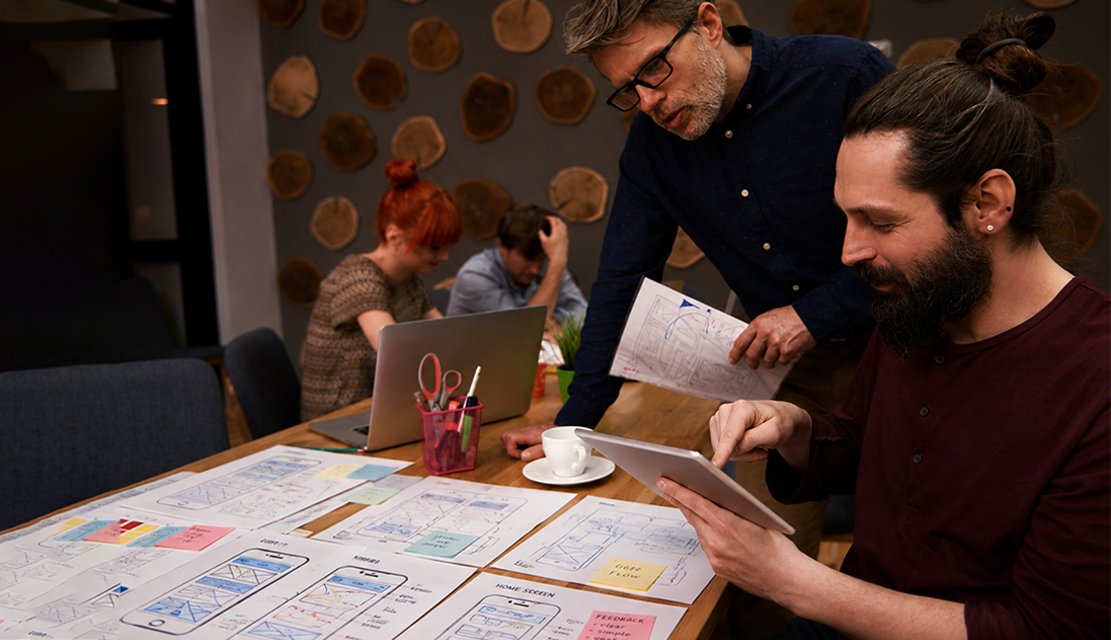
High-fidelity interactive prototypes are built to simulate real product behavior. Users can click, scroll, type, and navigate through functional screens that mirror production logic. These prototypes serve dual purposes: validating interaction decisions with real users and providing developers with unambiguous reference for implementation.

Structured usability tests are conducted with participants who match your target audience profiles. We measure task success rates, time-on-task, error frequency, and satisfaction scores. Findings are documented with specific interaction-level recommendations, not general observations. This data directly informs refinements before any code is written.

Final interaction specifications, annotated prototypes, and pattern documentation are delivered in formats your development team prefers. We also establish governance guidelines for maintaining interaction consistency as new features are added. This prevents the gradual degradation that occurs when products scale without design oversight.
Across 1,000+ client engagements and multiple industries, explore how considered interaction decisions produced measurable improvements in usability and retention.
Strong interaction design companies recognize that a healthcare consent workflow demands fundamentally different interaction logic than an e-commerce checkout sequence. Our approach treats every industry engagement as a distinct design problem, informed by regulatory requirements, user literacy levels, and domain-specific task complexity. Whether you are a seed-stage startup validating your first product or an enterprise modernizing legacy software, interaction models are calibrated accordingly.
Our portfolio spans fintech, healthcare, education technology, logistics, SaaS platforms, retail, media, and government services. This breadth means we have encountered and resolved interaction challenges across high-compliance, high-volume, and high-complexity environments. Each sector informs the next, giving our interactive web agency teams a library of validated patterns that accelerate delivery without sacrificing contextual relevance.

Interaction design demands more than wireframing tools and prototyping speed. It requires a disciplined understanding of cognitive load, motor behavior, and information processing under real-world conditions. Our practice has earned recognition from clients who value measurable usability improvements over aesthetic deliverables that look impressive but perform poorly.
Friction Quantification Before Design : Every project begins with numerical friction benchmarks, giving you a measurable baseline to evaluate interaction improvements against.
Developer-Ready Interaction Specifications : Interaction documentation includes timing values, state logic, and edge case handling that developers can implement directly.
Post-Launch Interaction Monitoring : After delivery, we track interaction performance through analytics integration, identifying regression points before they become user complaints.
We select tools based on project requirements, team compatibility, and output quality. Our interaction designers work across industry-standard platforms for prototyping, testing, and documentation.









Cisco’s Webex had the enterprise features but video meetings were exhausting people. Gallery view, constant eye contact, and control management were creating meeting fatigue that threatened remote work sustainability. UX Stalwarts designed humanized interaction that made video feel more like in-person meetings. Reducing fatigue 67 percent and improving meeting effectiveness from 6.2 to 8.4 out of 10 proved interaction design can solve wellbeing problems, not just functional problems. The 89 percent improvement in screen sharing engagement showed that maintaining human presence was critical. This interaction innovation defended our enterprise collaboration leadership.
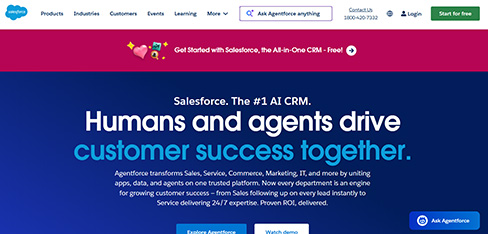
Salesforce was powerful but sales reps hated using it because they spent more time on data entry than selling. The more features we added, the more complex and time-consuming CRM became. UX Stalwarts designed context-aware interactions that automated administrative work and surfaced insights when reps needed them. Increasing selling time from 36 to 58 percent of rep workday transformed CRM from burden to productivity multiplier. The 78 percent reduction in data entry time eliminated the friction preventing adoption. This interaction innovation is how Salesforce defends CRM leadership — not features, but making hard work easy.
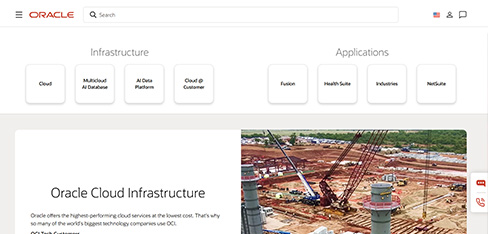
Oracle databases held the world’s most valuable business data but accessing it required SQL expertise that business users did not have. We were forcing people to learn database programming to answer business questions. UX Stalwarts designed natural language interaction that finally made enterprise databases accessible to everyone. Reducing query time 73 percent and expanding users 340 percent unlocked data’s value. The 87 percent query success rate proved natural language can match SQL precision. This interaction innovation is how Oracle defends database leadership against cloud-native competitors with simpler interfaces.
Answers to the questions product leaders ask before choosing an interaction design partner.
An interaction design agency focuses on how users engage with a digital product at the behavioral level. This includes designing navigation sequences, input mechanisms, feedback responses, transition animations, and error recovery paths. Unlike visual design, which addresses appearance, interaction design governs the logic of how a product responds to every tap, click, scroll, or keyboard action. The goal is to make every user task feel intuitive, fast, and predictable. A good interaction design firm delivers prototypes, state diagrams, and component-level specifications that development teams can build from without ambiguity.
UI design covers the visual layer of a product, including colors, typography, iconography, and layout composition. Interaction design sits beneath that layer, defining what happens when someone engages with those visual elements. It determines how a dropdown behaves, what feedback a button provides after being pressed, how form validation communicates errors, and when transitions occur between screens. In practice, ui interaction design and visual UI design work together. However, strong interaction logic can save a mediocre visual design, while excellent visuals cannot compensate for broken interaction patterns.
Start by reviewing their case studies for evidence of structured process, not just polished screenshots. Ask how they handle edge cases, accessibility, and responsive behavior across devices. Request references from clients with similar product complexity. Evaluate whether they deliver developer-ready specifications or only visual mockups. Good interaction design companies also demonstrate how they validate their work through usability testing and quantitative feedback loops. Avoid firms that focus conversations on aesthetics while skipping questions about task flows, error states, and user research methodology.
Any industry where digital products handle complex user tasks benefits significantly. Fintech platforms require precise interaction flows for transactions and compliance. Healthcare applications need careful consent and data entry sequences. SaaS products depend on strong onboarding and feature discovery interactions. E-commerce sites require optimized checkout and search filtering behaviors. Enterprise software with dense data displays needs interaction patterns that reduce cognitive load. Educational platforms benefit from progress tracking and adaptive content delivery interactions. The common thread is products where users need to complete multi-step tasks reliably.
User centered interaction design is an approach where every interaction decision is informed by research into how real users behave, think, and recover from errors. Rather than designing based on assumptions or trends, this method uses usability testing, behavioral observation, and task analysis to shape how products respond to user inputs. The approach prioritizes learnability, efficiency, and error prevention. It also accounts for accessibility needs and varying levels of digital literacy among target audiences. Products built with this methodology consistently show higher adoption rates and lower support costs.
Cost depends on project scope, product complexity, number of user flows, and depth of research required. A focused interaction audit for a single product module might range from $5,000 to $15,000. A comprehensive engagement covering end-to-end interaction architecture, prototyping, and usability validation for a full platform could range from $25,000 to $100,000 or more. Factors that increase cost include multi-platform design requirements, accessibility compliance needs, and integration with existing design systems. Most reputable providers offer phased engagement options that allow you to control investment incrementally.
Timeline varies based on product complexity and the number of user flows involved. A targeted interaction improvement for 5 to 10 screens typically takes 3 to 5 weeks. A full interaction design engagement for a new product, including research, mapping, prototyping, and validation, generally takes 8 to 14 weeks. Enterprise products with multiple user roles, complex permissions, and high data density may require 16 weeks or more. Projects with existing research and clearly defined requirements move faster. Iterative validation cycles add time upfront but reduce development rework significantly. Working with an established interaction design company helps you anticipate these timelines accurately.
Typical deliverables include user flow diagrams, interaction state maps, annotated wireframes, high-fidelity interactive prototypes, component behavior specifications, and usability test reports. For teams building design systems, interaction pattern libraries and governance documentation are also provided. Developer-facing deliverables include detailed specs for animation timing, input validation rules, keyboard navigation sequences, and responsive breakpoint behaviors. The exact deliverable set is shaped by your product stage and team composition. Early-stage products may need more exploratory prototypes, while mature products benefit from audit reports and interaction optimization recommendations. Together these outputs cover the complete user interface and interaction design specification your team needs.
Both. Many engagements involve integrating interaction patterns into an existing design system. In those cases, we audit current components for interaction consistency, identify gaps, and extend the system with new patterns that follow established conventions. For products without an existing system, we build interaction foundations that can evolve into a full design system over time. Our approach ensures that interaction design integrates cleanly with your current visual language, component library, and development framework rather than creating a parallel system that conflicts with established standards.
Success is measured through quantitative usability metrics including task completion rates, time-on-task benchmarks, error rates per workflow, and user satisfaction scores collected via standardized questionnaires. We also track qualitative feedback from usability session recordings and post-launch behavioral analytics. For products with commercial objectives, interaction improvements are correlated with conversion rate changes, support ticket volume reductions, and feature adoption rates. Baseline measurements are captured before design work begins, allowing clear before-and-after comparisons. This evidence-based approach ensures interaction design investment produces demonstrable returns. Strong user interaction design consistently produces measurable behavioral improvements across key product metrics.
Absolutely. Interaction design is where many accessibility failures originate. Issues like missing keyboard navigation, absent focus indicators, non-descriptive error messages, and inaccessible form controls are all interaction-level problems. Our process integrates WCAG 2.2 guidelines from the pattern definition phase onward. Every interaction is tested for screen reader compatibility, keyboard operability, and sufficient feedback for users with visual, motor, or cognitive impairments. Addressing accessibility at the interaction layer is more effective and less expensive than retrofitting it after visual design and development are complete.
An interactive web design agency typically focuses on building websites with dynamic and engaging visual experiences, including animations, parallax scrolling, and multimedia content. An interaction design firm operates at a deeper level, structuring how users accomplish tasks, process information, and recover from errors within any digital product, whether a website, mobile app, or enterprise platform. While interactive web agency teams often emphasize creative expression, interaction design firms prioritize usability, efficiency, and behavioral logic. Some organizations, including ours, deliver both capabilities within a unified engagement. The term interactive website agency is sometimes used interchangeably, though an interactive website agency usually emphasizes site-specific dynamic features over cross-platform interaction systems.
Mobile and desktop require distinct interaction approaches because input methods, screen space, and usage contexts differ significantly. Touch targets, swipe gestures, and thumb-zone ergonomics govern mobile interactions, while hover states, keyboard shortcuts, and multi-window workflows shape desktop behavior. We design interaction systems that share core logic across platforms while adapting input patterns, information density, and navigation models to suit each context. This adaptive approach, rather than simply scaling layouts down, ensures users have efficient task flows regardless of whether they access your product on a phone or workstation.
We provide complete documentation that your team needs to maintain and extend interaction patterns independently. This includes pattern libraries, component specifications, governance guidelines, and annotation files linked to your prototype tools. For teams that prefer continued partnership, we offer retainer-based support covering interaction audits for new features, quarterly usability reviews, and design system updates as your product scales. Our goal is to leave your team equipped to make sound interaction decisions autonomously while remaining available for complex challenges that benefit from specialized expertise.
We align our delivery format with your development process. Agile teams receive interaction specifications in sprint-ready increments. Prototypes are linked directly in project management tools for easy developer reference. We participate in design-development sync meetings during implementation to resolve interpretation questions in real time. Interaction annotations include technical details like animation easing curves, debounce timing for input fields, and conditional logic for state changes. This level of specificity reduces back-and-forth between design and engineering, shortens QA cycles, and ensures the shipped product reflects intended interaction behavior accurately.

C – 81C, Sector – 8, Noida 201301, India


1025 Beamon Drive, Franklin 37064 Tennessee, USA
Sveavagen 34 111 34 Stockholm, Sweden
A-10, Sahastradhara Rd, Doon IT Park, Dehradun, Uttarakhand

© 2026 UX STALWARTS. All rights reserved.