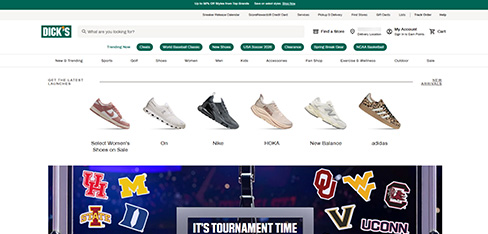
Most digital products carry dozens of small friction points that compound silently across the user journey, draining conversion, retention, and lifetime value without any single visible failure. Internal teams rarely catch them because product familiarity creates cognitive blind spots, and analytics dashboards show where users drop off but never why. Without a structured ux design audit performed by practitioners outside the product bubble, the root causes stay invisible and any remediation roadmap becomes a guessing exercise built on assumptions rather than evidence.
UX Stalwarts deliver ux audit services through a multi-lens methodology that combines heuristic review, behavioral data analysis, WCAG compliance verification, and competitive benchmarking inside one prioritized findings report. Coverage spans every critical touchpoint, from landing pages and onboarding flows to core tasks and post-purchase loops across desktop, mobile, and tablet viewports. Whether the engagement is a content-heavy website evaluation, an e-commerce checkout review, or ui ux audit services for an enterprise SaaS dashboard, every finding ships with severity ranking and execution-ready recommendations.
Eighteen years of cross-sector delivery and more than 1,250 client engagements have produced a proprietary evaluation framework that measures products against sector-specific usability norms rather than generic heuristics. This pattern recognition surfaces issues that surface-level audits miss: interactions that overload users, hierarchies that satisfy SEO yet break task completion, and layouts that pass automated testing but frustrate mobile users. Where many providers hand over a static PDF, a credible website ux audit company delivers a severity-ranked, impact-correlated roadmap that product owners can defend in the boardroom.

Every finding links to a documented source: a heuristic violation, a behavioral analytics pattern, a session replay observation, or a usability testing clip. This evidence discipline removes subjective opinion cycles, giving stakeholders defensible reasons behind each recommendation rather than design tastes to negotiate.

Issues are classified into critical, major, moderate, or minor tiers tied to estimated impact on task completion, conversion, and retention. This ranking gives product owners a clear execution sequence for the first remediation sprint, ensuring engineering effort lands on commercial value rather than cosmetic polish.

Audits run across every device your users actually rely on: desktop browsers, iOS and Android handsets, tablets in both orientations, and assistive technology configurations. Responsive breakpoint failures, touch-target sizing issues, and platform-specific navigation inconsistencies are captured with device-tagged screenshots inside one consolidated report.

Heuristic checklists that treat fintech platforms like recipe sites produce findings teams cannot act on. The framework calibrates expectations against e-commerce conversion benchmarks, healthcare clarity norms, and SaaS onboarding standards, turning generic ui ux audit services into commercially relevant intelligence for your specific market.

WCAG 2.1 AA verification ships with every engagement, never as a premium add-on. Contrast failures, keyboard traps, missing ARIA landmarks, and screen reader incompatibility are logged alongside usability findings, since a parallel ui design audit confirms visual and interaction inconsistencies that compliance scans alone miss.

Deliverables are built for direct engineering consumption: annotated screenshots with precise element identification, severity tags ready for Jira or Linear tickets, and a prioritized roadmap with effort indicators. Leading ux audit firms structure outputs this way so teams move from report to sprint without reinterpretation.

A user experience audit matters because it replaces assumptions with evidence at the exact moment when assumptions are at their most expensive, before redesign budgets are committed. Without diagnostic clarity, product teams spend six-figure budgets fixing problems that do not exist while ignoring friction quietly killing ten or fifteen percent of total conversion. Effective engagements build a commercial case for each intervention, mapped to measurable KPIs and engineering capacity. A disciplined ux design audit ensures every recommendation carries traceable rationale, sized commercial impact, and a sprint-ready handoff path your engineering team can execute confidently.
Partner with specialists who make invisible friction measurable and fixable.
A disciplined, repeatable methodology ensures no friction point is missed and every recommendation rests on documented evidence.

Stakeholder interviews capture business goals, target KPIs, known pain points, and user segments worth evaluating. The analytics stack is reviewed to confirm data availability, and audit scope is documented across platforms, flows, and personas. Upfront alignment prevents scope creep and anchors findings to real decisions.

Quantitative behavioral signals are extracted from analytics platforms, session replay tools, and heatmap software to locate hesitation, abandonment, and rage-click clusters. Qualitative inputs come from support tickets, NPS verbatims, and app-store reviews. Comprehensive usability audit services depend on this dual-source visibility before heuristic work begins.

Senior evaluators walk each in-scope flow against a sector-calibrated heuristic framework covering visibility of status, real-world correspondence, user control, consistency, error prevention, recognition over recall, flexibility, minimalist design, recovery, and help. Every violation is logged with an annotated screenshot tied to the surrounding flow context.

Three to five direct competitors are evaluated against the same heuristic framework, producing a scorecard that shows where your product leads, lags, or sits at parity. A trusted website ux audit agency uses this benchmarking layer to convert findings into market-aware intelligence for your team.

Quantitative analysis, heuristic findings, and competitive insights are consolidated, deduplicated, and classified into critical, major, moderate, and minor severity tiers. An impact-effort matrix plots each issue against estimated conversion lift and engineering complexity, producing a prioritized remediation roadmap rather than an undifferentiated problem list.

A live walkthrough delivers findings to product, design, and engineering stakeholders, mapping each recommendation against existing sprint capacity. The final package includes the annotated report, severity-ranked issue register, competitive scorecards, and recommended implementation sequence so the ux audit services translate cleanly into shipped product improvement.
Across more than 1,000 client engagements spanning fintech, healthcare, commerce, insurance, and SaaS, real diagnostic outcomes speak louder than promises.
Audit benchmarks have to mirror the conventions of the industry the product serves. Evaluating an insurance quoting interface against the same thresholds as a social feed produces misleading findings because cognitive load, regulatory constraints, and user motivation differ fundamentally. Sector-specific scoring rubrics, built from real delivery experience inside each vertical, keep findings calibrated to what best-in-class actually looks like.
Deep audit experience spans fintech and digital banking, healthcare and clinical platforms, insurance and insurtech, ecommerce, real estate, logistics, edtech, and enterprise SaaS. Cross-sector exposure produces transferable insight that single-vertical providers cannot offer. As a ux audit firm india product teams across APAC and EMEA rely on, the practice brings genuine multi-market context to every engagement.

In a market crowded by automated UX scoring tools and AI-generated audit reports, real differentiation comes from interpretive depth that human evaluators bring to ambiguous findings. Sustained referral growth across the leading ux audit firms category is driven by three capabilities generalist agencies and automated alternatives consistently struggle to replicate.
Commercial Impact Quantification: Every critical and major finding ships with an estimated conversion impact range, giving product owners a financial case for prioritization.
Regulatory and Compliance Lens: Regulated-industry audits incorporate GDPR, CCPA, ADA, and EAA requirements alongside standard usability heuristics for fintech and healthcare interfaces.
Redesign-Ready Intelligence: Findings are documented at the granularity of a ui design audit brief, removing discovery work redesign teams typically repeat afterward.
The audit toolkit is selected for diagnostic accuracy and cross-platform coverage. Every tool below has been validated across hundreds of engagements and integrates cleanly into the evidence collection workflow.










We knew our cart abandonment rate was too high and mobile was underperforming, but we did not have a clear picture of why or where to invest our limited UX resources. UX Stalwarts delivered a forensic-level UX audit that identified exactly where we were losing customers and how much each friction point was costing us. Quantifying $18.3 million in recoverable revenue from specific UX fixes turned this from a subjective design conversation into a business-critical investment priority. The Quick Wins alone paid back the audit cost in the first quarter. This audit fundamentally changed how we allocate our digital product roadmap.
CarMax was investing heavily in online vehicle sales, but we had concerning signals that our UX was actually blocking purchases rather than enabling them. UX Stalwarts conducted the most thorough UX audit we had experienced, combining expert evaluation with real customer testing and competitive intelligence. Learning that 42 percent of our abandonment was attributable to specific UX barriers we could fix was both sobering and empowering. The financing flow revelation — 67 percent drop-off at credit application — drove an immediate redesign that is already showing measurable recovery. This audit gave us the evidence and the roadmap to make UX a genuine competitive advantage in online vehicle sales.
Mobile represented 71 percent of our traffic but was converting at less than half the rate of desktop, and we did not understand why. UX Stalwarts delivered a mobile-first UX audit that finally gave us answers. Discovering that 54 percent of our mobile conversion gap was attributable to specific UX barriers (from real-world page speed to size guide accessibility) transformed this from a mystery into a solvable engineering and design problem. The size and fit revelation alone, with 41 percent add-to-cart abandonment, drove immediate action. This audit is the foundation of our mobile commerce transformation.
Common questions from product leaders weighing a structured evaluation engagement.
Several signals point toward a structured evaluation. Conversion rates that flatten despite stable or rising traffic, support tickets piling up around tasks that should be self-service, high cart abandonment in commerce flows, low feature adoption in SaaS products, and consistent negative app-store sentiment all suggest friction your team cannot see from inside the product. If you suspect usability issues but cannot pinpoint location or severity, professional ux audit services performed by external specialists remove the cognitive blind spots that familiarity creates and replace internal assumptions with prioritized, evidence-backed findings your engineers can confidently act on.
Pricing is based on how many user flows and platforms are included, how much competitive benchmarking needs to be done, whether live usability testing is being used in addition to the heuristic evaluation, and the extent of accessibility compliance checking to be included. A specific audit of one conversion funnel on desktop and mobile is less expensive than a full-funnel site-wide evaluation that includes onboarding, primary workflows, and retention loops on multiple devices. To better understand service scope, you can explore their UX design services page. A good audit company for UX will help to offer a breakdown of scope and cost even before the engagement starts, so that you can weigh up investment against the estimated commercial impact of the findings.
A targeted audit covering one user flow or conversion funnel typically completes in five to ten business days. A full product evaluation involving multiple personas, competitive benchmarking, accessibility verification, and behavioral analytics analysis usually runs three to five weeks. Timeline drivers include the number of journeys in scope, analytics and session replay availability at project start, and the number of competitor products in the benchmarking phase. Timelines compress meaningfully when clients prepare analytics access and stakeholder availability ahead of scoping, since most early delays trace back to data access rather than evaluation effort.
A UX audit is an expert-led evaluation where senior practitioners assess your product against known heuristic principles, industry standards, and behavioral data patterns. Usability testing, by contrast, observes representative users completing specific tasks and records exactly where they stall in real time. Both methods produce valuable diagnostic insight, but they answer different questions: an audit identifies what is violating best practice and where data patterns signal friction, while testing reveals how actual users experience those violations directly. The strongest user experience audit engagements combine both methods within a single project for maximum diagnostic coverage.
Standard deliverables include a severity-ranked issue register with annotated screenshots and heuristic violation references, a competitive benchmarking scorecard covering three to five direct competitors, an accessibility compliance report with WCAG 2.1 AA verification, a behavioral analytics summary identifying drop-off hotspots and rage-click patterns, and a prioritized remediation roadmap with an impact-effort matrix. All findings are formatted for direct import into project management tools like Jira or Linear. A live presentation walkthrough provides context for recommendations to your product, design, and engineering stakeholders so handoff translates directly into sprint planning.
The process begins with a thirty-minute scoping call covering your product challenges, analytics infrastructure, known pain points, and priority user flows. That conversation produces a customized scope document detailing audit phases, platforms and flows in scope, timeline, and investment. The initial consultation carries no cost or obligation. Once scope is confirmed, the engagement opens with analytics setup and a stakeholder alignment session. Any website ux audit agency offering fixed-scope quotes before understanding your product context will not produce findings calibrated to your actual commercial priorities, so look for providers who scope before they price.
Yes. E-commerce audits are calibrated to the conversion architecture of online retail: product discovery and search, category navigation, product detail page persuasion, cart management, checkout completion, and post-purchase communication. Evaluation benchmarks these flows against best-in-class commerce conventions drawn from delivery experience across consumer retail, direct-to-consumer brands, marketplace platforms, and B2B procurement portals. Findings are ranked by severity using estimated impact on average order value and checkout completion rate, and the prioritized roadmap helps merchandising, growth, and engineering teams align on which fixes to ship first.
Three post-audit paths are typically available: an implementation-support retainer where audit practitioners walk your internal team through remediation sprints; a full redesign engagement where audit findings become the design brief; or a validation re-audit where, after fixes ship, the impact of changes is verified against the original baseline. This closed-loop approach ensures recommendations do not stagnate as archived documents but translate into measurable product improvement. The route you choose depends on internal capacity, the scale of findings, and how quickly leadership wants commercial outcomes reflected in conversion or retention metrics.
The deepest audit portfolios cover fintech and digital banking, healthcare and clinical systems, insurance and insurtech, ecommerce and direct-to-consumer, real estate and proptech, logistics, education technology, and enterprise SaaS. Within each sector the evaluation framework applies usability norms specific to that domain: checkout friction thresholds for commerce, clinical data entry error-prevention standards for health platforms, and onboarding funnel benchmarks for SaaS products. As a recognized ux audit firm india clients return to for regulated, multi-region rollouts, the practice maintains documentation depth that single-vertical providers rarely match.
Ideally both. A pre-redesign audit establishes a baseline, quantifies existing usability debt, and ensures the redesign brief addresses real user friction rather than assumed problems. A post-redesign validation audit confirms the new experience actually solved the original issues and checks for regression, since rebuilds routinely introduce new friction inadvertently. Skipping the pre-redesign step risks investing significant budget into solving the wrong problems; skipping post-launch validation closes off the feedback loop needed to demonstrate measurable return on investment. Mature usability audit services treat both moments as standard checkpoints in any redesign program.
Accessibility verification is built into every engagement as a standard dimension rather than a separate workstream. Automated scanning identifies programmatic violations like missing alt attributes and insufficient contrast ratios, while manual evaluation handles the interpretive layer tooling cannot: keyboard navigation trap detection, logical reading order verification, focus management adequacy, and ARIA role appropriateness across complex interactive components. This integrated approach means the remediation roadmap addresses accessibility and usability findings in one prioritized sequence rather than creating parallel fix lists competing for the same engineering bandwidth across releases.
Yes. Mobile-specific evaluations cover platform convention adherence for iOS and Android, touch-target sizing, gesture-based navigation, safe-area handling for notched displays, offline-state behavior, and loading skeleton design under varying network conditions. The mobile audit module runs independently or as part of a wider cross-platform engagement covering web, mobile, and tablet viewports together. For products where mobile drives the majority of traffic, isolating the mobile experience audit often delivers the strongest early ROI because friction patterns that suppress conversion on small screens behave very differently from desktop equivalents.
Yes, collaborative engagement models are a core capability. Audit practitioners can embed in your existing sprint ceremonies, sharing findings incrementally as evaluation progresses rather than holding everything back until the final report. This embedded model accelerates remediation because design and engineering teams can begin work on critical findings while the broader audit continues in parallel. It is particularly effective for large enterprise products where waiting for a complete report would delay important fixes by several weeks, and where stakeholder context evolves quickly across releases and shifting leadership priorities.
Automated tools test surface-level metrics such as page speed, contrast ratios, missing alt text, and broken links, generating scores against fixed rules. They cannot interpret context: whether a technically functional interaction pattern is cognitively overloading users, whether a content hierarchy meets SEO yet breaks task completion, or whether a compliant color palette still signals the wrong emotional tone for your sector. Leading ux audit firms combine automated scanning with expert interpretation, behavioral data, and competitive context to produce findings that are nuanced, commercially prioritized, and actionable in ways pure automation cannot match.
Cadence depends on product velocity and market dynamics. Products with frequent feature releases benefit from quarterly lightweight audits of newly shipped flows alongside a comprehensive annual evaluation. Stable products with infrequent updates often need only an annual full-scope audit supplemented by focused reviews during traffic shifts, conversion drops, or competitor repositioning. E-commerce platforms should run audits ahead of peak seasons to ensure checkout and discovery flows perform at scale. A well-regarded website ux audit company helps you plan this rhythm, treating diagnostics as continuous insight rather than a reactive measure when revenue is already leaking.

C – 81C, Sector – 8, Noida 201301, India


1025 Beamon Drive, Franklin 37064 Tennessee, USA
Sveavagen 34 111 34 Stockholm, Sweden
A-10, Sahastradhara Rd, Doon IT Park, Dehradun, Uttarakhand

© 2026 UX STALWARTS. All rights reserved.