Most SaaS products lose the majority of new users within the first week, not because of missing features but because of poor experience design. Confusing onboarding sequences, overloaded dashboards, buried functionality, and unintuitive workflows create friction that silently erodes activation rates, inflates churn, and shrinks customer lifetime value. For B2B SaaS companies operating in competitive markets, these experience failures compound rapidly. Every user who abandons during setup, every team that downgrades after a trial, and every churned account traces back to saas product usability problems that deliberate design could have prevented.
Our saas ux design services address these revenue-critical challenges through a structured, evidence-based product design methodology. Beginning with behavioral analysis and product-level UX audits, we map the complete user lifecycle from first login through feature adoption, habit formation, and account expansion. Every recommendation targets a specific retention barrier, whether that means restructuring onboarding to accelerate time-to-value, simplifying dashboard layouts for cognitive clarity, redesigning workflow sequences to reduce task completion time, or refining notification systems to drive re-engagement. The outcome is a SaaS product where every interaction earns continued subscription commitment.
With eighteen years of cross-industry design experience spanning enterprise platforms, healthcare systems, fintech applications, and B2B marketplaces, UX Stalwarts brings product design depth that generalist agencies cannot replicate. Our team has optimized SaaS products for organizations at every growth stage, from seed-funded startups validating their first MVP to established platforms managing millions of active users across complex role-based environments. We do not apply surface-level visual updates. Every engagement begins with deep ux research for saas grounded in your product analytics, user behavior data, and competitive positioning.

Every engagement opens with a comprehensive saas ux audit that evaluates your product across the complete user lifecycle: acquisition, activation, retention, expansion, and referral. We identify the specific friction points causing trial abandonment, feature neglect, and churn, then rank each issue by its projected impact on retention revenue and customer lifetime value.

Most SaaS agencies focus on visual interface polish. Our saas product ux methodology spans onboarding flows, dashboard architecture, feature discovery patterns, workflow optimization, notification design, settings management, and account administration. Every product surface is evaluated and refined based on observed user behavior to prevent value leakage across any touchpoint.

Our designers understand SaaS product architecture at a structural level, including component-driven frontends, API-powered interfaces, role-based access patterns, and multi-tenant environments. This means every saas user interface design recommendation is technically sound regardless of your tech stack, avoiding impractical proposals that would require costly engineering rework.

Preferences do not guide our design process. Product analytics, session recordings, cohort analysis, and task-based usability testing inform our saas ux optimization from audit through post-launch iteration. This disciplined approach eliminates subjective design debates and ensures that each interface change produces verifiable improvements in the activation, retention, and engagement metrics your leadership tracks.

Having designed for regulated healthcare systems, real-time financial platforms, logistics operations, and collaboration tools, we transfer proven interaction patterns across industries that single-vertical SaaS agencies miss entirely. Workflow designs validated in supply chain management frequently unlock efficiency gains in project management. Onboarding approaches from health tech often strengthen fintech activation.

We operate as a strategic extension of your product team, not a siloed contractor. Our saas ux services engagement model includes documented design rationale, design system handoff, and team training so your internal designers and product managers can maintain, iterate, and scale UX improvements independently as your product and user base evolve.

Effective ux design for saas platforms extends far beyond interface aesthetics. It directly influences activation rate, net revenue retention, feature adoption velocity, and the cost of supporting each user. When your saas customer experience is optimized, new users reach their first value moment faster, active users discover advanced capabilities sooner, and power users expand their accounts with less friction. Onboarding that anticipates intent reduces early churn. Dashboards that surface actionable data instead of overwhelming metrics increase daily engagement. Workflows that minimize steps without sacrificing control improve task completion rates. Our team pairs rigorous product UX research with deep SaaS domain expertise to deliver these compounding gains.
Collaborate with specialists who understand how SaaS users truly adopt.
Our structured six-phase framework ensures every ux strategy for saas decision is evidence-based, product-aware, and tied to retention outcomes.

We begin by understanding your product vision, user segments, business model, and growth objectives. This phase includes stakeholder interviews, product analytics review, competitive benchmarking, and user persona validation to establish baseline performance metrics. By the end of context gathering, we have a clear picture of where the highest-impact product UX opportunities sit.

Our saas ux consulting services combine heuristic evaluation with quantitative behavioral analysis across your entire product. We examine onboarding completion rates, dashboard engagement patterns, feature adoption funnels, workflow friction points, and support ticket themes. Each finding is scored by severity and estimated retention impact, producing a prioritized remediation plan that connects interface problems to revenue consequences.

Using diagnostic findings, we develop a product UX strategy that defines information architecture changes, workflow simplifications, onboarding restructuring, and feature discovery improvements. This strategy document is reviewed collaboratively with your product and engineering teams to confirm alignment between experience goals, technical feasibility, and your product roadmap priorities before design begins.

Our designers create wireframes and interactive prototypes in Figma that translate the UX strategy into testable product interfaces. Designs account for your component library, design system constraints, and frontend architecture so that handoff from prototype to development proceeds without reinterpretation or misalignment, keeping implementation efficient and preserving design intent throughout.

Before any interface changes enter development, we conduct task-based usability tests with recruited participants matching your target user profiles. This validation catches friction that internal reviews miss and provides documented evidence that the proposed experience outperforms the current one. Only designs confirmed through testing move to engineering sprints, reducing post-release regression risk.

After release, we monitor product behavior through analytics, session recordings, and cohort retention data to confirm that improvements deliver projected results. Saas interface optimization continues through iterative experiments and refinements driven by live usage data. This phase ensures that gains compound across product cycles rather than degrading as user expectations and competitive alternatives evolve.
Across 1,000+ client engagements spanning enterprise software, B2B platforms, and vertical SaaS, our product UX work has delivered documented improvements in activation, retention, and expansion.
Our approach to saas ui ux design is anchored in principles of cognitive clarity, workflow efficiency, and measurable retention impact. Whether you are an early-stage startup validating product-market fit through an MVP or an established platform managing thousands of enterprise accounts with complex role hierarchies, we calibrate our UX methodology to match your product maturity, user sophistication, and growth trajectory. Every solution is engineered for sustained improvement across your saas product lifecycle design.
Our team has delivered b2b saas ux design projects across project management, CRM, HR technology, financial platforms, healthcare SaaS, supply chain management, EdTech, marketing automation, and analytics tools. This multi-vertical portfolio means we understand how different user roles, data complexity levels, and task frequencies shape how people interact with SaaS products, creating sharper outcomes regardless of your category or buyer profile.

Our standing among top saas ux design agencies is earned through consistent delivery of product outcomes that clients verify in their retention dashboards and expansion metrics. Industry recognition and lasting partnerships reflect a depth of product experience rigor that extends far beyond interface styling. Three capabilities anchor our competitive edge in this space.
Lifecycle UX Framework: We evaluate SaaS products across the full user lifecycle, from acquisition through expansion, covering stages that onboarding-only agencies consistently leave unaddressed.
Retention-First Design Logic: Our saas product design services tie every interface decision to a retention or expansion outcome, ensuring that design work directly reduces churn rather than merely improving visual appearance.
Research-Validated Product Interfaces: Every workflow, dashboard layout, and onboarding sequence is tested with real users before engineering implementation, producing SaaS products backed by behavioral evidence.
We leverage industry-leading research, prototyping, analytics, and testing platforms to ensure every dimension of your SaaS product experience is measured, validated, and continuously refined with precision.









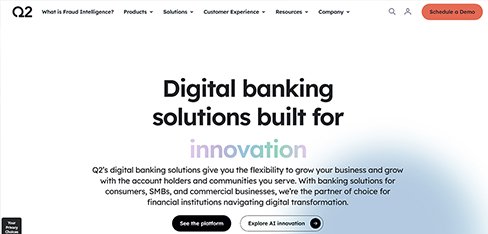
Nine-month implementations meant our sales cycle was longer than delivery. UX Stalwarts designed self-service configuration and visual customization that lets banks launch their digital banking in 4 months. Implementation time dropping 52 percent while feature adoption increased proved that SaaS platform UX directly determines how fast a company can grow.
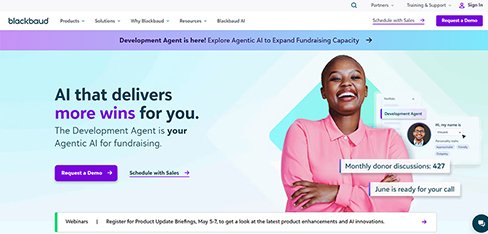
Nonprofit staff were paying for our cloud platform but using their old desktop software because the new system was too complex. UX Stalwarts redesigned everything using nonprofit language instead of database jargon with templates and guided workflows. Adoption jumping 3.6X meant our customers finally got the value they were paying for, and retention improving 22 percent proved it.
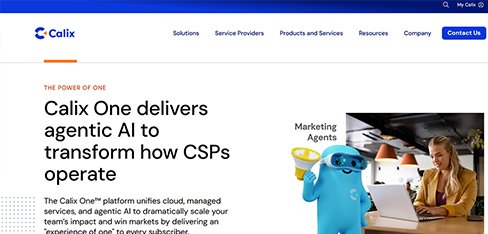
Community broadband providers do not have teams of network engineers. They have small teams doing everything. UX Stalwarts redesigned our platform so a general operations person can activate subscribers, troubleshoot networks, and analyze data without being an engineer. Activation time dropping 68 percent and non-technical adoption increasing 156 percent proved that SaaS platforms must meet users where they are.
Answers to the questions product teams ask before investing in SaaS UX.
Evaluate whether the agency leads with product research or primarily offers visual design output. The right ux design agency for saas will demonstrate structured audit methodology, show case studies with measurable product metrics like activation rate and churn reduction, and prove fluency in both UX principles and SaaS product architecture. Ask whether their team conducts task-based usability testing with real users, not just internal stakeholder reviews. Confirm they understand component-driven design systems, role-based interfaces, and multi-tenant considerations alongside core experience design. Pricing transparency, a documented framework, and experience collaborating directly with product and engineering teams are additional reliable indicators. Reviewing comparable engagements from a proven SaaS Product UX Design Company portfolio and references from established SaaS Platform UX Design Firms helps confirm methodology fit before commitment.
Saas ux consulting services pricing depends on product complexity, user base size, and engagement depth. A focused UX audit covering core workflows and onboarding for an early-stage SaaS product might range from $3,000 to $8,000. A comprehensive engagement including research, strategy, interface redesign, testing, and design system documentation for a mid-stage product typically costs $15,000 to $50,000. Enterprise SaaS platforms with multiple user roles, complex data visualization needs, and extensive workflow coverage may require $50,000 to $150,000 or more. Each engagement delivers prioritized findings tied to projected retention and activation impact so your team can evaluate ROI before committing resources. Detailed scoping conversations with a qualified SaaS Application UX Design Agency yield more accurate estimates, and reviewing SaaS UI/UX Design Solutions across comparable products clarifies which engagement model best fits your budget.
Timelines depend on product scope and current maturity. A targeted UX audit with actionable recommendations for a focused product area typically takes three to five weeks. A comprehensive product UX redesign that includes research, strategy, prototyping, usability testing, and phased design delivery generally spans twelve to twenty weeks. Enterprise SaaS products with multiple user roles, deep workflow complexity, or large design system requirements may extend beyond twenty weeks. Allocating adequate time for user validation before engineering handoff is critical, because skipping testing phases frequently produces post-release corrections that cost significantly more than structured validation would have required. Engagements with mature SaaS UX Optimization Services follow predictable phase durations, and most established SaaS UX Design companies share Gantt-style timelines during scoping for stakeholder review.
A thorough saas ux audit evaluates every product surface that influences user behavior and retention. This includes signup and onboarding flow completion rates, dashboard layout and information density, navigation clarity across product sections, feature discoverability and progressive disclosure patterns, workflow step counts and task completion times, notification and alert effectiveness, settings and account management usability, role-based access clarity, mobile and responsive behavior, and accessibility compliance. The deliverable is a prioritized report mapping each issue to its estimated impact on activation, retention, or expansion. Learn more about how usability testing validates audit findings with evidence from actual product users. A reputable SaaS UX Design Agency follows a documented audit protocol, and selecting a focused SaaS UI/UX Design Company ensures findings translate directly into actionable interface revisions.
A visual refresh updates colors, typography, iconography, and brand elements across your product interface. Saas ux optimization, by contrast, is driven by product analytics and user behavior data. It addresses how users navigate workflows, where they hesitate or abandon tasks, and what specific interface barriers prevent feature adoption or account expansion. Optimization may involve restructuring onboarding steps based on drop-off data, reorganizing dashboard modules by usage frequency, reducing workflow step counts, or adjusting notification timing to improve re-engagement. The goal is measurable improvement in activation, retention, and expansion metrics, not simply a modernized visual layer. Engaging a specialized SaaS Product UX Design Agency clarifies which interventions actually move metrics, while a dedicated SaaS UX Optimization Agency continuously tracks behavioral signals beyond initial implementation.
Yes, and this targeted approach often delivers faster retention gains at lower cost. Focused interventions identify the highest-impact friction points and resolve them within your existing product architecture. This might involve restructuring onboarding sequences, redesigning a critical dashboard view, simplifying a core workflow, optimizing form interactions, or improving contextual help placement. These changes frequently produce significant improvements in activation and retention without the risk, expense, and disruption of a full product redesign, while preserving user familiarity that long-time customers have built with your current interface patterns and mental models. Working with SaaS Platform UX Experts on targeted interventions preserves momentum, and partnering with a results-oriented provider of SaaS Product UX Design Services keeps every change aligned with retention objectives.
Effective b2b saas ux design starts with onboarding that reaches a meaningful user outcome within the first session, not a feature tour. Dashboards should surface actionable data rather than displaying every available metric simultaneously. Navigation should remain consistent and predictable across all product sections. Workflows should minimize required steps without hiding necessary controls. In-product guidance should appear contextually at moments of uncertainty rather than as dismissible overlays on first login. Design systems should enforce visual consistency as new features ship. Role-based views should display only the information and actions relevant to each user type. Help documentation should be searchable and embedded within the product context. These principles are reinforced when implemented by experienced SaaS UI/UX Design Services teams, and the leading SaaS UX Design firms in india apply them through structured review checklists during every release cycle.
Multi-role SaaS products demand interface architecture that serves administrators, managers, and end users through a single coherent experience. Our approach to ui ux for saas companies begins by mapping the distinct goals, permissions, and task frequencies of each user role. We then design role-aware navigation, dashboards, and workflows that surface relevant functionality without overwhelming any user type with controls they cannot access. Permission boundaries are communicated through interface cues rather than error messages. Settings hierarchies reflect organizational structures. The result is a product that feels purpose-built for each role while maintaining a unified design language and predictable interaction patterns. Selecting the best SaaS UX Design solution for multi-role products requires evaluating providers with proven role-modeling experience, including any qualified SaaS Product UX Design Company or boutique SaaS UX Design company shortlisted during vendor review.
Churn is rarely caused by pricing alone. In most cases, saas customer experience friction is the root cause. Users churn because onboarding fails to deliver value quickly, because core workflows feel inefficient, or because they cannot discover the features that would solve their evolving needs. Our approach addresses each cause through evidence-based design: accelerating time-to-value through onboarding simplification, reducing cognitive load in daily-use interfaces, and designing feature discovery paths that guide users toward deeper product engagement. Post-onboarding experience quality, not just initial setup, determines whether users renew, expand, or quietly disengage. Specialized SaaS Platform UX Design Firms address these retention drivers through behavioral instrumentation, and a focused SaaS Application UX Design Agency layers in qualitative validation to confirm root causes.
Yes. Early-stage SaaS products present unique UX opportunities because design decisions made at the MVP stage set interaction patterns that persist throughout the product lifecycle. Our saas ux design approach for startups emphasizes rapid validation through prototyping and usability testing before significant engineering investment begins. We help founding teams define onboarding flows, core workflow patterns, and dashboard structures grounded in user research rather than assumption. This research-first approach reduces costly post-launch redesigns and accelerates time-to-market by catching usability problems before they become embedded in shipped code. Choosing flexible SaaS UI/UX Design Solutions during the MVP stage avoids early lock-in, and engaging SaaS UX Optimization Services after launch ensures user-validated patterns continue evolving with the product.
We establish baseline metrics during the audit phase and define agreed-upon KPIs before design work begins. Common metrics for measuring saas ux services impact include activation rate, time-to-value, Day 7 and Day 30 retention, feature adoption rate, task success rate, average session duration, support ticket volume, NPS, and net revenue retention. Post-release, we monitor through product analytics platforms like Amplitude and Mixpanel, running cohort comparisons against pre-optimization baselines. For teams running A/B tests, we provide statistical confidence reporting to confirm that observed improvements are genuine behavioral shifts rather than seasonal or traffic-source variance. Mature SaaS UX Design companies tie every recommendation to a measurable KPI, and a disciplined SaaS UX Design Agency provides cohort-level dashboards your leadership team can review monthly.
Absolutely. Many of our engagements follow an embedded model where we provide UX strategy, validated prototypes, and design specifications while your internal team handles implementation. We deliver annotated Figma files with interaction notes, component specifications, and design system documentation that integrates directly with your engineering workflow. This model works well for product teams with established design and development capabilities who need specialized saas ux consulting expertise to direct priorities. We also conduct post-implementation design reviews to verify that interface intent is preserved across shipped features and edge cases. An embedded SaaS UI/UX Design Company integrates closely with internal stakeholders, while a senior SaaS Product UX Design Agency can lead specification reviews when internal capacity is temporarily constrained.
A b2b saas ux agency combines product research methodology with interface design expertise specifically calibrated for subscription software dynamics. General product design firms often approach each project without understanding churn mechanics, activation funnels, or expansion revenue drivers that govern SaaS business health. A specialized agency brings structured audit frameworks, behavioral data interpretation, and retention-focused design decisions that generalist designers rarely provide. For product teams serious about measurable impact on retention and lifetime value, partnering with a team that integrates user research, product strategy, and SaaS domain knowledge produces fundamentally different outcomes. Explore how heuristic evaluation strengthens SaaS product audits. A dedicated SaaS UX Optimization Agency brings continuous experimentation discipline, and SaaS Platform UX Experts contribute structured frameworks that generalist firms typically lack across complex product surfaces.
The top saas ux design agencies treat design systems as living infrastructure, not static style guides. A well-built SaaS design system includes a component library with documented usage rules, spacing and typography scales, color tokens for theming and accessibility, interaction patterns for common workflows, and governance guidelines for extending the system as new features ship. We design systems in Figma with mirrored component structures in Storybook so that design and engineering reference a single source of truth. This approach ensures interface consistency as your product scales, reduces design debt, and accelerates feature release velocity without sacrificing coherence. Established SaaS Product UX Design Services teams document governance rules alongside components, and seasoned SaaS UI/UX Design Services providers, including any boutique SaaS UX Design company, ensure adoption across both product and marketing interface surfaces.
SaaS UX improvements generate the strongest retention impact when paired with complementary disciplines. Our conversion rate optimization practice extends product UX findings into structured experimentation programs targeting trial-to-paid conversion and feature adoption. Prototyping services provide interactive validation of complex product interfaces before engineering resources are committed. For products requiring deeper behavioral insight, our user research capabilities include moderated usability testing, diary studies, and task analysis. Design system development, accessibility auditing, and information architecture consulting are also available to extend core SaaS UX improvements across your complete product ecosystem. Top-rated SaaS UX Design firms in india pair these adjacent disciplines into single engagements, helping clients identify the best SaaS UX Design solution for their long-term product roadmap.

C – 81C, Sector – 8, Noida 201301, India


1025 Beamon Drive, Franklin 37064 Tennessee, USA
Sveavagen 34 111 34 Stockholm, Sweden
A-10, Sahastradhara Rd, Doon IT Park, Dehradun, Uttarakhand

© 2026 UX STALWARTS. All rights reserved.