An online store that looks presentable but fails to convert is an expensive liability. When product pages lack visual clarity, when navigation buries categories behind too many clicks, or when checkout flows create unnecessary friction, revenue leaks silently. Poor ecommerce UI UX design does not just lose individual sales. It compounds into higher cart abandonment rates, lower average order values, and rising customer acquisition costs that outpace what each transaction can recover. For businesses competing in crowded online retail, the interface is the storefront, the salesperson, and the cash register combined.
Our ecommerce website design services address each of these conversion barriers through research-informed layout strategy, tested interaction patterns, and responsive visual systems built for every screen size. From custom ecommerce store design for emerging D2C brands to complex B2B ecommerce website design supporting tiered pricing and quote workflows, we deliver wireframes, interactive prototypes, high-fidelity mockups, and production-ready design assets. Every design decision is anchored in shopper behavior data, ensuring that navigation structures, product displays, and checkout sequences serve measurable business outcomes rather than subjective aesthetic preferences.
With eighteen years of cross-industry delivery and partnerships spanning startups, mid-market retailers, and enterprise commerce operations, UX Stalwarts brings a design-first approach that most ecommerce agencies cannot replicate. Where competitors lead with platform development, we lead with user experience, ensuring that the interface strategy is validated before a single line of code is written. That distinction matters when your revenue depends on how effortlessly a first-time visitor can find, evaluate, trust, and purchase your products within minutes of arrival.

Before designing any page, we study how your target shoppers browse, compare, and decide. Heatmap analysis, session recordings, and competitive benchmarking reveal friction points that generic templates cannot solve. This evidence base shapes every layout, filter, and call-to-action placement, producing a custom ecommerce website design grounded in real purchasing behavior.

Our ecommerce UI UX design services prioritize the path from landing page to order confirmation. We structure category hierarchies, optimize product page layouts, simplify cart interactions, and reduce checkout form fields to remove every unnecessary step between browsing intent and completed purchase. Each optimization targets a specific drop-off metric.

Mobile shoppers now represent the majority of ecommerce traffic, and responsive ecommerce website design is not optional. We design device-specific experiences that maintain visual quality, interaction speed, and purchase ease across smartphones, tablets, and desktops. Touch targets, swipe patterns, and thumb-zone navigation are calibrated for each viewport.

Whether your store runs on Shopify, WooCommerce, Magento, BigCommerce, or a headless commerce architecture, our ecommerce platform design services adapt to the technical environment your team manages. We design within platform constraints while preserving creative quality, ensuring that what we deliver can be built efficiently without compromise.

B2B ecommerce website design involves complexities that consumer stores never encounter: account-based pricing, minimum order thresholds, quote request workflows, multi-user purchasing permissions, and integration with ERP and inventory systems. We design B2B storefronts where procurement teams can complete transactions as efficiently as consumer shoppers complete theirs.

Launching is not the finish line. Our ecommerce website redesign services extend into ongoing performance monitoring, A/B testing of product page layouts, checkout flow refinements, and seasonal campaign design updates. We treat every store as a living product that improves continuously based on analytics, customer feedback, and evolving market conditions.

The difference between an ecommerce store that grows and one that stalls is rarely about product quality alone. It is about how quickly a visitor understands what you sell, believes the products are worth their price, and feels confident enough to enter payment details. Professional ecommerce website design achieves this by combining visual credibility with functional simplicity. Clear product photography placement, prominent trust signals, transparent shipping and return policies, and a checkout process that respects the buyer’s time all contribute to higher completion rates. Our team designs these experiences deliberately, backed by years of ecommerce-specific performance data.
Collaborate with ecommerce design specialists focused on your revenue growth.
Our methodology balances creative ambition with commercial discipline, ensuring that each phase produces validated outputs before the next one begins.

We analyze your current store performance through analytics review, competitive benchmarking, and customer journey mapping. If you are building from scratch, we study your target market’s purchasing patterns and competitor store structures. This phase produces a prioritized design brief that identifies the highest-impact opportunities for conversion improvement.

Category architecture, navigation hierarchy, and content structure are defined based on audit findings. We create sitemaps, user flow diagrams, and wireframe concepts that organize your product catalog for maximum discoverability. For B2B stores, this includes account portal structures, tiered pricing logic, and quote management workflows tailored to procurement processes.

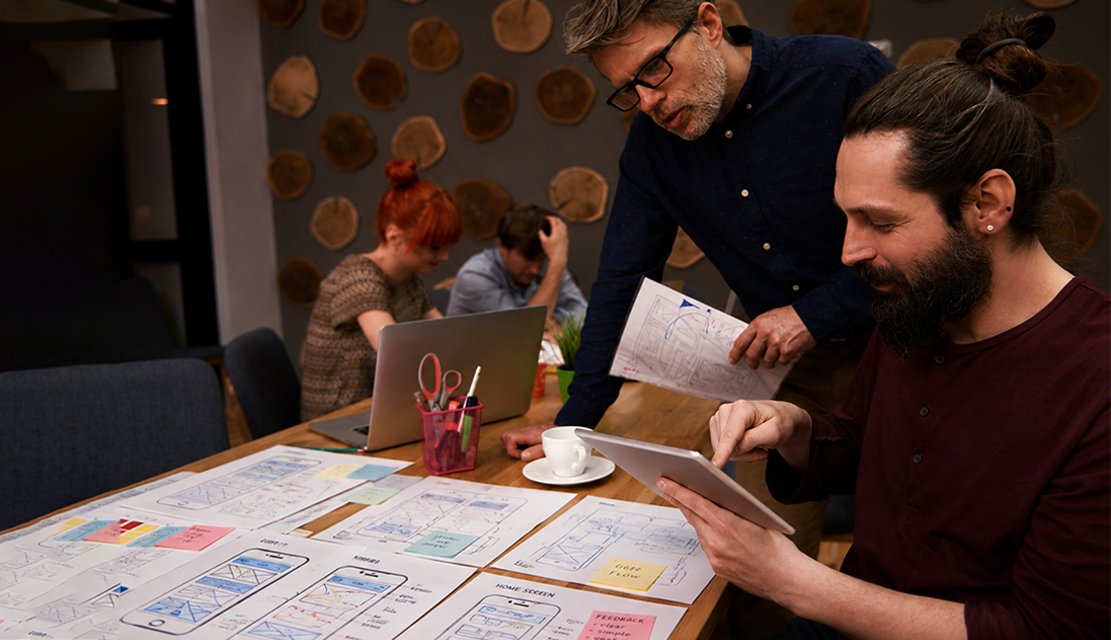
Low-fidelity wireframes translate the strategy into page-level layouts for homepages, category pages, product detail pages, cart, and checkout. We test navigation paths and content placement with stakeholder walkthroughs before investing in visual design. This step catches structural issues early, saving significant revision time downstream.

High-fidelity mockups apply your brand identity, typography, color system, and imagery standards to validated wireframes. Product cards, promotional banners, trust badges, and call-to-action elements are designed for visual impact and scannability. Every component is built within a modular system that supports seasonal updates and campaign-specific variations.

Interactive prototypes simulate the complete shopping experience from product discovery through order confirmation. We conduct usability testing with representative shoppers to measure task completion rates, identify confusion points, and gather qualitative feedback. Findings are documented as specific design refinements, ensuring the final interface performs before development investment begins.

We deliver annotated design files, responsive breakpoint specifications, component documentation, and interactive reference prototypes. Our team collaborates with your developers during implementation and provides design QA reviews to confirm that the launched store matches the approved design across all browsers and devices.
Across 1,000+ client engagements spanning retail, wholesale, and direct-to-consumer brands, our ecommerce store design services have delivered measurable revenue growth.
Our ecommerce website development and design practice is built on two principles: scalability that supports catalog growth without requiring structural overhauls, and specificity that respects the unique purchasing behaviors of each market segment. From fast-moving consumer goods requiring rapid product discovery to luxury brands demanding immersive visual storytelling, we calibrate information density, imagery strategy, and interaction pace to match the expectations of your specific buyers.
We have delivered ecommerce UI UX design across fashion, electronics, health and wellness, food and beverage, home furnishings, beauty, sporting goods, and industrial supply verticals. Each sector carries distinct requirements for product presentation, filtering logic, compliance labeling, and promotional mechanics. This range of experience enables our designers to apply proven ecommerce patterns while customizing layouts, navigation depth, and checkout flows for each vertical’s purchasing context.

Ecommerce design is often treated as a visual layer applied after platform selection. We approach it differently. Our design-first methodology ensures that shopper experience drives technology decisions, not the other way around. That inversion has produced consistently higher conversion rates and stronger client retention across every engagement, earning recognition from partners and industry platforms alike.
Revenue-Linked Design Decisions: Every layout choice, micro-interaction, and visual hierarchy decision maps back to a specific conversion metric or revenue outcome.
Checkout Obsession at Every Step: We design and test checkout flows with the same rigor most agencies reserve for homepage design, because that is where revenue is won or lost.
Platform-Agnostic Design Excellence: Our designs perform across Shopify, WooCommerce, Magento, and headless architectures without sacrificing creative ambition or interaction quality.
We design for all major ecommerce platforms and use industry-leading tools for prototyping, testing, and collaboration, ensuring seamless integration with your technical stack.









DKNY and Karl Lagerfeld are completely different fashion houses serving different women. Using the same website template for both was diluting what makes each brand special. UX Stalwarts designed distinct experiences that let each brand shine. DTC revenue growing 78 percent and cross-brand discovery generating 18 percent of revenue proved that in fashion e-commerce, brand identity is the conversion driver.
Calvin Klein’s brand is about less. But less is exactly what e-commerce conventions say not to do. UX Stalwarts proved that brand-aligned design and commercial performance are not trade-offs by building a minimalist CK experience that converts at double the previous rate. $2.4 billion in combined online revenue proved that premium fashion e-commerce succeeds when the website feels like the brand.
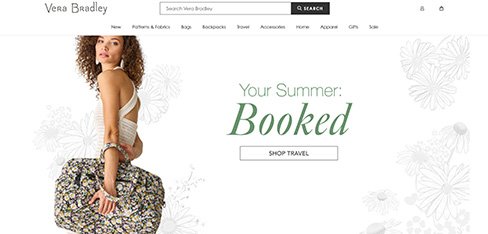
Our patterns are what make Vera Bradley unique but our website treated them like any other product attribute. UX Stalwarts designed a pattern discovery experience that turns our biggest differentiator into our biggest digital advantage. Revenue growing 134 percent and reversing a 2-year decline proved that e-commerce design must amplify what makes a brand special.
Evaluating an ecommerce design partner? Here are clear answers to the questions teams ask before they commit.
Evaluate whether the agency leads with design strategy or simply implements templates on a chosen platform. The best ecommerce website design company will demonstrate a structured process covering user research, wireframing, visual design, usability testing, and developer handoff. Ask for case studies showing measurable conversion improvements, not just visual portfolios. Confirm their experience with your specific ecommerce platform and inquire about post-launch optimization support. Agencies that combine ecommerce UI UX design expertise with analytics-driven iteration will deliver stronger long-term results than those focused exclusively on development speed or visual polish. Among the best ecommerce website design firms, the strongest contenders also operate as a full ecommerce website ui design company, blending visual craft with conversion discipline.
Ecommerce website design pricing varies based on catalog size, number of unique page templates required, platform complexity, and whether you need custom functionality such as product configurators, account portals, or multi-currency support. A focused redesign of key pages like product detail, category, and checkout may cost differently than a full ground-up custom ecommerce website design spanning dozens of unique templates. India-based agencies with strong UX capabilities often offer competitive value compared to US or European firms at comparable quality levels. Request a scoped proposal with itemized deliverables for meaningful comparison. An affordable ecommerce website design agency does not have to mean lower quality, since many India-based teams deliver enterprise-grade ecommerce website design solutions at competitive rates.
Timeline depends on store complexity. A targeted ecommerce website redesign covering core shopping pages typically takes six to ten weeks including research, design, testing, and handoff. A comprehensive custom ecommerce store design involving multiple product categories, B2B account portals, and a full component library can span three to five months. Projects requiring extensive user research, accessibility compliance, or integration with existing inventory and ERP systems may extend further. We establish milestone-based schedules during discovery so that expectations are aligned before design work begins. Shortlists of the best ecommerce website design companies in india typically publish realistic schedule ranges rather than rushed launch promises.
Ecommerce web design focuses on how your store looks, feels, and functions from the shopper’s perspective. It covers layout, visual hierarchy, navigation structure, product presentation, and checkout interaction. Ecommerce development translates those designs into working code on a chosen platform. Our ecommerce website development and design approach integrates both disciplines through close collaboration, but design always leads. We validate the shopper experience through prototypes and testing before development begins, reducing costly revisions and ensuring that the launched store performs as intended from day one. A capable ecommerce website design company keeps both disciplines aligned under one roadmap, while creative ecommerce website design firms also bring brand storytelling into the build.
Yes. Responsive ecommerce website design is a core requirement for every project. With mobile devices accounting for the majority of ecommerce traffic, we design mobile-first experiences that maintain full shopping functionality, visual quality, and checkout ease on smaller screens. Touch targets, swipe interactions, and thumb-zone navigation are specifically calibrated for smartphone use. We test across multiple devices and browsers to ensure consistent performance. Our responsive web design services cover the full spectrum of adaptive layout strategies for commerce-specific contexts. Our work covers the typical scope of custom ecommerce website design agencies and extends to specialized ecommerce website design india projects that require local payment and carrier integration.
Yes. Our ecommerce website redesign services follow a structured methodology that preserves search visibility throughout the transition. We map existing URL structures, implement redirects for any changed paths, maintain metadata and schema markup, and validate search performance after launch. Beyond SEO preservation, redesigns focus on improving conversion metrics by addressing identified usability issues, updating visual presentation, and optimizing critical shopping flows. We approach redesigns as incremental improvements where possible, minimizing disruption to existing customers while delivering meaningful gains in performance and user satisfaction. As an experienced ecommerce website designing company in india, we treat SEO continuity as a delivery requirement and provide ecommerce website design online support throughout migration.
Our experience spans fashion and apparel, consumer electronics, health and wellness, beauty, food and beverage, home furnishings, sporting goods, industrial supply, and automotive parts. Each industry carries distinct requirements for product display, filtering logic, compliance labeling, shipping configurations, and promotional mechanics. For example, fashion stores require size and color variant UX, while industrial supply portals need part number search and bulk ordering interfaces. This cross-sector exposure allows us to recommend proven patterns while customizing every store to its specific market context and customer purchasing behavior. Sector breadth is one reason buyers searching for ecommerce website design services india while benchmarking the best ecommerce website design firms shortlist us early in their evaluation.
Focus on five high-impact areas. First, reduce homepage-to-product clicks to three or fewer. Second, design product pages with clear primary imagery, pricing, availability, and a prominent add-to-cart action above the fold. Third, simplify checkout to the fewest possible steps with guest checkout as the default. Fourth, display trust signals including security badges, reviews, and return policies at decision points. Fifth, ensure consistent navigation across all devices. These ecommerce UX design tips apply regardless of platform or industry and have consistently improved conversion rates across our client engagements. Many of the best ecommerce website design companies in india apply these same principles, which is also why an experienced ecommerce website ui design company outperforms template-first vendors.
Key ecommerce website design trends include AI-powered product recommendations integrated directly into browsing flows, immersive product visualization through 360-degree views and augmented reality previews, micro-interaction feedback on cart and wishlist additions, personalized landing pages based on returning visitor behavior, and accessibility-first design that meets WCAG standards as a baseline rather than an afterthought. Dark mode options and voice-assisted navigation are emerging in premium storefronts. We incorporate relevant trends selectively, applying only those that demonstrably improve your specific shopper experience rather than following visual fashions for their own sake. We package emerging trends into practical ecommerce website design solutions, and even when engaged as an affordable ecommerce website design agency we never compromise on accessibility or performance baselines.
Product pages are where buying decisions are made or abandoned. We design them with a structured visual hierarchy: hero product imagery with zoom and variant switching, pricing and availability prominently placed, concise benefit-driven descriptions, specification tables for comparison shoppers, social proof through reviews and ratings, and clear shipping and return information. Cross-sell and upsell modules are positioned strategically without cluttering the primary purchase path. Every element earns its place through conversion data validation. Explore how our conversion rate optimization services complement product page design for maximum revenue impact. Creative ecommerce website design firms treat product pages as conversion instruments, and our ecommerce website design india engagements consistently lift add-to-cart rates after this structured rebuild.
Yes. B2B ecommerce website design is a specialized capability within our practice. We design portals supporting account-based pricing, customer-specific catalogs, minimum order quantities, quote request and approval workflows, multi-user purchasing permissions, and reorder functionality. These interfaces must balance the efficiency that procurement teams demand with the clarity that reduces order errors. We also design B2B dashboards showing order history, invoice tracking, and account management tools. The goal is to make wholesale and enterprise purchasing as intuitive as consumer shopping while accommodating the operational complexity that B2B transactions require. As an ecommerce website designing company in india with deep B2B specialization, we serve clients globally and rank among custom ecommerce website design agencies trusted for complex portal work.
Knowing how to build an ecommerce website that converts starts with understanding your buyer. Research their browsing patterns, purchase triggers, and comparison behaviors before selecting a platform or designing a layout. Structure your catalog with clear categories and filters that match how shoppers think, not how your inventory is organized. Design product pages that answer purchase objections visually. Minimize checkout friction with autofill, guest checkout, and transparent cost summaries. Test the complete purchase journey with real users before launch, and plan for ongoing optimization based on live analytics rather than static assumptions. Teams researching ecommerce website design online guides often miss this point, since real conversion lift comes from buyer research, not template tweaks.
Our ecommerce platform design services cover Shopify, WooCommerce, Magento, BigCommerce, and headless commerce architectures using platforms such as Commercetools or Medusa. We are platform-agnostic in our design approach, meaning we design the optimal shopping experience first and then adapt it to the technical capabilities and constraints of your chosen platform. If you are undecided on a platform, we provide recommendations based on your catalog size, budget, integration requirements, and growth trajectory. Platform selection is a strategic decision, and we ensure the design works within whichever system your team operates. Our ecommerce website design services india practice supports all major platforms with the same design-first philosophy.
Post-launch, we remain engaged through performance monitoring, A/B testing of high-traffic pages, checkout flow refinements, and seasonal campaign design updates. Ecommerce stores are not static products. Shopper behavior shifts with seasonal trends, promotional calendars, and competitive landscape changes. Our post-launch services ensure that design decisions continue to reflect current performance data and customer feedback. We also support design QA during development sprints when new features or product lines are added. Learn more about how our usability testing services support ongoing ecommerce store improvement.
Reach out through our consultation form with a brief description of your store, your current challenges, and your goals for the project. We schedule a discovery call to understand your product catalog, target audience, platform preferences, and timeline expectations. From there, we provide a detailed proposal outlining phases, deliverables, and investment. There is no obligation at the discovery stage. Whether you are launching a new online store, upgrading from a template-based setup, or seeking a comprehensive ecommerce website redesign, we tailor every engagement to your specific commercial context. Explore our broader ecommerce UI UX design approach for additional context.

C – 81C, Sector – 8, Noida 201301, India


1025 Beamon Drive, Franklin 37064 Tennessee, USA
Sveavagen 34 111 34 Stockholm, Sweden
A-10, Sahastradhara Rd, Doon IT Park, Dehradun, Uttarakhand

© 2026 UX STALWARTS. All rights reserved.