Standard analytics platforms report what happens on your website. They show page views, bounce rates, and session durations. What they cannot show is why visitors leave, where they hesitate, or what confuses them before they abandon a conversion path. Without website heatmap analysis and session replay analysis for websites, product and marketing teams operate on assumptions rather than observed behavior. These assumptions lead to redesigns that miss the actual friction points, wasted development cycles on features users never notice, and continued revenue leakage from problems that remain invisible in aggregate data dashboards.
Our heatmap analysis services combine click, scroll, and movement heatmaps with structured session recording review to build a complete behavioral picture of your digital experience. From identifying rage clicks and dead zones to mapping scroll depth patterns and navigation confusion, our team delivers annotated visual reports that connect observed user behavior to specific design and content recommendations. Deliverables include prioritized friction maps, behavioral insight decks, UX redesign specifications, and ongoing monitoring configurations. Every engagement produces actionable findings that your design and engineering teams can implement immediately.
With eighteen years of cross-industry UX execution, UX Stalwarts brings the interpretive depth that separates raw data collection from genuine behavioral understanding. Tools generate heatmaps. Our analysts read them with the trained perspective of designers, researchers, and conversion specialists who understand what each interaction pattern means for your business outcomes. Where competitors offer tool setup and generic reports, we deliver expert-led user behavior analysis services that connect every observed friction point to a measurable design improvement and a clear path toward conversion growth.

Heatmaps and session recordings produce data. Converting that data into decisions requires experienced analysts who recognize behavioral patterns, distinguish meaningful signals from noise, and translate visual evidence into prioritized design actions. Our UX heatmap consulting team brings years of pattern recognition across hundreds of websites and applications.

We never rely on a single data source. Each engagement combines click heatmaps, scroll depth analysis, movement tracking, session replay analysis for websites, and form interaction analytics into a unified behavioral assessment. This layered approach reveals the complete story behind user behavior, not isolated fragments.

Behavioral findings without design solutions create reporting overhead, not business value. Every insight our behavioral analytics consulting team delivers is paired with a specific, implementable UX recommendation. Clients receive not just what users are doing wrong but exactly what the interface should do differently.

Aggregate heatmaps mask the differences between first-time visitors and returning users, mobile and desktop sessions, or organic and paid traffic cohorts. Our heatmap analysis agency approach segments behavioral data by audience type, device, traffic source, and funnel stage, ensuring recommendations address each group’s distinct interaction patterns.

Behavioral analytics consulting requires access to sensitive user interaction data. We follow strict data governance protocols, ensuring all session recordings comply with GDPR, CCPA, and regional privacy regulations. Personal identifiable information is masked at collection, and data retention policies are documented and enforced throughout every engagement.

A single heatmap snapshot captures one moment. User behavior evolves as traffic sources shift, product offerings change, and seasonal patterns emerge. We configure ongoing monitoring dashboards and scheduled review cycles that detect behavioral regressions before they impact conversion rates, ensuring your optimization gains remain durable over time.
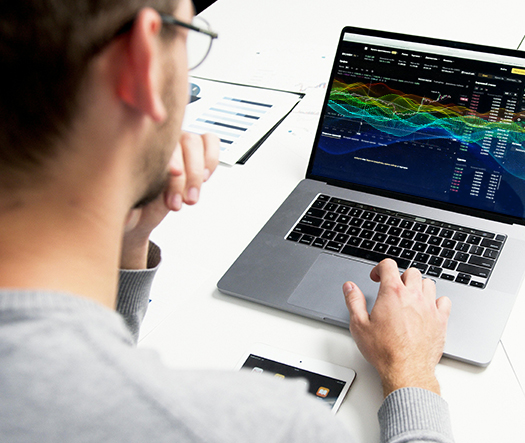
When design and product teams can see exactly where visitors click, how far they scroll, where they pause in confusion, and at which point they abandon a process, every subsequent decision becomes sharper. Website interaction analysis eliminates the debate between stakeholder opinions and replaces it with visual behavioral evidence that the entire organization can understand. The value extends beyond individual page improvements. Over time, CRO heatmap analysis builds an institutional understanding of how your specific audience interacts with digital interfaces, creating a behavioral knowledge base that informs roadmap priorities, content strategy, and feature development.
Work with analysts who read behavioral data, not just collect it.
Our structured analysis method ensures that every heatmap and session recording produces findings your team can act on with confidence.

We configure heatmap and session recording tools across your priority pages, setting appropriate sampling rates, privacy masking rules, and event triggers. This phase includes tag verification, cross-device tracking validation, and integration testing with your existing analytics stack. The output is a verified, privacy-compliant data collection framework.

Meaningful behavioral analysis requires sufficient data volume. We define minimum session thresholds per page and per device category, monitor collection progress, and ensure statistical reliability before any interpretation begins. During this phase, we also validate data quality by checking for recording gaps, tag conflicts, or sampling biases.

Our analysts review click heatmaps, scroll depth maps, movement overlays, and individual session recordings to identify recurring behavioral patterns. We tag rage clicks, dead zones, navigation confusion events, and content engagement anomalies. Each pattern is documented with screenshots, frequency counts, and affected user segments for traceability.

Not every behavioral anomaly warrants immediate action. We score each identified friction point by estimated conversion impact, affected traffic volume, and implementation complexity. This prioritization matrix ensures that your team addresses the highest-value opportunities first, producing measurable results early in the optimization cycle.

Each prioritized friction point is paired with a specific design, content, or interaction recommendation. Deliverables include annotated heatmap screenshots, behavioral insight narratives, wireframe concepts for proposed changes, and expected outcome projections. This synthesis bridges the gap between raw behavioral observation and actionable UX improvement.

After changes are implemented, we run comparative heatmap analysis to measure behavioral shifts against baseline recordings. Did scroll depth increase? Did rage clicks decrease? Did conversion rates improve at the identified friction points? This validation confirms that recommended changes produced the intended behavioral outcomes.
Across 1,000+ client engagements, our heatmap and session recording analysis has revealed behavioral insights that reshaped digital experiences and boosted conversions.
Our approach to website heatmap analysis is anchored in adaptability, analytical precision, and measurable outcome alignment. Whether interpreting session recordings for an early-stage SaaS product with limited traffic or analyzing thousands of daily sessions across an enterprise e-commerce platform, our team calibrates analysis depth, segmentation strategies, and reporting formats to match each organization’s decision-making rhythm and technical maturity.
Direct experience in healthcare, fintech, B2B SaaS, e-commerce, education, insurance, real estate, logistics, and government portals gives our team fluency in sector-specific behavioral patterns. Healthcare portals present distinct scroll behaviors around consent forms. Financial dashboards generate unique click patterns around data-heavy tables. E-commerce product pages reveal attention hierarchies that differ from content-driven sites. This vertical knowledge accelerates insight extraction and recommendation accuracy.

Most organizations install heatmap tools but lack the analytical bandwidth to extract meaningful insights from the data they collect. Our heatmap analysis firm bridges that gap with a team of trained behavioral analysts who bring cross-functional expertise in UX design, conversion strategy, and user research to every data review session.
Analyst-Led, Not Tool-Dependent: Our value is in interpretation, not software. We work with any heatmap platform your team already uses, adding expert judgment.
Behavioral-to-Design Translation: Every observation is connected to a design recommendation. Clients never receive a data dump without clear, implementable next steps tied to conversion outcomes.
Longitudinal Behavioral Tracking: We measure behavioral trends over time, not just snapshots, revealing whether optimization efforts produce sustained shifts in user interaction patterns.
Our team works across the leading behavioral analytics platforms, selecting and configuring the right combination for each project based on traffic volume, privacy requirements, platform compatibility, and analytical depth needed.









Amazon had mountains of analytics data but could not see what customers actually experienced while shopping. UX Stalwarts implemented heatmap and session recording analysis that revealed the why behind our metrics. Increasing product discovery 56 percent and reducing cart abandonment from 68 to 51 percent proved behavioral analysis drives optimization. Finding 23 rage click elements customers repeatedly tried clicking showed problems we never knew existed. This qualitative insight transformed how we understand customer behavior.
Wayfair mobile traffic was massive but conversion was terrible compared to desktop. We knew mobile had problems but not what specifically was failing. UX Stalwarts analyzed thousands of mobile session recordings revealing exact friction points. Increasing mobile conversion 73 percent and capturing $340 million in mobile revenue proved session analysis finds problems metrics hide. Watching customers repeatedly try to zoom static images showed obvious-in-hindsight issues we completely missed. This behavioral insight transformed mobile UX.
Redfin property pages had comprehensive information but low contact conversion. We did not know which content customers valued versus ignored. UX Stalwarts deployed heatmap analysis showing exactly what got attention. Increasing contact conversion 64 percent and mobile from 2.1 to 5.3 percent proved behavioral visibility drives optimization. Discovering 67 percent of visitors never scrolled past photos showed our best content was invisible. This attention analysis transformed how we structure listing pages.
Exploring heatmap and session recording analysis? Here is what teams typically ask.
Website heatmap analysis is the practice of using color-coded visual overlays to understand how visitors interact with specific pages. Click heatmaps show where users tap or click most frequently. Scroll heatmaps reveal how far down a page visitors actually read. Movement heatmaps track cursor behavior, which correlates with visual attention patterns. This analysis matters because it reveals interaction problems that traditional analytics cannot detect, such as users clicking non-clickable elements, ignoring primary calls to action, or never scrolling far enough to see critical content. These insights directly inform design improvements that increase engagement and conversions. Experienced website heatmap analysis consultants help translate these patterns into prioritized design fixes.
Heatmaps show aggregated behavior across many sessions, revealing general patterns like popular click zones or average scroll depth. Session recordings capture individual visitor journeys, showing the specific sequence of actions, pauses, and navigation choices one user made during a single visit. The two methods are complementary. Heatmaps identify where problems exist at scale. Session recordings explain why those problems occur by showing the surrounding context, including hesitation, backtracking, error encounters, and confusion signals. Our UX analytics consulting services always combine both methods because relying on only one produces an incomplete behavioral picture.
Pricing depends on project scope, the number of pages analyzed, traffic volume, and whether the engagement is a one-time audit or an ongoing monitoring retainer. A focused analysis of three to five priority pages with session recording review and a prioritized recommendation report typically falls within a mid-four-figure range. Enterprise engagements covering dozens of pages across multiple user segments, devices, and funnel stages represent larger investments. When evaluating cost, consider that identifying and fixing even one significant conversion friction point on a high-traffic page often generates returns that exceed the analysis investment within weeks.
Timeline depends primarily on data collection requirements. If heatmap and recording tools are already installed and collecting data, analysis can begin immediately. A typical engagement covering five to ten priority pages takes three to five weeks, including data validation, pattern recognition, friction prioritization, and recommendation delivery. Pages with lower traffic volumes may require longer collection periods to reach statistically reliable sample sizes. Ongoing monitoring retainers operate on monthly review cycles with continuous data collection running in the background.
Standard deliverables include annotated heatmap screenshots highlighting key behavioral patterns, a prioritized friction report ranking issues by conversion impact, session recording compilations illustrating specific user struggles, and a recommendation document pairing each finding with an actionable UX improvement. For larger engagements, we also deliver wireframe concepts for proposed redesigns, behavioral segmentation reports by device and traffic source, and configured monitoring dashboards for ongoing tracking. Every deliverable is designed to be immediately useful for design, product, and engineering teams. A trusted website interaction analysis company structures these outputs for immediate team use.
Our heatmap analysis services cover four primary heatmap types. Click heatmaps reveal which elements users interact with and which they ignore. Scroll heatmaps show content visibility thresholds and identify where the majority of visitors stop reading. Movement heatmaps track cursor paths that indicate attention and reading patterns. Attention heatmaps combine multiple interaction signals to show which page sections hold visitor focus longest. We also analyze specialized variants like rage click maps and dead click maps that highlight specific frustration signals demanding immediate attention. Combined, these heatmap types form the foundation of meaningful UX heatmap consulting.
Yes. Our heatmap analysis firm is tool-agnostic. We work with Hotjar, Microsoft Clarity, Contentsquare, Mouseflow, Crazy Egg, FullStory, VWO, and other platforms. If your team already collects behavioral data, we can begin analysis using your existing tool without requiring additional software purchases. If no tools are currently installed, we recommend and configure the most appropriate platform based on your traffic volume, privacy requirements, budget, and analytical needs. Our value lies in expert interpretation, not in any specific software dependency. Independent website heatmap analysis consultants add this interpretive layer regardless of platform.
CRO heatmap analysis provides the qualitative behavioral layer that complements quantitative conversion data. While conversion rate optimization identifies where drop-offs occur in your funnel through numerical analysis, heatmaps and session recordings reveal why those drop-offs happen by showing exactly what users experience at each step. This behavioral evidence strengthens optimization hypotheses, reduces failed experiment rates, and accelerates the path from identified problem to validated solution. A specialized CRO heatmap analysis agency turns this evidence into validated optimization wins.
Rage clicking occurs when a user repeatedly clicks the same element in rapid succession, typically signaling frustration with unresponsive buttons, broken links, or elements that appear clickable but are not. Rage click detection automatically flags these frustration events in session recordings and heatmaps, allowing analysts to identify and prioritize the most aggravating usability problems on your site. Fixing rage click triggers often produces immediate and significant improvements in user satisfaction, task completion rates, and conversion performance because these issues represent the most acute friction your visitors experience.
Every industry with digital conversion goals benefits from behavioral analytics consulting, but the impact is particularly significant for e-commerce, SaaS, financial services, healthcare portals, education platforms, insurance, and lead-generation-dependent B2B businesses. These verticals share common characteristics: complex user journeys, multiple decision points, sensitive data entry requirements, and high competition for user attention. Behavioral analysis helps these organizations understand the specific interaction patterns that distinguish their audience and uncover friction points that industry-generic optimization advice cannot address. Targeted user behavior analysis services support this depth across regulated and high-traffic verticals.
Privacy protection is embedded in every engagement from the initial tool configuration onward. We implement text masking for sensitive input fields, disable keystroke logging for password and payment fields, configure IP anonymization, and establish data retention policies aligned with GDPR, CCPA, and applicable regional regulations. Session recordings never capture personal identifiable information when properly configured. We also document privacy configurations and provide compliance verification as a standard deliverable, giving your legal and security teams full visibility into how behavioral data is handled.
Significantly. One of the most common reasons A/B tests fail is poorly formed hypotheses based on assumptions rather than observed behavior. Heatmap analysis provides the behavioral evidence needed to formulate stronger test hypotheses by revealing exactly what users struggle with on the control version. After tests conclude, comparative heatmap analysis between winning and losing variants explains why one performed better, building organizational knowledge that improves future test design and reduces wasted experimentation cycles. Partnering with a CRO heatmap analysis agency strengthens both hypothesis quality and post-test learning.
Scroll depth analysis measures how far visitors scroll down each page, displayed as a color-coded heatmap gradient from hot (most visitors reach this point) to cold (few visitors scroll this far). This analysis reveals whether critical content, calls to action, or conversion elements are positioned below the point where most visitors stop scrolling. It also identifies content sections that hold attention versus those that trigger exit behavior. For landing page optimization, scroll depth findings directly inform content sequencing, CTA placement, and page length decisions that maximize visibility of your most important conversion elements.
For most organizations, an initial comprehensive analysis followed by quarterly or monthly review cycles provides the best balance of insight depth and practical sustainability. Major site redesigns, new page launches, seasonal traffic shifts, or significant changes to traffic sources should all trigger fresh analysis cycles. High-traffic e-commerce sites and SaaS products with frequent feature releases benefit from continuous monitoring with weekly review cadences. The key is treating behavioral analysis as an ongoing practice rather than a one-time project, since user behavior evolves constantly alongside your product and market conditions. Ongoing UX analytics consulting services keep this rhythm productive over time.
Heatmap and session recording analysis is the diagnostic foundation that informs nearly every other UX improvement effort. It provides the behavioral evidence that shapes form and CTA optimization, identifies navigation problems that drive information architecture redesigns, and reveals content engagement patterns that guide copywriting and visual hierarchy decisions. A website interaction analysis engagement often serves as the starting point for a broader optimization program because it shows exactly where user experience breaks down, giving teams a clear, evidence-based roadmap for prioritizing design improvements across the entire digital product. A capable website interaction analysis company can lead this program end to end.

C – 81C, Sector – 8, Noida 201301, India


1025 Beamon Drive, Franklin 37064 Tennessee, USA
Sveavagen 34 111 34 Stockholm, Sweden
A-10, Sahastradhara Rd, Doon IT Park, Dehradun, Uttarakhand

© 2026 UX STALWARTS. All rights reserved.