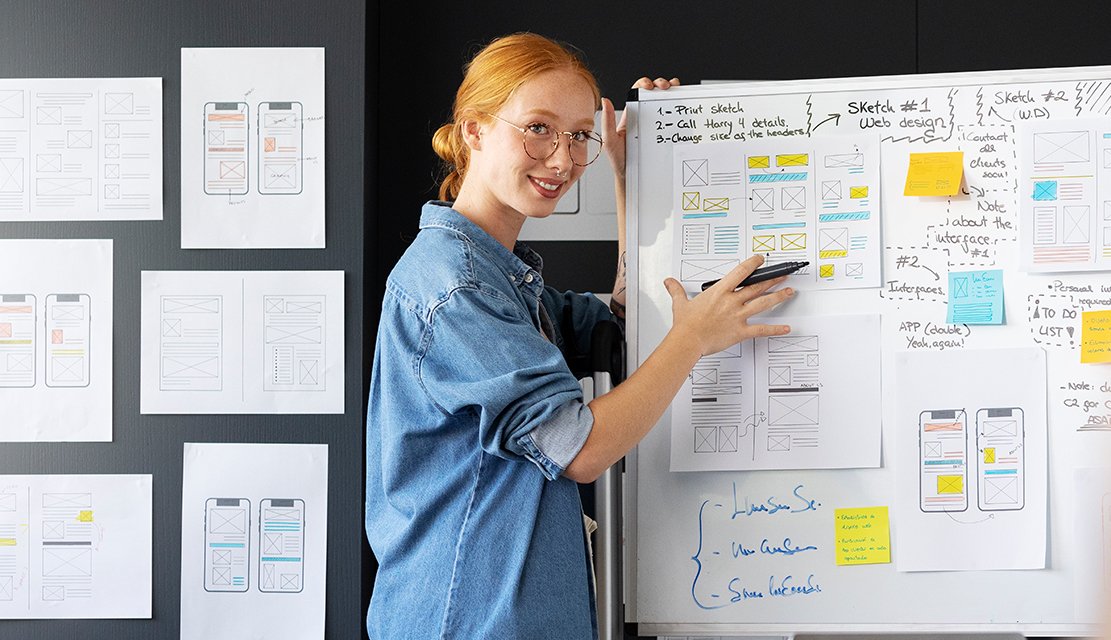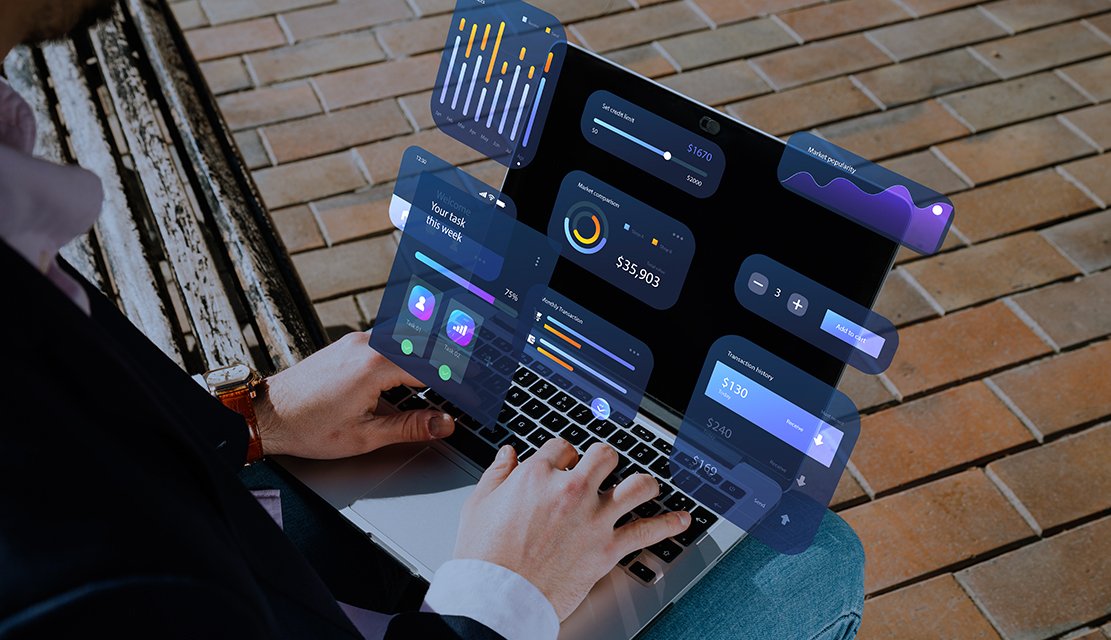
Most chatbot projects invest heavily in NLP models and backend logic while treating the interface as an afterthought. The result is a technically capable bot wrapped in a cluttered, confusing chat window that users close within seconds. Misaligned message bubbles, unclear input affordances, missing typing indicators, and generic widget styling create friction that no amount of AI sophistication can overcome. When chatbot ui design fails, containment rates drop, escalation costs rise, and the entire automation investment underperforms.
Our chatbot ui design services focus on every visual and interactive element users encounter during a bot conversation. We design message bubble hierarchies, quick reply button systems, card carousels, avatar treatments, chat window behaviors, input field states, and fallback prompts that guide users toward resolution without confusion. Deliverables include high-fidelity chat interface mockups, interactive widget prototypes, component specification documents, and accessibility-compliant design files ready for your development team to implement.
With eighteen years of designing digital interfaces across industries where clarity and compliance are non-negotiable, we bring a level of visual discipline to chatbot interface design that development-focused agencies consistently overlook. Our designers understand both the interaction psychology behind effective bot conversations and the technical constraints of chat widget platforms. That dual perspective produces interfaces that perform measurably better in containment, satisfaction, and repeat usage.

We design every chatbot component individually: message containers, timestamp placement, read receipts, quick reply chips, suggested action cards, file attachment previews, and loading states. Each element follows documented sizing, spacing, and color rules so your development team can implement without interpretation. This component-level rigor prevents the visual inconsistencies that erode user confidence.

Chatbot widgets behave differently on mobile browsers, desktop sidebars, full-page layouts, and messaging platforms. We design responsive variants for each deployment context so the interface adapts correctly everywhere. Button tap targets, message width ratios, and input field positioning are calibrated per platform. No single template approach can match this specificity.

The first three seconds of a chatbot interaction determine whether users engage or close the window. We design welcome states, capability previews, and conversation starters that set accurate expectations from the opening screen. Users understand what the bot can do before they type their first message.

When a bot cannot understand a query, the interface must guide users forward rather than presenting a dead end. We design disambiguation prompts, suggested rephrasing patterns, topic redirect options, and visible human handoff triggers. Every error state has a designed recovery path so users never feel trapped inside the conversation.

Your chatbot interface should look like it belongs to your product, not a third-party widget. We create custom visual treatments for avatars, color palettes, typography scales, and animation behaviors that align with your brand guidelines. The chat experience feels native to your digital ecosystem rather than bolted on.

We define visual and interaction KPIs before the first mockup: quick reply tap rates, message scroll depth, input field engagement frequency, and widget open-to-conversation ratios. Post-launch, we analyze these metrics to recommend specific component refinements. Design decisions are validated by user behavior data, not subjective preference.
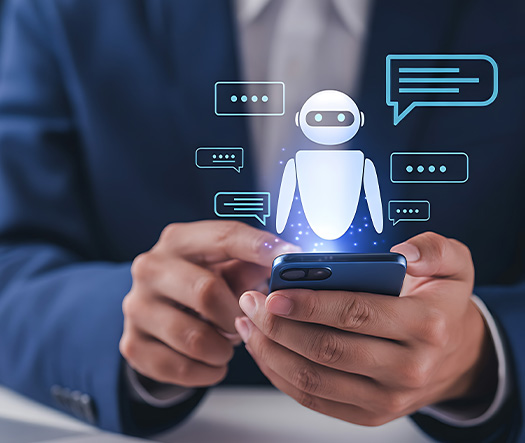
A chatbot is only as effective as the interface surrounding it. When users can scan responses quickly, when quick reply buttons present clear next steps, when the visual hierarchy separates bot messages from user inputs without ambiguity, and when fallback states feel helpful rather than frustrating, every conversation moves closer to resolution. The difference between a chatbot people tolerate and one they prefer starts at the component level. Our chatbot ux design team brings visual design expertise, interaction pattern knowledge, and usability research discipline into every project, ensuring your bot interface contributes to business outcomes instead of working against them.
Partner with designers who specialize in chatbot visual interfaces.
Our methodology separates visual interface design from bot development, ensuring the user experience receives focused, dedicated attention throughout.

We evaluate your current chatbot interface or benchmark against competitors if building from scratch. This audit documents every existing visual element, identifies usability friction points, and maps component gaps. Findings are compiled into an actionable audit report with prioritized recommendations. This baseline ensures subsequent design work addresses real problems, not assumptions.

Working alongside your conversation design and engineering teams, we map every user-facing interaction moment: welcome screens, prompt sequences, response displays, card presentations, error states, and handoff transitions. Each moment is documented with input/output behavior, visual requirements, and component dependencies. This map becomes the architectural blueprint for all interface work.

We establish the complete visual language for your chatbot: color tokens, typography scale, spacing grid, avatar system, icon set, button styles, and animation parameters. Every decision aligns with your existing brand system while adapting to the constraints of chat widget environments. The output is a documented chatbot design system.

Individual chat components are designed at full fidelity: message bubbles for text, images, and rich cards; quick reply chips in active, hover, and disabled states; carousel containers with navigation affordances; input fields with attachment options; and status indicators for typing, sending, and delivery confirmation.

Interactive prototypes simulate realistic chatbot conversations so stakeholders and test users experience the full visual flow. We run moderated usability sessions measuring message readability, button discoverability, error recovery success, and overall satisfaction. Test findings generate a prioritized refinement list. Only designs validated through real user interaction proceed to handoff.

Final deliverables include pixel-precise component specifications with spacing, sizing, and color values documented for every state. We provide responsive behavior rules for mobile and desktop, accessibility annotations including contrast ratios and screen reader labels, and platform-specific implementation notes for tools like Intercom, Drift, or custom frameworks.
Across 1,000+ client projects and multiple industries, our chatbot interface work has produced measurable gains in containment and user satisfaction.
Every chatbot ui design company must recognize that interface requirements shift dramatically across industries. A support chatbot for a banking app operates under different visual, compliance, and trust constraints than a product recommendation bot for an e-commerce platform. We calibrate visual density, response formatting, and interaction patterns to match sector-specific expectations. Our client base spans early-stage startups deploying their first bot to enterprises managing multi-channel automated support.
Industries where our chatbot ui design services deliver the strongest outcomes include banking and financial services, healthcare patient engagement, insurance claims assistance, e-commerce and retail, logistics tracking, education technology, SaaS product onboarding, telecommunications, and government citizen services. Each sector introduces specific requirements around data display, consent capture, language tone, and escalation protocol that directly influence component design and visual system decisions.
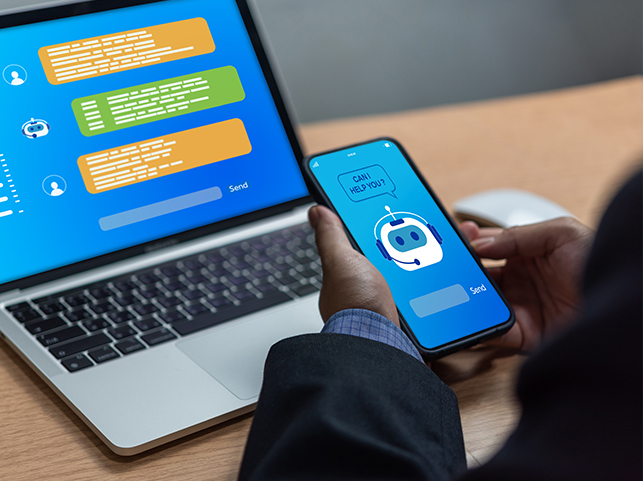
While most providers treat chatbot interface design as a sub-task within bot development, we treat it as a dedicated design discipline with its own research, methodology, and quality standards. Eighteen years of interface design experience across regulated industries have refined our approach into something measurably different from what generalist agencies and chatbot development firms deliver.
Design-First, Not Development-First: We design the interface independently from backend development, ensuring visual and interaction quality is never compromised by engineering shortcuts.
State-Complete Component Libraries: Every component ships with full state documentation: default, active, hover, disabled, loading, error, and empty. No visual state is left unspecified.
Post-Launch Visual Optimization: We monitor component-level interaction data after launch and deliver quarterly visual refinement recommendations based on real user behavior.
We select tools based on your project requirements and deployment platform. Our workflow integrates seamlessly with both established chat platforms and custom-built widget architectures.









Bank of America contact centers were overwhelmed with routine calls that customers should have been able to handle digitally. Our previous chatbot was frustrating and rarely resolved issues. UX Stalwarts designed conversational interface that actually worked. Reducing call volume 61 percent and improving containment from 28 to 74 percent transformed our service economics. The $127 million in cost savings while improving satisfaction to 8.7 out of 10 proved chatbot UI design is critical to digital banking success.
Delta flight booking was complex and intimidating, driving customers to travel agents and OTAs despite our direct channel advantages. UX Stalwarts designed conversational booking assistant that guided travelers through decisions. Increasing conversion 84 percent and growing ancillary revenue 37 percent per booking proved chatbot UI can drive both satisfaction and profitability. The 56 percent reduction in irregular ops calls showed conversational self-service works even during stressful disruptions. This chatbot transformed our digital commerce.
Verizon technical support was expensive and frustrating with customers calling about connectivity issues we could resolve remotely if we had better tools. UX Stalwarts designed conversational troubleshooting chatbot that actually fixed problems. Improving first contact resolution 73 percent and reducing calls 47 percent transformed our service operations. The $67 million savings from avoided truck rolls proved chatbot UI design delivers hard ROI. This platform changed how we support customers.
Planning a chatbot project or improving an existing one? Here is what product and design teams typically ask before starting.
Chatbot UI design is the practice of creating the visual and interactive elements that users see and interact with during a bot conversation. This includes message bubbles, quick reply buttons, input fields, card layouts, typing indicators, avatars, and chat window behavior. It matters because even the most intelligent chatbot fails when the interface is confusing, cluttered, or unresponsive. Users judge a chatbot within seconds based on visual clarity and ease of interaction. Strong chatbot ui design increases containment rates, reduces escalation to human agents, and improves overall satisfaction scores measurably. Mature chatbot interface design services treat the interface as a core product layer.
Chatbot UI design focuses on the visual layer: what users see, tap, and read. This includes typography, color, spacing, component styling, and animation. Chatbot ux design is broader, covering the overall experience of interacting with the bot, including conversation flow logic, tone of voice, error recovery strategy, and task completion efficiency. Both are essential, and they work best when developed together. However, many chatbot development companies neglect the UI layer, applying generic templates that undermine even well-designed conversation flows. Our approach ensures both layers receive dedicated attention. Working with a dedicated chatbot ux design agency keeps both layers aligned from day one.
Costs vary based on the number of conversation scenarios, deployment platforms, component complexity, and whether the design must comply with accessibility or industry regulations. A focused chatbot widget redesign for a single platform might range from $4,000 to $12,000. Comprehensive chatbot ui design services covering multiple deployment contexts, custom component libraries, responsive variants, and usability testing typically range from $15,000 to $50,000. Enterprise chatbot ui design for regulated industries with compliance documentation can exceed this range. Always request a scoped estimate based on your specific conversation flows and platform requirements. Pricing for professional chatbot ui design services scales with the number of conversation scenarios involved.
A typical project spanning widget audit, interaction mapping, visual system creation, component design, prototype validation, and developer handoff takes six to ten weeks. Simpler redesign projects focused on refining an existing chatbot interface can be completed in three to five weeks. Enterprise projects involving multiple deployment platforms, accessibility compliance, and multi-language visual variants often extend to twelve or fourteen weeks. The component design and prototype validation phases are the most time-intensive because every interactive state needs to be designed and tested individually.
A good chatbot interface achieves five things simultaneously. First, it communicates what the bot can do within the first interaction through clear onboarding design. Second, it presents bot responses with strong visual hierarchy so users can scan quickly. Third, it provides obvious next-step affordances through quick reply buttons, suggested actions, or guided prompts. Fourth, it handles misunderstandings gracefully with designed fallback states that offer alternatives rather than dead ends. Fifth, it maintains visual consistency with the parent product or brand so the chatbot feels native rather than foreign. Quality chatbot ui design solutions achieve all five outcomes together.
Evaluate whether the agency treats chatbot UI as a dedicated design discipline or merely as a step within bot development. Ask for component-level case studies showing message bubble design, quick reply systems, error states, and responsive layouts, not just conversation flow diagrams. Verify that they conduct usability testing on chatbot prototypes specifically, rather than relying on general interface testing. A strong chatbot ui design agency will also demonstrate platform-specific experience and deliver developer-ready specifications with full state documentation for every component. Look for a chatbot ui design firm that publishes case studies covering ui design for chatbot widgets and accessibility. The top chatbot ui design firms india has to offer also disclose usability testing methods, which sets stronger chatbot ui design agencies india apart from development-led shops.
Yes. Many chatbot widget platforms allow visual customization within their framework. We design within those constraints, optimizing message styling, button treatments, avatar placement, color systems, and quick reply configurations to match your brand and improve usability within the platform’s capabilities. For platforms with limited customization, we document the maximum achievable visual quality and recommend workarounds. For fully custom-built chatbot interfaces, we design without platform constraints and deliver specifications directly to your engineering team. Comprehensive chatbot interface design services cover both platform widgets and custom builds. Our chatbot ui design solutions adapt to either architecture.
Yes. Mobile chatbot interface design requires specific attention to tap target sizing, message width ratios on smaller screens, keyboard interaction behavior, scroll performance, and notification badge placement. We design separate responsive variants for mobile web, native iOS, and native Android contexts, ensuring the chat experience is optimized for each environment. Mobile-specific considerations include thumb-zone accessibility for quick reply buttons, compact card layouts that remain readable on smaller displays, and input field behavior that avoids content obscuration when the keyboard appears. For a broader view of how we design mobile application interfaces, explore our mobile app design services.
A chatbot widget is the container element, typically a floating button and expandable window, that hosts the chatbot on a website or app. The chatbot UI is everything inside that container: message bubbles, input fields, buttons, cards, typing indicators, and visual treatments. We design both. Widget design includes trigger button styling, open/close animation, positioning, minimized state appearance, and notification badges. Interface design covers the complete visual and interactive system within the chat window. Both layers must work together for the chatbot to feel polished and trustworthy.
Three things distinguish our work. First, we treat chatbot UI as a standalone design discipline with its own methodology, not a sub-step buried inside bot development. Every component receives dedicated design attention with full state documentation. Second, we validate every chatbot interface through usability testing that measures specific metrics like message readability, button discoverability, and error recovery success. Third, our enterprise chatbot ui design company background means we deliver compliance-ready accessibility documentation and responsive specifications that development teams can implement without guesswork. Compared with most chatbot ui design agencies india currently has, our methodology emphasizes measurable component metrics. Among top chatbot ui design firms india serves, few deliver state-complete libraries by default. As an enterprise chatbot ui design company india projects often need for compliance, we package WCAG documentation in every handoff. This positions us uniquely among chatbot ui design companies and specialist chatbot ui design firm options. Engaging a focused chatbot ux design agency rather than a development-led shop produces stronger outcomes. Clients evaluating chatbot ui design company india partners should also assess accessibility testing rigor.
We follow WCAG 2.1 AA standards for all chatbot interface components. This includes maintaining minimum contrast ratios between message text and bubble backgrounds, ensuring all interactive elements are keyboard navigable, providing screen reader labels for buttons and status indicators, and designing focus states for every interactive component. We also test with assistive technologies to verify that the complete conversation flow is usable for people with visual, motor, and cognitive disabilities. Accessibility documentation is included in every developer handoff package.
Absolutely. Many of our projects begin with an audit of a chatbot interface that has high abandonment rates. We analyze widget open-to-conversation ratios, message scroll depth, quick reply engagement rates, and the specific points where users close the chat window. Common problems include unclear onboarding states that confuse users about the bot’s capabilities, dense message formatting that makes responses hard to scan, missing quick reply options that force unnecessary typing, and generic fallback messages that offer no recovery path. Our redesign addresses each friction point with targeted component improvements. To understand how structured testing validates redesign decisions, see our A/B testing services.
Standard deliverables include a widget audit report with documented friction points, an interaction map covering all conversation touchpoints, a chatbot visual system document with color, typography, and spacing tokens, high-fidelity component designs for all message types and interactive states, interactive prototypes for usability validation, usability test findings with prioritized refinements, developer handoff specifications with responsive rules and accessibility annotations, and a component library file in Figma. Enterprise projects may also include platform-specific implementation guides and post-launch optimization frameworks.
Yes. Chatbot interfaces require continuous refinement as conversation flows expand and user behavior patterns emerge. We offer structured post-launch support that includes monitoring component-level interaction data, identifying underperforming visual elements, and delivering quarterly optimization reports with specific design recommendations. This ongoing partnership ensures your chatbot interface improves with each iteration rather than degrading as new features are added without design oversight. Post-launch support is especially valuable for enterprise chatbot deployments where usage volumes generate sufficient data for meaningful pattern analysis.
AI interface design is a broader discipline covering the design of user interfaces for any AI-powered product, including recommendation engines, predictive dashboards, autonomous agents, and generative AI tools. Chatbot UI design is a specialized subset focused specifically on the visual and interactive components of text-based bot conversations. The two disciplines share foundational principles around trust, transparency, and error handling, but chatbot UI design requires unique expertise in message formatting, sequential dialogue display, quick reply interaction patterns, and chat widget behavior. Our team practices both disciplines and applies the appropriate methodology based on your product’s requirements. For more on how we approach the broader discipline, explore our AI interface design services.

C – 81C, Sector – 8, Noida 201301, India


1025 Beamon Drive, Franklin 37064 Tennessee, USA
Sveavagen 34 111 34 Stockholm, Sweden
A-10, Sahastradhara Rd, Doon IT Park, Dehradun, Uttarakhand

© 2026 UX STALWARTS. All rights reserved.