Wearable apps fail when designers treat watches as small phones. A notification screen that demands ten seconds to read defeats the purpose of wrist delivery. A complication that shows outdated data erodes trust in the entire product. A fitness app that drains battery from a full charge to dead by lunch pushes users back to their phones permanently. A healthcare wearable that misses a critical alert during a workout fails the user at the exact moment the investment was supposed to pay off. Weak wearable app design shows up as low engagement after the first-week novelty fades, complication slots left empty by users who abandoned the widget, battery complaints dominating App Store reviews, and companion phone apps users open far more than the wearable ever earned attention.
Our approach treats wearables as a distinct glanceable medium demanding their own design discipline, not a scaling exercise applied to phone layouts. Before any screen is produced, our team studies how target users actually interact with wearables throughout daily routines including workouts, meetings, sleep, and commutes. Platform differences across Apple Watch, Wear OS, Garmin, Fitbit, and emerging form factors like smart rings shape every decision. From there we deliver research-backed information architecture, glanceable screens, complication designs, tile layouts, sensor-driven interactions, component libraries tuned for small-screen readability, and handoff files prepared for watchOS SwiftUI or Wear OS Compose implementation. As a specialized wearable app design company, we engineer the wrist moments that make products worth their investment.
Eighteen years of design work across thirty-plus countries gives our team practical fluency in where wearables genuinely serve users better than alternative devices. UX Stalwarts has partnered with early-stage founders launching fitness wearable app development programs and with established brands rolling out healthcare wearable app design across clinical monitoring deployments. Our designers study Apple watchOS Human Interface Guidelines and Google Wear OS design principles separately, collaborate with wearable engineers daily, work alongside sensor and data science teams, and speak the vocabulary of complications, tiles, digital crown, haptic feedback patterns, heart rate zones, HRV data streams, SpO2 accuracy thresholds, and the design decisions that separate wearable apps users keep from those they quickly remove from their paired phone entirely. That grounding separates generic mobile agencies from a wearable UX design agency prepared for production realities.

Wearables live or die on the three-second glance. Our designs prioritize information that matters most during brief wrist raises, removing cognitive load that desktop and phone audiences tolerate but watch users reject instantly. Progressive detail reveals deeper information only when users explicitly engage, protecting the glanceable contract wearable audiences expect throughout daily use.

Apple watchOS complications behave differently from Wear OS tiles. Garmin Connect IQ widgets follow different conventions again. Fitbit OS and emerging proprietary systems each carry their own design languages. Our team designs knowing which platform will ship the code, so complications, tiles, and notifications respect platform-specific behaviors rather than forcing cross-platform compromises that feel wrong on any specific watch.

Wearables unlock sensor-driven experiences phones cannot match. Heart rate variability, blood oxygen, ECG, GPS tracking, accelerometer-driven activity detection, and environmental sensors flow into real-time feedback loops our designs engineer deliberately. Real-time data wearable apps deliver immediate value during workouts, stress moments, or sleep when users genuinely need insight without pulling out a phone.

Every design decision affects battery life on wearables. Always-On Display, notification frequency, background data sync, and animation density directly shape how long users go between charges. Our designs specify patterns that preserve battery across full-day wear, respecting the real reason users chose wearables in the first place rather than triggering the charge-anxiety that kills wearable adoption quickly.

Wearable apps rarely exist alone. Coordination with companion phone apps determines whether the full product feels coherent or disjointed. Data handoff patterns, sync reliability, notification routing, and complex interaction offload to phones when watches cannot handle depth are designed deliberately. Users experience one product across devices rather than two separate apps barely aware of each other.

Wearables touch intimate contexts including sleep, workouts, medical monitoring, and meditation. Human-centered design for wearables respects these contexts by avoiding disruptive notifications during sleep, protecting privacy during shared gym use, and communicating medical data honestly without creating health anxiety. Our collaboration approach keeps these sensitivities central throughout design and handoff meaningfully across every engagement.
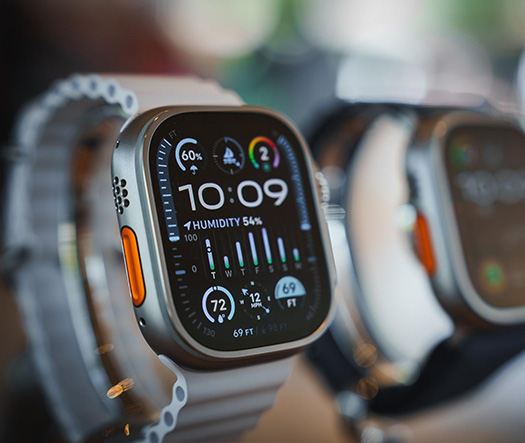
Wearable interfaces carry measurable consequences when glanceable thinking gets skipped. An overloaded watch face loses first-week users to phone-only workflows. A sensor-driven workout tracker that lags real performance erodes user trust in the underlying hardware investment. A healthcare wearable that fails during the moment it matters most destroys the clinical case for deployment entirely. Strong smartwatch app design shifts metrics that compound: wearable engagement holds past initial novelty, complications remain populated months after installation, battery life stays within user expectations, and companion phone apps feel like extensions rather than primary destinations. A thoughtful wearable UI/UX services partner understands where wrist investment genuinely pays off for users.
Partner with specialists who design wearable apps users actually keep using.
Every engagement follows a deliberate sequence built to deliver value in seconds, respect battery life, and coordinate cleanly across wearable and companion devices.

We begin by mapping the wearable reality around your product: how target users move through daily routines, which moments wearables genuinely serve better than phones, platform choice between Apple Watch and Wear OS or multiple platforms, and integration scope with sensors and companion apps. Existing analytics, retention patterns, and competitor wearable examples establish the measurable baseline every design decision must improve meaningfully.

Wearable journeys differ fundamentally from phone journeys. We map three-second glance moments, brief interactive windows, and rare deep-interaction scenarios separately. Notifications, complications, tiles, and watch face integrations are documented with attention budgets respected. Deep tasks that require more than fifteen seconds route to companion phone apps deliberately rather than forcing complex interaction onto wrists where users resent extended engagement.

Wearables unlock sensor experiences. We map available sensor data streams including heart rate, SpO2, ECG, GPS, accelerometer, gyroscope, and environmental sensors to specific user moments where real-time feedback matters. Sensor-based app development decisions happen during design, clarifying which data streams drive which user-facing feedback and how sensor accuracy thresholds map to design expressions users actually trust throughout daily wear.

High-fidelity complications, tiles, watch faces, notification screens, and companion app surfaces ship alongside a component library tuned for small-screen readability and platform-specific conventions. Custom wearable app solutions integrate with existing brand systems while respecting platform-native patterns. Typography scales for wrist reading distance, color contrast for outdoor visibility, and motion patterns respecting battery consumption are documented per platform explicitly during craft production cycles.

Designs face on-wrist validation under real conditions. Readability during movement, notification timing during meetings, sensor-feedback latency during workouts, and battery impact across a full day of wear are all tested on actual hardware with target users. Cross-platform wearable apps receive validation on both Apple Watch and Wear OS simultaneously. Edge cases like gym environments, rain, cold weather, and shared family watch usage get specific attention meaningfully.

Post-launch, wearable-specific analytics guide refinement. Engagement rates beyond first-week novelty, complication retention, sensor data accuracy ratings, battery complaint categories, and companion app coordination metrics are monitored against the Phase One baseline. Revisions ship aligned with Apple watchOS and Google Wear OS platform evolution so the app stays current as wearable ecosystems advance through annual releases delivering new sensor capabilities meaningfully.
Drawn from over one thousand engagements, these projects reflect measurable outcomes across Apple Watch, Wear OS, and specialized wearable apps launched globally across fitness, healthcare, and enterprise wearable deployments.
Foundational values behind every wearable engagement are glanceable discipline, platform respect, and sensor honesty. Teams evaluating top wearable app design companies weigh wrist-specific craft against execution reliability, and both matter in wearable work where battery, sensor accuracy, and privacy stakes run higher than typical mobile contexts. From founders launching first fitness trackers to established brands rolling out clinical wearable deployments, our team operates across the maturity spectrum. Design decisions balance immediate user needs against the platform evolution runway Apple and Google push annually through watchOS and Wear OS updates.
Industry coverage spans fitness tracking and workout coaching, healthcare monitoring including chronic disease management and clinical trials, mental wellness and meditation, sleep tracking, productivity notifications, contactless payments via Apple Pay and Google Pay, enterprise field service applications, and emerging categories including smart rings and heads-up displays. Our wearable application development company work extends across consumer and B2B wearable contexts. IoT wearable app design services engagements increasingly bridge wearables with broader connected-device ecosystems for home health, elderly care, and industrial safety monitoring deployments.
Choosing the best wearable app development agency comes down to wrist-specific fit, not reputation alone. UX Stalwarts has been cited in mobile and health-tech publications, shortlisted for international design awards, and referenced in wearable deployment case studies because the output earns sustained engagement past first-week novelty rather than just shipping complications that users eventually remove from their watch face rotation silently.
Glanceable Craft As Standard: Three-second glance thinking shapes every decision from first wireframe, so wearable designs deliver value in the attention budget users actually give wrists.
Sensor-First Experience Design: Heart rate, GPS, accelerometer, and environmental sensor streams drive user-facing feedback deliberately, unlocking the unique value wearables offer over phone apps.
Battery-Conscious Design Discipline: Every design decision accounts for battery implications, preserving the full-day wear experience users chose wearables for in the first place without triggering charge anxiety.
Our studio uses category-leading tools selected for small-screen prototyping precision, platform-specific handoff, and sensor data visualization across every wearable UX design services engagement and wearable device app design project we deliver.









Asking surgeons to dictate 18-minute procedure notes after operating all day produces inaccurate documentation. UX Stalwarts designed a wearable that lets surgeons document in real time with voice commands without breaking sterile field. Documentation time dropping 62 percent while accuracy improved dramatically proves that surgical wearable design directly impacts clinical documentation quality.
Laboratory researchers wearing gloves handling hazardous materials cannot touch a screen. So 76 percent of experiment steps went undocumented. UX Stalwarts designed a wearable that lets scientists log everything by voice without touching anything. Compliance jumping from 24 to 91 percent and reproducibility improving 44 percent proves that wearable design in laboratories is a scientific quality tool, not a gadget.
Surgeons turning their heads between patient and navigation monitor 200+ times per procedure is a precision and fatigue problem. UX Stalwarts designed a wearable display that keeps navigation guidance in the surgeon’s line of sight. Positioning accuracy improving 28 percent and head turns reducing 78 percent proves that in surgical wearables, ergonomic design directly impacts clinical precision.
The questions wearable product leaders ask before choosing a design partner.
Start with wrist-specific fluency. A studio that has never shipped a complication, tile, or sensor-driven workout app will miss where wearable apps actually fail during daily use. Candidates among top wearable app design companies worth considering bring glanceable design experience, platform-specific expertise, and sensor integration fluency rather than phone-app portfolios scaled down. Ask for before-and-after wearable engagement numbers segmented beyond first-week novelty, battery impact measurements, and evidence of platform-specific craft. Check experience with Apple Watch complications and Wear OS tiles specifically. A credible wearable UI/UX services candidate defends decisions to product, wearable engineering, and hardware teams simultaneously rather than in isolated meetings that hide cross-functional complexity. Shortlists for a Professional Wearable App Design Agency or Best Wearable App Design Agency increasingly weigh shipped wearable products over portfolio gloss.
Pricing for wearable app design varies with scope, platform count, and sensor integration complexity. A focused audit on an existing wearable app typically starts in the low five figures. A complete wearable UX design services engagement covering research, glanceable journey mapping, sensor and data architecture, wearable interface craft, and companion app coordination usually runs mid-five to six figures. Fitness wearable app development programs involving custom complications, detailed sensor feedback, and clinical-grade accuracy thresholds reach higher. Healthcare wearable app design for regulated deployments requires additional compliance investment. Wearable UX design services pricing depends on platform scope, sensor integration depth, companion app coordination, and post-launch support across watchOS and Wear OS platform update cycles meaningfully. Engagements scoped as Wearable App UX Design services or Custom Wearable UI UX Design Services follow similar pricing logic across discovery, craft, and validation phases.
Timelines depend on scope and platform count. A targeted audit with prioritized recommendations typically takes three to four weeks. A single-surface redesign like a complication or tile runs six to eight weeks including on-wrist validation. A complete wearable app development engagement covering discovery, glanceable journey mapping, sensor architecture, interface craft, and a documented component library generally runs fourteen to twenty weeks. Cross-platform wearable apps spanning both Apple Watch and Wear OS extend further because parallel design tracks run simultaneously. We scope in two-week milestones aligned with your sprint cadence so product, wearable engineering, and sensor data teams can evaluate progress continuously across both platforms independently. A complete Wearable Product Design Services engagement and a focused Wearable App Interface Design Services sprint differ in duration but share the same milestone discipline across Apple Watch and Wear OS.
A structured engagement follows six sequential phases. First, wrist context discovery maps daily routines, platform choice, and companion app scope. Second, glanceable journey mapping documents three-second glance moments separately from deep interactions routed to phones. Third, sensor and data architecture maps sensor streams to user-facing feedback moments. Fourth, wearable interface craft produces high-fidelity complications, tiles, and watch app screens alongside a component library. Fifth, on-wrist validation tests designs on real hardware under actual conditions. Sixth, post-launch iteration tracks platform-specific metrics and ships refinements. This reflects wearable UX best practices and wearable app design process discipline drawn from shipped deployments across fitness, healthcare, and enterprise contexts specifically. This Wearable App Design Services workflow scales from a single complication brief to a complete Wearable App Design solution covering platforms, sensors, and companion handoff.
Three things separate our wearable work. First, glanceable craft as standard. Three-second glance thinking shapes every decision from first wireframe rather than being discovered during engineering. Second, sensor-first experience design. Heart rate, GPS, accelerometer, and environmental sensor streams drive user-facing feedback deliberately. Third, battery-conscious design discipline. Every decision accounts for battery implications preserving full-day wear experience. A proven wearable UX design agency applying these commitments consistently appears on shortlists when teams evaluate partners. Portfolio polish alone rarely reveals whether a studio has shipped wearable apps that survive past the first-week novelty curve into sustained daily use where retention actually matters commercially. A trusted Wearable UI UX Design Agency or seasoned Wearable App UI Design agency separates itself through shipped wrist craft and platform-specific decisions rather than portfolio polish alone.
Starting is deliberately lightweight. A brief discovery call covers product stage, target wearable platforms, sensor integration scope, companion app strategy, known pain points, and desired outcomes. Within five working days you receive a scoped proposal covering phased milestones aligned with your sprint cadence, deliverable samples, team composition, timeline, and commercial terms. A paid pilot sprint focused on one high-leverage surface like a primary complication or sensor feedback loop is available for teams wanting to test chemistry before committing to full engagement. Most clients move from first conversation to kickoff within two weeks. You can begin with a short enquiry, share platform documentation under NDA, or explore related capabilities through our broader UX design services page. Teams can Hire Wearable App Designer talent for short sprints or Hire Wearable App UI UX Designer support on retainer when bandwidth or specialization is the constraint.
Several adjacent capabilities compound the impact of wearable product design. A mature design system accelerates every new feature release and protects consistency across wearable, companion phone app, web, and marketing surfaces built from shared tokens adapted for small-screen contexts specifically. Conversion rate optimization sharpens acquisition funnel performance on companion app screens through continuous A/B testing on subscription and activation flows. Custom wearable app solutions pair with dedicated usability testing across different wearable form factors, accessibility audits for users with limited dexterity, and motion design for haptic feedback patterns. Selection depends on stage; early founders prioritize glanceable flows, mature platforms gain more from optimization. Engagements structured around Wearable Mobile App Design Solutions or Custom Wearable App UI UX Services pair naturally with companion-app optimization and shared design-system work. Established Wearable App Design Firms and Wearable Application Design firms often package these adjacencies into bundled retainers across product cycles.
Every engagement is scoped around the specific wearable product, not a template. A fitness tracker has different needs than a clinical monitoring device. A mental wellness app demands different tone than a productivity notification system. A smart ring form factor requires entirely different thinking than a watch. Our wearable user interface design adapts across fitness, healthcare, mental wellness, productivity, payments, enterprise field service, and emerging wearable categories including smart rings and heads-up displays. Platform choice shapes the engagement; Apple Watch apps benefit from complication variety while Wear OS apps lean into tiles and watch face integration. Discovery produces a custom engagement plan accounting for form factor, platform, and sensor integration specific to your product roadmap. Selecting between Wear OS App Design Firms and Smartwatch App Design Agencies depends on platform priorities, sensor stack, and companion device strategy across the product roadmap.
Yes, and it is usually where wearable investment continues paying off as platforms evolve. After launch, Apple and Google both advance wearable capabilities yearly through watchOS and Wear OS updates. Retainer options cover ongoing design iteration, component library expansion, annual platform update alignment, new complication and tile variant adoption, sensor feature integration as hardware adds capabilities, and accessibility improvements across minor updates. A dedicated wearable partner keeps that rhythm consistent through platform evolution. Remote validation plays a central role in retainer work, covered in our guide to remote usability testing for distributed wearable user cohorts including fitness, healthcare, and enterprise field deployments across regions. Mature Wearable App Design Firms and Wearable Application Design firms structure retainers around watchOS and Wear OS release cycles rather than calendar quarters.
Coverage spans fitness tracking, workout coaching, healthcare monitoring including chronic disease management, mental wellness, sleep tracking, productivity notifications, contactless payments, enterprise field service, and emerging smart ring platforms. Clients range from pre-launch founders to established brands across India, the United States, the United Kingdom, the GCC, and Southeast Asia. A regionally experienced team understands that Indian markets combine fitness tracker adoption with entry-level smartphone pairings requiring lightweight companion apps, US markets prioritize Apple Watch complications and subscription health features, GCC markets increasingly require Arabic-first interfaces even on small wearable screens, and SEA markets adopt wearables across fitness and payment contexts simultaneously. India delivery advantages make our team a strong option for global founders seeking best wearable app development agency expertise. Regional buyers comparing Wearable Interface Design firms and Wearable UI UX Design companies weigh delivery capacity, time-zone overlap, and design depth together when shortlisting partners.
Glanceable wearable design reflects specific choices around information hierarchy, interaction depth, and attention budget. Our method combines four techniques. First, prioritize the single most important data point and make everything else secondary or hidden until users actively engage beyond glance. Second, respect the three-second rule; anything demanding longer attention should route to companion phone apps rather than demanding extended wrist engagement. Third, progressive disclosure reveals depth only on explicit user action through digital crown, tap, or long-press interactions. Fourth, complication and tile designs carry meaningful information at smallest sizes without requiring zoom or detail views. Trends in wearable app development increasingly favor this discipline across platforms. Credible Wearable App UX Design services and any Custom Wearable UI UX Design Services scope keep glanceable craft central from the first wireframe through final handoff. A capable Wearable Product UI UX Design Company embeds this glanceable thinking into design tokens from day one.
Accessibility shapes design inputs rather than post-launch patches. Wearable accessibility expectations include VoiceOver and TalkBack navigation on small screens, Dynamic Type and Android font scaling respecting larger type sizes within constrained wearable real estate, haptic feedback patterns as primary feedback for users with vision impairments, Reduce Motion respect on watchOS, and Switch Control compatibility across platforms. Voice control through Siri and Google Assistant integration compounds accessibility reach. Our article on UX accessibility audits covers broader inclusive thinking. Accessible wearable apps serve users including elderly populations often adopting wearables specifically because screen size and multiple input methods improve accessibility over phone alternatives meaningfully for daily health monitoring and safety contexts. Accessibility shapes every Wearable Product Design Services scope and every Wearable App Interface Design Services brief from the first discovery call onward. Specialist Wearable Interface Design firms and Wearable UI UX Design companies treat accessibility as a discovery-phase input rather than a launch checklist.
International wearable launches demand careful planning because small screens amplify localization challenges. Font rendering for CJK and Indic scripts at wearable sizes requires specific weight and legibility testing, right-to-left layout support for Arabic and Hebrew affects complication and tile positioning meaningfully, text expansion for German and Russian often breaks small-screen layouts past usable breakpoints, and cultural symbol sensitivity varies by market. Our article on multi-language interface design for global platforms covers broader approach applied to wearable contexts specifically. Small-screen localization benefits from token-based typography systems that tolerate expansion rather than hardcoded layouts that break when languages change during international expansion cycles unexpectedly. International launches reward partnering with a Wearable UI UX Design Agency or Wearable App UI Design agency experienced across multi-script and multi-region wearable rollouts. Senior product teams that Hire Wearable App Designer talent or Hire Wearable App UI UX Designer support for localization sprints move faster across launch markets.
Yes. Wearable design systems carry specific requirements beyond general product systems. Components must handle small-screen readability across multiple device sizes, complication and tile variants, watch face integrations, haptic feedback specifications, platform-specific theming, battery-aware animation patterns, and accessibility across constrained real estate. Our system engagements produce tokenized foundations, production-ready component libraries, documented accessibility behavior covering wearable-specific concerns, sensor visualization patterns, and handoff kits for watchOS and Wear OS platforms separately. For long-running wearable products, stewardship matters, which we cover in our article on design system governance applied specifically to multi-device wearable deployments. Token-driven systems anchor every Wearable Mobile App Design Solutions program and every Custom Wearable App UI UX Services engagement we run. A specialized Wearable Product UI UX Design Company maintains these systems through annual platform evolution.
Measurement begins before design. During discovery we capture baselines for flows being redesigned: daily active wearable usage beyond first-week novelty, complication and tile retention rates, sensor data accuracy satisfaction, battery complaint frequency, companion app coordination metrics, and support ticket categories specific to wearable contexts. After launch the same metrics are re-measured at thirty, sixty, and ninety days, and across annual platform update cycles. Secondary signals include haptic feedback effectiveness, glance completion rates, deep interaction frequency versus companion routing, and wearable-specific feature adoption. Quarterly reviews tie design decisions back to LTV, CAC, and subscription conversion for wearable-dependent products like fitness coaching and healthcare monitoring where wrist engagement directly determines commercial outcomes. Comparable benchmarks come from Wear OS App Design Firms and Smartwatch App Design Agencies tracking similar metrics across their portfolios. Shortlists for a Professional Wearable App Design Agency or Best Wearable App Design Agency increasingly require shipped measurement evidence rather than promised dashboards. A repeatable Wearable App Design solution emerges when measurement loops drive design iteration across releases. Measurement maturity separates a credible Wearable App Design Company partner from generic mobile vendors over the long term.

C – 81C, Sector – 8, Noida 201301, India


1025 Beamon Drive, Franklin 37064 Tennessee, USA
Sveavagen 34 111 34 Stockholm, Sweden
A-10, Sahastradhara Rd, Doon IT Park, Dehradun, Uttarakhand

© 2026 UX STALWARTS. All rights reserved.