Products based on assumptions almost never work. When organizations don’t conduct user research, development budgets are spent on features users don’t care about, interfaces that confuse users instead of converting them, and experiences that send customers fleeing to competitors. The impact is much more far-reaching than wasted effort. Poorly researched products undermine credibility of brands, add to support costs and accumulate technical debt that must be addressed in the long term as teams scramble to correct avoidable problems. For enterprises that are managing complex digital ecosystems, these compounding failures represent measurable revenue loss and erosion of market position.
UX Stalwarts eliminates guesswork from product decisions with structured and evidence-based UI UX research. Our UI UX research methodology combines qualitative insights and quantitative validation to provide clarity teams can take action against. We conduct user interviews, usability testing, journey mapping, and behavioral analysis in context to your business. Every engagement delivers documented insights, prioritized recommendations and actionable frameworks that design and engineering teams can confidently implement – whether validating concepts early or optimizing live products.
With experience across 1250+ clients in healthcare, fintech, retail, and enterprise software, we know how research needs change by industry and scale. Our teams have researched users in India, Southeast Asia, Europe and North America, utilising global research standards with a profound local context.

We conduct layered research combining multiple methods rather than relying on single-source insights. Each study triangulates findings from behavioral observation, direct user input, and quantitative analysis. This approach showcases patterns that single-method studies miss and produces recommendations with stronger evidentiary support.

Research disconnected from business goals produces interesting data but limited value. We structure every study around your commercial objectives, mapping user insights directly to conversion pathways, retention factors, and revenue drivers. Findings translate into prioritized actions ranked by potential business impact.

Eighteen years of research across Indian and international markets has helped us build a deep understanding of how users behave differently across regions, devices, and contexts. We design studies that account for linguistic diversity, digital literacy variations, and cultural factors affecting product adoption.

Product timelines rarely accommodate lengthy research phases. Our established processes, participant recruitment networks, and experienced moderators compress research cycles without compromising quality. Most usability studies deliver actionable findings within two weeks. Foundational research programs complete within four to six weeks.

Research reports gathering dust help nobody. Beyond delivering findings, we work alongside your design and product teams to translate insights into specifications, wireframes, and testable prototypes. Our researchers remain available during implementation phases to clarify interpretations and validate design decisions.

Clients participate actively throughout research engagements. We invite stakeholders to observe sessions, review emerging patterns, and shape follow-up questions in real time. This collaborative approach builds internal research capability and ensures findings address your most pressing questions.

Products are successful when they solve real problems for real users. Research eliminates the uncertainty as to what those problems actually are and how they are expected to solve them as users. Organizations that take the time up front to understand their users have less rework, better adoption rates, and experiences that lead to user diplomacy (vs. support tickets). Beyond immediate product improvements, systematic research adds to your organizational knowledge about your market that compounds over time. Our research teams bring in methodological rigor developed in hundreds of engagements to ensure that every study produces insights your organization can trust and act upon.
Partner with our research team to uncover actionable insights.
Our structured methodology ensures every research engagement delivers reliable insights while respecting your timeline and budget constraints.

We begin by understanding your product, business context, and research objectives through stakeholder workshops and documentation review. This phase identifies existing knowledge, surfaces assumptions requiring validation, and defines specific questions the research must answer. Deliverables include a research brief and study design document.

Participant quality determines research validity. We develop screening criteria matching your target users, then recruit through our established networks and specialized panels. For niche audiences, we coordinate directly with your customer teams. Each participant is verified against screening requirements before scheduling.

Our researchers conduct studies using methods selected during discovery. This may include moderated usability sessions, contextual inquiries, diary studies, or survey deployment. Sessions are recorded with participant consent. Observers from your team are welcome to watch sessions and capture their own notes.

Raw data transforms into structured insights through systematic coding and pattern identification. We analyze behavioral observations, verbal responses, and quantitative metrics to surface findings supported by evidence across multiple participants. Severity ratings and confidence levels accompany each finding.

Findings consolidate into deliverables appropriate to your needs. These typically include research reports with video highlights, journey maps documenting user pathways, personas grounded in observed behaviors, and prioritized recommendation matrices. All outputs connect insights directly to actionable design guidance.

Research value realizes when teams apply findings. We present results to stakeholders, facilitate workshops translating insights into design requirements, and support your teams during implementation. Follow-up validation testing confirms whether design changes achieve intended outcomes before full deployment.
Explore how research insights shaped product decisions across multiple client engagements spanning healthcare, fintech, retail, and enterprise sectors.
Good research is adaptable to the industry context. Regulated sectors require compliance-savvy methodologies. Consumer products need to have quick iteration cycles Enterprise platforms require research with complex user roles and workflows. Our practice serves organizations from early stage startups validating product concepts to global enterprises optimizing established platforms. This range has helped us develop a flexible methodology that is useful for every client no matter the scale of the organization.
UX Stalwarts is one of the leading user experience research companies, with proven experience in conducting research programs in healthcare, financial services, insurance, retail, ecommerce, education, real estate and enterprise software sectors. Each industry offers unique challenges with regard to research. Our accumulated experience means that we know what sector specific terminology, regulatory considerations and user expectations are before engagements start, compressing ramp up time and enhancing study design.

Our UX research consultancy has helped numerous businesses refine their research practices over nearly two decades, serving clients who demand actionable findings rather than academic exercises. Recognition from industry bodies and repeat engagements from enterprise clients validate our approach. Three factors consistently distinguish our research practice from our competitors.
Research That Drives Decisions: Every study produces prioritized recommendations with implementation guidance. Findings connect directly to design actions your teams can execute.
Researchers Who Understand Business: Our team bridges user needs and commercial objectives. Research framing considers business metrics alongside user satisfaction throughout every engagement.
Partnership Beyond Reports: We support implementation through design reviews, validation testing, and ongoing consultation. Research relationships extend beyond deliverable handoff.
Our researchers work with established platforms for session recording, analysis, survey deployment, and remote testing. Tool selection matches study requirements and client preferences.









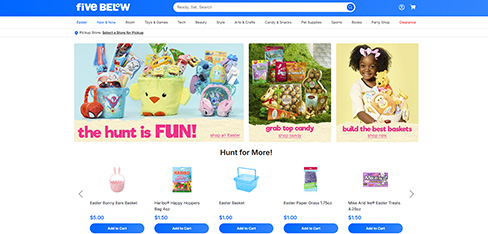
Five Below was growing fast but we needed to deeply understand what made our stores culturally relevant to Gen Z beyond just low prices. UX Stalwarts designed an ethnographic research program that got us out of conference rooms and into stores, homes, and social media where our customers actually experience the brand. Learning that treasure hunt appeal was about trend discovery, not just $5, fundamentally shifted our category strategy. The revelation that 73 percent of our customers shop in social groups transformed how we think about store layout. This research gave us the confidence to launch Five Beyond with higher price points because we understood what customers truly valued.
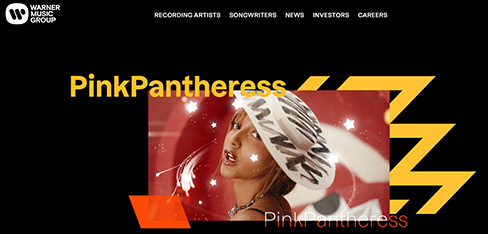
The streaming era fundamentally changed how fans discover and engage with music, and Warner Music needed research that went beyond surface-level analytics to understand the human behavior behind the data. UX Stalwarts designed a global UX research program that gave us genuine insights into how different generations and markets experience music. Learning that Gen Z discovery was driven by TikTok participation and that emerging markets required WhatsApp-first strategies completely reshaped our approach. The revelation that fans wanted vulnerability over polish in artist content transformed our creative strategy. This research directly informed platform investments and artist development programs that generated 28 percent subscriber growth.
Cracker Barrel was seeing traffic declines and there was a real question whether our nostalgic positioning was becoming a liability with younger families. UX Stalwarts designed behavioral research that observed real dining experiences and talked to actual guests rather than relying on assumptions. Learning that Millennial parents valued the unhurried, screen-free family experience — not in spite of the nostalgia but because of it — gave us confidence in our brand foundation. The revelation that wait time rocking chairs and retail browsing were part of the valued experience, not friction, stopped us from making operational changes that would have hurt what makes us unique. This research reversed our traffic trajectory.
Considering a research partner? Here's what decision-makers typically ask us.
TO choose the right user experience research agency, start by looking at methodology and not just visuals of portfolios. Ask the potential UX research consultancy about how they structure studies, recruit participants and translate findings into recommendations. Request examples of cases from your industry or related types of products. Evaluate communication style at the onset of conversations as this is indicative of the quality of collaboration all throughout engagements. Consider the extent to which the agency provides for implementation back of more than report delivery. Geographic coverage – this is important if your users are in more than one area. Finally, talk about how they manage scope changes and timeline pressures since most projects are faced with both.
At UX Stalwarts our user experience research services are built around structured methodologies, transparent communication, and outcome-driven delivery. With global research coverage, flexible engagement models, and a strong focus on implementation support, we help organizations make confident, evidence-backed decisions even under evolving constraints.
Investment varies according to the scope of study, study participant requirements, geographic coverage, and level of depth of deliverables. Usability research of a specific feature with eight to ten users is typically limited to modest five-figure budgets. Comprehensive foundational research programs with more than one method and more than one user segment require bigger investments. Enterprise benchmark studies that track the experience metrics over a period of time require ongoing commitments.
At UX Stalwarts, we come up with detailed proposals after understanding your specific requirements. Factors that affect the overall cost of hiring a UX research agency include difficulty in recruiting participants, complexity in moderating the sessions, depth of analysis, and formats of deliverables. Our UX research consulting team organizes research engagements to fit your budget constraints.
Time taken to complete a UI UX research depends on scope of research, availability of participants. Rapid usability testing with recruited participants provides findings in 2 weeks from kick-off. Foundational research programmes that use multiple methods usually take between four and six weeks. Complex international studies that cover several markets may take as long as eight weeks or more. Participant recruitment is what usually determines timeline more than analysis work. Niche professional audiences/specific demographic need(s) extend recruitment phases. Where possible, we compress timelines through parallel workstreams and established recruitment networks, although rushing participant selection runs the risk of compromising research quality.
Market research is the study of buying decisions, brand image and competitive position, among different populations. UX research services are centered around the user of a specific product, looking for usability issues, comprehension gaps and workflow inefficiencies. Market research asks a question of whether or not people will buy something. UX research asks “can people successfully use something they already chose?” Methods differ accordingly. Market research depends to a large extent on surveys and focus groups. UX research focuses on the study of behavior through usability testing and context studies. Organizations usually require both disciplines for different types of decisions.
Deliverables are aligned with study objectives and stakeholder needs. Standard outputs include research reports outlining methodology, key findings and prioritised recommendations with supporting evidence. Video highlight reels are composed of important moments from recorded sessions. Journey maps visualize pathways of users to identify points of friction and opportunities. Personas: Personas represent patterns of behavior as representative profiles of users. Competitive analysis documents the benchmark findings compared to the alternative products. For UX research agencies delivering implementation ready outputs, we also provide design specifications to translate insights into interface requirements. All deliverables include presentation sessions walking stakeholders through findings and recommendations.
To learn more about the deliverables offered by UX Stalwarts, get in touch with our UX research consultants today.
Yes we routinely conduct research using client provided lists of participants. Learning from real customers is a great way to gain context behind real usage patterns and known expectations. As a leading UX research consulting agency, we coordinate the recruitment communications to ensure the appropriate brand voice, and manage the data from participants based on your privacy requirements. Customer research is the complementary study with external participants who bring new perspectives that are freed by existing product familiarity. The combination usually results in richer findings. Our team collaborates with your customer success or marketing teams to find the right people that fit study criteria.
Absolutely. Concept validation research is a core business function at UX Stalwarts. It helps businesses avoid the expensive development of products that the user will not adopt. We test value propositions, feature priorities and interaction concepts before the start of the engineering investment. Methods include concept testing of descriptions or rough visuals, prototype evaluation of interactive mockups, and competitive analysis of how users currently address the problems that you aim to solve. Early research is usually much cheaper than post-launch corrections. User experience research companies such as ours suggest doing foundational research before making large development commitments, although research is valuable at all stages of the product lifecycle.
The recruitment strategy is dependent on the target user characteristics. For general consumer audiences, we use established panel networks which offer screened participants who meet demographic and behavioral criteria. For professional or niche audiences we use a combination of panel recruitment combined with direct outreach to industry channels and client customer databases. Specialized B2B research may include recruiting via professional associations, LinkedIn networks, or people attending conferences. As a reliable UX research company, we ensure that each participant is qualified for scheduling by completing screening questionnaires. Recruitment is often the longest time that goes into research schedules, so early involvement helps with scheduling flexibility.
Get in touch with our UX research consultants today to learn more.
Remote research is now standard practice Answer (88 words): Moderated usability sessions, user interviews, and card sorting studies work well for video conferencing with screen sharing. Remote methods reach out geographically dispersed participants that cannot be reached using in-person research. Recording capabilities for observers who cannot attend live sessions to review a recording at a later time Some research objectives still have advantages of in-person approaches, especially contextual inquiry observing physical environments or research involving hardware products. Our user experience research services offer both remote and in-person research, and we recommend methods that fit your study needs and accessibility for participants.
UX Stalwarts has more than eighteen years of experience which spans across various industries such as healthcare systems requiring HIPAA-aware research protocols, financial services platforms navigating complex regulatory environments, insurance products balancing communication of coverage and digital simplicity, retail and ecommerce optimization, educational platforms serving diverse learning populations, real estate transactions supporting high-stakes transactions, enterprise software supporting complex professional workflows.
Our cross-industry experience proves advantageous to the clients because of pattern recognition. Solutions that work in one sector have often been transferable to similar problems in other sectors. User experience research firms with wide coverage across industries bring with them accumulated learning that speeds up the development of insight within your specific context.
Research impact requires the adoption of the organization and not merely the quality of the report. As one of the leading UX research companies, we organize deliverables for action, with each finding linked to specific design recommendations accompanied by guidance on implementation. Presentation sessions involve stakeholders that have control over development priorities. Workshop facilitation conveys insights into the backlog items along with acceptance criteria. Follow-up availability to ensure that design teams are able to clarify interpretations during implementation. Validation testing verifies whether changes have desired results. Our UX research company gauges engagement success partly in terms of recommendations which were made and not just studies that were completed. Long-term partnerships exhibit long-term impact throughout product development.
As one of the seasoned UX research companies, we organise engagements on a matching scale of organisations. Focused usability evaluations in which specific features are tested with smaller participant counts work in smaller budgets suitable for startups validating concepts. Enterprise programs with multiple research track programs spanning product portfolios demand larger commitments. Initial conversations set the scope and investment expectations prior to formal proposals. We sometimes refuse projects in which budget constraints would compromise methodological rigor to perform an honest assessment that will lead to better research rather than research which misleads rather than informs. Contact our UX research consultant team to discuss your requirements and we will recommend appropriate engagement structures.
UX Stalwarts offer both models of engagement to meet different organizational needs. Project-based engagements have defined research questions for defined timescopes. Retainer arrangements provide ongoing research capability that supports product teams that make regular decisions where user input is required. Ongoing relationships are cumulative in building your understanding of your users that single studies cannot. Research operations partnerships help organizations build their internal research capacity while supplementing capacity during peak periods. Our UX research agencies model accommodates all the different organizational rhythms, from occasional strategic research to embedded research team augmentation.
First conversations determine if our capabilities fit your requirements. Contact us describing your product context, research questions and considerations of time lines. We schedule discovery calls about exploring objectives in more detail, and then make proposals for what we think the objectives of learning should be, who needs to participate, timelines, and investment. Upon approval, we conduct intake workshops for the establishment of study parameters and recruitment of participants. Fieldwork starts after participants schedule, usually within two weeks of project initiation for normal studies. Our user experience research consultant assigned to your project is your main point of contact for the duration of the engagement and beyond.

C – 81C, Sector – 8, Noida 201301, India


1025 Beamon Drive, Franklin 37064 Tennessee, USA
Sveavagen 34 111 34 Stockholm, Sweden
A-10, Sahastradhara Rd, Doon IT Park, Dehradun, Uttarakhand

© 2026 UX STALWARTS. All rights reserved.