Global web traffic comes from mobile devices, and Google’s ranking algorithm prioritises your site’s performance on the smallest screens. Mobile web design is no longer a secondary consideration in any web project; it’s the primary consideration. Organizations that approach mobile responsiveness as an optimization to be performed after the build instead of as an intrinsic element of the design process are repeatedly faced with the same set of consequences: increased bounce rates, reduced organic visibility, poorer page performance, and a user experience that is actively disincentivising the conversions that their marketing efforts are meant to generate.
Our mobile website design services deliver websites built on a performance-first foundation, where fluid grids, flexible image systems, optimised breakpoint logic, and lean front-end code work together to produce a consistent, fast, and navigable experience across every screen size your users bring. We design & develop across WordPress, Webflow, custom front-end frameworks and headless CMS architectures, ensuring that responsiveness is an engineered property of the build, not an afterthought applied through a theme or plugin that introduces performance debt.
As a responsive web design agency with cross-industry delivery experience in healthcare, fintech, enterprise SaaS, ecommerce and professional services, UX Stalwarts designs websites where mobile performance, Core Web Vitals compliance, and search visibility are all considered interconnected outcomes, not separate workstreams. Every engagement starts with a cold-eyed assessment of how your current site is doing on the devices that your audience is actually using, and every design decision is made with those actual-world conditions as the constraint.

The difference between a responsive web design company that satisfies a visual brief, and one that does not, is how builds are structured at the code level. We optimize for Core Web Vitals LCP, INP, and CLS from the first sprint, and not on the final QA pass.

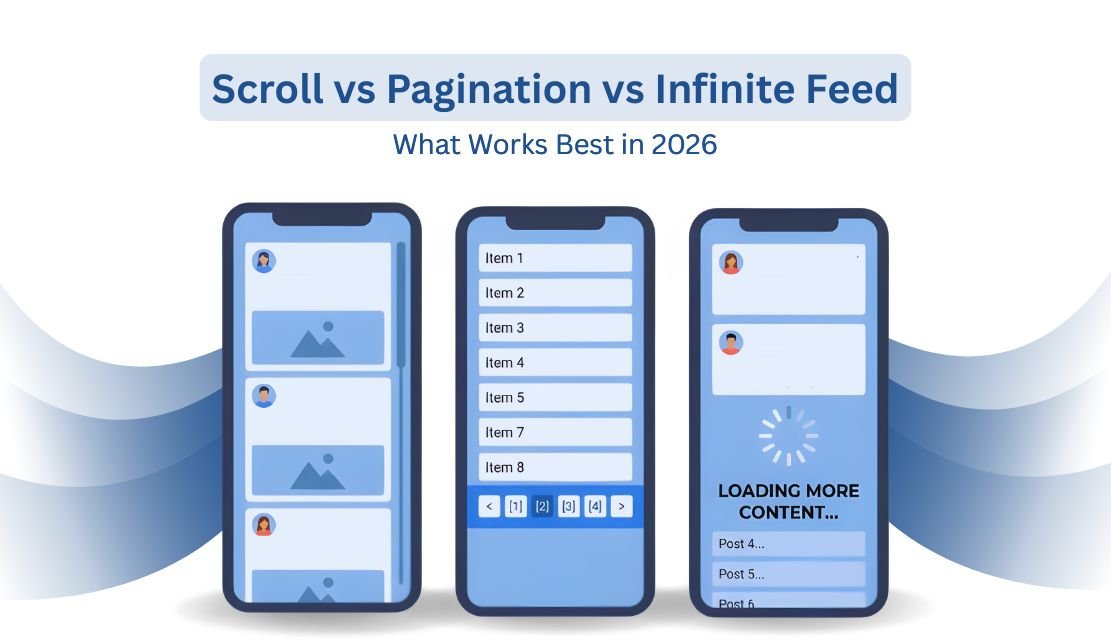
Every website we build begins with the smallest breakpoint and works up with progressive enhancement, not the other way around. The benefit of this approach is leaner code, faster load times on constrained mobile networks, and a user experience that is how the majority of your audience already navigates the web.

Where standard responsive scaling creates visual or functional compromises on a given set of devices, adaptive mobile web design enables us to provide optimized layout variations for defined screen environments. We use this approach when your content architecture and/or feature requirements require more control over the mobile experience than fluid scaling can provide.

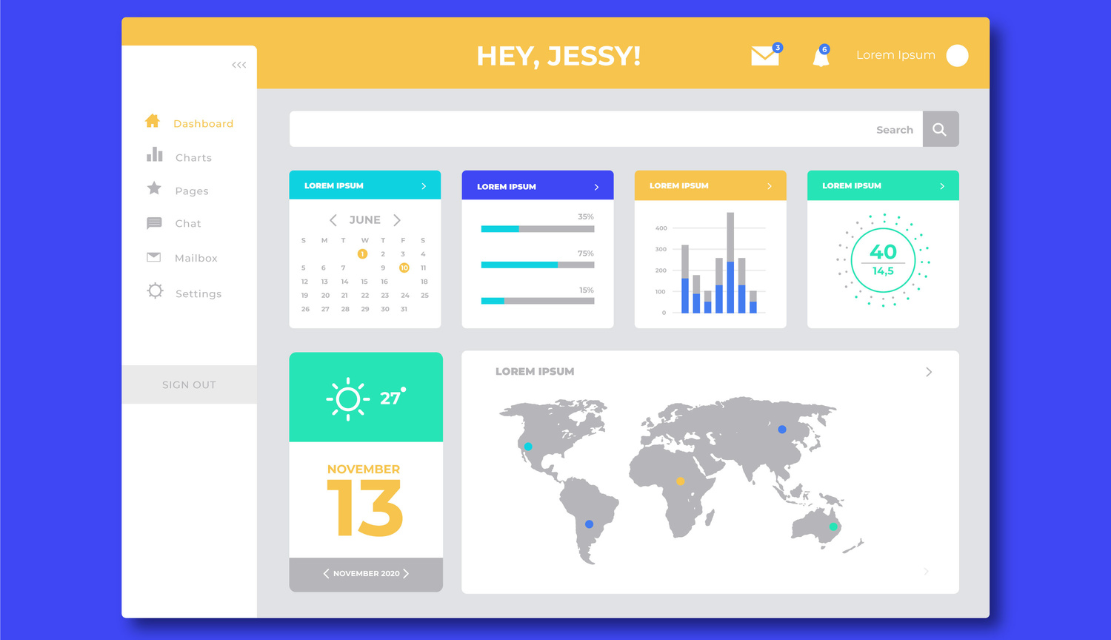
Enterprise dashboards, data tables, multi-column admin panels, and complex navigation structures do not function the same at mobile breakpoints as standard marketing pages. Our responsive website design service is designed for that complexity with specific design patterns that cater to dense data environments that maintain functional utility without compromising mobile usability at smaller viewports.

Responsive design and organic search performance aren’t parallel workstreams – they are the same workstream. Site architecture, internal linking structure, semantic HTML, image optimization and page speed design go hand in hand with layout design so that each page delivered to your users is also optimized as a contender in the search results.

A responsive website that performs well on launch day does not guarantee sustained performance as content grows, third-party scripts add up and Google’s measures of performance change. We provide structured post-launch reviews that measure real user Core Web Vitals, identify performance regressions and recommendations for specific optimizations before they affect your search rankings.

The business case for mobile-first and responsive web design extends well beyond device compatibility. A site that is less than two and a half seconds to load on forging mobile data, a site that is visually stable while contents render, and a site that is intuitive to navigate on a touch interface meets the needs of both the user who came from a search result as well as the algorithm that decided to bring your page to the surface. That alignment between user experience quality and search engine ranking signals where responsive design creates compounding business value. Users who experience a fast load time, fast loading, and easy navigation, without friction, are measurably more likely to convert, return and recommend. Our team designs for the latter to be the main measure of success.
Partner with a team that builds performance directly into every decision.
Creating a mobile-first responsive web design requires a structured sequence from device-context research through performance-validated delivery to achieve lasting results.

We begin by analyzing how your audience interacts with your current digital presence, which devices they use, where they drop off, what the analytics reveal about mobile versus desktop behavior, and how your current site scores against Core Web Vitals benchmarks. These findings define the design and performance brief for every subsequent phase.

With behavioral data established, we map content hierarchy and navigation structure for each breakpoint, ensuring that the most critical information and conversion actions are accessible without scrolling past secondary content on small screens. Navigation patterns, content prioritization and CTA placement are all tested against the mobile user journey before visual design begins.

We design responsive layouts creating responsive designs from mobile up, and we prototype the mobile experience first and incrementally improve it for tablet and desktop viewports. Prototypes are tested on each major breakpoint to ensure that design elements like layout integrity, typographic hierarchy, image scaling and interactive element size are maintained across the full range of target screen sizes.

Front-end development implements fluid grid systems, CSS custom properties, responsive image delivery, lazy loading, and performance-optimised asset pipelines. Code is written to reduce render-blocking resources and cumulative layout shift – two of the most common technical causes of poor Core Web Vitals scores that have a direct impact on search visibility and user experience.

Testing covers the full matrix of target devices, browsers and connection speeds by using both automatic tools and manual review on physical hardware where behaviour is different from that of emulators. Accessibility compliance, touch target sizing, keyboard navigation, and screen reader compatibility are all confirmed before the site moves on to staging to be signed off by the client.

Following client approval, we oversee a rigged process for the launch process that includes final performance benchmarking, Google Search Console setup and Core Web Vitals baseline documentation. Where agreed, post-launch monitoring is continued for a defined period of time in order to track real-user performance data, catch any regressions introduced by content updates and ensure that search visibility improves in line with projections.
As a global responsive design agency with 1,250+ client engagements, UX Stalwarts prove measurable responsive web outcomes across industries. Explore the work.
Every industry presents distinct constraints on how a responsive design web development engagement must be structured. A healthcare platform that is used by clinical professionals while working on hospital computers and handhelds at the same time needs different breakpoint priorities than an e-commerce site, where most transactions are completed using smartphones. A financial services portal needs to be able to present dense regulatory content in a legible format at small screen sizes. A SaaS application has to ensure a complex navigation functionality across tablet and desktop without compromising the mobile entry experience.
As a full-service mobile website design services company with cross-sector delivery experience, we we have designed and developed responsive websites for healthcare and clinical platforms, financial services and fintech applications, enterprise SaaS and B2B technology companies, e-commerce and retail organizations, logistics and supply chain businesses, education technology platforms, professional services firms, and government and public sector portals. Each engagement yields an outcome that is calibrated to the specific performance/usability demands of that domain.

The gap between responsive website development that meets a visual brief and responsive design that meets a measurable business outcome is a technical and strategic distance – not just a creative distance. Our practice is founded on the thought that every design decision carries some performance implication, and every performance implication carries some business implication.
Core Web Vitals as a Design Constraint): LCP, INP, and CLS targets are defined before a single layout decision is made, not retrofitted at QA.
Mobile-First Without Compromise: Among mobile website design companies, we distinguish ourselves by treating mobile as the primary design canvas, not a scaled-down afterthought.
Measurable Search Performance Outcomes: Responsive design built to our standard consistently improves organic mobile rankings because search performance and responsive quality are built together right from the beginning of the project.
We work with industry-standard design, development, and performance tools that ensure both creative precision and engineering quality across every responsive web project we deliver.









Realty Income’s investor relations platform was built for desktop research but institutional investors were increasingly mobile during site visits and travel. Our platform was unusable on mobile which meant investors conducting field research could not access our property data. UX Stalwarts redesigned with responsive architecture that made complex financial data and property portfolios accessible on smartphones. Enabling $2.1 billion in transactions involving mobile research validated the business impact. The 467 percent increase in mobile engagement showed we finally served mobile investor workflows. In institutional investing, mobile is not consumer convenience — it is professional necessity.
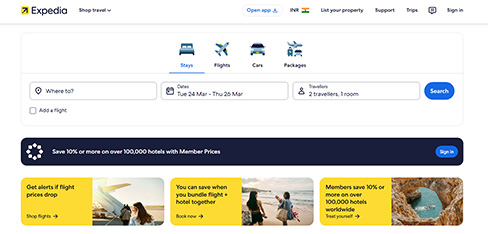
Expedia Group operates 200+ travel brands but each was independently tackling responsive design with wildly inconsistent results. Brands with poor mobile experiences were losing bookings not because of brand weakness but because of platform failure. UX Stalwarts architected a unified responsive platform that standardized mobile excellence across our entire portfolio. Growing average mobile conversion 73 percent and saving $37 million in development costs proved platform thinking beats brand-by-brand approaches. Bringing our lagging brands from 1.8 to 4.2 percent mobile conversion showed the power of shared responsive infrastructure. This is how platform companies scale quality.
Hyatt had a responsive website but it was really a desktop site that barely worked on mobile. Mobile visitors could not effectively view our beautiful hotels, compare rooms, or complete bookings. We were losing 73 percent of our traffic to mobile friction. UX Stalwarts redesigned with adaptive responsive approach optimized for each device. Growing mobile conversion 142 percent and adding $670 million in mobile revenue transformed our digital business. The 234 percent increase in image engagement showed that mobile users needed different experiences, not smaller desktop layouts. This is how luxury hotels compete in mobile-first travel.
Looking for the right partner for your next responsive web project and need clarity before you commit?
Mobile website design services cover the full scope of work required to produce a website that delivers an optimised, fast, and navigable experience on smartphones and tablets – not just a shrunk desktop layout. Depending on the scope of the project, this includes: mobile-first UX and UI design, responsive front-end development, image and asset optimization for mobile networks, Core Web Vitals measurement and improvement, cross-device testing, and, for specific device categories, adaptive layout development. The best mobile website design services incorporate SEO performance needs from the beginning of the project as opposed to viewing it as a post-build consideration.
Responsive website development is the process of building websites using fluid grids, flexible images, and CSS media queries, in such a way that the layout and content size up based on the screen size and no site-specific mobile and desktop versions of a website are necessary. It is important for SEO because Google has a ranking algorithm that is mobile-first, meaning that it analyzes your site based on its mobile version when it comes to determining search placement. A site with poor mobile performance, slow load times or unstable site layouts will consistently suffer from poor performance in organic search, regardless of content quality or backlink profile.
Mobile first and responsive web design are related but distinct concepts. Responsive web design is a technical approach using fluid grids, flexible images and media queries to make a single codebase adapt across screen sizes. Mobile-first is a design philosophy, which means that the smallest screen is designed first and then the larger layouts are incrementally improved from there, rather than scaling a desktop design down. A mobile-first site is always responsive, but a responsive site is not always mobile-first. The former builds have the advantage of usually resulting in better performance on small screens, as the hierarchy of content and code weight is less compressed from the desktop viewport up and more optimized for the small viewport.
Adaptive mobile web design uses predefined layouts for specific screen width categories rather than a single fluid layout that scales continuously. Where standard responsive design is a process whereby a single layout is adapted fluidly to all sizes, adaptive design is a design process where an optimized layout is served when a device falls into a set breakpoint category. It is appropriate when your product or content has significantly different functional needs on mobile than on desktop – for instance, enterprise tools where a stripped-down mobile workflow works for field users differently than a full desktop control panel. Which approach to use, responsive or adaptive, should be guided by data of user behaviour and functional requirements, not the norm.
Google’s mobile-first indexing means your mobile site’s performance directly determines your search ranking, not your desktop version. Slow LCP scores (the time it takes for your largest visible content element to load) signal poor user experience to Google’s algorithm. High CLS scores (unexpected layout shifts as content loads) indicate visual instability. Poor INP scores (how quickly the page responds to user interactions) signal interactivity problems. All three Core Web Vitals metrics are evaluated on mobile and contribute to your Page Experience ranking signal. A well-designed responsive site that meets Google’s Core Web Vitals thresholds gains a measurable organic ranking advantage, particularly in competitive keyword environments where content quality between competing pages is similar.
Evaluate mobile website design companies on four practical criteria. First, ask to see how their existing projects fare on Google PageSpeed Insights for mobile, not just their visual portfolio. Secondly, ask if the way they develop their websites includes Core Web Vitals optimization as a standard delivery or more as an optional add-on. Third, ask if they test on physical devices or just in browser emulators, as sometimes emulators only testing fails to discover real-world performance problems. Fourth, ask about how they address post-launch performance regression when content is updated or because third-party scripts are slowing things down. An agency that cannot answer these questions in specifics is providing design without performance accountability.
UX Stalwarts recommends evaluating any responsive design company on the following dimensions: Experience in designing for your particular type of content or industry, A clearly defined design process that optimizes for Core Web Vitals and not just visual responsiveness, CMS compatibility for your existing or intended platform, a defined cross-device testing approach, and A record of post-launch support. Ask to see a performance score for a live site they have delivered, and not just a screenshot of the design. If a company cannot show measurable mobile performance results from recent work, then the responsiveness they provide is probably visual rather than functional.
Creating a mobile first responsive web design involves writing CSS styles for the smallest supported screen width and uses media queries with min-width to progressively add layout complexity for larger viewports. At the development level, that means organizing the structure of the content in the HTML, making the flow of content linear and working on mobile without having to modify it, using flexible grid or flexbox layouts instead of using fixed pixel widths, serving appropriately sized images using srcset and sizes attributes, deferring the loading of non-critical resources, and minimizing render-blocking JavaScript. The result is a codebase that is lean by default; performance is not added at the end, but built into the architecture from the first committed line of code.
A standard web design service may produce a visually attractive website without formally addressing mobile performance, breakpoint behavior, or Core Web Vitals compliance. A responsive website design service specifically scopes and delivers design and development work to ensure the site is able to perform well for all of the possible screen sizes your users will encounter. The distinction in this matters because it’s possible to have a site that looks great on mobile devices but has poor LCP scores, poor and unstable CLS behavior, or poor INP response times, all of which impact the user experience and organic search ranking in ways that are not visible to the untrained eye. Responsive design services should involve some form of measurable performance validation, and not just visual review at multiple breakpoints.
Timeline depends on project scope, content volume, platform, and whether the engagement requires a discovery and strategy phase or not. A well-targeted responsive redesign for a set of page templates on an existing CMS platform will usually take from eight to 12 weeks from kickoff to launch. Larger enterprise projects and/or new builds with bespoke front-end architecture, complex integrations, and multi-language or multi-region requirements can go up to sixteen to twenty-four weeks. We give a detailed timeline estimate after a scoping conversation where we have an understanding of your platform, content structure and performance targets – because timeline accuracy needs the specifics of the project, not general benchmarks.
Often, yes, though the answer depends on your current platform and the technical condition of your codebase. As a responsive design agency, we start with a technical audit as to whether your current build can be made responsive with CSS and layout changes, or if the structural issues run deep enough that a rebuild is the more efficient route to take. Common signs that a partial retrofit is an option are a well-structured CMS, semantic use of clean and limited use of fixed-width layout components. Some common indicators to rebuild are having table-based layouts, too many plugin dependencies, poor Core Web Vitals baseline scores, or the platform no longer receiving security updates.
As a mobile website design services company, we work across WordPress, Webflow, custom React and Next.js front-end builds, and headless CMS architectures that include Contentful and Sanity. Platform selection is based on your team’s content management needs, your organization’s technology resources for continued maintenance, and the performance characteristics each platform can feasibly provide for your site’s type of content and traffic volume. We advise clients on platform choice during discovery, based on those factors, not based on internal tool preference, and we document architecture decisions so your team understands the reason for each recommendation.
Responsive design, web development and SEO share the same technical foundations. Site architecture, URL formation, configuration of the canonical tag, alt attributes of images, loading time of pages, structured data markup, and the hierarchical formation of internal links are all attributes of the development layer that have a direct impact on organic search performance. We make SEO requirements a part of the design, not an addition once the website is launched. This means site architecture will be mapped before development starts, semantic coding will be the default standard for coding, page performance targets will be determined with Google’s Core Web Vitals thresholds in mind, and structured data will be implemented where it will aid richer eligibility for search results. The result is a site that is built to rank from the day it is indexed all the way through.
UX Stalwarts introduces ordered project governance, cross-functional team members, and written delivery standards to all responsive web design company engagements at enterprise scale. For organizations with multiple stakeholder groups, existing brand and technology standards, legacy content migration requirements or regulated content considerations, our process includes formal discovery, staged design approval, phased development sprints and structured cross-device testing against a defined device and browser matrix. We also offer post-launch performance documentation – Core Web Vitals baseline scores, Google Search Console setup, etc. – so your internal team has a clear point of reference for performance when making all future decisions about how to develop the site.
The best responsive web design company for your particular project is the one that understands the functional and performance needs of your type of content, can show relevant delivery experience, measures its work against real-user performance data, and not just visual deliverables, and maintains clear communication at every stage of the engagement. For potential agencies, ask them to show you a PageSpeed Insights report for a recently delivered mobile site, how they go about fixing Core Web Vitals regressions after launch and their cross-device testing process. UX Stalwarts welcomes these questions because our delivery process is based on the answers and because we believe that performance accountability is what separates a truly capable web design partner from one that simply produces pretty screenshots.

C – 81C, Sector – 8, Noida 201301, India


1025 Beamon Drive, Franklin 37064 Tennessee, USA
Sveavagen 34 111 34 Stockholm, Sweden
A-10, Sahastradhara Rd, Doon IT Park, Dehradun, Uttarakhand

© 2026 UX STALWARTS. All rights reserved.