A mobile application user’s drop after a first use is not a design success; it is a retention failure with measurable financial consequences. Organisations that invest in development but not equally in design will often ship applications that may be technically workable but that are commercially useless: confusing to navigate, slow to convey value, unable to guide users to the actions the business needs. Poor mobile UX causes higher customer acquisition costs due to increased customer churn, a loss of trust in the brand due to a friction-heavy interaction, and costly redesign cycles that could have been prevented with good design thinking in the first place.
As a mobile app design agency with eighteen years of cross-industry experience, UX Stalwarts designs mobile applications around the behavioural patterns, contextual constraints, and decision journeys of the very users that will actually use them. Every engagement spans the entire spectrum of design, from user research, through information architecture, interaction design, UI systems development, to validated prototyping; all the deliverables have a hand-off cleanly to development without ambiguity. Whether the short-term need is the consumer-facing iOS product, enterprise Android workflow tool, cross-platform experience or custom mobile solution for a regulated industry, the same research discipline and design precision is invested in each project scope.
Among the top app design companies evaluated by enterprise procurement teams, very few can demonstrate genuine cross-platform depth alongside compliance-aware design practice and enterprise-grade handoff standards. UX Stalwarts operates across iOS, Android, and cross-platform environments with equal UX Stalwarts works on iOS, Android, and cross-platform environments with the same command and has experience documented in healthcare, fintech, logistics, and enterprise software sectors, where errors in mobile design are not merely UX issues effervescing but operational and regulatory risks. That breadth of context, combined with a rigorous six-phase design process, is what sets UX Stalwarts apart from agencies that create pretty screens without having a deep understanding of the business and user realities that those screens need to serve.

iOS and Android are not interchangeable design environments; they have different interaction paradigms, conventions for navigation, gesture patterns, and visual standards that users have been conditioned to expect. We design for the conventions of each platform, creating experiences that feel at home on the device as opposed to being generic across the board. This platform fluency is not something applied as a cosmetic adjustment at the end of a project, but is built into every project from the wireframe phase.

No interface is designed before our team knows who will use the interface, in what context, and with what expectations. Discovery includes behavioural research, persona development, competitive app analysis and user journey mapping specific to your product category. This front-loaded investment in research eliminates the highest cost class of design errors – decisions made on untested internal assumptions that emerge as user complaints after the place is launched.

Enterprise mobile applications pose design challenges that consumer app frameworks cannot address: multi-role interfaces, offline functionality requirements, integration with legacy systems, accessibility compliance mandates and security-driven UX constraints. As a recognised enterprise app design company, we have direct experience designing with these constraints, not learning about them mid-project at a client’s expense.

Every design engagement includes the process of interactive prototype development, which gives stakeholders the chance to experience the flows of an application before the development process starts. Prototypes are created to prove specific hypotheses – about navigation logic, feature discoverability, or conversion flow – not as a way to create a demo for presentations. Issues that are identified in prototype testing are addressed in the design phase when the cost of change is low, as opposed to after development is committed in a direction.

A design that cannot be built accurately is not finished. Every project ends with a complete developer handoff package, covering annotated specifications, interaction documentation, asset libraries, design system components and platform-specific guidance. Development teams are handed off work they can do immediately without follow-up clarification loops, which delay timelines and introduce interpretation errors in the process.

Real user behaviour after launch always shows patterns that no amount of pre-launch research can predict. Our team supports post-launch UX iteration cycles that are driven by analytics, heat maps, and user feedback data, thinking of the shipped application as the start of the design process, not the end of it. Clients who incorporate iteration in their engagement model consistently experience improved performance in terms of long-term retention and conversion.

Download numbers are a vanity metric. Retention, task completion, and conversion are the indicators that connect mobile design to business outcomes. When an application is designed with behavioural rigour – when flows are logical, value is communicated immediately, and friction is systematically removed – users form habits around it. They recommend it. They get the actions the business needs them to complete. The UX Stalwarts team designs for that quality of engagement: not screens taking good pictures in the portfolio, but experiences that continue to perform in the daily context of real users with real goals and little patience.
Partner with a design team that understands both user needs and business outcomes.
Every mobile app design engagement follows a structured, research-grounded sequence that moves from discovery to developer handoff with deliberate discipline — ensuring each phase builds on validated decisions, not unchecked assumptions.

The engagement starts with structured interviews with stakeholders, user research, competitive app analysis and mapping of technical constraints. The team forms a clear image of who the users of the app are, what they need to achieve, in what context they will use the application, and what the business results from the design need to be. This phase results in a discovery report, governing every design decision from then on, avoiding misaligned briefs becoming costly late-stage corrections.

With findings from the discovery documented, the team prepares a strategy for mobile design, which includes documentation on information architecture, user flow logic, platform selection rationale, and feature prioritisation. This phase defines what the application will do, in what order, and how users will do it, and how the design will help guide them to key actions. Clients review and approve the strategy before any visual or interaction design begins so that the direction is tied to commercial objectives instead of your designer’s gut.

Structural wireframes are created to define screen layouts, navigation patterns and content hierarchy before visual design application. Wireframing at this stage separates structural thinking from aesthetic decision-making, which allows stakeholders to evaluate how the application works before reacting to how it looks. Issues in navigation logic, information density or user flow are identified and resolved at this stage (the cost of revision is minimal compared to later phases).

Approved wireframes move into high-fidelity UI design, where the focus will be on visual language, typography systems, the application of colour, iconography, component libraries, and motion principles (in detail). Each design is built as a responsive system for its target platform, adhering to the iOS Human Interface Guidelines or Google’s Material Design standards as appropriate, while expressing the client’s brand identity within those conventions. Design systems are designed to achieve visual and functional consistency across the different screens and future additions to the features.

Interactive prototypes are created based on the approved UI designs to simulate the entire experience of the application before a line of development code is written. Prototypes for internal stakeholder validation, user testing sessions, and investor/board level demonstrations. Testing at this stage creates documented findings that help to make final design changes – making sure that the development team is working from a design that has been validated against real user behaviour, rather than simply discarding it in static screens.

The final phase creates a full developer handoff package: Annotated design specifications Interaction documentation Asset exports by platform and resolution, design system component libraries, and guidelines for platform-specific implementation considerations. Quality assurance is performed against the handoff package to ensure it is complete and accurate. Post-handoff, the design team is available for clarification on the development, and the team performs a final review of the built application against the approved designs before release.
Across a global client base spanning enterprise organizations and growth-stage companies in healthcare, fintech, retail, logistics, and enterprise software, the portfolio reflects 18+ years of applied mobile design expertise across iOS, Android, and cross-platform environments. Explore documented engagements where a rigorous design process produced measurable outcomes.
The mobile design challenge looks fundamentally different depending on the industry it serves. A fintech application must build trust in the first 3 seconds and provide security without any friction for every interaction. A healthcare app also needs to balance clinical accuracy with patient-friendly language against accessibility and compliance mandates. A logistics platform must employ a robust and reliable operation in adverse connectivity conditions and support users with widely varying levels of digital fluency. UX Stalwarts brings documented experience in each of these contexts, applying design principles that are more or less adapted to the particular user populations and regulatory contexts those industries require.
Industry experience spans businesses in healthcare and medical technology, financial services and fintech, eCommerce and retail, enterprise software and SaaS, logistics and supply chain, education technology, professional services, and consumer lifestyle apps are among the industries with experience. This breadth means that the team knows what design decisions are transferable across categories and which need to be adapted to the specific sector. Clients benefit from cross-industry pattern recognition, insights from designing for similar user populations in other industries, without compromising the context-specificity that each industry requires.

Attractive screens are the baseline expectation in mobile app design, not a differentiator. What goes into the thinking that precedes every design decision separates a mobile application that performs commercially from one that simply passes the visual review. UX Stalwarts ensure that thinking is baked in at all stages of all engagements, and the results keep performing after release instead of triggering re-design conversations within months of release.
Research Governs Every Decision: Every interaction pattern, navigation model and visual hierarchy choice is traceable to documented user research findings, not aesthetic preference or convention borrowed from unrelated product categories.
Platform Conventions, Brand Expression: iOS and Android users have expectations about the platforms that they use, which, when broken, cause friction despite the visual impression they leave. The team balances this tension by designing within the boundaries of each platform while expressing the client’s identity differently within the boundaries.
Handoffs That Development Teams Trust: The quality of a design handoff determines whether a great design actually gets built accurately. The development teams consistently describe the quality of specification packages produced by design teams as the most complete they’d received from a design partner.
The team uses a deliberate, up-to-date selection of mobile design, prototyping and handoff tools chosen for their compatibility with iOS and Android development workflows and their ability to deliver design outputs that translate accurately from screen to shipped application.








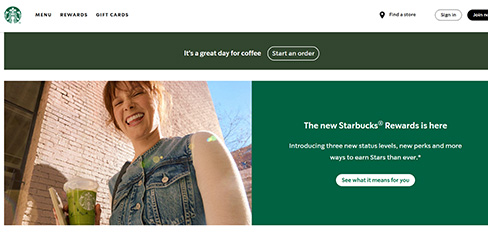
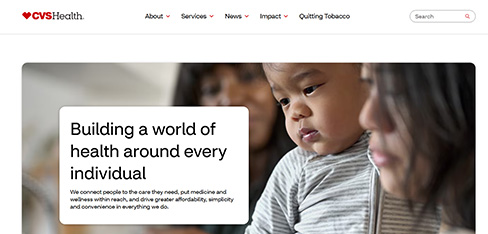
CVS had pharmacy, MinuteClinic care, retail stores, and Aetna insurance but our app treated them as separate businesses. Customers managing chronic conditions were juggling prescriptions, appointments, health tracking, and product purchases across disconnected experiences. UX Stalwarts redesigned our app as an integrated health platform. Growing digital health revenue to $890 million and improving medication adherence 34 percent proved integration created value. The 3.8x lifetime value of integrated users showed that health platforms are more valuable than pharmacy apps. This is CVS’s competitive advantage against Amazon Pharmacy.
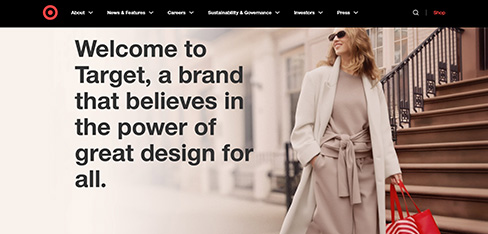
Target’s same-day services had 94 percent customer satisfaction but only 23 percent adoption. We had a discovery problem, not an experience problem. Customers did not know they could get Target products in 2 hours. UX Stalwarts redesigned our app to make convenience the default with upfront mode selection and Drive Up optimization. Growing same-day services from $4.2 billion to $5.6 billion in revenue proved we unlocked latent demand. The 134 percent Drive Up growth showed that when you make convenience frictionless, customers choose it. This capability is how Target competes with Amazon.
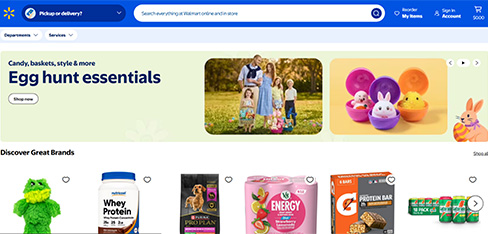
Walmart’s stores are our competitive advantage but our mobile app was not leveraging them. We had an e-commerce app and a separate store experience with no connection. Customers shopping both channels spent 4.7 times more but we were not enabling that journey. UX Stalwarts redesigned our app as an omnichannel hub with in-store mode, seamless cart switching, and location-aware experiences. Achieving 73 percent cross-channel adoption and growing to 98 million monthly users made our app the bridge between physical and digital. The 34 percent store mode usage proved customers wanted mobile tools while shopping. This is how stores win the digital era.
Evaluating your options? Here is what serious buyers consistently want to understand before choosing a mobile design partner.
A mobile app design service covers the full discipline of designing how a mobile application works and looks, from user research and information architecture through wireframing, UI design, interaction design and interactive prototyping. It does not usually involve development, although the best engagements result in handoff packages that work well with development teams. The distinction is important because design and development are two different disciplines: design looks at the question “will the application be usable, clear and engaging?”; development looks at the question “will the application be functional and stable?” Both are necessary, but conflating them leads to poor outcomes in both directions.
Start by going through their portfolio, looking for applications in your product category or a similar level of complexity – not necessarily for visual quality but in structural logic. Ask how they do user research before starting designs, what they do if they get feedback and revise designs, and what their developer handoff process looks like. A credible mobile app design agency will have answers to all three questions, documented, client references who will be happy to speak about the process and live applications that you can interact with, instead of just static screenshots. Evaluate their process (as thoroughly as their portfolio).
iOS and Android have two different design conventions: Both operating systems have been designed to be used in very different ways based on what users are accustomed to seeing on their respective platforms. iOS is guided by Apple’s Human Interface Guidelines, which emphasise certain navigation patterns, typography conventions, gesture behaviours, and visual standards. Android uses Material Design principles from Google, and these principles have different ways of navigation structure, component behaviour, and visual language. An Android app design agency or iOS app design agency which applies a generic, platform-neutral design creates applications that feel just a little wrong to a platform-native user, a friction that destroys trust and engagement without the user always being able to explain why.
The team provides design for native iOS, native Android and cross-platform environments, including applications using Flutter, React Native and similar frameworks. Cross-platform design, therefore, demands a particular approach: a design system must be unified across both platforms, and yet it must follow the conventions that are specific to the native platform users. This is a more constrained design problem than for an individual platform, and it calls for a mobile design agency that is fluent in both platform conventions at any given time. The team’s cross-platform design approach is written down and available for review before engagement.
Cost is determined by the number of unique screen designs that will be needed, the level of user research and strategy work required, fidelity/iterations of the prototype, the complexity of interaction design for different user flows and states, and whether the engagement includes usability testing and post-launch iteration support. Mobile app design company usually categorises the pricingintoo fixed-fee per project scope, or phased billing as per design milestones. The most important consideration of cost is not which firm charges the least; it is which firm’s process results in a design that decreases development rework, post-launch fixes, and early redesign cycles that collectively cost considerably more than a rigorous design engagement.
Timeline is based on the scope of the application, the number of unique user flows, the complexity of the interaction design and how fast the stakeholders will review and approve at each phase. A focused consumer application with a well-defined scope can go through discovery, wireframing, UI design and prototype validation in a matter of weeks. A complex enterprise application that has multiple user roles, offline requirements and integration considerations usually takes several months of design work before handoff. The best way to have timeline expectations is by having detailed scoping at the beginning of the engagement with clear phase durations and a set of approval gates.
Yes. As a mobile app design agency, India organisation and international clients work together regularly, UX Stalwarts delivers its model of collaboration to work effectively across time zones and geographies. Research phases are captured asynchronously; design review sessions are scheduled synchronously with proper notice; all deliverables are produced in internationally-compatible formats. Working with an India-based mobile design agency offers international clients access to senior design capability at the level of delivery standards of agencies in higher cost markets, with structured methods of communication which eliminate the handoff gaps seen in less structured remote engagements.
Mobile UI design refers to the visual layer of a mobile application, the colours, typography, icons, component styles and visual hierarchy in the product that users see. Mobile UX design refers to the structural and behavioural layer, how the application is organised, how the users navigate between screens, how the flows are sequenced, and how the friction is minimised on each step. Both disciplines are critical, and the most productive mobile engagements consider them inseparable. Mobile app ui ux design services that focus on UI without UX result in visually interesting applications that users find confusing; those that focus on UX without UI result in functional applications that users find unappealing. The integration of both disciplines is done in a unified design process by the team.
A full mobile app design engagement should include: A user research report including findings from the discovery process Information architecture diagrams Wireframes for all the key screens and states High fidelity UI designs for all screens, with a range of relevant device sizes A design system or component library An interactive prototype Usability testing documentation, if testing was performed Developer handoff package including annotated specifications, interaction documentation, and asset libraries organized by platform and resolution. Any engagement that ends without these documented deliverables is leaving the client without the materials to effectively build, maintain and evolve the application.
Enterprise mobile applications have design problems that consumer app frameworks cannot solve. Multi-role interfaces require that the users accessing the same application be presented with different views, navigation options and available actions, depending on their role and permissions. Offline functionality cannot be added to the interaction model as an afterthought after UI decisions have been made. Integration with existing enterprise systems, CRMs, ERPs, and backend data sources defines what information is available and how it can be displayed. As an established enterprise app design company, the team has some experience with these limitations and designs for them from the strategy phase, not as late-stage additions.
Yes. App redesign engagements follow a structured process, which starts with a UX audit of the existing application, taking a look at analytics, user feedback, task completion rates, and identified friction points to understand what is working, what is failing and why. This audit helps to avoid the most common mistake in redesigning, which is copying bad structural decisions in new visual packaging. The redesign process then mirrors a new build, strategy, wireframing, UI design, prototyping, but with the additional advantage of the real performance data from the existing product informing every decision. Redesigns guided by audit results are often superior to redesigns that are simply motivated by a desire for a visual refresh.
When comparing the best app design company options, look at five things in addition to the quality of their portfolios: how robust their user research practice is, how well they document their processes, the quality of samples they provide for developer handoff, how comfortable the company is with applications at your complexity level, and how the company provides support after the application is launched. Visual quality is a baseline expectation; virtually every established agency produces attractive screens. The differentiating factors are rigor of the process, the depth of research, the quality of the handoff, and the accountability structure for what happens when the application is in the hands of the users, generating real feedback.
Custom app design means the design of an application from original research through custom visual and interaction systems, without the need for template layouts, generic component libraries, or off-the-shelf design patterns. A custom mobile app design agency is needed when the application is for a specialised user population, is in a regulated or high-stakes industry, needs a different expression of the brand that generic templates are not able to provide, or needs to solve a user problem that currently available design conventions don’t address. Template-based approaches are suitable for simple applications with low differentiation requirements; custom design is suitable if the application’s UX is part of the product’s competitive advantage.
The transition from design to development is one of the riskiest transitions in any mobile app project. Specification gaps, undefined states of interactions, missing asset exports and ambiguous responsive behaviour at this stage translate directly into errors in the development, requiring the involvement of the design team to resolve, adding time and cost to the development phase. A well-structured handoff package includes annotated design files with specifications about spacing, typography, and colour; interaction documentation about all screen states, transitions, and gesture behaviours; asset libraries organised by platform and resolution; and design system documentation about the rules of use for components. The team performs a final check on the handoff package before release to check for completeness.
UX Stalwarts is a leading design agency that specialises in the discipline of UX, user research, UX strategy, UI design, interaction design, and prototype development, and delivers handoff packages that integrate smoothly with any development partner or internal engineering team of the client’s choice. For businesses that are looking for an app design and development service provider to complete the task in a single place, the team has developed relationships with development partners and can help facilitate introductions with a full design context already documented. This strategy ensures that design integrity is preserved by development without having to manage complex multi-vendor handoffs independently by your clients.

C – 81C, Sector – 8, Noida 201301, India


1025 Beamon Drive, Franklin 37064 Tennessee, USA
Sveavagen 34 111 34 Stockholm, Sweden
A-10, Sahastradhara Rd, Doon IT Park, Dehradun, Uttarakhand

© 2026 UX STALWARTS. All rights reserved.