Digital products fail users in quiet, incremental ways. A button that does not communicate its state. A form which requires no feedback until submission fails. A workflow that requires the user to remember the context that should be held for them. These are not cosmetic failures; they are behavioural breakdowns that accumulate into abandoned sessions, high support volumes, and products that users tolerate rather than rely on. In complex B2B environments, where efficiency directly impacts operational outcomes, poorly designed interaction patterns carry costs that manifest as measurable, traceable effects before leadership links them to design.
User interaction design is the discipline that governs how a product responds to the people using it in all input methods, system states and task situations. Our practice is comprehensive in the scope of interaction design services: from mapping out flows of behaviour, to defining specifications for microinteractions, to designing motion systems that communicate, not decorate, to building the interaction logic for complex multi-step workflows, to producing the developer-ready documentation that removes ambiguity between design intent and engineering output. We design for web, mobile, SaaS, enterprise platforms, and data-heavy dashboards where clarity of interaction makes the difference between getting work done and giving up.
As recognised interactive web design across healthcare, fintech, e-commerce, and enterprise software, and with our cross-industry delivery experience, UX Stalwarts brings structure to a discipline far too many studios treat as a post-visual design refinement. Interaction quality is not an aesthetic layer – it is a functional specification that needs to be researched, structured, tested and documented just as any other engineering deliverable. That is how we are going into every engagement.

Before defining one interaction pattern, we study to understand how users actually navigate your product, where they pause, where they err, and what context they carry between steps. And that behavioural evidence determines the structure of interaction, not preference, or convention. The outcome is an interaction system that is not based on assumed task patterns but based on actual task patterns.

Our UI interaction design practice includes every interactive state an interface element can be in: default, hover, focus, active, disabled, loading, error and success. Each state is specified and documented before beginning development, which can cause the silent inconsistencies that build up when state logic is left to engineering interpretation during build.

Animation has a place in interfaces because of what it communicates that the static design cannot: a system state change, a spatial relationship, a completed action. We design motion systems in which timing, easing, and duration are calibrated to reinforce usability, not provide for visual interest at the expense of performance or clarity.

Accessible interactions are not compliant add-ins; they are the foundation of a usable product. Our interaction specifications consider keyboard navigation paths, reduced motion preferences, screen reader compatibility, and touch target sizing right from the first design phase so that accessibility is more intrinsic to the interaction system than it is retrofitted before launch.

Enterprise dashboards, multiple-step approval flows, permission-based navigation and data-rich interfaces require interaction logic that is rarely good for general design studios. Of interaction design companies that work at enterprise scale, our team has specific experience in designing interaction structures for high-complexity B2B products where task efficiency is a direct operating measure.

Interaction design that doesn’t make it to the build phase has no practical value. Our deliverables include annotated interaction specifications, documented state logic, motion timing values, and behaviour notes in a format ready for direct use by our engineering team, reducing the number of clarification cycles and ensuring that the interaction experience you build is the one that was designed.

The relationship between user interface and interaction design determines whether a product is responsive or sluggish, clear or ambiguous, trustworthy or unreliable, and users make that judgment in seconds of engagement, and without consciously articulating it. When interaction design is done with precision, users get their tasks done with less cognitive effort, make fewer mistakes and achieve their goals with confidence that directly translates into retention and recommendation. For enterprise products, the impact is operational: less training time, less support burden, measurably more task completion rates across user populations. Our team designs interactions that earn that outcome through evidence-led decisions, not iterative guesswork applied after the product has already disappointed its users.
Partner with UX Stalwarts for measurable interaction design services.
Every engagement follows a structured, research-grounded sequence that converts behavioural insight to an interaction system your engineering team can build without ambiguity.

We begin with an understanding of the way users currently navigate your product or equivalent systems, what they do well, what they do poorly, and what cognitive patterns they bring to the task at hand. Session recordings, task analyses, and contextual interviews create a behavioural map that informs every subsequent interaction decision with evidence and not assumptions.

Usability insights, we define the structural logic of the interaction system, how the users move from state to state, what causes what response, how errors occur and how they are resolved, and which interaction patterns apply consistently across the product. This is the phase of the architecture process that results in the interaction skeleton before any visual design work begins.

We specify the behaviour for all discrete interactive elements: button states, input field feedback, input field validation logic, loading indicators, transitions between views, and empty states. Each microinteraction is defined with sufficient precision to allow an engineer to implement it with no need for design clarification, including timing values, easing curves, and trigger conditions.

Where animation is communicative in nature, indicating system status, guiding spatial navigation or confirming a completed action, we design motion systems with defined timing, duration and easing parameters. Motion is reviewed for accessibility compliance, respect for user preferences to reduce or eliminate animation at the operating system level.

Interactive prototypes are built to the fidelity needed to provide meaningful usability evaluation, enough fidelity that real problems with interactions are exposed, and not just aesthetic preferences. We perform structured usability tests with representative users, observe task completion behaviours, and use findings to improve interaction logic before the specification is handed to development.

Final deliverables include fully annotated design files, interaction state documentation, motion specifications and behaviour reference guide format for engineering teams. Whereas design systems are implemented, interaction tokens and component behaviour notes are incorporated into the current system architecture, which minimises build time and ensures consistency throughout future product development cycles.
As an Interactive Web Design Agency with 1250+ client engagements worldwide, UX Stalwarts exhibits applied interaction expertise across industries - see the results.
Every industry presents distinct interaction constraints. Regulatory disclosure requirements need to be surfaced at specific points in time, operational workflows with a misplaced interaction step that means compliance risk, or consumer journeys with drop-off at a single screen that costs measurable revenue. As an interactive web agency with experience across sectors, we tailor interaction patterns to the functional and compliance needs of any sector, versus using an interaction template that is product agnostic across engagements with fundamentally different characteristics.
Our project history spans user-centred interaction design work across healthcare and clinical platforms, financial services and fintech applications, enterprise software as a service (SaaS) and workflow automation tools, e-commerce and retail experiences, logistics and operations dashboards, government and public sector portals, real estate and property technology, and education technology platforms. Each sector influences how we go about task hierarchy, error handling, feedback timing and the cognitive load management that is embedded within our interaction specifications.

The gap between interaction design houses that deliver great-looking prototypes and those that deliver working, scalable interaction systems is greater than most clients realise until they experience both. Our practice is designed based on the second model, where each interaction decision is traceable to user research, and each deliverable is usable by an engineering team without interpretation.
Research-Anchored Interaction Decisions: Every user interaction design choice we make is traceable to a specific behavioural observation or validated usability finding, never to convention alone.
State-Complete UI Specifications: With the in-between roles between design intent and what engineers actually build eliminated, we document every interactive state an element can be in.
Motion That Communicates, Not Decorates: Our motion design decisions are held to a communicative standard; each animation must reduce cognitive load or clear up a system state in order to earn its place.
We work with established interaction design and prototyping tools to ensure a level of design precision and seamlessness during the handoff to engineering teams across web, mobile, and enterprise platforms.











Cisco’s Webex had the enterprise features but video meetings were exhausting people. Gallery view, constant eye contact, and control management were creating meeting fatigue that threatened remote work sustainability. UX Stalwarts designed humanized interaction that made video feel more like in-person meetings. Reducing fatigue 67 percent and improving meeting effectiveness from 6.2 to 8.4 out of 10 proved interaction design can solve wellbeing problems, not just functional problems. The 89 percent improvement in screen sharing engagement showed that maintaining human presence was critical. This interaction innovation defended our enterprise collaboration leadership.
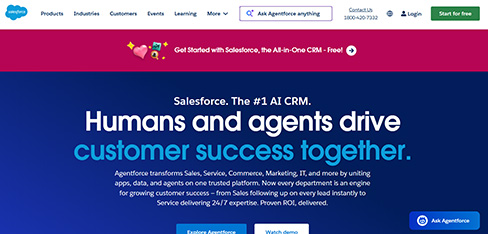
Salesforce was powerful but sales reps hated using it because they spent more time on data entry than selling. The more features we added, the more complex and time-consuming CRM became. UX Stalwarts designed context-aware interactions that automated administrative work and surfaced insights when reps needed them. Increasing selling time from 36 to 58 percent of rep workday transformed CRM from burden to productivity multiplier. The 78 percent reduction in data entry time eliminated the friction preventing adoption. This interaction innovation is how Salesforce defends CRM leadership — not features, but making hard work easy.
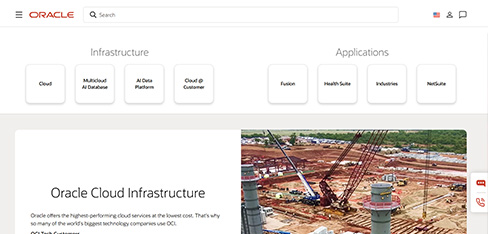
Oracle databases held the world’s most valuable business data but accessing it required SQL expertise that business users did not have. We were forcing people to learn database programming to answer business questions. UX Stalwarts designed natural language interaction that finally made enterprise databases accessible to everyone. Reducing query time 73 percent and expanding users 340 percent unlocked data’s value. The 87 percent query success rate proved natural language can match SQL precision. This interaction innovation is how Oracle defends database leadership against cloud-native competitors with simpler interfaces.
Exploring user-centred interaction design partners and want clarity before you commit?
User interface and interaction design are closely related to each other, but tackle different levels in the design of a product. UI design is concerned with the visual layer, the typography, color, layout, the use of icons, and the appearance of interface elements. Interaction design lies underneath that layer and deals with how the interface behaves when the user puts in input. It determines what happens when a user clicks a button, how an error is surfaced, how a multi-step workflow sequences itself and how the system communicates state changes. Strong products demand that both disciplines be carried out rigorously and in a coordinated fashion.
A structured interaction design engagement will typically include behavioral research and user task analysis, interaction architecture that defines how a user flows through the product, microinteraction specifications for all discrete interface elements/states, motion system design where the animation is not for mere fun but serves a communicative function, high-fidelity prototype building, usability testing with real users, and developer-ready documentation. The scope is dependent on the complexity of the product. Enterprise platforms that have a permission-dependent workflow and multi-step processes require a much higher interaction specification depth than a basic marketing website or consumer mobile app.
UI interaction design refers to the exact specification of how the visual interface elements behave in their complete range of states: default, hover, focus, active, loading, success, error and disabled. A product requires focused interaction design work any time the behaviour of an interface is causing friction – users making mistakes at particular steps, support teams getting questions on how to do something or analytics revealing consistent drop-off at transition points. It is also critical at the time of building any new product, since interaction behaviour established early on avoids this type of costly, behavioural inconsistency across a codebase as a product grows larger.
Quality of interaction affects one’s confidence at each touchpoint. When feedback is immediate and accurate, transitions convey system stability enough, and error handling helps users come to a resolution rather than abandon the system, task completion rates increase measurably. Reduction in user errors leads to low support costs. Clear interaction patterns increase the speed for onboarding new users as well as time-to-value. In E-Commerce situations, when the checkout interaction is smoother, cart abandonment is reduced. At the feature adoption stage, intuitive workflow interactions help reduce churn in SaaS. These outcomes are traceable, and interaction design is a direct lever on all of them.
UX design is the larger discipline, which encompasses user research, information architecture, content strategy, service design and the overall shape of a user’s experience with a product or an organisation. Interaction design is a concentrated sub-discipline of UX that specifically deals with the behavioural layer, how a product responds to user input moment-to-moment. A UX designer charts the whole journey of a user and establishes strategic intent. An interaction designer takes that intent and specifies exactly how each interactive moment is executed, documented and tested. The two disciplines overlap significantly, but interaction design requires a certain depth in movement, state logic and feedback mechanisms of behaviour.
When comparing interaction design firms, look for three things that make it easy for most portfolios to skip past. First, can they show you interaction specifications as well as state documentation, not just visual prototypes? Second, do they have usability testing done on their prototypes, or do they just pass work along without any validation as to the user behaviour? Third, have they designed for the kind of product complexity your project entails? Enterprise workflows involve different interaction competencies than consumer mobile apps. Ask to see annotated design files and not just rendered screens. The quality of documentation is often, in fact, an indication of the quality of thinking.
UX Stalwarts take a functional specification approach to interaction design as not a creative embellishment exercise. Every interaction pattern that we define starts with behavioural research evidence. Every state we specify is well-documented enough that it would be possible to implement the engineering implementation without interpretation. Every motion system that we design is judged against both the communicative value and the accessibility standards. Our cross-industry experience means that we know interaction patterns from healthcare, fintech and enterprise software applications to apply to every engagement, as opposed to applying consumer product conventions to contexts where those conventions fail.
Timeline is dependent on the product scope and complexity, and whether the engagement will start with discovery research or be built on existing insights of the existing behavioural knowledge. A focused interaction design engagement covering a defined product area, a checkout flow, an onboarding sequence, or a dashboard module usually takes from six to 10 weeks from research through validated prototype and documented specification. Full-product interaction system design for enterprise platforms can be as long as sixteen to twenty weeks. We supply detailed estimates of timelines after a scoping conversation during which we understand the complexity of the product and the current state of any existing design work.
Yes. Most enterprise engagements are where interaction specifications are integrated into an existing design system rather than building from scratch. As an interactive website agency with experience with design systems, we look at the existing component behaviour documentation, pinpoint any gaps in state coverage and create interaction specifications that extend, not contradict what your team has already determined. Where there are no existing interaction tokens or behaviour guidelines for a design system yet, we can generate that documentation as part of the engagement that creates a reusable interaction reference that supports the continued development velocity of your product team.
Yes. Web and mobile interaction patterns differ significantly; mobile interfaces are based on the vocabulary of gestures (swipe, pinch, long-press, pull-to-refresh), platform-specific conventions for navigation, and standards for the size of a target for touch interaction that have no direct equivalent on desktop. So we design for both, we define interactions as per the platform conventions your users expect, iOS Human Interface Guidelines and Android Material Design for mobile; WCAG-conformant web interaction standards for browser-based products. Where a product has a cross-platform presence, we design a coherent interaction grammar that adapts to each context without creating inconsistency of behaviour between environments.
A general UX design agency will generally cover the entire spectrum of the user experience, research, strategy, information architecture, visual design, and testing. An interactive web agency specialises in the behavioural and motion layer of digital products, how interfaces respond to user input, how animations communicate system states, and how interaction patterns help guide users through workflows. The specialisation is important when the essence of the problem with your product is behavioural: users aren’t getting things done, workflows are labored or the interface doesn’t tell users what the system is doing. Specialist interaction design provides a level of depth that a generalist UX practice may not be able to provide.
Accessibility is integrated into interaction design from architecture, not as a step that must be checked before launching a product. Our specifications include keyboard navigation paths for all interactive flows, focus indicator design for all interactive elements, screen reader label for states and transitions, and touch target sizing to WCAG 2.1 AA minimum requirements. For motion design, we record reduced-motion alternatives for every animation so that users who have configured their operating system to minimize motion will get an equivalent, usable experience. Accessibility in interaction is not a constraint; it is a quality standard of a design.
Interaction design is responsible for creating the behavioural blueprint that the front-end engineers perform. Our developer handoff documentation consists of annotated Figma files with interaction state specifications, timing values for motions (duration, delay, easing curve), descriptions of component behaviours in non-technical language, the documentation of edge cases, including empty states and error conditions, and Lottie animation files that are ready to be implemented directly. We also provide implementation review sessions after initial build, where we compare the built behaviour against the specification and make adjustments before the product reaches the end user. This helps decrease behavioural regression and shortens the quality assurance cycle.
Products with a high level of complexity in tasks are best served by enterprise software as a service platforms, clinical decision and diagnostic tools, financial dashboards, logistics operations platforms and any product where users complete multi-step workflows regularly. Beyond the complex, products with measurable drop-off at particular interaction points, high support query volumes associated with how features work, or poor onboarding completion rates are all examples of documented interaction design issues that specialist firms can solve. Consumer products entering competitive markets also benefit greatly, since the quality of interaction contributes to first-impression retention – the time when most users make their choice of sticking with a product or leaving it behind. Among interaction design companies that cater to enterprise scale, specialist firms of IxD (interaction design) companies outperform generalist studios in these applications.
The most helpful starting point is a focused conversation about where your product has its current behavioural challenges right now – where are users failing, what’s interacting with the analytics, and what does your product team already know about the problem itself. From that conversation, we scope the engagement: defining what areas of the product to focus on, what research needs to be done,d what exists, what platforms we’re in scope for, and what deliverables are expected to be generated. We offer an in-depth scope and estimate of the work investment within a week of the initial consultation. No lengthy intake forms, a direct conversation is faster and produces an accurate scope than any questionnaire.

C – 81C, Sector – 8, Noida 201301, India


1025 Beamon Drive, Franklin 37064 Tennessee, USA
Sveavagen 34 111 34 Stockholm, Sweden
A-10, Sahastradhara Rd, Doon IT Park, Dehradun, Uttarakhand

© 2026 UX STALWARTS. All rights reserved.