Poorly executed conversational interface design is one of the most expensive and under-diagnosed failures in usability of digital products today. When a chatbot doesn’t correctly interpret intent, it gives a dead-end response, or it fails to gracefully recover from an unexpected input, users don’t simply abandon the interaction – they abandon trust in the product behind it. For enterprise platforms, customer-facing applications, and AI-powered tools, where automated dialogue is a central part of the user journey, trust is the main commercial asset for which the interface is responsible.
Our conversational UI UX practice is built upon the realisation that when designing a dialogue, we are not employing the same discipline as when designing a graphical interface. Conversation flows, intent mapping, fall-back logic, turn-taking design, error state recovery, personality and tone frameworks, and multimodal input handling all require unique methodology that relates natural language processing capabilities to user mental models in ways that feel genuinely effortless. We design across the entire range of conversations: text-based chatbots, voice user interfaces, AI assistant overlays, and multimodal experiences with all three working together in a single cohesive interaction system.
As a specialist conversational UI design agency with delivery experience across healthcare, BFSI, enterprise SaaS, e-commerce, and customer experience platforms, UX Stalwarts brings structured design thinking to the specific challenges of human-AI interaction not just visual polish applied to chat bubbles. Every engagement starts with a clear understanding of what your conversational system is attempting to do for users, and every design decision is measured against that outcome using measurable criteria.

Before any visual design work, we map out the full conversation architecture intent clusters, handling entities, happy paths, deviation paths, and fallback sequences. This structural work is the basis that separates the user experience of a conversational system that users trust from one that gets them caught in loops of unhelpful automated responses.

Our team includes a dedicated conversational UX designer for every engagement, a specialist whose practice is built around dialogue design, not borrowed from graphical interface work. This is important because the cognitive and behavioural principles at work in the interaction of users with conversation are fundamentally different from the principles at work in the interaction of people with visual interfaces.

Designing for generative AI assistants powered by large language models adds interaction patterns, error conditions, and user expectation issues that were not in the scope of legacy chatbot design frameworks. We design specifically for LLM era products including prompt guidance patterns, response variance handling, and transparent AI disclosure as a trust-building interface element.

The quality of a conversational interface is best shown not by its happy path but by how it manages misunderstood intent, out-of-scope queries, and repeated failure. We consider fallback design and graceful recovery to be the main deliverables, not edge cases that are addressed once visual design is done.

Our conversational UI design consultants have designed Dialogue systems for healthcare platforms, banking applications, insurance products and compliance-sensitive enterprise tools where language precision, disclosure requirements and the expectations of how data must be handled, directly influence what the interface can and cannot say and how it must behave when the conversation hits a sensitive boundary.

Every conversational interface we design is scoped with defined success metrics containment rate, task completion rate, handoff-to-human frequency, user satisfaction scores, and re-engagement patterns. These metrics are defined before design and tracked after launch, allowing your team to have a clear line of sight between design decisions and product performance.

The business case for investing in rigorous conversational UI design goes far beyond the visible surface of a chat window. When each turn of dialogue is designed on purpose when intent recognition comes naturally, error recovery feels like a friend instead of a bot, and the system’s personality is consistent with your brand users complete their tasks with less friction, support escalations are reduced, and the conversational channel starts to produce measurable retention and conversion value instead of just sucking up the cost of support. Our team understands that conversational UI design done at this standard requires a different set of inputs, methods, and deliverables than standard UI work and we deliver accordingly.
Partner with our team to build AI conversations users trust.
Every engagement follows a structured sequence designed to reduce dialogue failure, build user trust, and produce measurable containment and satisfaction outcomes.

We begin by analysing how your users currently interact with your conversational touchpoints, what queries get the most volume, where the conversation breaks down, what percentage of interactions have to escalate to a human agent & what emotional state users typically arrive in. These findings are the design brief for every subsequent phase of work.

With user intent data established, we begin to map the full extent of the conversational system including identifying clusters of intents, types of entities, any required integrations, scope boundaries, and the decision points where a query must be handled in a particular way, clarification needs to be requested, or an escalation must be gracefully made. This architecture is the document of the structure that manages all design of the dialogues downstream.

We write and structure the dialogue responses, quick replies, clarifying questions, guided options, and fallback sequences calibrating language, tone, and response length to the particular user context and platform. Every variant of response is recorded along with the condition that causes it, so that the system has the same behaviour regardless of the full range of possible user inputs.

With dialogue content established, we design the visual layer input fields, message bubbles, quick-reply buttons, rich media components, loading indicators, and handoff transitions. Each visual element is intended to aid the flow of the conversation, not compete with it, and all components are validated for accessibility, touch-ability, and screen size adaptability.

Interactive prototypes are tested with representative users within the defined intent spectrum including deliberate edge cases, off-topic queries, and error-inducing inputs. User testing at this stage will always reveal dialogue gaps, tone mismatches, and dead-end sequences that would otherwise have been invisible until after the system is live and impacting real users.

Following client approval, we deliver structured documentation conversation flow diagrams, dialogue scripts, component specifications, and integration advice and launch support. Where agreed, post-launch analysis reviews real-user conversation logs to identify emerging failure patterns, intent gaps, and dialogue segments where user behaviour strays away from the designed flow with iterative improvements applied accordingly.
As a specialist conversational UI design agency trusted by 1,250+ clients globally, UX Stalwarts delivers measurable dialogue outcomes across industries. Explore the work.
No two industries present the same constraints on how a conversational interface has to behave. As an enterprise conversational UI design company that has experience with cross-sector delivery, we know that a virtual assistant in a healthcare platform must be able to handle sensitive disclosures with clinical precision, and that a dialogue system in a banking application must be able to navigate regulatory language requirements without causing the interaction to feel bureaucratic. A retail chatbot optimised for purchase guidance requires a completely different tone, pacing, and fallback logic than a B2B SaaS onboarding assistant managing complex multi-step workflows.
Our conversational UI design services have been delivered across Healthcare and Clinical platforms, Banking and Financial services applications, Insurance and Regulatory environment, Enterprise SaaS and Technology products, E-Commerce and Retail Customer Experience platforms, Logistics and Supply Chain support tools, Education Technology platforms, HR and Internals Employee-facing Digital Assistant. Each of the engagements generates a conversational system that is tuned to the linguistic, compliance, and user behaviour requirements of that domain.

As a conversational UI design company india clients consult experts from around the globe, UX Stalwarts doesn’t position itself on tool fluency or visual execution but the rigour and depth of our dialogue design methodology. The quality of a conversational interface is determined by decisions that are made long before the visual layer is touched.
Dialogue Architecture as a Deliverable: We treat conversation flow documentation as a primary output as the kind of thing that is not internal scaffolding to be discarded when the design is complete.
Error UX as a Quality Standard: Fallback design and graceful error recovery are scoped, resourced, and delivered with the same rigour as happy-path dialogue.
Metrics-Driven Conversational Excellence: Our professional conversational UI design services are scoped against containment rate, task completion, and cost targets, not aesthetic approval alone.
We work with the industry's leading design, prototyping, and conversation testing tools to make sure that not only is it precise in terms of the dialogue but also in terms of the quality of the interface for every single engagement that we deliver.










American Express contact centers were overwhelmed with routine calls that customers should have been able to handle digitally, but our self-service was too complex and frustrating. UX Stalwarts designed conversational UI that finally made digital service as easy as talking to an agent. Reducing call volume 67 percent and improving containment from 32 to 78 percent transformed our service economics. The $127 million in cost savings proved conversational UI is not just better experience — it is better business. This is how we scale premium service.
Capital One’s mobile banking was powerful but required customers to stop what they were doing, pull out their phones, and manually navigate. This limited when and how people could bank with us. UX Stalwarts designed voice banking that made banking truly mobile — available while driving, multitasking, or when hands and eyes were busy. Growing engagement 156 percent and reaching 43 percent adoption proved voice is not novelty — it is fundamental access. The 9.6 out of 10 satisfaction from visually impaired customers showed voice banking is also accessibility imperative.
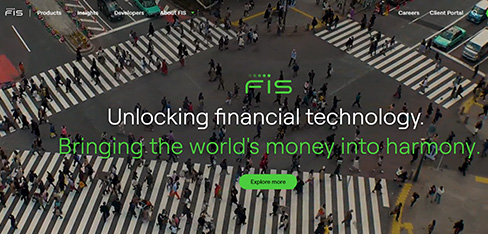
FIS had enterprise-grade payment processing but our APIs were complex and intimidating for developers used to Stripe’s simplicity. Integration took weeks and required payment processing expertise most developers lacked. UX Stalwarts designed conversational developer interface that made our powerful APIs as easy to use as asking questions. Reducing integration time 84 percent and growing adoption 143 percent among small businesses proved conversational UI is not just for consumer chatbots — it is for developer tools. This is how enterprise fintech competes with developer-first startups.
Evaluating a specialist partner for your next conversational interface project and need clarity before you proceed?
Conversational interface design is the discipline of structuring, scripting, and visually designing digital interactions that take the form of natural language interactions dialogue that may be text-based, voice-based, or multimodal. It fundamentally differs from typical UI design: while graphical interfaces are navigated using graphical elements such as buttons, menus, and forms, conversational interfaces are navigated using language. This means that the designer’s primary material is not layout and visual hierarchy, but dialog: the sequence turns, how to handle unexpected inputs, the tone of responses, the architecture of fallbacks, etc. The visual in conversational interface design supports the dialogue, which is not leading the dialogue.
Conversational UI UX refers to the combined discipline of designing both the visual interface layer and the underlying user experience of a conversational product. The UI component is responsible for the visible parts message bubbles, input fields, quick-reply buttons, typing indicators, and avatar design. The UX component addresses the architecture of the experience dialogue flow, intent coverage, error recovery logic, task completion pathways, and the emotional quality of each interaction turn. The difference is important because organizations that invest a lot in making their interfaces attractive with visual polish while paying little attention to the architecture of the dialogue are consistently creating interfaces that are visually attractive but annoying to the user, the moment the conversation goes off the expected path. Both these dimensions must be designed with equal rigour for the product to perform.
We design across the full range of conversational interface types. Text-based chatbots for Customer Support, Lead Generation, Onboarding, and Internal Self-Service Are The Most Common Type Of Engagement. Voice user interfaces for smart speakers, IVR systems, voice commands in apps, or hands-free enterprise tools – this is a separate design discipline we also provide. Multimodal conversational interfaces combining text, voice, quick-reply buttons, rich media cards, and visual guidance within a single interaction system are growing in enterprise use. AI assistant and copilot-type interfaces based on large language models entail an additional specialisation, because the design issues introduced by generative output variability require different methods of guiding the user and fallbacks.
Error state and fallback design refer to how a conversational interface behaves when it fails to understand a user’s input, comes across a query that is out of scope, or has reached a point where it cannot fulfill the user’s request. This dimension of design is critically important because the quality of a conversational product is best understood (and measured) by these moments not by its performance on straightforward, anticipated queries. A poorly designed fallback either sends users into repeated loops, gives generic error messages giving them no way forward, or sends them silently into a human agent without any explanation. A well-designed fallback acknowledges the limitations clearly and provides meaningful alternatives to the user and protects his/her trust in the product even if the system can’t provide what he/she asked for.
Traditional rule-based chatbots operate on fixed decision trees; the designer can anticipate ahead to where all potential responses and all possible pathways are going to lead. Generative AI assistants generate a variable context-dependent response that is unpredictable for the designer. This changes the designer’s job from script writing for dialogues to prompt architecture, response quality guard rails, user guidance patterns leading users to create good queries, error handling accounting for the possibility of hallucinations, inconsistencies in responses, and setting boundaries in terms of topics that the system should not respond to. Designing for LLM-powered interfaces then requires a lot of explicit transparency elements in the form of clear AI identity disclosure, confidence indicators, editable response features that were not needed for traditional chatbot design.
A structured engagement typically produces conversation architecture documentation: intent maps, entity lists, flow diagrams, full dialogue scripts for all the intents anticipated and their deviation paths, fall-back and error recovery dialogue for the defined failure cases, a personality and tone framework specifying language standards for the system’s responses, visual UI design for all interface components, an interactive prototype for usability testing, and handoff documentation for the development team, covering integration points and handling edge cases. For voice interfaces, other deliverables include audio feedback design and turning and taking logic documentation. Post-launch engagements include generating conversation log analysis reports and iterative dialogue optimization recommendations using actual-user interaction data.
UX Stalwarts recommends evaluating potential conversational UI design consultants on four practical dimensions. First, ask to see a conversation architecture document from a previous project, not just visual screen shots. This shows whether or not the agency considers dialogue design a named discipline or as an informal addition to standard UX work. Second, ask them how they handle error state and fall back design specifically and whether it’s scoped as a primary deliverable. Third, ask if they have designed for your particular type of platform, whether that is a chatbot builder that is legacy, a generative AI assistant, or a voice interface. Fourth, ask how they measure success post-launch in other words, what conversation metrics they track and how they use those metrics to drive iterative improvements.
Multimodal conversational UI design refers to interfaces where users can interact with the application using multiple input and output modes within a single conversational experience: text, voice, visual quick reply options, rich media cards, images, and (in some cases) gesture or touch. A product needs to be multimodal designed when the user base includes people that work in situations that must be adequately covered by more than one input mode: field-working people who cannot type, visually-impaired people who need to work with audio, people working on mobile devices who benefit from both guided button options and free-text input, or in enterprise applications where complex data outputs require visual formatting, but also need to be explained in plain language. Multimodal design involves harmonious coordination of the dialogue architecture and the visual layer so that mode switching does not appear disjointed but rather smooth.
Timeline depends on the scope of the conversational system, the complexity of the intent landscape, platforms or channels to be supported, and post-launch optimisation if present in the engagement. A narrow chatbot design for a well-defined set of intents for a single channel generally takes between six and ten weeks from discovery to handoff to the developer. A voice interface or multimodal product with more extensive intent coverage, enterprise integration requirements, and different language variants will typically take twelve to eighteen weeks. Generative AI assistant design engagements have variable timelines that rely heavily upon the state of the underlying LLM infrastructure and the level of prompt architecture work to be done before UX design can commence.
A conversational ux designer on our team is responsible for the dialogue architecture and user experience quality of the conversational system, not just its visual presentation. Practically, then, this implies conducting intent research, mapping conversation flows, writing and structuring dialogue scripts, designing fallbacks, defining a system’s personality and tone framework, running dialogue-specific usability testing, and analysing post-launch conversation logs for problems with quality. This role lies between those of user research, content design, and UX strategy it draws from all three disciplines, while keeping the narrow focus of the exact challenge faced: making automated dialogue feel natural, trustworthy, and effective for the humans that are using it.
An enterprise conversational UI design company brings capabilities that general UX agencies typically do not offer as named practice areas. At the enterprise level, conversational interfaces must integrate with CRM systems, knowledge bases, ticketing platforms, and authentication layers meaning the design must take into account dynamic data handling, context preservation across sessions, and secure information delivery within the dialogue. Compliance-focused dialogue design for regulated industries, multi-language and multi-region conversation design, handoff logic for human-agent escalation within complex service architectures, and governance frameworks for AI response quality are all enterprise-specific requirements that require specialised experience. UX Stalwarts takes all of these capabilities and puts them under a structured delivery framework developed specifically for enterprise conversational deployments.
The connection between dialogue design quality and business performance is direct and traceable via specific metrics. Containment rate, the rate at which conversations are resolved without human escalation, is the most often tracked outcome and is directly influenced by how well the intent architecture and fallback design have been executed. Task completion rate, which assesses whether users complete what they came to do, is the measure of dialogue clarity and quality of the flow design. Customer satisfaction scores for automated interactions, returning user re-engagement rates, and conversion rates within commercial-focused conversational flows are all results that react measurably to improvements in dialogue design. We scope all engagements against a defined target for these metrics to ensure that design investment generates traceable returns.
Our professional conversational UI design services extend beyond the launch date, where the engagement scope encompasses post-launch support. Post-launch work usually starts with a structured analysis of actual user conversation logs four to six weeks after the product is launched. This review identifies intent gaps queries the system runs into but that the system was not designed to support, dialogue segments that have high drop-out or escalation rates, problems with response quality that do not become visible until the system is being used at scale, and emerging patterns of user vocabulary that differ from language assumptions made during dialogue design. Findings are translated into a prioritised list of dialogue improvements, which are made iteratively, usually on a quarterly review cycle for maintained products.
UX Stalwarts, as a conversational UI design company in India, brings cross-industry delivery depth, a competitive engagement scope that encompasses post-launch support. Post-launch work usually starts with a structured analysis of actual user conversation logs four to six weeks after the product is launched. This review identifies intent gaps queries the system runs into but that the system was not designed to support, dialogue segments that have high drop-out or escalation rates, problems with response quality that do not become visible until the system is being used at scale, and emerging patterns of user vocabulary that differ from language assumptions made during dialogue design. Findings are translated into a prioritised list of dialogue improvements, which are made iteratively, usually on a quarterly review cycle for maintained products.
The best conversational UI design agency india for your specific engagement is the one that takes dialogue architecture seriously as a named and documented deliverable; demonstrates experience with your type of conversational interface chatbot, voice, generative AI or multimodal; shows you evidence of how they tackle the challenges of fallback and error recovery design; and can point to post-launch metrics from past engagements rather than only visual portfolio samples. UX Stalwarts welcomes due diligence. We provide structured engagement scoping documents, share relevant case study details under NDA where required, and are transparent about our methodology at every stage because a design partner that can explain exactly how they work understands the discipline well enough to deliver on it reliably.

C – 81C, Sector – 8, Noida 201301, India


1025 Beamon Drive, Franklin 37064 Tennessee, USA
Sveavagen 34 111 34 Stockholm, Sweden
A-10, Sahastradhara Rd, Doon IT Park, Dehradun, Uttarakhand

© 2026 UX STALWARTS. All rights reserved.