Organizations lose market share daily because their brand fails to communicate differentiation. When your visual identity lacks strategic coherence, there is a question of your professionalism, before they even interact with your product. Inconsistent branding across touchpoints destroys trust, fragments customer perception, and has a direct impact on conversion rates.
UX Stalwarts ensures comprehensive branding and identity design services that translate business strategy into visual systems engineered for recognition and commercial impact. Our methodology combines competitive intelligence, audience psychology and design excellence to create brand identities that perform in every customer interaction – from initial awareness to post-purchase advocacy. We deliver full visual ecosystems: logo architecture, color systems, typography frameworks, iconography, and guidelines for applications that will empower your teams to uphold brand integrity at scale.
With 1,250+ successful client engagements across healthcare, fintech, eCommerce, and B2B technology, our track record speaks to our ability to create identities that endure. Our work doesn’t just look contemporary, it’s designed for the era of AI discovery, optimized for the way that modern buyers actually discover and evaluate brands.

We tailor your competitive landscape, buyer psychology, and growth trajectory to your brand. Our discovery process involves stakeholder interviews, market positioning analysis and customer perception audits to inform all visual decisions. This eliminates subjective debates, and the identity work is grounded in commercial reality. The result is the development of brand identity that supports specific business outcomes-not just aesthetic preferences- with measurable results for market perception and reducing customer acquisition costs.

Your brand identity must function in AI-driven discovery environments where LLMs surface companies based on semantic authority, not just keywords. We engineer brand systems that are optimized for generative search, conversational AI and multimodal interfaces and are effective in traditional channels. Our approach takes into account how your brand appears in ChatGPT results, voice assistant responses, and AI-generated recommendations, and creates brand identity assets that ensure brand recognition across evolving digital touchpoints without constant design.

Operating across three continents gives us unique insight into how visual language translates across cultural contexts. We understand which design principles are universal and which require localization. Whether you’re expanding from India to North America, entering European markets, or building a globally consistent brand, our team navigates cultural symbolism, color psychology variations, and regional aesthetic preferences. This avoids costly rebranding in new markets and helps to ensure your identity rings true across geographies.

Brand identity designers at a leading agency integrate WCAG compliance and inclusive design principles from initial concepts, not as afterthoughts. This means that your brand works for users with visual, cognitive and motor disabilities without sacrificing aesthetic impact. We take into account color contrast ratios, legibility of typography for dyslexic users, and scalability for assistive technologies. This way, you not only extend your addressable market, but you also show your corporate responsibility and future-proof your identity against changing accessibility regulations-all while staying visually sophisticated.

Beautiful concepts become worthless without flawless execution. At UX Staltwars, deliverables include comprehensive brand guidelines, asset libraries organized for team access and technical specifications that remove ambiguity during implementation. We offer design tokens for developers, print production specifications and channel-specific adaptation rules. This rigor makes sure your corporate and brand identity stays consistent, whether it’s applied by your internal team, your external agencies or your international partners, avoiding the brand dilution that undermines brand recognition over time.

Brand identity creation isn’t a one-time project; it’s the foundation for ongoing market presence. We extend a 90-day post-launch support to answer app questions, make guidelines based on real-world use, and aid your team in internalizing the new system. This includes asset creation for channels that you didn’t expect, stakeholder training sessions and strategic guidance as you scale. Our commitment goes beyond delivery because successful brand identities require partnership at the critical adoption phase, not just handoff and disappearing.
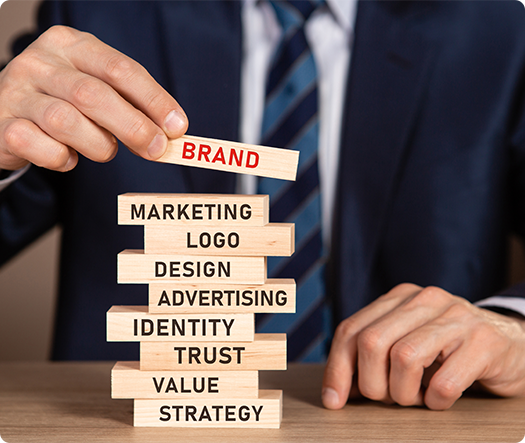
Effective building of brand identity determines whether prospects engage with or ignore your business in crowded markets. When executed with strategic rigour, brand identity design services provide instant differentiation, which reduces sales cycles and boosts customer lifetime value. This isn’t just about visual appearance – though that plays a role – but it’s about taking your positioning, your values and your promise, and encoding them into a visual language that communicates instantly. Our expert branding identity designers know that milliseconds make first impressions, and first impressions are directly related to revenue outcomes. Strong brand identities lower customer acquisition costs by building recognition that creates inbound interest, increases perceived value in order to charge premium prices, and creates emotional connections that drive customer loyalty beyond transactional relationships. This is the commercial reality that our eighteen years experience has demonstrated time and again in many industries.
Partner with specialists who architect identities engineered for lasting impact.
We follow a systematic brand identity service methodology refined across 1,250+ engagements, designed to minimize risk while maximizing strategic clarity and creative impact.

We extend to conduct comprehensive stakeholder interviews, competitive landscape analysis, and customer perception research to understand your current market position and growth objectives. This phase uncovers the strategic insights that will differentiate your brand from competitors. We analyze existing brand equity, determine perception gaps and record the specific business outcomes your new identity needs to make possible. By the time we get to phase conclusion, we’ve created measurable criteria for success and strategic guardrails that will guide all later creative decisions.

Armed with discovery insights, we define your brand positioning, personality framework, and value proposition architecture. This is where we decide what your brand stands for in the market and how it is to be perceived in relation to alternatives. We develop detailed audience personas, the emotional and rational benefits, and the brand promise that your identity will communicate. The strategy document is the blueprint that ensures that all visual decisions support your competitive positioning, and resonates with your target buyers.

The design team generates multiple visual directions that translate strategy into tangible expressions. We examine different strategies to typography, color psychology, symbolic representation, and compositional style, with each having a foundation in the strategic underpinning, but with a unique market presence. You go through concepts ranging from evolutionary refinement to revolutionary reimagining with a rationale explaining how each direction supports your strategic objectives. This exploration phase helps to avoid settling on first ideas and discovering unexpected solutions.

With an approved creative direction, we build out your complete brand identity system. This includes logo variations for different situations, full color palettes with guidelines for usage, typography systems, iconography libraries, and pattern/textural elements. We test the system across applications – digital interfaces, print collateral, environmental graphics and product packaging – assuring versatility and consistency. Every element is optimized for reproduction across media (from large format displays to mobile interfaces) with integrity and recognition at any scale.

Excelling services document your brand identity firm’s work in comprehensive guidelines that serve as the definitive reference for anyone applying your brand. This includes logo clearspace requirements, color requirements across models, typography pairing requirements and imagery style direction, as well as examples of correct and incorrect usage. We organize assets in a sensible system with a sensible naming convention, including files in formats suitable for different production needs. These guidelines remove any ambiguity and empower teams to ensure consistency to the brand without needing constant supervision or approvals.

Here, we support the launch and adoption of your new brand identity and company vision through phased rollout planning, stakeholder training and tactical asset creation. This includes designing priority applications such as business cards, presentations, website elements, and social media profiles. We work closely with your teams to answer technical questions, refine applications for certain channels, and ensure a smooth transition from old to new identity. Our goal is to complete organizational adoption with consistent and confident application of the brand system across all touchpoints from day one.
Our brand identity agencies have delivered transformative results for more than 1,250 clients across a broad spectrum of industries, including healthcare technology, financial services, B2B SaaS, eCommerce and regulated industries where trust and clarity are the keys to success.
Approach towards developing brand identity prioritizes strategic alignment with your industry’s regulatory landscape, competitive dynamics, and customer expectations. We’ve created brand identities for venture-backed startups needing aggressive differentiation, mid-market companies implementing growth strategies and enterprises with complex sub-brand architectures. Whether you’re introducing a disruptive product or renewing an established presence in your market, we know the balance between innovation and risk that characterizes successful corporate brand identity work in competitive spaces.
Healthcare technology, financial services, B2B software, eCommerce, professional services, manufacturing, hospitality, education technology, telecommunications, and consumer products – we’re the brand identity firm trusted by businesses in these industries to help navigate unique challenges. Our cross-industry experience means that we apply our proven principles, but adapt to sector-specific requirements. We know compliance for healthcare, signals of trust for fintech, technical credibility for B2B, and emotional connection for consumer brands. This versatility helps to make our ramp-up faster and guarantees that we provide relevant solutions that are relevant to your specific buyer personas.
Organizations seeking brand identity designers evaluate dozens of options before deciding. What distinguishes outstanding partners isn’t portfolio aesthetics; most agencies can create attractive work. The difference lies in strategic rigor, implementation thoroughness, and partnership commitment. Our methods reflect eighteen years of refinement based on successes and failures that taught us what actually drives brand performance in real markets.
Evidence-Based Creative Direction: Grounding creative decisions in customer research, competitive intelligence, and perceptual data, not designer preferences. This lowers susceptible debates and gives measurable improvement in the brand perception and market differentiation.
Global Perspective, Local Execution: Operating across India, the USA, and Sweden provides genuine, real multicultural insight that avoids culturally tone-deaf design. We understand how color, symbolism, and aesthetics translate across markets while maintaining cohesive global identity systems.
Technology-Forward Brand Systems: Engineering brand identities that are optimized for AI discovery, voice interfaces and new channels and that are not compromised in traditional media. This future-readiness helps to extend your brand’s relevance and delays costly redesigns as technology changes.
Leverage modern design technology and collaboration platforms to assure precision, efficiency, and a seamless handoff of your brand identity design company assets to internal teams and implementation partners.









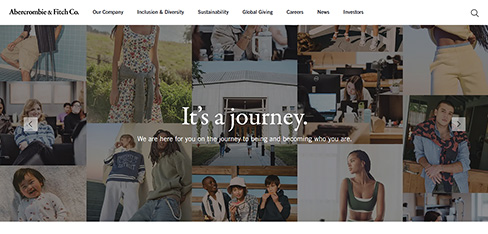
Abercrombie had become culturally toxic. Our brand stood for everything modern consumers rejected — exclusion, elitism, and superficiality. We needed to fundamentally transform who we were, not just update a logo. UX Stalwarts partnered with us to rebuild our brand identity from the ground up around inclusion, quality, and authentic American style. Growing revenue 89 percent and shifting brand sentiment from 34 percent negative to 78 percent positive proved you can transform a damaged brand if you commit to real change. This was not a rebrand. This was a revival.
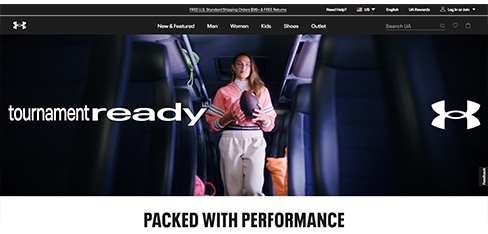
Under Armour had lost its way. We chased lifestyle categories and casual consumers, and in the process we diluted the performance brand identity that made us relevant in the first place. UX Stalwarts helped us refocus on who we are — a performance brand built by and for athletes. Recovering $1.2 billion in market share and growing our women’s business 156 percent by returning to our authentic brand identity proved that focus beats breadth. The ‘Unlike Any’ women’s campaign showed we could expand without losing our performance soul. This brand transformation saved Under Armour.
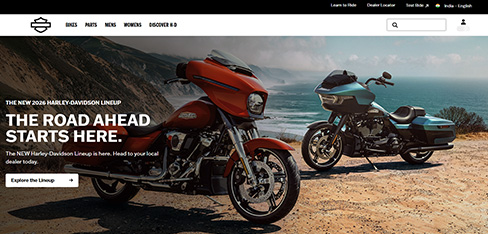
Harley-Davidson faced an existential threat. Our customers were aging out and younger riders did not see themselves in our brand. We needed to evolve our identity to welcome new generations without betraying 120 years of heritage. UX Stalwarts helped us articulate ‘United by Independence’ — a positioning that honors our rebellion roots while embracing contemporary diversity. Growing under-40 riders by 47 percent and women riders from 11 to 22 percent proved we could modernize without losing our soul. The LiveWire sub-brand success showed our identity was flexible enough for electric motorcycles. This was cultural evolution, not abandonment.
Choosing the right brand identity agency determines your brand's market impact - here's what you need to know.
Start by evaluating their process rigor, not just portfolio aesthetics. Strong agencies begin with strategy, not design. Request case studies of how they have translated business objectives into visual solutions with measurable outcomes, if possible. Assess their experience in the industry – specialists know the ins and outs of the industry, but generalists can provide fresh perspectives. Investigate the way they and others make discoveries to ensure they’re going to spend time understanding your business before proposing solutions. Review their deliverables thoroughly – Agencies that only send logo files without guidelines cause problems during the implementation process. Finally, test for cultural fit by holding preliminary conversations. You’ll be working closely for weeks, so communication style and shared values are very important. The best partner is one who is both a creative and strategic thinker, thorough in implementation, and sincerely interested in your business success, beyond the completion of the project.
Investment varies dramatically based on scope and provider type. Basic logo-only projects from freelancers range $500-$5,000, while comprehensive brand identity development from established agencies typically costs $15,000-$75,000. Enterprise-level rebrands with the involvement of extensive research, multiple stakeholders, and global implementation can cost upwards of $150,000. Timeline is also somewhat variable; simple identity systems take 4-6 weeks, and full-blown brand development with strategy takes 8-16 weeks. Complex rebrands with organizational change management take up to 3-6 months. These ranges are based upon discovery depth, revision cycles, complexity of stakeholder alignment, and volume of deliverables. Be suspicious of quotes from agencies quoting fixed prices without knowing your specific requirements. Reputable partners do a discovery before making an accurate estimate. Remember that branding is a strategic investment with multi-year returns – making the decision based on the lowest cost usually means that you will be designing work that will need expensive revision within 12-18 months.
Comprehensive engagements should provide primary logo and variations for different contexts, a complete color palette with Pantone, RGB, CMYK, and HEX values, typography system specifying fonts and usage rules, iconography or graphic element library, photography and illustration style guidelines, and detailed brand guidelines document. You should receive source files in Adobe Illustrator format, along with production-ready files in various formats for different applications. Expect a digital asset package for websites and social media, print-ready files for collateral production and presentation templates of brand application. Forward-thinking agencies also offer design tokens to developers, accessibility compliance documentation, and asset management systems. Clarify details of deliverables during the contracting to prevent surprises. Inadequate documentation means continued reliance on the original designer, and your team will not be able to apply the brand on their own. Thorough deliverables lead to organizational autonomy and consistent implementation across all touchpoints.
Logo design creates a single mark or wordmark representing your company. Brand identity design encompasses the complete visual system, including logos, colors, typography, imagery style, graphic elements, and application rules. Branding is the broader strategic discipline defining your market position, personality, messaging, and customer experience. Think in hierarchy: branding strategy informs brand identity design, one component of brand identity design is logo design. Many businesses err by buying logo-only services, and then they have a hard time with inconsistent applications because they have no comprehensive guidelines. Alternatively, others invest in a huge branding strategy and fail to translate these strategies into tangible visual systems. Optimal results demand integrated strategies with visual identity informing strategy and building cohesive systems that communicate your positioning across all touchpoints for your customers. This integration is provided by professional agencies who will make sure that alignment is strategically made between your market position and visual expression, rather than working as ‘two different, disconnected activities.
Internal development works with you, having specific expertise and an objective perspective – both rare combinations. Graphic designers on staff may be creating tactical assets beautifully, but may lack strategic branding methodology and market positioning insight. Leadership teams know business strategy, but usually have little design execution skills. Additional internal teams have inherent biases on how the company should be perceived without the external perspective to give an objective positioning. Successful internal development requires dedicated branding specialists who can facilitate strategic discussions, translate business objectives into visual language and be consistent across applications. Most organizations find outside specialists to be more efficient because the agencies have cross-industry experience, creative resources dedicated to the job, and an objective perspective on competitive differentiation. They’ve solved similar challenges hundreds of times, and know what really works in the market. Only consider internal development if you have had brand strategists and senior designers on staff, as well as executive buy-in to focus on this work as a priority over other work.
Successful identities combine strategic relevance with distinctive visual expression and systematic documentation, enabling consistent application. First, the identity has to communicate truthfully about your positioning and be engaging to target audiences – beauty without strategic alignment is a commercial failure. Second, it must be differentiated enough from its competitors to be recognized and remembered. Third, versatility across applications avoids frequent re-designing – the system must work equally well on mobile interfaces, billboards, business cards, and product packaging. Fourth, all-around guidelines avoid misapplication and brand dilution along the way. Fifth, the identity should be contemporary but not trendy and not include things that are so dated that they need to be refreshed constantly. Sixth, scalability enables the system to handle the evolution of business, new products, and market expansion without having to completely overhaul the system. Finally, buy-in from internal stakeholders also ensures adoption and consistent use. Identities are not effective if they’re imposed without the involvement of the organization, and without the internal championship that is required to ensure disciplined implementation. The best brand identities are valuable strategic assets that are appreciated over time through their consistent application and exposure in the market.
Complete redesigns typically occur every 7-15 years, though this varies significantly by industry and business evolution. Technology companies often change more often because of how quickly the visual language of their industry changes, whereas traditional industries may have identities for decades. Rather than arbitrary time lines, consider need-based on particular triggers: major changes to business models, mergers or acquisitions, expansion into dramatically different markets, fundamental change in target audience, or when your current identity is actively a hindrance to business objectives. Between major refreshes, perform periodic refinements that update apps without changing core identity elements. This evolutionary approach helps in maintaining the brand equity while keeping the expression contemporary. Some organizations do small updates every 3-5 years; they subtly update typography or make things simpler while still maintaining recognition. Don’t redesign just because you’re bored with your current identity – and ruin brand equity in the process. Customers require repeated exposures to develop recognizability, and constant changes preclude this accumulation. Change your brand identity when business strategy commands it, and not because of aesthetic choices or fads. Strong identities improve through the years by constant application rather than constant reinvention.
Our comprehensive approach begins with strategic foundation work, including competitive positioning analysis, audience research, and brand architecture development. We then develop a full set of visual systems: primary logo configurations in different situations, secondary marks in certain applications, a full set of colors using guidelines, a typography system with fonts for different types of content, an iconography library or graphic element system, photography and illustration style direction, and pattern or texture treatments. Documentation includes detailed brand guidelines, asset libraries organized for team access and technical specifications for reproduction. We are also able to design initial applications such as business cards, letterhead, presentation templates, and digital profile assets to demonstrate the implementation of the system. Post-launch support includes stakeholder training, implementation advice and 90-day consultation on application questions. This broad scope makes sure that you get not only beautiful-looking visuals but a fully functional system for your team to be confidently applied everywhere you touch, so that points of contact are consistent without always needing to be designed and approved by the designer and your team at every touch.
We design with a multi-channel application as a primary requirement from initial concepts. Logos are put to the test of legibility at minuscule sizes on mobile interfaces and enormous sizes on buildings. Color systems contain specifications for RGB for digital reproduction, CMYK for print production, and Pantone spot colors for speciality printing to insure color consistency from medium to medium. Typography choices take into account both how the user will view the material on the screen and how it will be printed, covering web-friendly alternatives whenever possible when primary fonts aren’t available. We offer file formats for each situation: vector files for print, which scale infinitely without loss of quality, optimized raster files for the digital world, used at multiple resolutions and specific exports for social media platforms with their specific requirements. Guidelines consist of media-specific application rules that are concerned with technical constraints such as print bleeds, screen resolution variations and viewing distance in the environment. We have played with the identity in real production situations in the course of development, where we catch possible reproduction problems before finalizing rather than finding out about problems while implementing the production. This technical rigor is to ensure that your brand will retain its integrity no matter where customers encounter it.
Strategy provides the foundation that makes identity design relevant rather than merely attractive. Without a grounded strategy, design is arbitrary. Brand strategy identifies your place in the market among your competitors, identifies your target audience and what motivates them, defines your unique value proposition, outlines your personality and tone that should be used throughout all communications, and determines what specific perceptions you need to create. These strategic elements have a direct impact on visual decisions: Positioning affects differentiation approach, audience research affects aesthetic preferences and cultural considerations, value proposition affects messaging hierarchy in applications, personality affects color psychology and typography character, and desired perceptions affect symbolic and compositional decisions. When we start with strategy, every design decision is defensible with reference to the business objectives rather than subjective opinion. This removes debates from stakeholders about what their preference is and focuses the evaluation on effectiveness. The result is identity systems that perform commercially because they’re engineered to communicate specific messages to specific audiences – not just designs that designers or executives find personally appealing.

C – 81C, Sector – 8, Noida 201301, India


1025 Beamon Drive, Franklin 37064 Tennessee, USA
Sveavagen 34 111 34 Stockholm, Sweden
A-10, Sahastradhara Rd, Doon IT Park, Dehradun, Uttarakhand

© 2026 UX STALWARTS. All rights reserved.