Digital products fail not because of poor technology but because of disconnected experiences. Organizations invest heavily in development only to watch users abandon, churn, or never convert. Without a clear user experience strategy, businesses lose resources on features that users ignore, navigation paths that confuse and interfaces that frustrate rather than facilitate. The cost is measurable in terms of lost revenue, increased support burden, and a competitive disadvantage that compounds over time.
UX Stalwarts takes a research-led approach to developing a UX strategy that bridges what your users need with what your business requires. Our methodology includes behavioral analysis, journey mapping, competitive benchmarking and strategic roadmapping to provide actionable frameworks. We provide clarity across product decisions, information architecture, interaction patterns and conversion pathways. Each engagement produces documented strategy artefacts to guide design, development and iteration to quantifiable outcomes.
With experience spanning 1250+ global clients across healthcare, fintech, eCommerce, and enterprise sectors, we bring pattern recognition that accelerates decision-making and reduces strategic risk. Unlike agencies that see strategy as a preliminary formality, for us, strategy is the foundation that makes or breaks your product. Our cross-industry perspective enables us to apply approaches that have worked, and to avoid making assumptions that are costly and hinder digital initiatives.

Our strategy engagement begins with primary research, not assumptions. We conduct stakeholder interviews, user behavior analysis, and competitive audits before making recommendations. This evidence base helps to ensure that your strategy is addressing real friction points and opportunities rather than hypothetical scenarios. The result is a roadmap based on validated insights which are trusted by stakeholders.

User satisfaction without business impact is incomplete. We structure every digital UX strategy on measurable objectives such as conversion improvement, retention increase and operational efficiency. Our strategists transform user needs into commercial outcomes to ensure executive buy-in and clear success metrics. Strategy documents with KPI frameworks for continued measurement.

Experience across healthcare, fintech, retail, and enterprise sectors, we recognise patterns that accelerate problem-solving. A checkout optimization technique from e-commerce to inform patient portal design. An onboarding flow from SaaS helps in improving the adoption of banking applications. This accumulated knowledge means faster insights and fewer dead ends during the experiments.

Delivery of strategy artefacts designed for implementation at scale. Design systems, component libraries and governance frameworks enable consistency across products, teams, and markets. Our documentation helps our internal teams function independently, yet keep things aligned strategically as organizations scale. Strategy becomes infrastructure and not just a phase.

UX strategy fails when organizational alignment breaks down. We conduct structured workshops to help surface the competing priorities, build consensus on trade-offs, and establish the common vocabulary across product, engineering, and business teams. The process leads to internal champions who support the use of user-centred decisions throughout the implementation process.

Strategy is not a one-time deliverable but an evolving framework. Leading services ensure measurement systems, feedback loops, and iteration protocols that ensure that your experience maintains alignment with the evolving user expectations and market conditions. Clients are given not only a strategy but a system for continuous improvement over time.
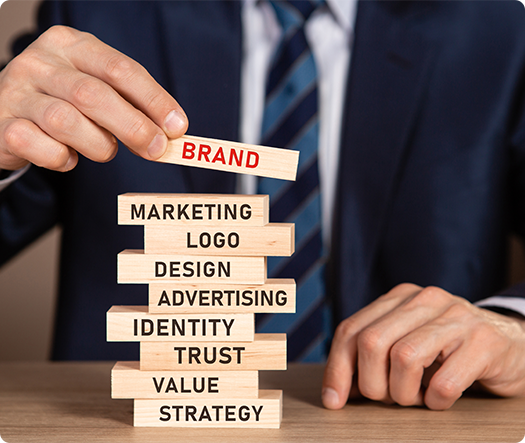
Digital UX strategy exists to solve a fundamental challenge: ensuring that every design decision, development investment, and feature prioritization moves users toward actions that benefit them and your organization simultaneously. When strategy is clear, teams no longer argue over subjective preferences and begin to make decisions based on user evidence and business logic. Conversion rates improve as there is a systematic disappearance of friction. Retention is increased because experiences anticipate the need instead of forcing it to adapt. Support costs are reduced due to self-explanatory interfaces. Our team has the strategic rigor built up from hundreds of engagements, taking research and turning it into the framework for making product decisions for years, not months.
Partner with our digital UX strategy experts to build strategy that your teams can execute.
Our approach removes ambiguity from product decisions by systematically translating research into actionable frameworks that align stakeholders and guide implementation with confidence.

We start by understanding your organization’s context through stakeholder interviews, business document review, and goal alignment sessions. This phase helps clear up the success metrics, constraints and existing assumptions. We identify what decisions the strategy needs to inform and who the stakeholders are who need to be aligned. The phase ends with a validated project brief that ensures that later work takes place to address real organizational needs.

Primary and secondary research present the basis of evidence for strategic recommendations. We interview users, analyze behavioral data, audit existing experiences and benchmark competitors. Synthesis generates user archetypes, journey maps, and friction inventories that expose the places where experiences are working and where possibilities exist. The results of research are recorded for continued reference.

Research data transforms into strategic insights through structured analysis. We identify patterns across user segments, prioritize problems by impact and feasibility, and map dependencies between experience improvements and business outcomes. This phase results in a matrix of opportunities which informs the decisions of resource allocation and sequencing. Analysis outputs become the basis for the development of the roadmap.

Strategic frameworks translate insights into actionable guidance. We create design principles, experience standards and decision criteria that are referenced by the teams throughout the implementation. Frameworks address information architecture, interaction patterns and content strategy at levels appropriate for the maturity of your organization. Example applications and exception handling protocols are provided on each framework.

Prioritized opportunities become a phased implementation plan with clear milestones, dependencies, and resource requirements. The roadmap balances quick wins that can build momentum and foundational investments that enable future improvements. We document assumptions, risks, and decision points where stakeholder input is required during execution. Roadmaps are aligned with development cycles and organization’s planning horizon.

Strategy transitions to implementation through knowledge transfer, workshop facilitation, and ongoing advisory support. We equip internal teams with the context and frameworks to operate autonomously, to implement and stay strategically aligned. Measurement systems monitor progress against success measures. Regular check-ins provide a strategy to adapt to learning generated during implementation.
Across 1250+ client engagements spanning multiple industries and markets, we have developed and implemented user experience strategy frameworks that produce measurable business outcomes. Explore how our approach translates into results for organizations with similar challenges to yours.
Our approach to enterprise UX strategy combines scalability with precision. We serve organizations ranging from early-stage startups seeking product-market fit to global enterprises managing portfolio-wide experience consistency. Core values of sustainability, accessibility and long-term growth are guiding principles for the way we structure engagements. We invest in understanding industry-specific constraints, whether regulatory compliance in healthcare, security requirements in fintech or conversion optimization in retail.
Deep sector experience accelerates strategic insight. In healthcare, we understand the complexity of patient journeys and compliance requirements. In fintech, we move through trust building and transaction friction. In eCommerce, we optimze for discovery, consideration, and conversion and reduce our abandonment. For enterprise applications, we trade power user efficiency for onboarding accessibility. This accumulated knowledge means fewer assumptions, faster alignment and strategies that address the realities of the industry and less about generic principles.

We have refined our UX strategy methodology across hundreds of engagements, earning recognition for frameworks that translate seamlessly from strategic artefact to implemented experience. Three principles set us apart from the way we work with clients who are looking for a user experience strategy consultant who can deliver results that can be measured.
Strategy With Implementation Fidelity: Frameworks are designed for teams who must get them done. Clear documentation, practical examples, and governance protocols ensure the survival of the strategy upon contact with the development reality.
Executive-Level Strategic Communication: Translate user experience insights into business language that speaks to leadership. Strategy presentations target ROI, risk and competitive position in addition to user needs.
Embedded Knowledge Transfer: Engagements build internal capability alongside external deliverables. Clients receive not only strategy documents but organizational competence to evolve strategy on their own.
Our strategists employ contemporary research, analysis, and documentation tools that provide rigorous methodology and cooperative delivery. We choose according to the project needs as well as compatibility with the client's ecosystem.









Brinker was operating digital experiences in silos — our app, our website, our kiosks, and third-party platforms all felt like different companies. Customers were confused and we were bleeding commission dollars to delivery platforms with better UX. UX Stalwarts developed an omnichannel UX strategy that finally gave us a unified vision and roadmap. Growing digital sales 38 percent and reducing third-party reliance saved us $18 million annually in commissions. The 2.7x lifetime value of omnichannel customers proved that strategic UX is a competitive advantage, not just a cost center.
Thor Industries sold exclusively through dealers for decades and had zero direct customer relationships. As RV buyers moved online for research, we were invisible in their decision journey. UX Stalwarts developed a UX strategy that enabled us to build research and configuration tools that served buyers while strengthening dealer partnerships. Generating $2.4 billion in dealer-attributed revenue and capturing 1.2 million qualified leads proved that strategic UX can create value for both consumers and channel partners. This strategy transformed Thor from a manufacturer into a consumer brand.
Twilio expanded from one API to 15+ products but our developer experience had not scaled with our platform growth. Documentation was inconsistent, multi-product adoption was painful, and developers who loved our SMS API struggled to adopt our other products. UX Stalwarts developed a DevX strategy that finally unified our platform experience. Achieving 94 percent multi-product adoption and growing platform revenue to $380 million proved that strategic developer UX is the foundation of platform business models. Our Developer NPS jumping from 34 to 72 validated we got it right.
Making an informed decision about your UX strategy investment requires clarity on approach, outcomes, and engagement logistics.
UX strategy is the foundational planning that determines what experiences should be created and why, while UX design focuses on how those experiences are visually and interactively implemented. Strategy addresses questions such as what user problems should be addressed first, how success will be measured and what the competitive positioning that the experience should create. Without a strategy, design teams are left making decisions in isolation that can solve individual problems but introduce inconsistency or lose out on bigger opportunities. A well-developed strategy gives us the framework which makes subsequent design decisions coherent and aligned with business objectives.
Several signals indicate strategy investment would benefit your organization. If product teams frequently debate design decisions without clear resolution criteria, strategy provides the decision framework. If there is any user research, but it does not translate into product priorities, strategy fills that gap. If more than one product or channel feels inconsistent, strategy creates unifying principles. If conversion metrics level off with design iterations, strategy points to systemic problems that tactical changes can’t tackle. Organizations in a state of rapid growth, platform migrations or other competitive pressures benefit greatly from strategic clarity before they start committing development resources.
Timeline depends on scope, organizational complexity, and research depth required. Focused strategy for a single product typically requires six to eight weeks, including discovery, research, analysis, and framework development. Enterprise-wide strategy across multiple products or channels can take twelve to sixteen weeks to ensure that stakeholders are fully aligned and all research has been completed. We organize engagements around phases that provide incremental value so organizations can take action on initial insights as deep strategic work progresses. Rushing strategy to meet arbitrary deadlines usually makes superficial frameworks that fail when implemented.
Investment varies based on engagement scope, research requirements, and deliverable depth. Focused product strategy typically ranges from the cost of hiring a senior UX resource for three to four months. Enterprise strategy with extensive research and stakeholder arrangement is a bigger investment on par with a small internal strategy team. We recommend talking about specific requirements for giving proper estimates. The applicable issue is often not the absolute cost but return on investment. A strategy that avoids a misguided development initiative or expedited product-market fit delivers value much greater than engagement fees.
Core deliverables typically include research synthesis documenting user insights and competitive analysis, strategic framework establishing design principles and decision criteria, prioritized opportunity roadmap with phased implementation recommendations, and measurement framework defining success metrics and tracking methodology. Depending on the scope, other common deliverables include user personas and journey maps, information architecture recommendations, content strategy guidelines, and governance documentation. All deliverables are intended for practical application and not simply presentation. Teams should be able to refer to artefacts from the strategy on a daily basis as they make product decisions.
Measurement frameworks are established during the strategy engagement, not after implementation. We work with clients to identify metrics that connect experience improvements to business outcomes, whether conversion rate improvements, retention increases, support cost reductions, or efficiency gains. Leading indicators monitor changes in user behaviour, and lagging indicators monitor business impact. We recommend establishing baseline measurements before implementation starts so that progress can be measured. Regular measurement reviews are a way to modify strategy based on what is actually happening, as opposed to assuming how it should happen.
Collaboration with internal teams strengthens both strategy quality and implementation success. We structure engagements to leverage existing organizational knowledge while bringing external perspective and methodology rigor. Workshop formats include in-house teams in research synthesis and framework development to establish ownership and understanding for better execution. Knowledge transfer to allow the internal team to sustain and develop the strategy independently. Many clients hire us to do initial strategy development and periodic reviews, and hire internal teams to do ongoing implementation and iteration.
Our experience spans healthcare, fintech, banking, eCommerce, education, real estate, and enterprise software sectors. This cross-industry experience brings pattern recognition capabilities to speed up insight development without the sector-specific blind spots. Healthcare projects have shaped the way we think about trust and compliance in fintech. Retail conversion optimization has influenced Enterprise application efficiency strategies. We bring relevant sector experience to every engagement, but are open to approaches that may have their genesis in other industries.
Ecommerce strategy requires specific attention to discovery, consideration, and conversion pathways that other digital products may not emphasize as heavily. We focus on lowering abandonment at each funnel stage, optimizing product discovery with search and navigation, building trust with transparency and social proof, and eliminating friction from checkout, to name a few. Mobile commerce is paid special attention to in light of the patterns of traffic. We also address post-purchase experience, including order tracking, returns and loyalty mechanisms leading to repeat business. Strategy creates the link between immediate conversion optimization and long-term customer lifetime value.
Enterprise UX strategy addresses the unique challenges of designing experiences within large organizations. These include multiple stakeholder groups with competing priorities, legacy system constraints, compliance and security requirements, and the requirement for scalable design systems with the need for consistency across many products and teams. Enterprise strategy needs to consider the internal users and power users who have different needs from the consumer-facing products. Change management considerations have an impact on how strategy is socialized and adopted. Our enterprise experience supports clients in navigating complexity in the organization while delivering strategic frameworks that ensure survival in the corporate context.
Stakeholder alignment is built into our methodology rather than treated as an afterthought. We start with a stakeholder mapping process to identify decision-makers, influencers and subject matter experts. Discovery interviews bring out individual perspectives and priorities before synthesis exposes points of agreement and tension. Structured workshops provide forums for good disagreements and consensus-building. Strategy presentations are tailored to various audience requirements that may range from an executive summary to an in-depth implementation guide. Regular checkpoints throughout the engagement keep alignment on track as insights are gained and recommendations take shape.
Strategy transitions to implementation through structured handoff and optional ongoing support. Knowledge transfer sessions ensure internal teams understand not just what the strategy recommends but why, enabling them to make consistent decisions as new situations arise. Documentation is designed for practical reference during daily work. Many clients engage with us for periodic strategy reviews that measure progress of implementation, include new learning and adjust recommendations based on actual outcomes. Some clients have advisory relationships to maintain strategic guidance as products have evolved and markets have changed.
The perceived tension between user needs and business objectives often dissolves under examination. Users who cannot accomplish their goals do not convert, retain, or advocate. Businesses that ignore user friction pay in terms of support costs and competitive disadvantage. Strategy helps to identify where the user and business interests overlap and reveals those opportunities. Where there are truly trade-offs, strategy offers a means for making explicit choices rather than deferring to whoever makes the most persuasive case. We help our clients understand that the sustainable success of businesses demands experiences that are effective for the users.
External consultants bring perspectives that internal teams cannot replicate. Organizational insiders carry assumptions and politics that constrain strategic thinking. Consultants have witnessed what is working in a variety of organizations and industries, offering pattern recognition and accelerating insight development. External facilitation is often able to facilitate more honest stakeholder conversations than can be had with the management team itself. That being said, strategy should end up as an internal capability. The best engagements are used to build organizational competence in addition to delivering strategic frameworks. Hire a UX strategy developer to build the foundation and then build internal capacity to maintain and evolve.
Preparation improves engagement efficiency and outcomes. Gather existing research, analytics reports and previous strategy documents to provide context. Identify key stakeholders that should be involved in discovery and alignment activities. Clarify what decisions the strategy needs to inform and what success looks like for your organization. Consider timing in relation to development cycles and organizational initiatives against which the strategy needs to be aligned. Ensure executive sponsorship is present to do something about recommendations. Being open about organizational limitations, politics, and past failed efforts helps us organize an approach that takes account of reality instead of perfect conditions.

C – 81C, Sector – 8, Noida 201301, India


1025 Beamon Drive, Franklin 37064 Tennessee, USA
Sveavagen 34 111 34 Stockholm, Sweden
A-10, Sahastradhara Rd, Doon IT Park, Dehradun, Uttarakhand

© 2026 UX STALWARTS. All rights reserved.