Poor user experience costs businesses millions in lost revenue. Users leave confusing interfaces within seconds. Navigation failures lose customers to their competitors. Digital products are failing not because they lack functionality, but because they don’t understand user needs. The difference between the market leaders and forgotten products often comes down to one factor: well-thought-out, deliberate user experience design company principles applied consistently.
Our UX design services are integrated with a combination of deep user research and strategic thinking. We deliver wireframes, prototypes, interactive mockups and full design systems. Every pixel serves a purpose. Each interaction conforms to user mental models. Our user design agency builds interfaces that eliminate friction, move things faster and boost conversion rate. We don’t guess what people want – we find out through hard testing and validation.
Eighteen years of serving 1250+ global clients taught us what separates good design from exceptional outcomes. Our user experience consultants work in India, the USA and Sweden to benefit from their multicultural insights on every project. Fortune 500 enterprises and aggressive startups trust us because we deliver measurable improvements: reduced bounce rates, increased engagement, and more revenue.

We begin every engagement with comprehensive user research. Never assumptions. Our user experience design services include ethnographic studies, usability testing, and behavioural analytics. This foundation ensures that designs solve real problems, not imaginary problems. Clients have validated knowledge that removes expensive redesigns and decreases development risk by quite a bit.

Every interface is accessible to the standards of WCAG 2.1 AA from day one. Our UX design agency creates inclusive experiences that are usable for users with a range of abilities. This isn’t an afterthought – it’s part of our core process. Accessible design helps you to increase your market share while showing good social responsibility and limiting your exposure to litigation.

With offices across three continents, we bring firsthand insight into diverse, multicultural markets. We know how interaction patterns are affected by cultural contexts. We’ve designed for markets that range from Asia to North America to Europe. This global lens is a helpful way to help clients avoid cultural missteps in crafting universally intuitive experiences.

We are good at unravelling complex enterprise systems that have multiple roles and workflows of users. Our enterprise UX design expertise manages complex data architectures, permissions hierarchies and cross-platform consistency. Large organizations choose us because we understand stakeholder management, the requirements of governance and the challenges of designing at scale.

Strategic integration of AI to enhance research synthesis and pattern recognition. Our user experience agencies use machine learning to provide heatmap analysis and predictive modelling. However, everything from the creative decisions is made by human designers. Technology magnifies our capabilities. We never substitute for nuanced judgment, empathy and strategic thinking that make for excellent design.

Our commitment extends beyond delivery. We provide ongoing optimization through A/B testing, analytics review, and iterative improvements. Most UX design agencies vanish after launch. Staying engaged, monitoring real-world performance and refining based on actual user behavior. True success requires continuous optimization, not one-time delivery.
Exceptional user experience design separates market leaders from mediocre competitors. High-impact UX design services will save you on support costs and improve user onboarding and the lifetime value of customers. This is beyond aesthetics; it’s about designing intuitive paths that lead to successful outcomes without difficulty. Bad design causes friction at all touchpoints. Strategic design helps to remove obstacles, clarify the options and build confidence. Our user experience design companies approach features a combination of behavioral psychology, information architecture and visual design principles. The result: digital products users enthusiastically recommend because interactions feel natural, efficient and satisfying.
Partner with specialists who transform complex challenges into elegant solutions.
This systematic methodology minimizes risk and increases value. Each phase builds upon previous insights, ensuring nothing gets overlooked or assumptions remain untested.

We immerse ourselves within the context of your business, competitive landscape and user challenges. The goals and constraints are shown through interviews with stakeholders. Analytics review helps to see current pain points. Competitive analysis reveals the market openings. This phase results in full research documentation, validated user personas, and strategic recommendations that are used to guide all subsequent decisions.

Direct user engagement uncovers what people actually do in contrast to what they claim they prefer. We provide usability studies, contextual studies, and task analysis. Our UX design company uses card sorting, tree testing and journey mapping. Deliverables include detailed finding reports, opportunity maps, and prioritized recommendations validated with actual user feedback.

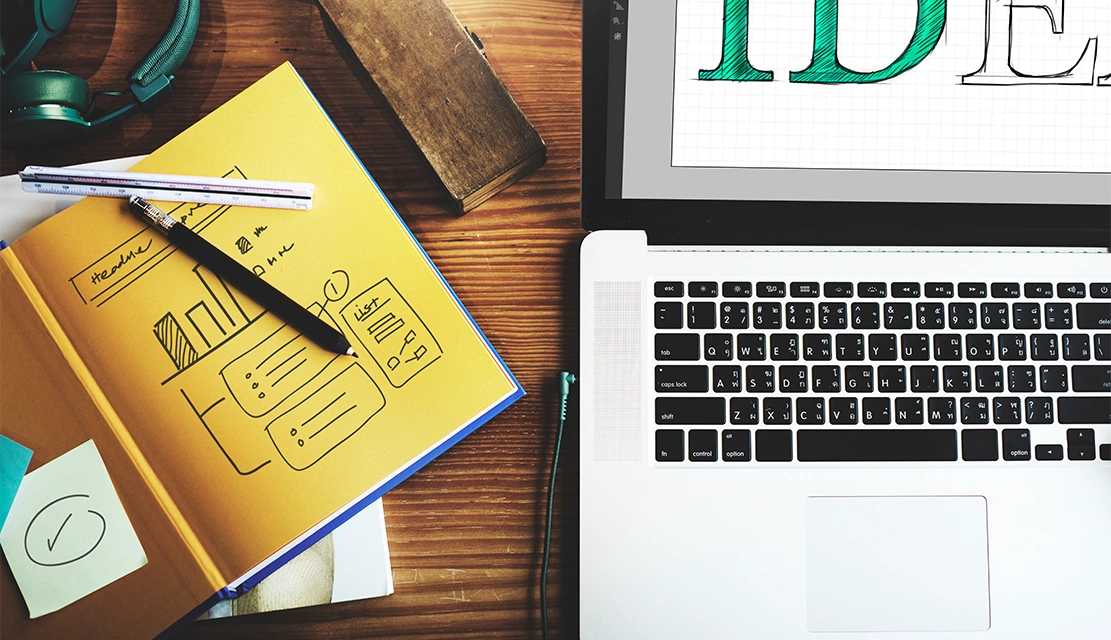
Information architecture is the structural base. We make sitemaps, user flows, and interaction models. Our user experience consultant team defines the navigation hierarchies, content organization and interaction patterns. Wireframes are used to communicate layout concepts without the distractions of visual design. This phase sets up the blueprint that everything else is built on systematically.

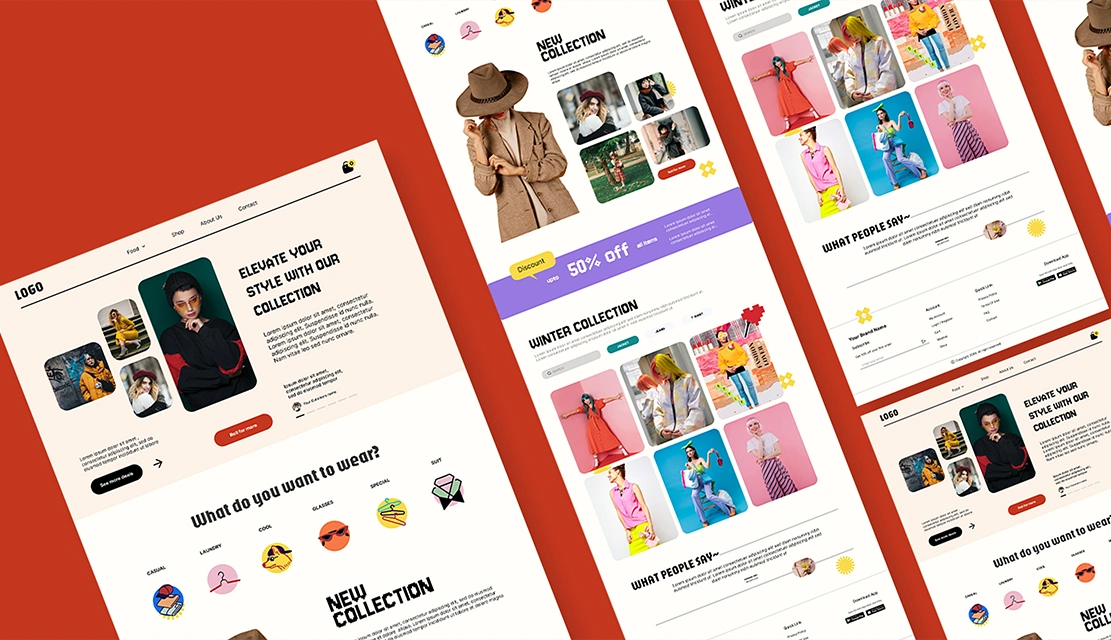
Visual design is a way of bringing wireframes to life without compromising the usability principles. Our user experience designer is involved in creating high-fidelity mockups, design systems, and component libraries. Color palettes, typography, iconography, and spacing adhere to established guidelines for the brand while maximizing clarity. Every visual decision has the benefit of improving comprehension and supporting user goals in an effective manner.

Issues are discovered before investment in development using rigorous testing. Prototype testing with representative users identifies friction points. A/B testing is a way to validate design hypotheses. Our application UX design is run through several cycles of iteration, depending on observed user behaviour. This phase avoids expensive post-launch fixes through systematic validation with actual target users.

Comprehensive documentation to ensure smooth developer handoff. We offer annotated specifications, asset libraries and interaction guidelines. Our UX design developer collaboration includes: design system documentation, component specs, and responsive breakpoints. Post-launch support consists of analytics monitoring, tracking performance and making optimization recommendations. Your team gets everything they need to implement successfully.
Our portfolio spans 1250+ successful engagements across healthcare, fintech, eCommerce, and enterprise. Explore how strategic design solved complex challenges.
Our UX design philosophy is built around sustainability, scalability, and continuous innovation. Over eighteen years, we’ve partnered with organizations ranging from bootstrapped startups to Fortune 500 enterprises – adapting to vastly different business models, constraints, and growth stages. This breadth of experience allows us to design systems that last, scale, and evolve.
Working across industries gives us a distinct advantage. Healthcare has ingrained a deep respect for compliance and precision. Fintech demands uncompromising security and transparency. eCommerce sharpens our expertise in conversion optimization. Education platforms refine our approach to onboarding and user enablement. Real estate products shape our mastery of map-driven interactions, while retail systems strengthen our understanding of inventory-centric interfaces. A narrowly specialized UX designer may miss these cross-pollinated insights. Our diversity of experience is what makes our work stronger, more resilient, and more effective.

Thousands of UX design studios claim expertise. Few deliver transformative results consistently. Our distinction emerges from relentless quality focus, strategic thinking depth, and a genuine partnership approach. Industry recognition validates this commitment: multiple awards acknowledge innovation, client satisfaction, and measurable business impact across diverse sectors.
Tri-Continental Design Intelligence: Global offices provide unique multicultural perspectives. We recognize the influence of geography on user expectations, designing interfaces that are universal and respect local contexts.
Research Over Assumptions: We never design based on personal likes or based on industry trends. Every decision is based on validated user research and behavioural data analysis.
Accessible By Default: Accessibility isn’t optional. It’s fundamental to our process. Every deliverable meets international standards, expanding reach and reducing risk.
Professional user experience design companies invest in the latest technology stacks. Our toolkit is a combination of collaborative design platforms, advanced prototyping tools and sophisticated analytics engines for optimal workflow efficiency.

















Four iconic restaurant brands sharing one clunky digital platform that felt the same regardless of which restaurant you were ordering from — that was our problem. UX Stalwarts built a multi-brand UX framework that gave each brand its own personality while sharing the underlying efficiency. Cutting the ordering flow from 11 taps to 5, lifting loyalty activation by 63 percent, and growing digital order frequency by 49 percent showed that UX design is a material revenue driver in casual dining. The post-dining re-engagement UX alone is recovering visits we would have completely lost.
Allegiant’s value proposition is unbeatable prices to great leisure destinations, but our booking UX was undermining that promise at every step. Customers were hitting 14 steps, getting confused by our add-on presentation, and abandoning before they ever saw our lowest fares. UX Stalwarts rebuilt the entire funnel UX and the results were remarkable. Cutting abandonment from 71 to 34 percent and increasing ancillary attach rates from 28 to 51 percent in one redesign cycle is the kind of UX ROI that makes the investment an obvious decision. Our mobile booking is finally competitive.
Dave and Buster’s lives on the energy of groups having fun, and our app UX was actively getting in the way of that. Guests were waiting at POS stations to reload cards, calling to book parties, and missing out on rewards they had earned. UX Stalwarts built an in-venue UX ecosystem that made every part of the visit smoother. A 43 percent increase in per-visit spend from app-active guests and 78 percent of reloads becoming self-service transformed how our floors operate. The event booking conversion jumping 84 percent is real revenue that used to walk out the door.
Considering partnering with user experience design agencies? Here's everything you need to know.
Start by looking at portfolios related to relevant industry experience. Look beyond visual polish. A case study will show you a measurable outcome. Check their process involves valid user research, not just design execution. Ask for their approach to accessibility, testing methodology and post-launch support. Request client references and really use them. Discuss the cadence of communication and collaboration tools. Ensure there is chemistry between teams because effective design requires that partnering is close. Finally, compare proposals carefully – the cheapest usually delivers shallow work, and the most expensive doesn’t guarantee quality. Seek demonstrated value, strategic thinking, and cultural fit.
Pricing changes drastically depending on the complexity and scope of the project. Most professional user experience design firm partners have multiple pricing schemes, such as fixed pricing for set projects, hourly billing for exploratory projects, or retainer contracts for continuous relationships. Ask for detailed proposals with deliverables, timelines, revision allowances and payment terms. Remember that taking the time to do the right research and validation in the beginning saves costly corrections later in the development.
Timelines are based on the complexity and scope of the project. Simple website redesigns could take 6-8 weeks. Comprehensive application UX design projects take 12-16 weeks on average. Enterprise platforms can increase for 6-9 months or more. Discovery and research phases normally take 2-4 weeks. Design & iteration take 4-8 weeks. Testing and refinishing take an additional 2-3 weeks. Factor in the review cycles of your clients, approval on your part from stakeholders, and revision rounds. Rushed timelines undermine quality – good research and validation take time. It is important to discuss realistic schedules during initial consultations, balancing the pressure to be thorough with the urgency to help your child.
Comprehensive engagements generally constitute research documentation, user personas, journey maps, wireframes, high-fidelity mockups, interactive prototypes, design specifications, and component libraries. You’ll get detailed annotations explaining interaction behaviors, responsive breakpoints and accessibility considerations. Asset libraries consist of icons, illustrations, and UI elements. Style guides are a record of typography, colour palettes and spacing systems. Developer handoff packages contain technical specifications and implementation instructions. Many hiring UX designer teams also include usability test reports, analytics recommendations and optimization roadmaps. Clarify deliverable expectations from the beginning–good documentation gives development teams the ability to implement designs accurately and without constant designer involvement.
Superior user experience companies put research above assumptions. They validate designs based on systematic testing and not on subjective opinions. Their processes focus on accessibility, meaning that their products work for a variety of users. They are proactive in their communication, and they engage their clients in a collaborative way and explain the rationale of their design well. Exceptional teams think strategically with business objectives coupled with user needs. They constructively challenge requirements as necessary. Their portfolios show meaningful results and not just great pictures. Post-launch support separates the truly committed partners from the transactional vendors. Finally, the best UX design companies keep investing in learning and staying on top of new best practices, tools, and methodologies.
Both ways have their merits depending upon the circumstances. Agencies are the means for immediate access to a wide range of expertise with no recruitment delays. They bring fresh perspectives, inter-industry knowledge and proven methodologies. Costs continue to be predictable and scalable. Internal teams provide greater product knowledge, continuous availability and shared incentives. They work seamlessly with existing workflows. Consider hybrid approaches: consider hiring a user experience consultancy for initial strategic work, followed by internal execution. Many organizations work with agencies for major initiatives, but keep small teams on staff for the ongoing optimization being done. Your decision should be based on the complexity of the project, the urgency of the timeline, budgetary constraints and long-term design requirements.
We set up very defined success metrics in the process of discovery – conversion rates, task completion times, error reduction, and customer satisfaction scores. Baseline measurements are measurements of current performance. Design decisions are linked with business objectives, rather than to aesthetic beliefs only. Through the process, we validate hypotheses by testing them before investing resources. Post-launch analytics monitoring provides evidence for improvements. A/B testing is used to find optimization opportunities. We provide detailed reporting demonstrating the impact of design changes on key performance indicators. This data-driven approach is to ensure investments yield returns. User experience consultants unable to prove anything measurable offer little real value other than superficial aesthetic improvements.
UX (user experience) accounts for the whole journey of interactions – research, information architecture, task flows and usability. UI (user interface) is more focused on visual design, i.e. colors, typography, buttons, aesthetics. UX asks, “Is this solving user problems effectively?” UI asks, “Does this look good and on-brand?” Both matter tremendously. Excellent UI without solid UX is a nice-looking but frustrating product. Great UX with poor UI does not capture the emotion of the user. Professional user experience design agencies combine both disciplines. The most effective results arise when strategic UX thinking is used to feed into elegant execution (UI) throughout the design process.
We spend time knowing domain-specific terminology, workflows and constraints. Initial discovery includes subject matter expert interviews. We do research into industry standards, compliance requirements and user expectations specific to your sector. Our user experience designer team gets to know your business intimately before making any proposals. Cross-industry experience helps us to see patterns while respecting specialisation. We’ve designed for healthcare (HIPAA compliance), fintech (security transparency), manufacturing (complex data hierarchies), and so on. Technical complexity doesn’t scare us – it gets our problem-solving juices flowing. We ask questions, and don’t stop until we have a real understanding of people’s context, challenges and success criteria as users.
Engagement after launch is dependent on the agreement, but is usually a combination of analytics review, A/B test support and optimization recommendations. We track user behavior data, spot the areas of friction, and recommend making things iterative. Some clients prefer retainer arrangements for constant optimization. Others have us in for quarterly performance reviews. We have some documentation in place that will ensure that internal teams can make minor updates on their own. For major improvements, we re-engage with established systems of design (for consistency). Unlike vendors who disappear after delivery, we consider our relationship with our clients to be long-term, or partnership, relationships. Your product will evolve – We’re committed to being part of that journey of growth.
Accessibility integration begins in wireframing and not as a post-design checklist. We do keyboard navigation, screen reader compatibility and color contrast from day one. Testing includes validation of assistive technology. Our process is compliant with the minimal WCAG 2.1 AA standards and often well beyond the standard of AAA whenever possible. We educate clients about the legal requirements, as well as the business benefits – an accessible design will significantly increase the market reach. Every deliverable contains accessibility annotations. And this proactive approach is cheaper than fitting in retrospectively later. Inclusive design isn’t an option – it’s squarely central to creating products that work for everyone, regardless of their abilities or situations.
Absolutely. We work seamlessly with internal development teams, other agencies or offshore partners. Our user experience design agency delivers comprehensive specifications that work across any technology stack – whether you are using the React framework, Angular, Vue, native mobile, or even custom frameworks. We adapt our way of delivering to your team’s preferences. Some clients would like to use Figma handoff; others like Zeplin or Abstract. We attend developer standups when useful. Our goal is to make it as easy as possible to implement, and not impose particular tools. Clear communication and flexibility are the keys to making sure our designs translate accurately, no matter your technical environment.
Great design is both at the same time. We start by gaining a deep understanding of business goals: what are the revenue goals, what is the market positioning, and what are the operational constraints. Then, we find out how serving users’ needs achieves those goals. Users who complete tasks efficiently become loyal customers. Reducing friction helps to increase conversion rates. Simplified onboarding reduces support costs. Our philosophy when hiring a UX designer is to find elegant solutions that would satisfy our stakeholders as well as our end-users. When conflicts emerge, we encourage discussions of trade-offs, often finding creative solutions that eliminate false dichotomies. For a strategic UX designing agency, work is an intersection between business success and the satisfaction of users.
We’ve delivered successful projects in healthcare, financial services, eCommerce, education technology, real estate, enterprise software, logistics, manufacturing, travel, hospitality, nonprofits and government sectors. Rather than narrow specialization, we use cross-industry insights. Healthcare teaches us orderliness. Fintech is proving the transparency of security. eCommerce is revealing conversion optimization. This breadth strengthens what we do; solutions from one sector often resolve problems in another. While we vary our methodologies to suit industry-specific needs, the methodologies are universal. Human cognition and behavior principles are constant, irrespective of the sector. We bring both specialized knowledge and transferable knowledge.
Our team is engaged in continuous professional development – attending conferences, completing certifications and participating in design communities. We experience new tools and methodologies before we recommend them to clients. Regular internal knowledge-sharing sessions spread learning in our user experience design company’s network. We follow thought leaders, read research publications, and contribute to research in the industry. Client projects allow us to be exposed to different problems which need innovative solutions. This combination – formal learning, working with peers and real-world problem-solving – keeps our skills sharp and relevant. We invest a lot in growth because stagnant knowledge yields stagnant results.

C – 81C, Sector – 8, Noida 201301, India


1025 Beamon Drive, Franklin 37064 Tennessee, USA
Sveavagen 34 111 34 Stockholm, Sweden
A-10, Sahastradhara Rd, Doon IT Park, Dehradun, Uttarakhand

© 2026 UX STALWARTS. All rights reserved.